
Vietnam Property Glossary: Key Vietnamese Terms Every Foreign Buyer Should Know
Buying property in Vietnam means running into a wall of unfamiliar Vietnamese terms — on contracts, in listings, from agents and at the notary. Not knowing what “sổ hồng”, “bàn giao thô” or “tạm trú” means is how foreign buyers get caught out. This glossary defines the terms you will actually meet, grouped by stage of the journey, with a link to a full guide on each so you can go deeper where it matters.
This is general information for 2026 to help you read the vocabulary — not legal or tax advice. Definitions are simplified; confirm specifics with a licensed Vietnamese professional.
Ownership & certificates
- Sổ hồng (“pink book”) — the certificate proving legal ownership; since 2025 a unified, QR-coded certificate. See the pink book guide and the new 2025 certificate.
- Sổ đỏ (“red book”) — the older land-use certificate name, now merged into the single certificate above.
- Land use rights (LUR / LURC) — in Vietnam no one owns land outright; you hold land-use rights. Foreigners cannot hold land in their own name — see can foreigners own land.
- 30% quota — the cap on foreign ownership per condo building; details in the 30% quota explained.
- 50-year leasehold — the ownership term for a foreign buyer, renewable — see the 50-year leasehold.
The purchase & contract
- HĐMB (hợp đồng mua bán) / SPA — the sale-and-purchase agreement, the binding contract; read it as carefully as the price. See the buying process.
- Đặt cọc — the deposit or reservation payment that holds a unit before the SPA; understand what is refundable.
- Nhà ở hình thành trong tương lai — “future housing”, i.e. off-plan property not yet completed — compare in off-plan vs completed.
- Bảo lãnh ngân hàng — the bank guarantee that can protect off-plan payments — see off-plan bank guarantee.
- Thanh toán theo tiến độ — the staged payment schedule tied to construction progress, covered in off-plan payment schedule.
Costs, taxes & fees
- Lệ phí trước bạ — the registration fee (commonly 0.5%) paid to register ownership — see taxes & costs when buying.
- Thuế TNCN — personal income tax; on a property transfer this is currently 2% of the sale price for the seller — see selling & foreigner taxes.
- Phí bảo trì 2% — the one-time 2% maintenance (sinking) fund; and phí quản lý, the monthly management fee — both in management fees & the maintenance fund.
- Repatriation — moving your sale proceeds or rental income out of Vietnam; see repatriating funds.
The building & the unit
- Bàn giao thô — bare-shell handover; hoàn thiện cơ bản — basic-finish handover. The difference drives your move-in budget — see bare shell vs finished.
- Thông thủy — the usable (“carpet”) area you actually live in, versus the larger built-up area you are charged on.
- Hướng — the unit’s orientation/direction, which matters for tropical heat and for local resale — see choosing the right unit.
- BQT / BQL — the building’s management board (Ban Quản Trị) and management company (Ban Quản Lý), who run the building and set its rules.
- PCCC — fire prevention and fighting (fire safety); see the PCCC checklist.
- Condotel — a tourism-designated unit built for short stays, distinct from an ordinary residential apartment.
Remote & foreigner-specific terms
- Tạm trú — temporary-residence registration for foreigners staying at a home; see the tạm trú guide.
- Giấy ủy quyền (Power of Attorney) — authorising someone to act for you, essential for a remote purchase — see the POA guide.
- Hợp pháp hóa lãnh sự — consular legalization, needed to make a foreign document valid in Vietnam. Vietnam’s entry to the Hague Apostille Convention takes effect 11 September 2026; until then consular legalization applies, after which an apostille replaces it for member states.
- Việt kiều — an overseas Vietnamese, who may have different ownership rights from other foreigners — see Việt kiều buying property.
- EVN — Vietnam Electricity, the electricity supplier whose account you transfer into your name after handover — see post-handover setup.
Conclusion
You don’t need to be fluent in Vietnamese property law — but recognising these terms lets you read a contract, a listing and a handover document without being surprised. Bookmark this glossary and follow the link on any term you want to understand fully. When a word on your paperwork isn’t clear, stop and check it before you sign.
This glossary is general information only, simplified for clarity, and not legal or tax advice. Confirm the meaning and implications for your situation with a licensed Vietnamese professional.
As a primary-market distributor in Ho Chi Minh City, Happy Land explains every term and document as you go, in English. Browse current projects or contact our team on Zalo or WhatsApp.
Frequently asked questions
What is a 'sổ hồng'?
The sổ hồng (literally 'pink book') is the certificate that proves legal ownership of a home in Vietnam — the single most important document in any purchase. Since 2025 it has been issued as one unified, QR-coded Certificate of Land Use Rights and Ownership of Assets Attached to Land. For a foreign apartment owner it names you as owner of the unit and records your ownership term. Older certificates remain valid.
What does 'bàn giao thô' mean?
Bàn giao thô means a 'bare shell' handover: the apartment is delivered as a structural shell — concrete floors and walls with rough plumbing and electrical points — and you fit out the flooring, paint, kitchen and bathrooms yourself before it is livable. It contrasts with 'hoàn thiện cơ bản' (a basic finish) and a fully furnished handover, which need progressively less extra work and budget.
What is the '30% quota'?
It is the cap on foreign ownership in a condominium: foreigners may own up to 30% of the units in a single apartment building (with separate ward-level limits on landed houses). A project must be within that cap for you to be registered on the certificate, and it also shapes your resale liquidity to other foreigners. Selling to a Vietnamese citizen is not constrained by the quota.
What does 'PCCC' stand for?
PCCC is 'phòng cháy chữa cháy' — fire prevention and fighting, i.e. fire safety. It refers to the standards, systems and approvals a building and any fit-out must meet. It matters at handover (does the building comply?) and for any renovation or short-term-rental use, where PCCC requirements are a common sticking point.
What is 'tạm trú'?
Tạm trú is temporary-residence registration. A foreigner staying at a residence in Vietnam — including an apartment you own and live in — is generally required to register their temporary stay, often within a short deadline of moving in. In a condo the management company frequently handles it; where it does not, you (or your representative) declare it online or at the ward police.
Projects for sale now
Get the latest price list, availability & payment terms — free advice via Zalo/WhatsApp.
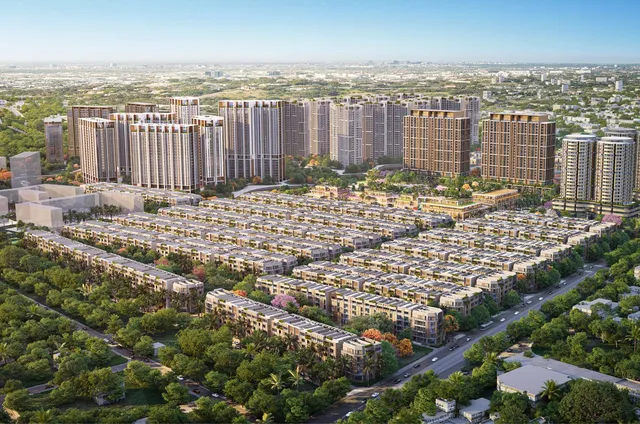 Selling now Foreign quota
 Masterise Homes · Luxury apartment & integrated township
The Global City
An Phu, Thu Duc City (former District 2), HCMC
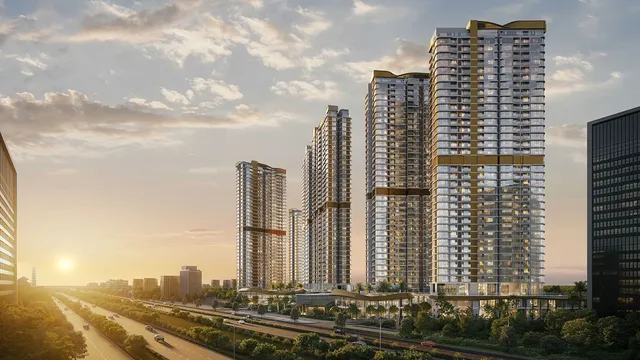 Selling now Foreign quota
 Gamuda Land · Luxury apartment
Eaton Park
An Phu, Thu Duc City, HCMC
 Selling now Foreign quota
 SonKim Land × Hongkong Land · Branded residences
The Metropole Thủ Thiêm
Thu Thiem, Thu Duc City, HCMC