Vietnam's New 2025 Land & House Certificate (QR Pink Book): What Foreigners Should Know
In 2025 Vietnam quietly redesigned the single most important document in any property purchase: the ownership certificate that buyers commonly call the “pink book” (so hong) or “red book” (so do). Under the Land Law 2024 and its implementing circular, the old separate templates were merged into one unified Certificate of Land Use Rights and Ownership of Assets Attached to Land, complete with a scannable QR code that links the paper to the national land database.
For foreign apartment owners, this is welcome news rather than a cause for alarm. Your existing certificate stays valid, the new design makes verification easier, and the changes mainly affect the template and the issuing office rather than your rights. This guide explains the new certificate in plain English, shows you how to read and verify the QR code, and sets out an honest old-versus-new comparison. It is general information, not legal advice, and figures change, so treat licensed professionals as the final word.
What actually changed in 2025
Three reforms landed close together, and it helps to separate them.
One unified certificate. Historically Vietnam used different documents at different times: a certificate of house ownership and residential land use (the “pink book”), and a certificate of land use rights (the “red book”). The Land Law 2024 (Law No. 31/2024/QH15) consolidated these into a single national template: the Certificate of Land Use Rights and Ownership of Assets Attached to Land. The detailed template rules sit in Circular 10/2024/TT-BTNMT from what was then the Ministry of Natural Resources and Environment, effective from 1 August 2024. In everyday speech people still say “pink book,” but the formal document now has one name and one layout nationwide.
A QR code for instant verification. The new template adds a QR code, sized roughly 2.0 cm by 2.0 cm, in the top-right corner of page one. Scanning it pulls the certificate’s recorded details from the cadastral system, and the information returned by the code is treated as having the same value as the text printed on the page. The practical effect is that anyone, a notary, a bank, or a cautious buyer, can check whether a certificate is genuine and matches the official record.
Issuance moved to the commune/ward level. Vietnam reorganized its local government into a two-tier system in 2025 and abolished the district administrative layer. Under Decree 151/2025/ND-CP, the authority to issue first-time certificates for individuals shifted from the former district People’s Committee to the commune or ward-level People’s Committee, with effect from 1 July 2025. For a foreigner buying a new apartment, this is mostly invisible because the developer’s team usually handles the filing.
Old book vs new certificate at a glance
The table below summarizes the practical differences. Treat the timelines and quotas as indicative; they change and depend on the project and locality.
| Feature | Old red book / pink book | New 2025 unified certificate |
|---|---|---|
| Formal name | Separate titles (land use; or house + residential land) | Certificate of Land Use Rights and Ownership of Assets Attached to Land |
| Legal basis | Earlier land/housing laws | Land Law 2024; Circular 10/2024/TT-BTNMT |
| QR code | None | Yes, ~2 cm x 2 cm, top-right of page 1, links to cadastral database |
| Layout | Key data spread across two pages | Core plot, asset and certification data consolidated on page 1 |
| Issuing authority (individuals, first issuance) | District-level People’s Committee | Commune/ward-level People’s Committee (from 1 July 2025) |
| Validity of old books | n/a | Old certificates remain fully valid; no forced re-issuance |
| Foreign apartment owner term | 50 years, renewable | 50 years from issuance, renewable once (Housing Law 2023) |
Are old certificates still valid? Yes
This is the question most existing owners ask, and the answer is reassuring. Certificates issued under the old names and templates before 2025 remain valid and are legally equivalent to the new unified certificate. There is no government order to surrender or swap your book, and re-issuance is voluntary, not compulsory.
In practice, you will usually only receive a new-template certificate when something triggers re-issuance anyway: you sell the unit, you inherit or are gifted it, you register a mortgage, or you correct an error. At that point the land registration office issues the current template, with the QR code, as a matter of course. Until then, your existing certificate continues to prove your ownership, and you do not need to do anything.
If you specifically want a QR-coded certificate sooner, you can request re-issuance, but for most owners it is simpler to wait for a natural transaction. The cost-benefit rarely favors a voluntary swap unless you are about to sell and want the cleanest possible document for the buyer.
How to read the new certificate
The redesigned template front-loads the important information onto page one. When you look at a new certificate, you should be able to find, on the first page:
- The owner’s name and details. For a foreigner, this is your name, passport number and nationality, listed as the owner of the unit.
- The land plot and project information. Plot number, land type, usage term, usage origin, and address.
- The asset attached to the land. For an apartment, this is the building and unit: the asset category, construction area, floor area, primary structure, construction grade, number of floors, completion year, and ownership term.
- The ownership term. For foreign buyers this is generally 50 years from the date of issuance, renewable once under the Housing Law 2023.
- The certifying authority and the QR code in the top-right corner.
Page two of the certificate is reserved for “changes after issuance,” such as transfers, mortgages, and corrections, plus the registration entries that accompany them. When you buy a resale unit, this page is where the property’s recent history shows up, so it is worth reading closely.
If you are still unsure how the so hong fits into foreign ownership generally, our companion explainer on the pink book (so hong) for foreigners walks through the document from first principles.
How to verify a certificate using the QR code
The QR code is the headline upgrade, and using it well is a genuine due-diligence improvement. Here is a sensible approach.
- Scan the code with a standard phone camera or QR reader. The code resolves to the certificate’s recorded information held in the land database.
- Compare what the scan returns against what is printed. Owner name, unit, area, term, and certificate number should all match. A mismatch, or a code that returns nothing, is a red flag worth pausing on.
- Treat the scan as confirmation, not as the whole job. The returned data carries the same value as the printed text, but the QR code is a verification aid, not a substitute for a notary’s formal title search. Forgers can copy a layout; what they cannot easily fake is a clean match against the official database plus a notary’s independent check.
- Still verify older, non-QR certificates the traditional way. If the seller holds a pre-2025 book with no QR code, that book is still valid, and you verify it through the land registration office and your notary, exactly as before.
For a foreigner, the most important verification is not the QR code at all, it is confirming that the apartment sits in a licensed commercial project that is still within its foreign-ownership quota. The QR scan helps confirm the document; the project’s legal status confirms that you are even allowed to be named on it. Our Vietnam property due diligence checklist for foreigners covers both layers.
What this means for foreign apartment owners
The unified certificate does not change the substance of foreign ownership; it changes the paperwork. The core rules from the Housing Law 2023 and Land Law 2024 still apply: foreigners buy apartments and houses inside licensed commercial housing projects, on a leasehold-style basis, with the underlying land remaining state land. Foreign ownership in a single condominium building is capped (commonly described as up to 30% of units), and a project must be within that quota for you to receive a certificate.
Your certificate will name you as the owner of the specific unit and record a 50-year term from issuance, renewable once. The new template simply records this on the consolidated page-one layout and adds the QR code. If you bought before 2025, your older certificate already protects you and does not need upgrading.
The commune/ward-level issuance change is unlikely to affect your experience. When you buy a new unit, the developer and the project’s land registration office typically prepare and lodge the certificate application, so you interact with the developer’s legal team rather than the issuing committee directly. For a deeper look at who can own what, see can foreigners own land in Vietnam?, and for the end-to-end transaction, our buying process for foreigners guide.
Practical takeaways
A few honest points to keep in mind as the new system beds in.
- No panic, no forced swap. Your old book is valid. Do nothing unless you are transacting.
- Use the QR code as a confidence check on any new certificate, but never skip the notary and the project’s legal status.
- Expect a single national template now. If a “certificate” you are shown looks like an unfamiliar one-off format, slow down and verify.
- Timelines and quotas are indicative and change. Reported first-issuance processing of around three working days for a complete file, and quota caps, vary by locality and project. Confirm current figures for your specific case.
- Watch the project, not just the paper. For foreigners, the licensed-project and foreign-quota questions matter more than the certificate template.
The 2025 reform is, on balance, good for foreign buyers. A unified, QR-verifiable certificate makes a clean title easier to confirm, and that transparency tends to help the people who do their homework. The flip side is that the transition period is exactly when unusual or outdated documents circulate, so a careful eye on the certificate, the project, and the notary’s report remains essential.
This article is general information and current to mid-2026; it is not legal, tax, or investment advice. Laws, figures, and procedures change, and your situation may differ, so please confirm the specifics with a licensed Vietnamese lawyer, notary, or tax adviser before you act.
If you would like help reading a specific certificate, scanning and cross-checking a QR code, or confirming that a project is within its foreign-ownership quota, the Happy Land team can assist in English. Message us on Zalo or WhatsApp for a quick, no-pressure conversation, and browse our project listings to see current foreign-eligible apartments with developer pricing and live availability.
Frequently asked questions
Is my old pink book or red book still valid after the 2025 change?
Yes. Certificates issued under the old names and templates before 2025 remain fully valid and carry the same legal weight as the new unified certificate. There is no requirement to surrender or exchange them, and authorities have confirmed that voluntary re-issuance is optional, not mandatory. You would typically only receive a new-template certificate when a transaction triggers re-issuance anyway, such as a sale, an inheritance, a mortgage registration, or a correction. For day-to-day ownership, your existing book continues to prove your rights.
What does the QR code on the new certificate actually do?
The QR code, printed at roughly 2 cm by 2 cm in the top-right of page one, links the physical certificate to Vietnam's cadastral database. Scanning it returns the certificate's recorded details, and that returned information is treated as having the same value as the text printed on the page. In practice it lets a buyer, bank, or notary cross-check that a certificate is genuine and matches the official record, reducing the risk of forged or altered books. It is a verification aid, not a replacement for a notary's title check.
Who issues the certificate now that districts have been abolished?
Since 1 July 2025, under the two-tier local government reform and Decree 151/2025/ND-CP, first-time certificates for individuals are issued by the commune or ward-level People's Committee rather than the former district authority. The district administrative layer was removed in the 2025 reorganization. For foreigners buying a new apartment, this rarely changes your experience, because the developer and the project's land registration office usually handle the paperwork on your behalf.
As a foreigner, what will my new certificate show?
Your certificate names you as the owner of the specific apartment unit and records your ownership term, which for foreign buyers is generally 50 years from the date of issuance, renewable once under the Housing Law 2023. It is a leasehold-style ownership of the dwelling, while the underlying land remains state land. The certificate also records the building, unit, area, and project details. Always confirm the exact term and the project's foreign-ownership quota status before you sign.
Do I need to upgrade my certificate to get the QR code?
No. There is no obligation to convert an older certificate just to obtain a QR code. The QR-coded format is issued going forward and on re-issuance events. If you want a new-template certificate sooner, you can request re-issuance, but for most owners it is simpler to wait until a transaction naturally produces an updated certificate. Verifying an old certificate is still possible through the land registration office even without a QR code.
Projects for sale now
Get the latest price list, availability & payment terms — free advice via Zalo/WhatsApp.
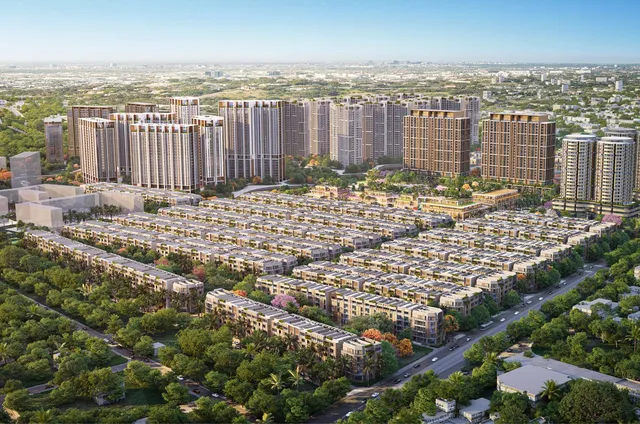 Selling now Foreign quota
 Masterise Homes · Luxury apartment & integrated township
The Global City
An Phu, Thu Duc City (former District 2), HCMC
 Selling now Foreign quota
 Gamuda Land · Luxury apartment
Eaton Park
An Phu, Thu Duc City, HCMC
 Selling now Foreign quota
 SonKim Land × Hongkong Land · Branded residences
The Metropole Thủ Thiêm
Thu Thiem, Thu Duc City, HCMC