
Off-Plan Bank Guarantee in Vietnam: What Foreign Buyers Must Check (2026)
If you are buying an apartment in Vietnam that is still under construction, you are buying a promise: the developer takes your money in installments and hands over the finished home months or years later. The single most important legal protection standing between you and a developer who runs out of money is the bank guarantee for future housing — a refund commitment from a bank that, since 2025, every off-plan seller in Vietnam is required to arrange. This guide explains what that guarantee is, how it protects you as a foreign buyer, how to verify a project actually has one, and why you should almost never use the new right to opt out of it.
This is general information for 2026, not legal or tax advice. Vietnamese real estate law is implemented through circulars and local practice that change; always have a licensed Vietnamese lawyer review your specific project and contract.
What “future housing” means and why the guarantee exists
Vietnamese law draws a sharp line between two things. Completed property is a home that already exists and has (or is ready to receive) its ownership certificate — the “pink book” or sổ hồng. Future housing (nhà ở hình thành trong tương lai) is a home that does not physically exist yet: the building is on paper, under construction, or topped-out but not handed over. Almost all primary-market sales of new apartments — exactly the kind of fresh-launch inventory Happy Land distributes — are sales of future housing.
The risk is obvious. You pay 30%, 50%, sometimes 70% of the price before you can live in the unit. If the developer mismanages cash, loses financing, or the project stalls, your money is exposed. Vietnam saw enough stalled projects in the past decade that the legislature built a backstop directly into the law.
That backstop is the bank guarantee for the developer’s financial obligation to buyers of future housing, carried over and strengthened in the Law on Real Estate Business 2023 (effective from 1 August 2024) and operationalised by the State Bank of Vietnam’s Circular 61/2024/TT-NHNN, which took effect on 1 April 2025. In plain terms: before a developer is allowed to sell off-plan homes, a bank must commit that if the developer fails to deliver on time and the buyer asks for their money back, the bank will refund the buyer.
For background on the wider choice between buying off-plan and buying a finished unit, see our guide on off-plan vs completed property in Vietnam.
How the bank guarantee protects you
The mechanism is a chain of obligations:
- The developer must obtain a guarantee facility from a qualified bank before it is permitted to sign sale or lease-purchase contracts for future housing. Under Circular 61/2024, both Vietnamese commercial banks and licensed foreign bank branches operating in Vietnam may issue these guarantees.
- The bank issues a guarantee covering the developer’s obligation to refund advance payments to buyers if the home is not handed over on the schedule in the contract.
- You, the buyer, can receive a specific guarantee letter naming you, your unit, and the amount covered — your individual slice of the project-level guarantee.
What the guarantee pays: if the developer fails to hand over the property on the agreed schedule and you exercise your right to a refund, the bank is obliged to return the advance payments you made to the developer, within the scope and limit stated in the guarantee letter. This is what makes off-plan in Vietnam materially safer than in markets with no such requirement.
What the guarantee does not do — and this is where honest advice matters:
- It does not guarantee construction quality, finishing standards, or that the building looks like the showroom render.
- It does not protect against the project never being licensed for foreign ownership, or the 30%-per-building foreign quota being full. Those are separate eligibility checks — see can foreigners own land in Vietnam?.
- It does not guarantee your future resale price or rental yield.
- It typically covers the money you paid the developer, not consequential losses, legal fees, or currency movement.
Treat the bank guarantee as insurance against non-delivery, not a warranty on the whole investment.
The change that catches foreign buyers out: the new opt-out
Here is the nuance most English-language sources gloss over. The 2023 law and its 2024/2025 implementing rules kept the seller’s obligation to arrange a guarantee mandatory — a developer still cannot sell future housing without a bank standing behind it. But the reform added a new wrinkle: the individual buyer may now choose whether they want a specific guarantee letter issued for their own contract.
The intent was administrative simplification. In practice it creates a trap: a buyer who waives the letter to save a little paperwork or a small fee gives up their cleanest, most enforceable claim against the bank if the project stalls.
Our recommendation is blunt: do not opt out. For a foreign buyer paying installments on a building that does not yet exist, the guarantee is the most valuable protection you have. The cost saving is trivial against the downside. Keep the guarantee unless a licensed Vietnamese lawyer, looking at your specific contract, advises a different course. If a sales agent pushes you to waive it “to make the paperwork faster,” treat that as a reason to slow down, not speed up.
The payment ladder: what a developer can legally collect
The bank guarantee works hand-in-hand with statutory caps on how much money a developer can take, and when. These caps are your second layer of protection — they limit your exposure at every stage.
| Stage | Legal cap on what the developer can collect | Why it protects you |
|---|---|---|
| Deposit | Max 5% of the price, and only once the project is eligible for sale | Stops developers taking large deposits on unapproved projects |
| First installment (at contract signing) | Cannot exceed 30% of contract value (the 5% deposit counts toward this) | Limits upfront exposure before construction milestones |
| Total before handover | Cannot exceed 70% of value — or 50% for foreign-invested (FDI-controlled) developers | Keeps a meaningful balance unpaid until you hold the keys |
| Before ownership certificate (pink book) | Cannot exceed 95% of value | Roughly 5% is retained by you until the sổ hồng is issued — your final leverage |
A few practical notes. The 5% deposit cap applies only once the project has the provincial authority’s confirmation that it is eligible for off-plan sale — a developer asking for a large “booking deposit” on a project with no such approval is acting outside the law. The 30% first-installment cap means you should never be asked for half the price at signing. And the 5% retention until the pink book is genuinely powerful: it gives you something to withhold until the developer actually delivers your registered ownership certificate, which for foreigners is the document that proves your leasehold title.
If a draft contract pushes past any of these caps — a 50% payment at signing, or full payment demanded before handover — that is a red flag worth pausing on. We cover more of these in common mistakes foreign buyers make.
How to verify a project actually has the guarantee
A law on paper is only as good as your verification. Do not take a brochure line — “bank guaranteed” — at face value. Here is the documentary trail to demand, and how to check each piece.
| # | What to ask for | How to verify | Red flag if… |
|---|---|---|---|
| 1 | Sale-eligibility confirmation from the provincial Department of Construction (that the future housing may be sold) | Cross-check the project name and phase against the document; ask the date of issue | Developer can’t produce it, or it predates major design changes |
| 2 | Bank guarantee agreement / commitment between the developer and the issuing bank for the project | Note the bank’s name and the guarantee reference; confirm the bank is a licensed commercial bank or foreign bank branch | ”Guarantee in progress” with no signed document |
| 3 | Your individual guarantee letter (after you sign) naming you, your unit, and the covered amount | Read the trigger conditions and the covered sum line by line | Letter is vague on what triggers a refund, or omits your unit |
| 4 | Independent confirmation from the bank | Contact the issuing bank’s guarantee department directly to confirm the letter is genuine and active | Developer resists you contacting the bank |
| 5 | Foreign-ownership eligibility of the project and remaining quota | Confirm the project is in a foreigner-eligible zone and the 30%-per-building cap isn’t full | No clear answer on quota or zone |
| 6 | Payment schedule vs. the legal caps | Map the contract’s installments against the 30% / 70% (50% FDI) / 95% table above | Any installment exceeds the cap for its stage |
A reputable developer hands these over without friction; resistance to any of them is itself the most useful signal you will get. Happy Land requests and reviews this paper trail with you before you transfer any money, and we coordinate with the issuing bank so you can verify the guarantee yourself.
For the full step-by-step transaction flow around these checks — from reservation to pink book — see our buying process for foreigners.
Putting it together: a foreign buyer’s order of operations
The guarantee, the deposit cap, the payment ladder, and the foreign-ownership rules are four separate protections that only work if you check them in the right order:
- Confirm foreign eligibility first. Before anything, verify the project admits foreign owners and has quota left. A perfect bank guarantee is worthless if you can’t legally be registered on the title.
- Confirm sale eligibility. No provincial sale-eligibility confirmation means no lawful off-plan sale, and the 5% deposit cap does not even apply yet.
- Confirm the guarantee exists — and keep it. Get the project guarantee, then your individual guarantee letter, and verify both with the bank. Do not opt out.
- Check the payment schedule against the caps. Make sure no stage exceeds 30% / 70% (or 50% for FDI developers) / 95%, and that ~5% is retained until your pink book.
- Have a licensed Vietnamese lawyer review. A local lawyer reads the Vietnamese-language contract and guarantee letter — the versions that legally bind you — and flags anything the English summary smooths over.
Off-plan in Vietnam can be an excellent entry point for foreign buyers: developer pricing, new inventory, and a staged payment plan that spreads cost over the build. The bank guarantee is precisely what lets you take that opportunity with a real safety net underneath it — provided you confirm it exists, read it, and keep it.
A note on scope, and how Happy Land helps
The figures and rules above are indicative and current as of 2026, drawn from the Law on Real Estate Business 2023, the Housing Law 2023, the Land Law 2024, and the State Bank of Vietnam’s Circular 61/2024. Implementation varies by province and by bank, and the details that matter — the exact wording of your guarantee letter and your contract — are specific to each transaction. This article is general information, not legal or tax advice; engage a licensed Vietnamese lawyer to review your project and documents before committing funds.
This is exactly the kind of due diligence Happy Land runs as a primary-market distributor working directly with developers: we pull the sale-eligibility confirmation, the bank guarantee, and your individual guarantee letter, map the payment schedule against the legal caps, and help you verify everything with the issuing bank — all on developer pricing with live inventory. If you are weighing an off-plan purchase, message us on Zalo or WhatsApp and we’ll walk you through the guarantee paperwork for any specific project, or browse our project listings to see what’s currently launching.
Frequently asked questions
Is the bank guarantee mandatory for every off-plan project in Vietnam?
Yes — under the Law on Real Estate Business 2023, a developer is not allowed to sell or lease-purchase future (off-plan) housing until a commercial bank or licensed foreign bank branch has agreed to guarantee the developer's financial obligation to buyers. The seller's duty to arrange this guarantee is mandatory. What changed in 2025 is that the individual buyer may now choose whether they want a specific guarantee letter issued for their own contract. The project-level guarantee facility must still exist; only the buyer-level letter is optional, and we strongly recommend you keep it.
What does the bank guarantee actually pay out, and when?
The guarantee covers the money you have paid the developer in advance. If the developer fails to hand over the home on the schedule stated in your sale contract, and you ask for your money back, the bank is obliged to refund the amounts you paid the developer (within the guaranteed scope and limits in the guarantee letter). It is a safety net against non-delivery — not a guarantee of construction quality, future price, or rental income. Always read the specific guarantee letter to see the covered amount and the conditions that trigger a refund.
How do I confirm a project really has a bank guarantee?
Ask the developer, in writing, for three documents: (1) the provincial authority's confirmation that the housing is eligible for off-plan sale; (2) the guarantee agreement or commitment letter from the bank covering the project; and (3) once you sign, your own guarantee letter naming you, your unit, and the covered amount. Then verify directly with the issuing bank's guarantee department that the letter is genuine. A reputable developer provides these without friction. Happy Land can request and walk you through these documents before you commit any money.
Should I use the new right to opt out of the bank guarantee?
Generally, no. The 2025 reform lets buyers waive the specific guarantee to simplify paperwork and sometimes shave a small cost, but for a foreign buyer paying installments on a building that does not yet exist, the guarantee is the single most important protection you have against developer non-delivery. The administrative saving is tiny compared with the downside. Unless a licensed Vietnamese lawyer advises otherwise for your specific situation, keep the guarantee.
How much can a developer collect before I get the pink book?
For future housing, the law caps the payment schedule: the first installment cannot exceed 30% of the contract value (the 5% deposit counts toward this), and the total collected before handover cannot exceed 70% of the value — or 50% for foreign-invested (FDI-controlled) developers. Crucially, the seller cannot collect more than 95% of the price until you have received the ownership certificate (pink book / sổ hồng), so roughly 5% is retained as your final leverage. If a contract asks for more upfront, that is a red flag.
Does the bank guarantee protect me if the project is never licensed for foreign ownership?
No. The bank guarantee protects against the developer failing to hand over on time; it does not fix an eligibility problem. You also need to confirm the project is within a zone where foreigners may own, that the 30%-per-building foreign quota is not already full, and that your name can be registered on the leasehold. These are separate checks from the guarantee. See our guides on the buying process and on whether foreigners can own land, and have a licensed Vietnamese lawyer review the project before you pay.
Projects for sale now
Get the latest price list, availability & payment terms — free advice via Zalo/WhatsApp.
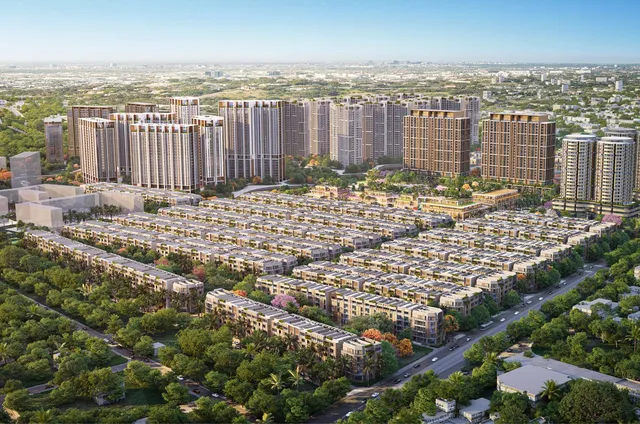 Selling now Foreign quota
 Masterise Homes · Luxury apartment & integrated township
The Global City
An Phu, Thu Duc City (former District 2), HCMC
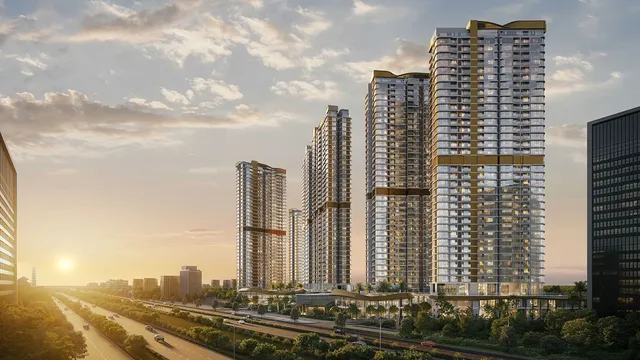 Selling now Foreign quota
 Gamuda Land · Luxury apartment
Eaton Park
An Phu, Thu Duc City, HCMC
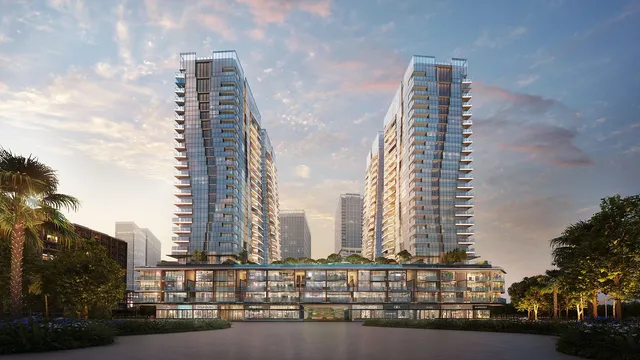 Selling now Foreign quota
 SonKim Land × Hongkong Land · Branded residences
The Metropole Thủ Thiêm
Thu Thiem, Thu Duc City, HCMC