
Vietnam's 30% Foreign Ownership Quota Explained (2026)
If you have started shopping for an apartment in Ho Chi Minh City, you have almost certainly run into a phrase that stops the conversation cold: “Sorry, the foreign quota is full.” That sentence is the practical face of Vietnam’s 30% foreign ownership rule. Understanding exactly how the quota works — and why eligible units are genuinely scarce — is one of the highest-value things a foreign buyer can learn before signing anything.
This guide explains the rule in plain English, sources it to the current 2026 legal framework, and then turns it into a concrete buying strategy. This is general information, not legal or tax advice; confirm specifics for your situation with a licensed Vietnamese lawyer.
The 30% quota is a hard legal cap on how many units in each building foreigners can own
Under Vietnam’s Law on Housing No. 27/2023/QH15 and its implementing Decree No. 95/2024/ND-CP (effective 1 August 2024), foreign individuals and organisations may collectively own no more than 30% of the apartments in a single residential building. This is not a developer marketing rule or a soft target — it is a statutory ceiling that the authorities enforce when issuing ownership certificates.
A few details matter a great deal in practice:
- The cap is per building (block), not per project. For a development with several towers sharing a common podium, the 30% limit is applied to each block separately, not pooled across the whole project. A project of 2,000 units does not give foreigners 600 units to spread freely; each tower is counted on its own.
- It applies to apartments in commercial housing projects. Foreigners can only buy in approved commercial developments — not social housing, and not in restricted zones.
- For landed property (villas, townhouses), a separate cap applies. Foreigners may own no more than 10% of the houses in a single project, and across an administrative ward-equivalent area (defined as roughly 10,000 population) the collective foreign holding cannot exceed 250 houses.
Because Vietnam reorganised its administrative map in 2025, the “ward/commune” boundaries that anchor the 250-house count have shifted in some areas. The principle is unchanged, but the exact area used for the count should be confirmed project-by-project.
If you want to see which live developments currently still have room, the cleanest starting point is to review Happy Land’s curated project list with quota status in mind.
Foreign-eligible units are scarce because demand routinely exceeds the 30% slice
The arithmetic is simple and unforgiving: in a sought-after tower, foreign demand frequently wants more than 30% of the units, but the law allows exactly 30% — so the eligible inventory sells out while Vietnamese-only inventory remains. This is why you can stand in a half-empty sales gallery and still be told there is “nothing left for foreigners.”
Several forces compound the scarcity:
- The good towers fill first. River-view, low-floor-premium, and best-orientation units attract both local and foreign buyers. Foreigners are competing for the same desirable stock within a capped 30% allocation.
- Developers allocate the quota deliberately. Some hold a portion of the foreign quota back for later phases or for premium pricing, so the “available” foreign slice at launch can be smaller than the full 30%.
- Once full, the only way in is resale from another foreigner. When a building hits its 30% ceiling, a new foreign buyer cannot buy a fresh unit from the developer in that block. They must either buy a resale unit from an existing foreign owner (which keeps the count at 30%) or look at a long-term lease — a very different legal product.
This dynamic is most acute in flagship HCMC districts. In high-demand projects such as The Global City and Eaton Park, the foreign-eligible allocation in the best blocks can move quickly, while larger master-planned communities like Vinhomes Grand Park may keep eligible inventory available longer simply because there are more towers.
The pink book and the 50-year term are where the quota becomes real
The quota is enforced at the moment your ownership certificate — the “pink book” (Certificate of Land Use Rights and Ownership of Property Attached to Land) — is issued, and a foreigner’s ownership runs for a 50-year term that is renewable once. Two practical points flow from this.
First, the 50-year clock and resale value are linked. A foreign individual owns for up to 50 years from the date the certificate is issued, with one possible extension of up to another 50 years (application to the provincial People’s Committee at least three months before expiry). When you buy a resale unit from another foreigner, the prevailing reading is that you inherit the remaining years of the original term rather than a brand-new 50 years. The current law does not perfectly spell out every renewal scenario, and further government guidance is expected — so in the final years of a term this ambiguity is a real factor in pricing. Treat any unit deep into its term with extra due diligence.
Second, buying from a Vietnamese owner can behave differently from buying from a foreigner, particularly around how the term and quota are recorded. This is exactly the kind of detail to confirm in writing before deposit.
For the full mechanics of certificates, eligibility and signing, our buying process guide for foreigners and the broader foreigner ownership guide walk through each step. If you would rather have someone check a specific unit’s quota and term status for you, reach out to the Happy Land team.
How to turn the quota from an obstacle into a buying advantage
Scarcity is a problem for the unprepared buyer and an edge for the prepared one — the trick is to treat “foreign-eligible” as a feature you can verify and lock in early. Here is how seasoned foreign buyers play it:
| Tactic | Why it works |
|---|---|
| Ask for the quota number in writing, per block | ”30% available” project-wide can hide a nearly-full target tower. Get the specific block’s remaining foreign count. |
| Buy early in a launch | The foreign 30% is freshest at launch; the best-value eligible units rarely survive late phases. |
| Verify before deposit, not after | Confirm the unit is inside the eligible 30% and that the developer’s project is legally cleared for foreign sale before paying anything. |
| Treat eligibility as a resale asset | When you eventually sell, your unit can go to either a Vietnamese buyer or the limited pool of foreigners still seeking entry — a genuinely eligible unit in a full building is comparatively scarce. |
| Mind the term on resale | Prefer units earlier in their 50-year term; price in the remaining years on older resales. |
A useful mental model: in a desirable, quota-full building, being a foreign-eligible owner is itself a moat. New foreign buyers cannot get a developer unit there — they can only buy from owners like you. That can support liquidity and price on the resale side, provided you bought a quality unit with comfortable term remaining.
The corollary risk is the reverse: never let a salesperson rush you into “the last foreign unit” without independent verification. The pressure is real, but so is the cost of a unit that turns out to sit outside the eligible count or in a project not cleared for foreign sale.
When you are weighing specific buildings — say comparing The Metropole Thu Thiem, Masteri Grand View, or The Prive — the deciding factor is often not the brochure but which block still has clean, verified foreign quota. To get a current, unit-level read on that, book a consultation with Happy Land.
Costs, taxes and getting your money out also shape the real “cost” of an eligible unit
The quota determines whether you can buy; taxes, fees and repatriation rules determine what the investment actually returns — so factor them in before you fall in love with a specific unit. Foreign buyers face the standard transaction costs (registration fee, VAT on new units, and personal income tax on resale), plus the practical question of moving sale proceeds and rental income back home.
These are governed by their own rules and are independent of the 30% cap, but they belong in the same decision. Our taxes and costs guide and the repatriation of funds guide cover both in detail. Tax and currency rules change and depend on personal circumstances; treat figures as reference and confirm with a qualified Vietnamese tax adviser.
Conclusion
Vietnam’s 30% foreign ownership quota is best understood not as a wall but as a gate with a fixed width. In every desirable building, foreigners are competing for the same capped slice, which is why eligible units are scarce and why “the quota is full” is such a common refrain. The buyers who win are the ones who get the per-block number in writing, verify eligibility before depositing, buy early in a launch, and treat their hard-won eligible unit as a resale asset that a limited pool of future foreign buyers will want.
If you would like an honest, current read on which HCMC projects still have verified foreign quota — and which units are actually worth it — talk to the Happy Land team. We would rather tell you the quota is full and point you somewhere better than sell you the wrong unit.
This article provides general information as of 2026 and is not legal, tax, or investment advice. Vietnamese property law continues to be clarified through implementing guidance; always confirm the current rules and your specific situation with a licensed Vietnamese lawyer and tax adviser before committing.
Frequently asked questions
Is the 30% foreign ownership quota counted per project or per building?
Per building (block). Under Decree 95/2024, foreigners may own up to 30% of the apartments in each individual residential building. In multi-tower projects sharing a common podium, the 30% cap is applied to each block separately, not pooled across the whole project. A salesperson saying '30% available project-wide' may still have a target tower that is nearly full, so always ask for the specific block's remaining foreign count.
What happens when a building's foreign quota is already full?
Once a block reaches its 30% ceiling, a new foreign buyer cannot purchase a fresh unit from the developer in that block. The only ways in are to buy a resale unit from an existing foreign owner (which keeps the total at 30%) or to enter a long-term lease, which is a different legal product without ownership. This is why genuinely eligible units in good buildings are scarce and worth verifying in writing before you pay a deposit.
If I buy a resale apartment from another foreigner, do I get a fresh 50-year term?
Generally no. The prevailing reading of the Law on Housing 2023 is that a foreign buyer purchasing from another foreigner inherits the remaining years of the original 50-year term rather than a new 50 years. The law does not spell out every renewal scenario perfectly and further government guidance is expected, so units deep into their term carry pricing risk. Confirm the exact term position with a Vietnamese lawyer before buying any resale unit.
Are there separate quota rules for villas and townhouses?
Yes. For landed property, foreigners may own no more than 10% of the houses in a single project, and across an administrative ward-equivalent area (roughly 10,000 population under Decree 95/2024) the collective foreign holding cannot exceed 250 houses. Because Vietnam redrew many administrative boundaries in 2025, the exact area used for the 250-house count should be confirmed project-by-project.
How can I tell if a specific unit is inside the eligible 30% before I buy?
Ask the developer or your agent for the foreign quota status of that specific block in writing, confirm the project is legally cleared for foreign sale, and verify all of this before paying any deposit, not after. An independent Vietnamese lawyer can check the project's legal file and the certificate position. Happy Land can also pull a current, unit-level read on quota and term status for projects you are considering.
Projects for sale now
Get the latest price list, availability & payment terms — free advice via Zalo/WhatsApp.
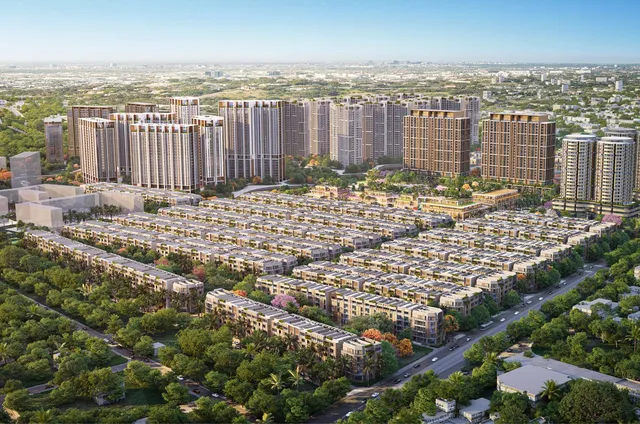 Selling now Foreign quota
 Masterise Homes · Luxury apartment & integrated township
The Global City
An Phu, Thu Duc City (former District 2), HCMC
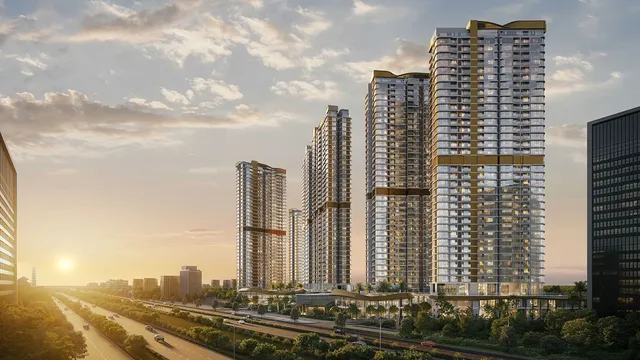 Selling now Foreign quota
 Gamuda Land · Luxury apartment
Eaton Park
An Phu, Thu Duc City, HCMC
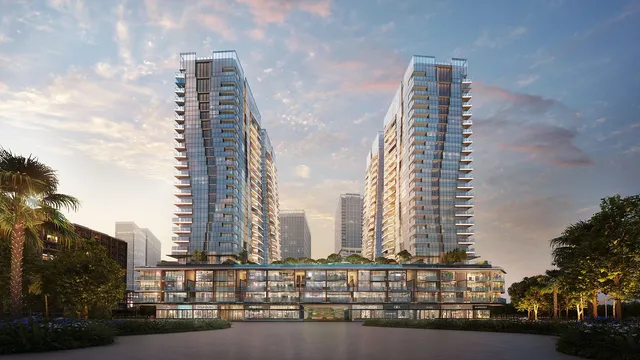 Selling now Foreign quota
 SonKim Land × Hongkong Land · Branded residences
The Metropole Thủ Thiêm
Thu Thiem, Thu Duc City, HCMC