
How to Buy an Apartment in Vietnam as a Foreigner: 7 Steps (2026)
Buying an apartment in Vietnam as a foreigner is more straightforward than most newcomers expect, but the process runs on a specific sequence of steps that differs from buying back home. This guide walks you through all seven stages, from the first reservation to receiving your ownership certificate, with the practical and financial realities you need to plan for.
This article is general information for prospective buyers, not legal or tax advice. Vietnamese property law is governed by the Law on Housing 2023, the Land Law 2024, and the Law on Real Estate Business 2023, all effective from 2025. Always confirm specifics with a licensed lawyer and a tax advisor before you commit funds.
The short answer: foreigners buy on a 7-step path ending with a pink book
Foreigners can legally buy apartments in approved commercial developments in Vietnam, and the purchase follows a clear 7-step process: reservation, deposit, signing the Sale and Purchase Agreement (SPA), progress payments, handover, and finally pink book issuance. What you actually acquire is a 50-year, once-renewable ownership right over the unit, registered in your name on a certificate commonly called the “pink book.”
Two facts shape everything that follows. First, foreign ownership is capped at 30% of the units in any single apartment building, so the project must have quota available for you. Second, foreigners generally cannot obtain a local mortgage, so you should plan to fund the purchase in cash or through financing arranged outside Vietnam. We cover both in detail below.
If you want to skip straight to checking which buildings still have foreign quota, our team can pull live availability for you. Tell us your budget and timeline and we will shortlist eligible units.
Step 1: Reservation — securing the unit you want
The process starts with a reservation, where you place a small refundable holding amount to take a specific unit off the market while paperwork is prepared. A reservation is not yet a binding purchase. It typically locks the unit, price, and payment schedule for a short window (often one to two weeks) so the developer stops offering it to other buyers.
Before you reserve, the single most important check is foreign quota. Because no more than 30% of a building’s units can be foreign-owned, you must confirm in writing that the specific unit is eligible and that quota is still available. A reputable distributor will verify this against the developer’s foreign-ownership register before taking your money. This is exactly the kind of due diligence we run on projects like The Global City and Eaton Park before recommending a unit.
Keep the reservation receipt. It records the agreed price and conditions, and it is the basis for the deposit that follows.
Step 2: Deposit — committing to the purchase
Once you decide to proceed, you sign a deposit agreement and pay a deposit that, under the Law on Real Estate Business 2023, cannot exceed 5% of the total apartment price for off-plan units. This 5% cap is a relatively new protection for buyers, designed to limit how much developers can collect before a project is legally cleared for sale.
The deposit agreement should already reference the key commercial terms: the final price, the full payment schedule, the expected handover date, and what happens if either side withdraws. Read the cancellation and penalty clauses carefully. In a standard deposit structure, if you walk away without cause you typically forfeit the deposit, while if the developer fails to deliver they usually owe it back plus a penalty.
At this stage it is worth having a Vietnamese-speaking lawyer review the documents. The cost is modest relative to the purchase, and it is the right moment to catch unfavorable terms before they harden into a signed SPA.
Step 3: Signing the SPA — your core ownership document
The Sale and Purchase Agreement (SPA) is the central legal contract that defines your ownership rights, and signing it converts your deposit into a committed purchase. For new developments, the SPA is signed directly with the developer. It should be bilingual, in Vietnamese and English, with the Vietnamese version typically governing in any dispute.
A complete SPA spells out the unit details (exact area, floor, layout, finishing specification), the total price and what is included, the full instalment schedule tied to construction milestones, the handover deadline, warranty terms, and the developer’s obligation to apply for your pink book. It should also state clearly that the unit falls within the foreign-ownership quota.
For the SPA you will need a valid passport and proof of legal entry into Vietnam (your entry stamp or visa). We detail the full document list in Step 7. The deposit you already paid is credited as the first portion of the purchase price under the schedule.
Choosing the right project before this stage matters enormously, because the SPA terms vary between developers. We help buyers compare options such as Vinhomes Grand Park and The Metropole Thu Thiem side by side. Book a consultation before you sign anything.
Step 4: Progress payments — and the mortgage reality
After the SPA, you pay the balance in instalments tied to construction progress, and this is where foreign buyers must confront the financing reality: you generally cannot get a Vietnamese mortgage. The law structures off-plan payments to protect buyers. The first instalment, including your deposit, cannot exceed 30% of the contract price. Subsequent payments must track real construction progress.
There is a hard ceiling before you take possession. For most developers, total payments before handover cannot exceed 70% of the contract value. Importantly, where the seller is a foreign-invested developer, that ceiling drops to 50% before handover. The remaining balance is paid at or near handover, with a small final portion often held back until the pink book is issued.
On financing, be realistic. In the large majority of cases, Vietnamese banks will not lend to a foreigner without legal residency, a work permit, and locally earned income, because enforcing a mortgage over foreign-owned property is legally uncertain. Some international banks operating in Vietnam (such as Standard Chartered, Shinhan, and HSBC) are more accustomed to expat files, and a few foreigners with strong local ties do secure loans at roughly 8% promotional rates rising to 9–11% afterward. But the dependable approach for most buyers is cash, or financing arranged in their home country. Plan your purchase as a cash transaction unless a lender has already confirmed your eligibility in writing.
| Payment stage | What happens | Typical share of price |
|---|---|---|
| Reservation | Hold the unit | Small, refundable |
| Deposit | Commit to buy (legal cap) | Up to 5% |
| First instalment (incl. deposit) | Sign SPA | Up to 30% |
| Progress payments | Tied to construction | Up to 70% total before handover (50% for foreign-invested developers) |
| Handover balance | Take possession | Most of remainder |
| Pink book retention | Released on title | Small final % |
Figures are statutory caps and typical market practice; your actual schedule is set in the SPA.
Step 5: Handover — taking possession of your apartment
Handover is the moment the developer delivers a completed, inspected apartment and you pay the bulk of the outstanding balance. Before accepting handover, conduct a thorough inspection (often called a snagging inspection) against the finishing specification in your SPA. Check walls, flooring, plumbing, electrical fittings, windows, and appliances, and document every defect with photos.
If you find issues, list them in the handover minutes and require the developer to remedy them. A common practice is to withhold the final small percentage of the price until defects are fixed and, ultimately, until your pink book is issued. Do not feel pressured to sign the handover acceptance until the unit matches what you contracted for.
At handover you also typically settle the apartment maintenance fund, a mandatory 2% of the apartment value that funds building upkeep, along with arrangements for the registration fee and any VAT not already included in the quoted price. Clarify with the seller exactly which costs are inside the headline price and which sit on top.
Step 6: Settling taxes and fees toward the pink book
To register ownership you settle the closing costs, principally a 0.5% registration fee, plus VAT and the 2% maintenance fund if not already included. For a new-build apartment bought from a developer, VAT of 10% may apply to the building portion of the price and is frequently quoted separately, so confirm whether the price you were given is VAT-inclusive.
Encouragingly, foreigners do not pay any extra transfer taxes compared with Vietnamese citizens; the fee structure is the same. Budget conservatively: depending on what is bundled into the advertised price, your total closing costs can land anywhere from a low single-digit percentage up to roughly 10–14% once VAT and the maintenance fund are layered on. Build this into your purchase plan from the start so there are no surprises.
Tax treatment can change and depends on your specific transaction. Confirm current rates and your obligations with a Vietnamese tax advisor before completion.
Step 7: Pink book issuance — your title in hand
The final step is issuance of the pink book, the Certificate of Land Use Rights and Ownership of Assets Attached to Land, which is your legal proof of ownership. For most off-plan purchases the developer submits the application to the local land authority on your behalf, attaching the notarized SPA, payment receipts, your passport and entry stamp, and confirmation of quota compliance. The authority verifies everything and then issues the certificate in your name.
Be patient: pink book issuance can take many months, sometimes longer than a year, depending on the project and the authority’s workload. Your name on the certificate reflects the foreign ownership term of 50 years from the date of issuance, renewable once for a further 50 years. Hold the original certificate securely, as you will need it to sell, lease formally, or pass on the property.
The documents you should expect to provide across the process are: a valid passport, proof of legal entry (entry stamp or valid visa), the signed and notarized SPA, and full payment receipts. Some projects, such as Masteri Grand View, The Privé, and Lumiere Riverside, have well-organized developer teams that handle the title application efficiently, which is one reason project selection matters.
Ready to move from research to action? Send us your shortlist and we will guide you step by step, or browse our current project listings to see what has foreign quota available today.
Conclusion
Buying an apartment in Vietnam as a foreigner is a well-defined seven-step journey: reserve the unit, pay a deposit capped at 5%, sign a bilingual SPA, make progress payments tied to construction (with the 30% first-instalment and 70%/50% pre-handover ceilings), take handover after inspection, settle taxes and fees, and receive your pink book. The two realities to plan around are foreign quota (only 30% of a building) and financing (assume cash, since local mortgages rarely reach foreigners). Get those right, use a bilingual SPA, and lean on a licensed lawyer and tax advisor, and the process is genuinely accessible. To learn more about who we are and how we work, see our introduction, or start your search on the projects page.
Frequently asked questions
Can a foreigner buy an apartment in Vietnam in 2026?
Yes. Under the Law on Housing 2023, foreign individuals with a valid passport and legal entry into Vietnam can buy apartments in approved commercial developments. Ownership is a 50-year right, renewable once, and foreign buyers are capped at 30% of the units in any single building. This is general information, not legal advice.
Can foreigners get a mortgage in Vietnam to buy property?
Generally no. Most Vietnamese banks will not lend to foreigners without local residency, a work permit, and locally earned income. A few international banks (such as Standard Chartered, Shinhan, and HSBC) may lend to well-qualified expats, but most foreign buyers should plan to pay cash or arrange financing in their home country.
What documents does a foreigner need to buy an apartment in Vietnam?
The core documents are a valid passport, proof of legal entry into Vietnam (your entry stamp or valid visa), the signed and notarized Sale and Purchase Agreement (SPA), and payment receipts. The developer typically uses these to apply for your pink book on your behalf.
What is a pink book and how long does it take to get one?
The pink book is the Certificate of Land Use Rights and Ownership of Assets Attached to Land, your legal proof of ownership. For off-plan purchases the developer usually files the application, and issuance can take from several months to over a year depending on the project and local authority.
How much deposit do I pay and how are the instalments structured?
Under the Law on Real Estate Business 2023, the deposit for an off-plan apartment is capped at 5% of the price. The first instalment including the deposit cannot exceed 30%, and total payments before handover cannot exceed 70% of the contract value (50% if the developer is foreign-invested). Final amounts are released around handover and pink book issuance.
Projects for sale now
Get the latest price list, availability & payment terms — free advice via Zalo/WhatsApp.
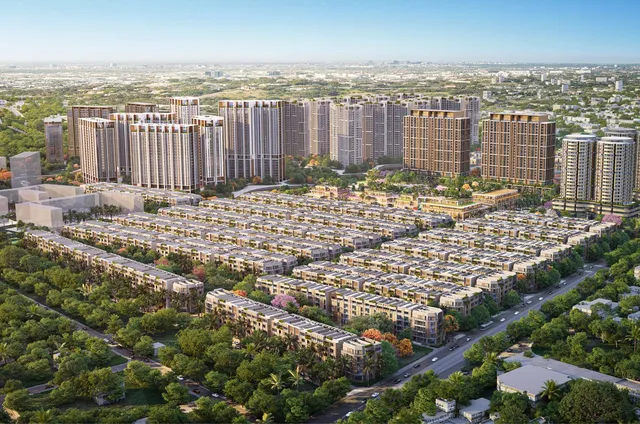 Selling now Foreign quota
 Masterise Homes · Luxury apartment & integrated township
The Global City
An Phu, Thu Duc City (former District 2), HCMC
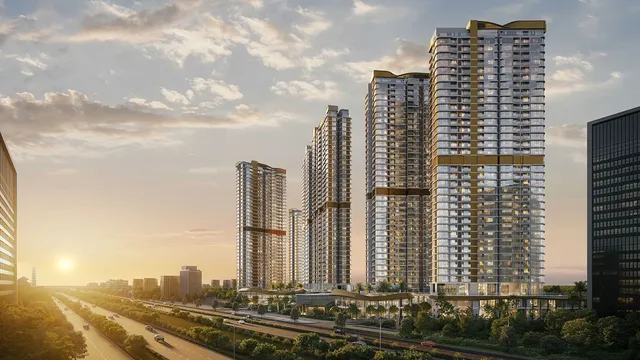 Selling now Foreign quota
 Gamuda Land · Luxury apartment
Eaton Park
An Phu, Thu Duc City, HCMC
 Selling now Foreign quota
 SonKim Land × Hongkong Land · Branded residences
The Metropole Thủ Thiêm
Thu Thiem, Thu Duc City, HCMC