
Taxes & Costs When Buying Property in Vietnam (2026)
When you buy property in Vietnam, the headline price on the brochure is not the full story. Between government fees, the building’s maintenance fund, value-added tax and notary costs, foreign buyers typically add somewhere in the range of 11–15% of the unit price when purchasing a brand-new apartment where VAT is quoted separately. This guide itemises each cost for 2026 so you can budget with confidence.
This article is general information for prospective buyers, not legal or tax advice. Rates and thresholds change, and your exact bill depends on the developer, the contract and your personal circumstances. Always confirm figures with a licensed Vietnamese notary, tax agent or lawyer before you transfer money.
The total cost of buying a new apartment in Vietnam is roughly 11–15% on top of the base price
For a primary-market (developer) apartment, most of the “extra” is VAT and the maintenance fund, which together can reach 12% before you even add the registration fee and notary. The exact percentage depends heavily on whether the developer’s advertised price already includes VAT. Here is the full picture for 2026.
| Cost item | Who pays | Rate (2026) | Notes |
|---|---|---|---|
| Value-added tax (VAT) | Buyer | 10% | Applies to new units sold by developers; usually quoted inside the headline price, but confirm in writing. Not part of resale of older units. |
| Maintenance / sinking fund | Buyer | 2% | One-time payment on the pre-VAT value; funds long-term upkeep of common areas. |
| Registration fee (“pink book”) | Buyer | 0.5% | Paid to obtain the ownership certificate. |
| Notarisation fee | Buyer (negotiable) | ~0.03–0.1% (sliding, capped) | For notarising the sale contract; small fixed-scale fee. |
| Administrative / certification charges | Buyer | Minor, fixed | Document copies, certification, issuance of the certificate. |
Add these together for a developer apartment and the “all-in” figure typically lands between 11% and 15% of the base price once VAT is counted as a separate line. If the developer’s price already bakes in VAT, your remaining out-of-pocket closing costs are far smaller (often 2–4%), because the largest single item is already paid.
If you would like a line-by-line cost estimate for a specific unit, our team can prepare one before you commit. Request a personalised cost breakdown.
VAT of 10% is the single largest cost, and it is usually already inside the developer price
For new apartments sold directly by a developer, 10% VAT applies, and reputable developers quote the price inclusive of VAT. That means the number you see on the price list is generally the number you pay for the home itself. The trap is assuming VAT is included when it is not: always ask the sales team to confirm in writing whether the quoted figure is VAT-inclusive.
Two important points for 2026:
- Vietnam’s temporary VAT reduction to 8% for many goods and services expressly excludes real estate, so residential property stays at the standard 10% rate.
- Resale apartments bought from a private individual on the secondary market are generally not subject to VAT, which is one reason resale closing costs are lower than primary-market ones.
You can see how VAT-inclusive pricing works in practice across our listed developments, from The Global City and Eaton Park to Vinhomes Grand Park.
The 2% maintenance fund is a one-time payment that protects the building’s future
Every apartment buyer contributes 2% of the unit’s pre-tax value to a maintenance (sinking) fund. This is collected once, usually at handover, and is held to pay for major future works on shared infrastructure: elevators, the facade, the roof, fire-safety systems, lobbies and landscaped areas. It is separate from the monthly management fee you pay for day-to-day services such as security and cleaning.
On a VND 5 billion apartment, the 2% maintenance fund is roughly VND 100 million. It is a meaningful sum, so factor it into your handover budget rather than treating it as a surprise at the last minute. For landed houses and villas without shared apartment infrastructure, the 2% apartment maintenance fund typically does not apply in the same way.
The 0.5% registration fee turns your purchase into legal ownership
To receive your ownership certificate, the “pink book,” you pay a registration fee of 0.5% of the property value. This is the administrative tax that records you as the legal owner in the state system. It is modest compared with VAT and the maintenance fund, but it is non-negotiable and essential: without registration, your name is not on the certificate.
Notarisation of the sale-and-purchase contract is a further small cost. Vietnam uses a capped, sliding scale, so on a typical apartment the notary fee is a fraction of a percent. Budget for minor certification and document charges on top.
Choosing a development with a clean legal file, where the developer is positioned to deliver pink books on schedule, makes this stage far smoother. You can review the credentials of projects such as The Metropole Thu Thiem and Masteri Grand View on our project directory.
When you sell, expect a 2% transfer tax on the sale price
On resale, the seller pays personal income tax (PIT) of 2% on the transfer value, not on the profit. This is a flat, final tax: 2% of what the property sells for, regardless of whether you made a gain. It is legally the seller’s obligation, although in practice the two parties sometimes negotiate who absorbs it within the deal.
An important 2026 update: the Ministry of Finance proposed in 2025 a higher 20% tax on net property gains (the difference between purchase and sale price), but withdrew that proposal and confirmed the flat 2% rate continues. The stated reason was that the 2% method is more workable given current administrative and data capacity, with any move to gain-based taxation deferred to the future. For now, budget resale costs as roughly 2–5% of the sale price once you add agency fees and transaction structuring.
Thinking ahead to exit value matters as much as entry cost. Liquid, well-located projects such as The Prive and Lumiere Riverside tend to resell more easily, which is part of the total-cost picture.
If you rent the property out, plan for combined tax of up to 10% on gross rent
An individual landlord generally pays 5% VAT plus 5% PIT, a combined 10%, on gross rental income once revenue clears the tax-free threshold. The threshold is changing in 2026, and getting this right matters:
- Under the rules in force for the earlier part of 2026, the tax-free threshold for individual business and rental revenue is VND 100 million per year. Below that, no VAT or PIT is due; above it, the combined 10% applies to gross rent.
- Under Vietnam’s revised Personal Income Tax Law, expected to take effect on 1 July 2026, that threshold rises substantially to VND 500 million per year, sharply reducing the tax burden for most small landlords.
Because the threshold and its mechanics are mid-transition, the precise treatment of your rental income depends on exactly when revenue is earned and how the implementing regulations are finalised. This is a clear case where a Vietnamese tax agent’s confirmation is worth the small fee. Tax is calculated on gross rent, not on net profit after costs, so model your yield accordingly.
If buy-to-let is your goal, we can help you compare projected net yields after tax across our portfolio. Talk to our advisory team.
A worked example: budgeting a VND 5 billion new apartment
To make the numbers concrete, assume a primary-market apartment with a base (pre-VAT) value of VND 5 billion:
| Item | Calculation | Approx. amount |
|---|---|---|
| VAT (10%) | 5,000M × 10% | 500M VND |
| Maintenance fund (2%) | 5,000M × 2% | 100M VND |
| Registration fee (0.5%) | 5,500M × 0.5% | ~27.5M VND |
| Notary + admin | Capped/fixed | a few million VND |
| Indicative total add-on | ~630M VND (~12.5%) |
These are illustrative figures to show the order of magnitude, not a quote. The exact base used for each levy (pre-VAT versus post-VAT) and the developer’s pricing convention will move the final number. Still, the example shows why the working assumption of “roughly 11–15% on top” is realistic for a new apartment where VAT is a separate line.
To understand who can legally hold these costs and certificates as a foreign buyer, and how Happy Land supports the process end to end, see our about page and full project list.
How to keep your costs predictable
Three habits protect your budget. First, get every figure in writing: VAT-inclusive or not, when the maintenance fund is due, and which party pays notary fees. Second, confirm current rates at the moment of purchase, because 2026 is a transition year for several thresholds. Third, work with a distributor who handles the paperwork transparently, so registration and certificate issuance proceed without costly delays.
When you are ready to move from research to a concrete plan, our team can walk you through the full cost stack for any specific unit and connect you with licensed notaries and tax agents. Contact Happy Land for a no-obligation cost consultation.
Conclusion
Buying property in Vietnam in 2026 carries predictable, well-defined costs: a 10% VAT (usually inside the developer price), a one-time 2% maintenance fund, a 0.5% registration fee and modest notary charges, totalling roughly 11–15% on a new apartment. On resale, a flat 2% transfer tax applies to the sale price; on rental, expect up to 10% combined VAT and PIT above the tax-free threshold, which rose to VND 500 million per year in 2026. None of these should surprise a well-prepared buyer. Confirm the live figures with a licensed professional, get everything in writing, and you can budget your purchase with confidence.
Reminder: this is general information, not legal or tax advice. Please verify all rates with a qualified Vietnamese notary, tax agent or lawyer before transacting.
Frequently asked questions
How much extra should I budget on top of the apartment price in Vietnam?
For a new developer apartment in 2026, budget roughly 11–15% on top of the base price when VAT is quoted separately. The biggest items are 10% VAT, a 2% maintenance fund and a 0.5% registration fee, plus minor notary and admin charges. If the developer's price already includes VAT, your remaining closing costs are usually only about 2–4%.
Is VAT already included in the price I see from the developer?
Usually yes for reputable developers, but you must confirm it in writing. New apartments carry 10% VAT, and most price lists are VAT-inclusive, meaning the headline number is what you pay for the home. If VAT is quoted on top, your total cost rises significantly, so always ask the sales team to state clearly whether the figure is VAT-inclusive.
What tax do I pay when I sell property in Vietnam?
Individual sellers pay a flat 2% personal income tax on the transfer (sale) price, not on the profit. It is a final tax regardless of whether you gained or lost. In 2025 the government proposed a 20% tax on net gains but withdrew it, confirming the 2% flat rate continues into 2026. This is general information, not tax advice; confirm with a tax agent.
How is rental income from my Vietnam property taxed?
An individual landlord generally pays 5% VAT plus 5% PIT, a combined 10%, on gross rent once annual revenue exceeds the tax-free threshold. That tax-free threshold rose to VND 500 million per year in 2026 under the revised VAT/PIT laws (up from VND 100 million previously). Because the rules are mid-transition, confirm your exact position with a Vietnamese tax agent.
What is the 2% maintenance fund and is it refundable?
The maintenance (sinking) fund is a one-time payment of 2% of the apartment's pre-tax value, collected at handover to pay for future major works on shared areas such as elevators, the facade and fire-safety systems. It is not a refundable deposit; it is pooled for the building's long-term upkeep and is separate from your monthly management fee.
Projects for sale now
Get the latest price list, availability & payment terms — free advice via Zalo/WhatsApp.
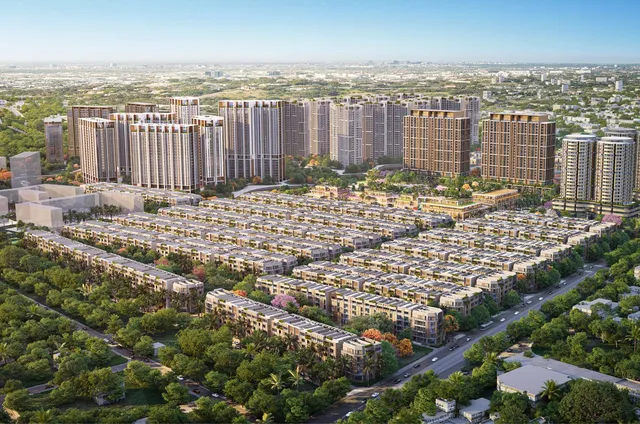 Selling now Foreign quota
 Masterise Homes · Luxury apartment & integrated township
The Global City
An Phu, Thu Duc City (former District 2), HCMC
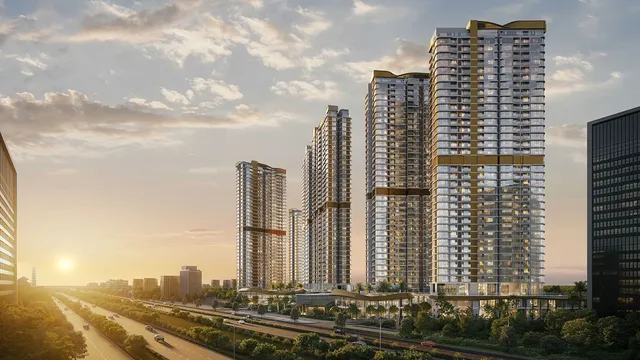 Selling now Foreign quota
 Gamuda Land · Luxury apartment
Eaton Park
An Phu, Thu Duc City, HCMC
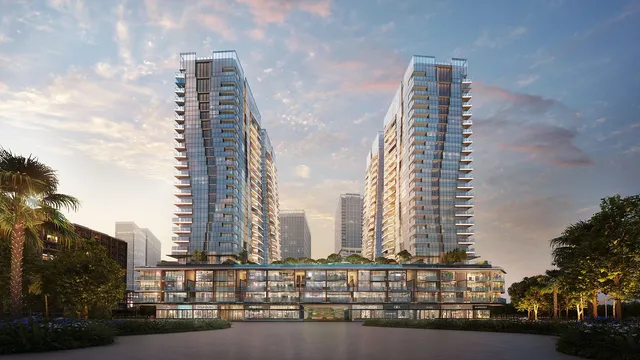 Selling now Foreign quota
 SonKim Land × Hongkong Land · Branded residences
The Metropole Thủ Thiêm
Thu Thiem, Thu Duc City, HCMC