
Off-Plan vs Completed Property in Vietnam: 2026 Buyer Guide
Choosing between an off-plan unit (sold before or during construction) and a completed property (finished, often resale) is the first big decision most foreign buyers face in Vietnam. The two paths differ sharply in price, payment timing, paperwork and risk — and the right answer depends on whether you are an investor chasing capital growth or an end-user who wants keys and certainty now. This guide lays out both sides honestly, with the 2026 rules that actually govern these transactions.
This article is general information, not legal or tax advice. Laws, fees and market figures change; verify your specific situation with a licensed Vietnamese lawyer and a tax advisor before signing anything.
Off-plan and completed property mean very different things in Vietnam
The core distinction is the construction stage at the moment you buy, and that single fact cascades into price, payment, financing and risk. Off-plan (“nhà ở hình thành trong tương lai”, literally “housing formed in the future”) is bought directly from the developer on the primary market, often years before handover. You pay in installments tied to construction milestones and receive a Sale and Purchase Agreement (SPA), with the title following much later.
A completed property is finished and habitable. It can still be primary stock (a developer selling remaining units in a finished building) or, more commonly for foreigners, secondary/resale — buying from a previous owner who already holds, or is entitled to, the ownership certificate. You typically pay close to the full price up front and can inspect the actual unit, the building and the neighbourhood before committing.
Both routes give foreign individuals the same underlying right: a 50-year leasehold, renewable once, evidenced by the Pink Book (Sổ Hồng, the Certificate of Land Use Rights and Housing Ownership). Foreigners cannot own land outright — the Pink Book confirms ownership of the unit and a land-use right, not freehold land. The same caps apply either way: 30% of units per condominium building and roughly 250 landed houses per ward-equivalent area may be foreign-owned.
If you are still mapping the legal basics, start with our guide to the buying process for foreigners and the broader foreigner guide.
Off-plan: lower entry price and staged payments, but real timing risk
Off-plan’s biggest draws are a lower launch price and a payment schedule that lets you fund the purchase over the construction period rather than all at once. Developers price early phases below the expected completed value to raise capital, so disciplined buyers can capture appreciation between launch and handover. In a rising HCMC primary market — average primary prices were reported around USD 7,000/m² in early 2026, with central apartments up roughly 8% year-on-year nominally — that gap can be meaningful.
The 2026 payment rules genuinely favour the buyer. Under the Law on Real Estate Business 2023 (effective 1 August 2024), for off-plan sales:
- The deposit is capped at 5% of the contract price (down from the open-ended deposits of the old regime).
- The first installment, including the deposit, must not exceed 30% of the contract price.
- For foreign-invested and domestic developers alike, total payments before handover cannot exceed 70% of the contract value; for lease-purchase the pre-handover cap is 50%.
- You may withhold the final 5% until the Pink Book is issued — a powerful lever that keeps the developer accountable for delivering title.
The honest downsides:
- Delivery risk. Construction can slip, and Vietnam has a real history of stalled projects. Your money is committed for years before you have a usable asset.
- The Pink Book wait. Many foreign owners report waiting 2–5 years after handover for the certificate to issue. During that limbo you hold only the SPA — a contractual right, not a registered title.
- Spec vs reality. You are buying off a brochure and a show unit; the finished product can differ.
- Quota timing. If the building’s 30% foreign cap fills before your title registers, that is a problem you want headed off in the contract.
New supply was tight in early 2026 (core HCMC new launches fell sharply quarter-on-quarter), which can mean less choice but also firmer pricing on quality launches. Browse current primary opportunities on our projects page, including The Global City and Eaton Park.
When you are weighing a specific off-plan launch, our team can pull the developer’s approval documents and current foreign-quota status before you commit — contact Happy Land for a project-by-project check.
Completed property: certainty and rental income now, at a higher price
A completed property removes most timing uncertainty — you see exactly what you are buying, can rent it immediately, and the title is either in hand or far closer than off-plan. For end-users and income-focused investors, that certainty is often worth paying for.
Advantages:
- What you see is what you get — the actual unit, finishes, views, noise, neighbours and building management.
- Immediate use or rental yield. No multi-year wait before the asset produces income or houses your family.
- Title clarity. On a resale, the seller may already hold the Pink Book; due diligence is more about verifying an existing certificate than betting on a future one.
- No construction risk. The building exists.
Trade-offs:
- Higher price. You pay completed-market value, not a launch discount, and you forgo the appreciation off-plan buyers may have captured.
- Large up-front outlay. Expect to fund most or all of the price near signing rather than in installments.
- Resale quota friction. When you buy resale from a foreign owner, you are taking a slot within the building’s 30% cap — confirm the unit is one of the foreign-eligible units. Buying a foreign-eligible unit from a Vietnamese seller is generally cleaner on quota.
- Ageing and renovation. Older completed stock may need updating and carries the building’s existing wear.
Established, largely completed communities such as Vinhomes Grand Park and landmark Thu Thiem addresses like The Metropole Thu Thiem and Masteri Grand View illustrate the completed end of the spectrum.
Side-by-side: how the two stack up for a foreign buyer
Use this table as a quick filter, then dig into the items that matter most for your goal.
| Factor | Off-plan (primary) | Completed (often resale) |
|---|---|---|
| Entry price | Lower at launch | Higher (market value) |
| Payment | Staged installments; ≤30% first, ≤70% before handover, 5% withheld for Pink Book | Mostly/all up front |
| Title (Pink Book) | SPA now; certificate often 2–5 yrs after handover | In hand or near-term |
| Capital growth potential | Higher (launch-to-handover gap) | Moderate |
| Rental income | Starts only after handover | Immediate |
| Inspect before buying | No (show unit only) | Yes (actual unit) |
| Main risk | Delivery delay, developer reliability, title lag | Overpaying, older stock, resale quota slot |
| Foreign-quota exposure | Confirm cap not full before title registers | Confirm unit is foreign-eligible |
| Buyer protection | Bank guarantee available (waivable), 5% retention | Standard transfer; verify existing title |
Due diligence is non-negotiable on either path — but the checklist differs
The single best protection in Vietnam’s market is documentary due diligence by an independent local lawyer before any money moves. Pressure to “decide today” is the clearest red flag; legitimate developers and sellers let you verify everything first.
For off-plan, insist on seeing the developer’s investment registration certificate, construction permit, land-use right certificate for the project, and the “eligibility for sale” notice confirming the project may sell off-plan housing. Get written confirmation (not verbal) that the building’s 30% foreign quota has room for your unit. Check whether a bank guarantee of the developer’s obligations is offered — under the 2023 law it is available but can be waived in writing, so decide deliberately. Beware any deal that hands you only a “50-year lease contract” with the developer instead of a route to a Pink Book; that is a private contract, not registered title.
For completed/resale, the focus shifts to the existing Pink Book (or the clear paperwork trail to it), confirming the seller’s identity and authority, that the unit is foreign-eligible, and that no mortgage or dispute encumbers it.
A practical point on foreign-buyer status: you generally must enter Vietnam legally (a valid entry stamp is the baseline), and payments for property must run through Vietnamese bank accounts — which also matters later when you want to send proceeds home. Read our taxes and costs guide and the repatriation of funds guide before you transact.
If you would like a second set of eyes on a contract or a developer’s track record, reach out to our advisory team — we will tell you honestly where the gaps are.
Costs and taxes are similar on both paths — budget beyond the headline price
Whichever route you choose, build a buffer for fees and taxes on top of the purchase price. As a general 2026 reference (rates change; confirm with a tax advisor):
- VAT ~10% typically applies to commercial housing and is usually baked into the developer’s quoted price.
- Registration (“title”) fee ~0.5% of value when registering ownership.
- Maintenance/sinking fund ~2% of the unit price for condominiums.
- Transfer personal income tax 2% of the transfer price when you later sell (paid by the seller).
- Rental income tax: the amended Personal Income Tax Law raised the tax-free threshold for individual landlords to VND 500 million/year of rental revenue (in effect in 2026); above that, a combined ~10% (split VAT/PIT) applies on gross rent. Foreigners are taxed on the same basis as locals.
These figures are indicative reference ranges, not a quote, and never include fabricated exact totals — your actual costs depend on the specific unit, project and timing.
Which one suits you? Match the choice to your goal
Pick off-plan if you are an investor comfortable with timing risk and a multi-year horizon; pick completed if you want certainty, immediate use or rental income, and minimal title lag.
Off-plan tends to suit buyers who: want the lowest entry price and staged cashflow, believe in the location’s growth, can tolerate a 2–5 year title wait, and will do rigorous developer due diligence. Completed property tends to suit buyers who: want to live in or rent the unit now, need title certainty, prefer to inspect before paying, and are willing to pay full market value for that peace of mind.
Many seasoned investors do both — anchoring with a completed, income-producing unit while taking a measured off-plan position in a reputable launch for growth. Whatever the mix, the deciding factor should be the developer’s track record and the documentary proof behind the project, not the marketing.
Ready to compare specific buildings and quotas side by side? Explore our curated projects, learn more about how we work, or book a no-pressure consultation and we will map off-plan and completed options to your goal and budget.
Conclusion
There is no universally “better” choice between off-plan and completed property in Vietnam — only the better fit for your timeline, risk appetite and purpose. Off-plan rewards patient investors with lower entry prices, friendly 2026 payment rules and the 5% title-retention lever, at the cost of delivery and Pink Book timing risk. Completed property costs more but delivers certainty, inspection and immediate income. In both cases, independent legal due diligence on the title, approvals and foreign quota is what actually protects your money. Get those fundamentals right and either path can be a sound entry into one of Asia’s most dynamic property markets.
Frequently asked questions
Is off-plan or completed property cheaper for foreign buyers in Vietnam?
Off-plan is usually cheaper at the point of purchase, because developers price early phases below the expected completed value to raise construction capital. Completed property costs market value but lets you inspect the unit and start using or renting it immediately. The 'cheaper' option also depends on appreciation between launch and handover, which is never guaranteed. This is general information, not financial advice.
How does the payment schedule work for off-plan property in Vietnam in 2026?
Under the Law on Real Estate Business 2023, the deposit is capped at 5% of the contract price, the first installment (including deposit) cannot exceed 30%, and total payments before handover are capped at 70% (50% for lease-purchase). You can also withhold the final 5% until the Pink Book ownership certificate is issued. Confirm the exact schedule in your specific contract.
When do foreign buyers receive the Pink Book on an off-plan purchase?
For off-plan, you receive a Sale and Purchase Agreement at signing, but the Pink Book (ownership certificate) is typically issued well after handover — many foreign owners report waiting two to five years. A developer with a track record of long title delays is a red flag. On completed resale property, the seller may already hold the Pink Book, shortening the wait considerably.
What are the main risks of buying off-plan in Vietnam?
The biggest risks are construction delay or non-completion, developer reliability, and a long wait for the Pink Book during which you hold only a contractual right rather than registered title. There is also quota risk if the building's 30% foreign-ownership cap fills before your title registers. Independent legal due diligence on the developer's permits and approvals is essential before you pay anything.
Do off-plan and completed properties have different taxes for foreigners?
The core taxes are broadly the same: around 10% VAT (usually in the developer's price), a ~0.5% registration fee, a ~2% condominium maintenance fund, and 2% personal income tax on transfer when you sell. As of 2026, individual rental income is tax-free up to VND 500 million per year, with roughly 10% combined tax above that. These are reference figures, not tax advice — confirm with a qualified advisor.
Projects for sale now
Get the latest price list, availability & payment terms — free advice via Zalo/WhatsApp.
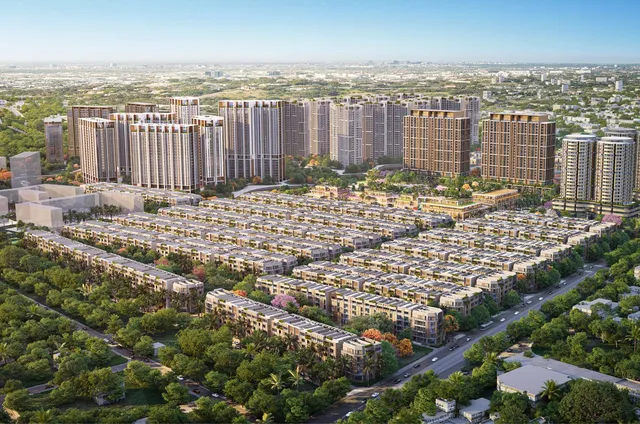 Selling now Foreign quota
 Masterise Homes · Luxury apartment & integrated township
The Global City
An Phu, Thu Duc City (former District 2), HCMC
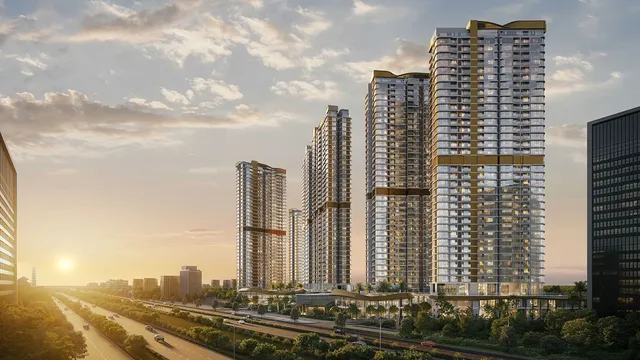 Selling now Foreign quota
 Gamuda Land · Luxury apartment
Eaton Park
An Phu, Thu Duc City, HCMC
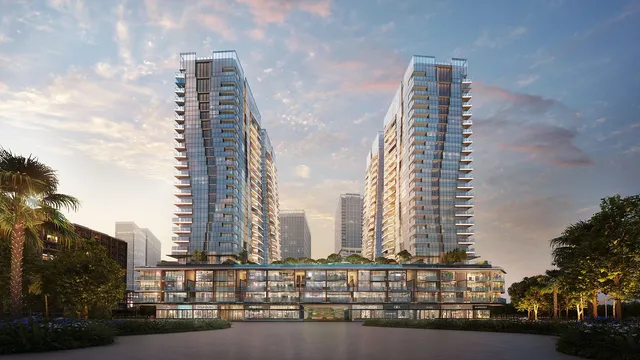 Selling now Foreign quota
 SonKim Land × Hongkong Land · Branded residences
The Metropole Thủ Thiêm
Thu Thiem, Thu Duc City, HCMC