
Overseas Vietnamese (Việt Kiều) Buying Property in Vietnam 2026
If you are an overseas Vietnamese (Việt Kiều) thinking about buying an apartment, a townhouse, or land back home, 2026 is a genuinely different landscape from a few years ago. Under the Land Law 2024 (effective 1 January 2025) and the Housing Law 2023 (effective 1 August 2024), people who still hold Vietnamese nationality — and, to a large degree, people of Vietnamese origin who lost it — can own housing far more broadly than ordinary foreigners. Crucially, you are generally not bound by the 30% per-building quota or the 50-year ownership term that restrict foreign buyers.
This guide explains the rules group by group, what proof you need, what each group can actually buy, and the nominee trap that still catches too many in the diaspora. This is general information, not legal or tax advice — always confirm your specific case with a licensed Vietnamese lawyer.
The three groups — and why the difference matters
Vietnamese property law does not treat “anyone with a Vietnamese surname” as one block. There are three distinct legal statuses, and your rights depend entirely on which one you fall into:
- Vietnamese citizen residing abroad — you still hold Vietnamese nationality (a valid or renewable Vietnamese passport, even if you also hold a foreign passport). The Land Law 2024 treats you, for land purposes, essentially the same as a Vietnamese living in the country.
- Person of Vietnamese origin (no current nationality) — you, a parent, or a grandparent once held Vietnamese nationality, but you have since naturalized elsewhere and given it up. You gained substantially expanded rights in 2025, but they are not 100% identical to a citizen’s.
- Foreigner with no Vietnamese origin — a non-Vietnamese individual. This group remains capped by quotas and a 50-year term, and is the subject of Happy Land’s foreigner-focused guides linked below.
Getting your classification right is the first and most important step, because it changes what you can buy, whether you face quotas, and what documents you must produce.
Group 1 — Vietnamese citizens living abroad: near-domestic rights
This is the most powerful position. The Land Law 2024 (notably Article 4, which defines land users) brings Vietnamese citizens residing abroad squarely within the category of land users with full rights and obligations — on par with citizens living in Vietnam.
In practical terms, if you still hold Vietnamese nationality you can:
- Receive residential land-use rights directly, including a bare land plot to build on or a landed townhouse with its own sổ hồng (pink book).
- Buy a house or apartment inside or outside a commercial housing project — you are not confined to “foreigner-eligible” projects.
- Own an unlimited number of properties, just like a domestic citizen.
- Hold ownership indefinitely — there is no 50-year term and no renewal anxiety.
- Be entirely outside the 30% per-building / per-project foreign quota.
- Transfer, gift, mortgage, lease, contribute as capital, and pass property by inheritance.
The trade-off is documentary: you must be able to prove you genuinely still hold Vietnamese nationality, and you must have entered the country lawfully at the time of signing. Holding a foreign passport in addition to your Vietnamese one does not strip these rights, as long as the Vietnamese nationality is intact.
Group 2 — People of Vietnamese origin (lost nationality): broad, but with one real limit
If you naturalized abroad and gave up Vietnamese nationality, you are a “person of Vietnamese origin residing abroad.” The 2025 reforms were generous to you. You can now:
- Buy houses — both apartments and landed houses — together with the attached residential land-use rights.
- Buy in any housing development project, not only foreigner-designated ones.
- Inherit residential land-use rights and the house on the same plot.
- Own, sell, mortgage and gift those properties with no 30% quota and no 50-year cap — a major advantage over foreigners.
The honest limit: most legal analysis of the Land Law 2024 holds that a person of Vietnamese origin without current nationality generally cannot acquire a vacant, bare land plot purely to build on the way a full citizen can. Your secure route is to acquire a house plus its land-use rights, or a unit/house inside an approved project, rather than raw land. If owning a bare plot matters to you, the cleaner long-term path is often to reacquire Vietnamese nationality (a separate process under the Law on Vietnamese Nationality) so you move into Group 1.
Group 3 — Foreigners: the quota and the 50-year clock
For contrast, a non-Vietnamese-origin foreigner buying under the Housing Law 2023 faces real ceilings:
- No more than 30% of the apartments in any single residential building.
- For landed houses, a capped share per ward-level area (commonly framed as up to 10% of a project, subject to an absolute house-count limit).
- Ownership for up to 50 years, with one renewal possible — recorded on the certificate.
- Purchase limited to commercial housing projects; no bare land plots, and nothing in national-defense or security zones.
Happy Land covers this group in depth — see Can foreigners own land in Vietnam?, the Buying process for foreigners, the Pink book (sổ hồng) for foreigners, and Inheritance & gifting property for foreigners. The point for Việt Kiều readers: if you can establish citizenship or origin, you escape most of these limits.
Comparison table: what each group can do in 2026
| Right / Restriction | Vietnamese citizen abroad (Group 1) | Vietnamese origin, no nationality (Group 2) | Foreigner, no origin (Group 3) |
|---|---|---|---|
| Buy apartment in a project | Yes | Yes | Yes (within 30% cap) |
| Buy landed house in a project | Yes | Yes | Limited (per-ward cap) |
| Buy house + attached land-use rights outside projects | Yes | Generally yes (house + LUR) | No |
| Acquire bare land plot to build | Yes | Generally no | No |
| 30% per-building foreign quota applies? | No | No | Yes |
| 50-year ownership term applies? | No (indefinite) | No (indefinite) | Yes (renewable once) |
| Number of properties | Unlimited | Like citizens (broad) | Capped by quota |
| Inherit residential land-use rights | Yes | Yes | Restricted to value/term |
| Mortgage, gift, lease, capital contribution | Yes | Yes | Restricted |
| Key proof needed | Valid Vietnamese nationality + entry stamp | Proof of Vietnamese origin + entry stamp | Passport + valid entry |
Indicative summary; exact treatment of edge cases (bare land, inheritance valuation) can vary by project and locality. Confirm with a licensed Vietnamese lawyer.
Proving you qualify: nationality and “Vietnamese origin”
Eligibility lives or dies on documents. Two things must be shown.
1. Your status (nationality or origin).
- Current citizens (Group 1): a valid Vietnamese passport, Vietnamese ID/CCCD, or another document evidencing current Vietnamese nationality.
- Vietnamese-origin (Group 2): documents showing you, a parent, or a grandparent held Vietnamese nationality. Accepted evidence commonly includes an old Vietnamese passport (even expired), a pre-1975 birth certificate or ID card, a family household registration book, a certificate of Vietnamese nationality, or a citizen-registration record. Where you claim origin through a parent or grandparent, you also supply their nationality proof plus the birth/marriage certificates that connect you to them.
If your original papers are lost — common across the diaspora — you can apply for a formal Certificate / Confirmation of Vietnamese Origin. Under Decree 16/2020/NĐ-CP, this is issued by a provincial Department of Justice, a Vietnamese diplomatic mission abroad, or the State Committee for Overseas Vietnamese. Lineage-based nationality questions are governed by the Law on Vietnamese Nationality 2008 (amended 2014).
2. Lawful entry. Both qualifying groups must have entered Vietnam legally, evidenced by a valid passport/travel document with a Vietnamese entry stamp at the time of signing the notarized contract (per the implementing decree, Decree 95/2024/NĐ-CP). You do not need a residence card, but you do need to be — or have lawfully been — in the country to transact.
3. Clean money trail. Remit purchase funds through a licensed Vietnamese bank, keep proof of the source of funds, and retain the transfer records. A transparent money trail protects your title and your future right to repatriate sale proceeds.
The nominee trap — the diaspora’s most expensive mistake
For years, many Việt Kiều bought land “đứng tên hộ” — registered in a sibling’s, cousin’s, or friend’s name — because their own rights were unclear. Stop doing this. A nominee arrangement is not recognized or protected by Vietnamese law. On paper, the property belongs to whoever is on the pink book. If that person sells it, mortgages it, divorces, dies (triggering their heirs’ claims), or simply refuses to transfer, you can be left with nothing enforceable — side letters and verbal promises rarely survive a Vietnamese court.
Because the 2025 reforms now let most qualifying overseas Vietnamese buy in their own name, the original reason for nominee deals has largely evaporated. Verify your eligibility first, then buy in your own name. If a broker tells you the only way is to use a relative’s name, treat that as a red flag and get independent legal advice.
A practical checklist before you commit
| Step | What to do |
|---|---|
| 1. Classify yourself | Confirm whether you are Group 1 (citizen), Group 2 (origin), or a foreigner. This drives everything. |
| 2. Gather proof | Locate passport / pre-1975 docs / household book; if missing, start the Certificate of Vietnamese Origin process early — it takes time. |
| 3. Match the asset to your rights | Group 2 buyers: prioritize house + land-use rights or in-project units, not bare plots. |
| 4. Verify the project & title | Check the developer’s legal approvals and that pink books are actually issued to buyers. |
| 5. Plan your entry | Ensure you will be in Vietnam with a valid entry stamp to sign. |
| 6. Bank the funds | Remit via a licensed bank; keep source-of-funds proof. |
| 7. Use a notarized contract in your own name | Never a nominee. Engage an independent Vietnamese lawyer to review. |
| 8. Register the pink book | Ensure the certificate is issued in your name and reflects your status. |
How Happy Land helps Việt Kiều buyers
We work primarily with overseas and foreign buyers on the primary market, so we are used to the origin-verification, entry-timing, and remittance questions that come with a Việt Kiều purchase. We sell at the developer’s price with live inventory, help you target projects that match your specific legal status, and coordinate with independent lawyers and notaries so your name — not a nominee’s — ends up on the pink book.
This article is general information only and is not legal or tax advice; Vietnamese rules and figures are indicative and change, so please confirm your situation with a licensed Vietnamese lawyer before committing funds.
Ready to look at what you can actually buy in 2026? Message Happy Land on Zalo or WhatsApp for a quick, honest eligibility check, and browse our project listings to see current developer-price inventory.
Frequently asked questions
Can a Việt Kiều who still holds a Vietnamese passport buy land plots, not just apartments?
Yes. Under the Land Law 2024 (effective 1 January 2025), an overseas Vietnamese who still holds Vietnamese nationality is treated like a domestic citizen. That means you can receive residential land-use rights directly — including a bare land plot or a landed townhouse — buy houses outside commercial projects, and you are not capped by the 30% per-building quota or the 50-year ownership term that apply to foreigners. You will need a valid Vietnamese passport and a current entry stamp at signing, and funds should be remitted through a licensed bank.
I lost my Vietnamese nationality decades ago — what can I buy now?
As a person of Vietnamese origin without current nationality, your rights are much broader than a foreigner's but narrower than a current citizen's. You can buy houses (apartments and landed houses) together with the attached residential land-use rights, buy in any housing project, and inherit and own such property — with no 30% quota and no 50-year term. The main limit is that you generally cannot acquire bare, vacant land plots purely to build on, the way a citizen can. You must prove Vietnamese origin and hold a valid entry stamp.
How do I prove 'Vietnamese origin' if I have no documents left?
Acceptable proof includes an old Vietnamese passport (even expired), a pre-1975 ID card or birth certificate, a family household registration book, or a certificate of Vietnamese nationality. If you lost yours, you can prove origin through a parent or grandparent's nationality (their birth certificate plus your birth certificate linking you to them). Where direct documents are missing, a Certificate/Confirmation of Vietnamese Origin can be issued by a provincial Department of Justice, a Vietnamese embassy/consulate abroad, or the State Committee for Overseas Vietnamese under Decree 16/2020/NĐ-CP. A Vietnamese lawyer can run the origin verification before you commit to a purchase.
Do I need to be physically in Vietnam to buy?
For the transaction, yes — eligibility for both current citizens abroad and people of Vietnamese origin is tied to lawful entry, evidenced by a valid passport or travel document with a Vietnamese entry stamp at the time of signing (Decree 95/2024/NĐ-CP). You do not need a residence card, but you do need to have entered the country legally. Many buyers complete due diligence and reserve remotely, then travel in to sign the notarized sale and purchase agreement.
Is it safe to buy land in a relative's name (nominee) because it is cheaper or simpler?
No — this is the single biggest risk for the Việt Kiều community. A nominee (đứng tên hộ) arrangement is not protected by Vietnamese law: the legal owner on the pink book is your relative, and if they sell, mortgage, divorce, die, or simply refuse to transfer, you may have no enforceable claim. Since 2025 the rules let qualifying overseas Vietnamese buy in their own name in most cases, so there is far less reason to use a nominee. Buy in your own name, verify your eligibility first, and get independent legal advice.
Will buying property give me a path to Vietnamese residency or nationality?
No. Owning property in Vietnam does not by itself grant residency, a visa, or nationality. Residency, long-term visas, and reacquisition of Vietnamese nationality are governed by separate immigration and nationality rules (the Law on Vietnamese Nationality 2008, amended 2014). Some overseas Vietnamese pursue reacquiring nationality to gain full citizen-level land rights, but that is a distinct legal process — speak to a licensed Vietnamese lawyer about whether it fits your situation.
Projects for sale now
Get the latest price list, availability & payment terms — free advice via Zalo/WhatsApp.
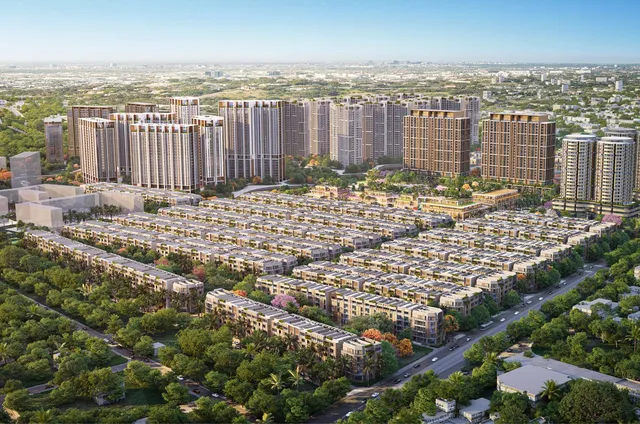 Selling now Foreign quota
 Masterise Homes · Luxury apartment & integrated township
The Global City
An Phu, Thu Duc City (former District 2), HCMC
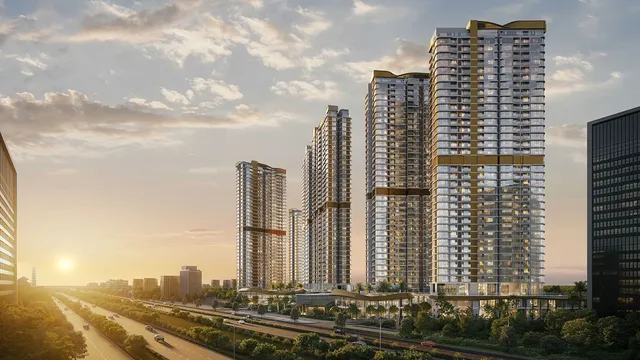 Selling now Foreign quota
 Gamuda Land · Luxury apartment
Eaton Park
An Phu, Thu Duc City, HCMC
 Selling now Foreign quota
 SonKim Land × Hongkong Land · Branded residences
The Metropole Thủ Thiêm
Thu Thiem, Thu Duc City, HCMC