
Apartment Management Fees & the 2% Maintenance Fund in Vietnam (Foreign Owners, 2026)
When foreign buyers evaluate a Vietnamese apartment, almost all the attention goes to the purchase price, the legal pink book, and the foreign-ownership quota. Far fewer people ask the more boring question that decides whether the investment actually performs: what does it cost to own and hold this unit, month after month, after I have paid for it?
This guide covers the two charges that surprise foreign owners most — the recurring monthly management/service fee (charged per square metre) and the one-off 2% maintenance fund (phí bảo trì) paid at handover — plus parking, how a building’s fees are decided and disputed, and how to fold all of it into a realistic rental yield. Figures are indicative for 2026 and vary by building; this is general information, not legal or financial advice.
The two fees foreigners confuse most
Vietnamese apartment ownership has two completely separate building-level charges, and conflating them is the single most common mistake we see.
| Monthly management / service fee | 2% maintenance fund (phí bảo trì) | |
|---|---|---|
| Frequency | Recurring, monthly | One-off, paid at/before handover |
| Basis | Per m² of your apartment area | 2% of the pre-VAT selling price |
| Purpose | Day-to-day operation of common areas | Major repairs of common structural areas |
| Who collects | Management company, on behalf of owners | Developer, then handed to the Management Board |
| Governed by | Apartment Building Conference resolution | Housing Law 2023 (maintenance-fund section) |
The service fee keeps the lights on this month. The maintenance fund pays to replace the lift in year twelve. They are different pots of money, with different rules and different decision-makers, and the law (the Law on Housing 2023, No. 27/2023/QH15, effective 1 January 2025) treats them separately.
The monthly management / service fee
This is the fee you pay every month for the operation of everything outside your own front door: 24/7 security, cleaning of lobbies and corridors, elevator operation and routine servicing, common-area lighting and electricity, landscaping, pest control, garbage collection, and building administration. In premium buildings it also funds the swimming pool, gym, and concierge — though some developments bill those amenities, or paid parking, on top.
The fee is quoted per square metre of your apartment per month, then multiplied by your unit’s area. So a higher service rate hits a 100 m² three-bedroom far harder than a 45 m² studio.
Indicative 2026 ranges (these move, and the exact rate is set per building):
| Segment | Typical service fee (VND/m²/month) | Roughly (USD/m²/month) | What you usually get |
|---|---|---|---|
| Budget / social-near | 5,000 – 9,000 | ~$0.20 – $0.35 | Basic security, cleaning, lift, no resort amenities |
| Mid-range | 10,000 – 16,000 | ~$0.40 – $0.65 | Security, cleaning, lifts, gardens, sometimes a pool/gym |
| High-end / branded | 17,000 – 30,000+ | ~$0.70 – $1.20+ | Full amenities, concierge, premium upkeep, generous staffing |
In Ho Chi Minh City, mid-range buildings commonly land around VND 12,000–18,000/m²/month; established luxury towers in District 1 or Thao Dien can exceed VND 25,000–30,000/m²/month. Hanoi publishes a formal price framework — for buildings with elevators the official band runs from a floor near VND 1,200/m²/month up to roughly VND 16,500/m²/month, with high-end amenity buildings commonly quoted at VND 19,000–24,000/m²/month. These provincial brackets matter because they act as a legal backstop when owners and a management company cannot agree (more on that below).
A worked example for a mid-range 70 m² unit at VND 15,000/m²/month: 70 × 15,000 = VND 1,050,000/month (~$42), or about VND 12.6 million (~$500) a year — before parking, before utilities, before any letting agent. That is real money against your yield.
The one-off 2% maintenance fund (phí bảo trì)
Separately from the monthly fee, every buyer of an apartment in a multi-owner building contributes 2% of the apartment’s selling price (before VAT) into the building’s maintenance fund. You pay this once, at or before handover, and it is usually collected by the developer alongside the final payment.
What it funds: major repairs and replacement of the common areas — the structure, the lift systems, the façade, the fire-safety and water systems, the roof, the shared technical equipment. It is the building’s long-term sinking fund. It does not pay for routine cleaning or security (that is the monthly fee), and it is not a pot the management company can dip into for operating shortfalls.
A worked example: an apartment with a pre-VAT contract price of VND 3.0 billion carries a 2% maintenance contribution of VND 60,000,000 (~$2,350), paid once. On a VND 5.0 billion unit it is VND 100,000,000 (~$3,900). Foreign and Vietnamese buyers pay this identically — there is no foreigner premium on it.
What the Housing Law 2023 changed
The 2023 law tightened control of this fund precisely because mismanagement of it had become a notorious source of disputes. The key points an owner should know:
- The developer must open a dedicated bank account to hold the maintenance fund for a multi-owner building.
- The developer may not use the fund for any other purpose before transferring it to the Building Management Board.
- Once the Management Board is elected, the developer must hand the fund over to it.
- If the developer refuses, the board can send a written demand to the district-level People’s Committee; if the developer still fails to comply, the People’s Committee can issue an enforcement decision and organise collection of the fund to hand it to the board.
- Revenue from exploiting common areas (advertising in lifts and lobbies, certain parking income, shared facilities) is generally directed into the fund as well.
The practical takeaway for a foreign buyer: ask, before you sign, whether the building’s maintenance fund has been properly accounted for and — in a completed building — whether it has actually been handed to a functioning Management Board. A history of fund disputes is a yellow flag.
Parking and utilities are not in the service fee
Two costs that catch out new owners because they sit outside the monthly service fee:
- Parking. The law is explicit that management/operation service fees do not include parking. Car and motorbike parking are billed separately, and the rates fall under price rules set by provincial People’s Committees. Expect roughly VND 80,000–150,000/month for a motorbike and VND 1.0–2.5 million/month for a car space, depending on the building and city. In some HCMC projects, car parking spaces have even been offered for sale at tens to hundreds of millions of VND — a contentious practice the authorities and Management Boards have pushed back on, so read any parking-purchase offer carefully.
- Utilities. Your in-apartment electricity, water, gas, internet, and cable are metered to you and billed separately. None of this is in the service fee.
Who decides the fees — and how disputes work
For a foreign owner who will not attend meetings in person, understanding the governance is worth more than memorising rates, because it tells you who can change your costs.
- The Apartment Building Conference (the general meeting of all owners) is the top decision-maker. Under the Housing Law 2023 it has authority over the important questions of running the building — including approving the management/operation service fee. A fee is meant to be set by consensus of owners, not imposed by the operator.
- The Building Management Board (Ban quản trị) is the elected committee that represents owners, negotiates the management contract, and — critically — receives and oversees the 2% maintenance fund.
- The management company operates the building under a contract whose terms the conference has approved.
- The provincial People’s Committee publishes a price bracket that acts as a fallback: if owners and the operator genuinely cannot agree on a fee, the bracket applies.
Disputes over fee increases are among the most common conflicts in Vietnamese buildings. The pattern to remember: a management company cannot lawfully raise the service fee unilaterally — an increase needs a valid conference resolution. If it tries, owners can take it back to the conference, complain to the local authority, or go to court. But the flip side protects the building: once a fee is properly approved and written into the contract, an individual owner who disagrees is still bound, and refusing to pay can be treated as a breach. Practically, that means your protection is participation — directly or through a proxy/manager who votes for you.
If you own from overseas, this is exactly where a local representative earns their keep; our guide on managing your Vietnam property from abroad covers giving someone authority to receive notices and vote at the conference.
Putting it together: a holding-cost example
Here is a realistic first-year and steady-state picture for three segments. All figures are indicative 2026 estimates and will vary by building and exchange rate.
| Cost item | Budget 50 m² (VND 1.8bn) | Mid-range 70 m² (VND 3.0bn) | Luxury 100 m² (VND 7.0bn) |
|---|---|---|---|
| Service fee rate | 8,000/m²/mo | 15,000/m²/mo | 25,000/m²/mo |
| Monthly service fee | ~400,000 | ~1,050,000 | ~2,500,000 |
| Annual service fee | |||
| Motorbike/car parking (yr) | ~1.0M | ~2.0M | ~24M (car) |
| One-off 2% maintenance fund | |||
| Optional letting agent (8–10% of rent) | optional | optional | optional |
The 2% line is paid once at handover; everything else recurs. Notice how the luxury unit’s annual running cost (service fee plus car parking) can exceed VND 50 million before a single repair — which is why net yield, not gross, is the only number worth trusting.
Budgeting these into your rental yield
Gross yield ignores all of the above. Net yield does not. Before you accept any “8% yield” headline, deduct from gross rent: the monthly service fee, parking (if you provide it), a modest annual provision toward future maintenance top-ups, and — for most absentee foreign owners — a letting/management agent at roughly 8–10% of collected rent in Ho Chi Minh City. Together these commonly absorb 10–20% of gross rent.
For the full mechanics of turning gross into net, see rental yield in Ho Chi Minh City. For the taxes and transaction costs that sit alongside these holding costs, see taxes and costs when buying property in Vietnam. And if you intend to let the unit, renting out your apartment in Vietnam walks through the contracts, registration, and rental-income tax that complete the picture.
A pre-purchase fee checklist
Before you sign, ask the developer or our team for written answers to these:
- What is the exact service fee (VND/m²/month) for this building, and what does it include — pool, gym, concierge, or are those extra?
- Is the building inside the official provincial price bracket, and has a conference approved the current fee?
- What is the 2% maintenance fund in VND for this unit (2% of the pre-VAT price), and when is it due?
- For a completed building: has the maintenance fund been handed to a functioning Management Board, and is there any history of fund disputes?
- What are the parking rates (motorbike and car), and is parking guaranteed for my unit or a separate purchase?
- What is the building’s record on fee increases — frequency and process?
Getting these in writing before handover turns a vague “ongoing cost” into a line you can model — and protects you from the surprise that erodes so many foreign owners’ returns.
Talk to Happy Land
We sell primary-market apartments at the developer’s price and can pull the exact service-fee schedule, 2% maintenance-fund figure, and parking terms for any project before you commit — so your yield model is built on real numbers, not estimates. Message us on Zalo or WhatsApp to get a unit-specific holding-cost breakdown, or browse our project listings to compare buildings.
This article is general information for 2026 and not legal or financial advice; fees, brackets, and rules change, and individual buildings differ. For your specific purchase, confirm the figures in your contract and consult a licensed Vietnamese lawyer.
Frequently asked questions
Is the 2% maintenance fund a recurring annual charge?
No. The 2% maintenance fund (phí bảo trì) is a one-off contribution paid once, at or before handover, calculated as 2% of the pre-VAT selling price written in your sale and purchase agreement. It is completely separate from the monthly management/service fee, which is recurring. Under the Housing Law 2023, the developer must hold this 2% in a dedicated bank account and transfer it to the Building Management Board once that board is elected. You do not top it up every year; the fund is replenished only if the residents' conference votes to do so when it runs low.
What does the monthly apartment management fee actually pay for in Vietnam?
The monthly service fee (per m2 of your apartment area) covers the day-to-day operation of shared areas: 24/7 security, cleaning of lobbies and corridors, elevator operation and servicing, common-area lighting and electricity, landscaping, garbage collection, and building administration. It does NOT cover your in-apartment electricity, water, internet, or parking — those are billed separately. It also does not cover major capital repairs of structural common areas; those come out of the 2% maintenance fund.
Can the management fee be increased without my agreement?
Not lawfully and not unilaterally. Under the Housing Law 2023, the management/operation service fee is decided by the Apartment Building Conference (the general meeting of owners), not by the management company alone. A company that raises the fee without a valid conference resolution can be challenged through the conference, a complaint to the local People's Committee, or the courts. However, once a fee is properly approved by the conference and written into the management contract, individual owners are bound by it even if they personally voted against it — non-payment can be treated as a breach.
Do foreigners pay higher management fees than Vietnamese owners?
No. The monthly service fee and the 2% maintenance fund are charged per square metre and per the sale price respectively, identical for foreign and Vietnamese owners in the same building. There is no foreigner surcharge on these holding costs. The practical difference is that absentee foreign owners often add a private property-management or letting agent (typically 8–10% of collected rent in Ho Chi Minh City), which is an optional service on top of the building's own fees.
What happens to the 2% fund if the developer never hands it over?
The Housing Law 2023 tightened this. The developer must keep the 2% in a dedicated account and may not spend it before handover. If the developer fails to transfer it to the Building Management Board, the board can send a written demand to the district-level People's Committee. If the developer still does not comply, the People's Committee can issue an enforcement decision and organise collection of the fund — including from the developer's other accounts — to hand it to the board. Disputes over this fund have historically been a major source of friction, so check the building's track record before buying.
How should I budget these fees into my rental yield?
Treat the monthly service fee, parking, and a small annual provision toward the maintenance fund as deductions from gross rent before you quote a net yield. On a typical mid-range Ho Chi Minh City unit, building service fees, parking, and any letting-agent commission can absorb roughly 10–20% of gross rent. Always model net yield, not gross. See our guide on rental yield in Ho Chi Minh City for a fuller breakdown of how these costs compress the headline number.
Projects for sale now
Get the latest price list, availability & payment terms — free advice via Zalo/WhatsApp.
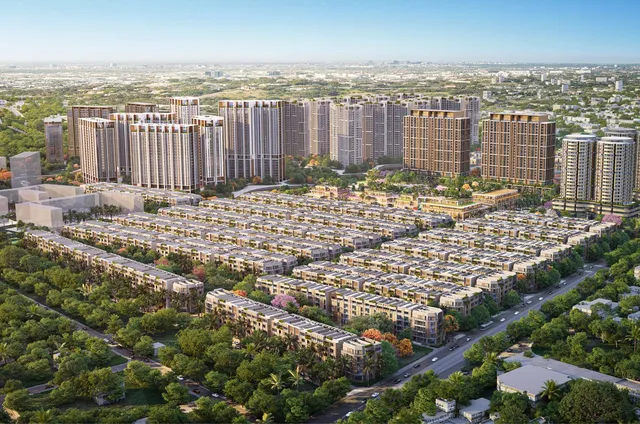 Selling now Foreign quota
 Masterise Homes · Luxury apartment & integrated township
The Global City
An Phu, Thu Duc City (former District 2), HCMC
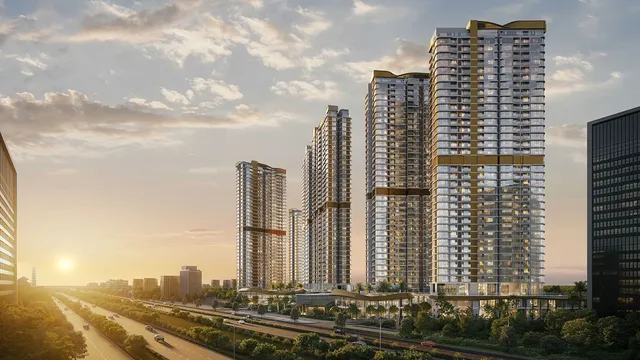 Selling now Foreign quota
 Gamuda Land · Luxury apartment
Eaton Park
An Phu, Thu Duc City, HCMC
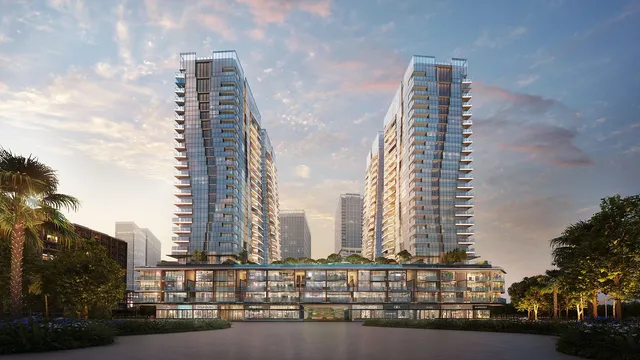 Selling now Foreign quota
 SonKim Land × Hongkong Land · Branded residences
The Metropole Thủ Thiêm
Thu Thiem, Thu Duc City, HCMC