Vietnam 50-Year Leasehold for Foreigners Explained (2026)
If you are a foreigner buying an apartment in Vietnam, the single most misunderstood detail is the “50-year leasehold.” It is not a lease in the way most Westerners imagine, it is not necessarily a hard 50-year clock, and it does not mean your home vanishes in 2076. This guide explains exactly how the term works under the 2023 Law on Housing and 2024 Land Law, what realistically happens as the term winds down, and the often-overlooked marriage path that can change everything.
This is general information for foreign buyers, not legal or tax advice. Laws and decrees evolve, and your individual case may differ — always confirm with a licensed Vietnamese lawyer before signing.
What the “50-year leasehold” actually is
A foreigner does not buy land in Vietnam — you buy the home, plus a time-limited right to use the land beneath it. In Vietnam, all land is owned by the state. Vietnamese citizens hold long-term, effectively permanent land-use rights; foreigners cannot hold land-use rights directly. Under the 2024 Land Law, this principle is reaffirmed: a foreign individual owns the dwelling (the apartment or house) and holds a right to use the underlying land for a permitted period, but never the land outright.
That permitted period is 50 years from the date your ownership certificate — the “Pink Book” — is issued. The Pink Book (officially the Certificate of Land Use Rights and Ownership of Assets Attached to Land) is your legal proof of ownership. It states the property type, your identity, the ownership term, and any restrictions. Within that 50-year window, you have genuine ownership rights: you can live in the home, rent it out, sell it, gift it, or pass it on by inheritance.
So the honest framing is this: a Vietnamese leasehold is closer to a long, renewable, transferable freehold-of-the-building than to a depreciating UK-style ground lease. But the term is real, and you should plan around it.
The renewal: how the second 50 years works
You can extend once, for up to another 50 years, giving a maximum total of 100 years of ownership. This is set out in the 2023 Law on Housing and clarified by Decree 95/2024/ND-CP. The mechanics matter, so here is the procedure as it currently stands:
| Step | Detail |
|---|---|
| When to apply | At least 3 months before the 50-year term expires (Decree 95/2024, Art. 6) |
| Where to apply | The Provincial People’s Committee where the property is located |
| Review period | The Committee has 30 days to approve or reject |
| After approval | Register the extended term on your certificate within 15 days |
| Extension length | Up to 50 additional years, one time only |
| Typical documents | Application form, certified copy of the Pink Book, valid passport with entry stamp |
The honest caveat: extension is granted if you still meet the eligibility conditions (lawful entry to Vietnam, the property not falling into a national defense or security zone, quota availability). It is not yet a fully automatic, rubber-stamp process, and as of 2025–2026 commentators note that renewal still involves a degree of administrative discretion. No foreign-owned 50-year term has actually reached expiry yet — the framework is new — so there is no real-world track record to point to. Treat the second 50 years as highly likely but not legally guaranteed.
If you want the full step-by-step on getting to a valid Pink Book in the first place, see our buying process guide for foreigners.
What happens at — and before — the 50-year mark
You have three practical exits, and only one of them ends with the property reverting to the state. Here is what the law allows as the term approaches:
- Renew. Apply for the one-time extension as above and continue owning for up to another 50 years.
- Sell or gift before expiry. The 2023 Law on Housing explicitly lets a foreign owner sell or donate the home to anyone eligible to own property in Vietnam — a Vietnamese citizen, an overseas Vietnamese, or another qualifying foreigner (subject to the building’s foreign-ownership quota). You capture the resale value rather than losing it.
- Do nothing. If you neither renew nor transfer, the home reverts to state ownership at the end of the term, without compensation.
The takeaway for investors is straightforward: the term is an asset-management deadline, not a wealth-destruction event. Most foreign owners will sell or hand the asset to heirs long before year 50. If you are buying a brand-new project today, your clock starts only when your Pink Book is issued, so an off-plan purchase in a development like The Global City or Eaton Park effectively gives you a fresh, full term.
Thinking about how the numbers work over a holding period? Our team can model resale and exit timing with you — book a consultation with Happy Land.
The honest grey area: what does a new buyer or heir get?
This is the most important nuance competitors skip: the law is genuinely ambiguous about whether a buyer or heir inherits your remaining term or a fresh 50 years. When you sell or bequeath the home to another foreigner, the 2023 Law on Housing does not clearly state whether they receive 50 years (renewable once) from the date of their new certificate, or only the time left on your original term.
In practice, market participants and several Vietnamese law firms expect that a new foreign owner is issued a new certificate and a new term, but this has not been settled by a clear decree or a body of cases. The conservative assumption when valuing a unit you might resell to a foreigner is that the term could be treated as continuing rather than resetting. By contrast, if you sell to a Vietnamese citizen, the term question disappears — they hold long-term land-use rights. This single point is why local legal advice before resale is worth far more than its cost.
For inheritance specifically, foreign heirs can inherit a qualifying home in a commercial project outside defense/security zones; if they are not eligible to own (or the building’s foreign quota is full), they are generally entitled to the value of the property rather than the title itself.
The marriage path: how it changes the whole picture
A foreigner legally married to a Vietnamese citizen residing in Vietnam can hold home ownership on essentially the same terms as a Vietnamese national — including indefinite, non-expiring tenure. This is the most powerful — and least understood — route around the 50-year limit.
But read the fine print honestly, because two things are easy to conflate:
- The home (dwelling) can be owned long-term, not capped at 50 years, when you qualify through marriage to a Vietnamese citizen residing in Vietnam.
- The land-use rights still cannot be held by the foreign spouse. For a house attached to land, it is typically the Vietnamese spouse who holds the land-use rights; the foreigner may co-own the structure. For a condominium, this matters less because no one “owns” the land under an apartment block.
There are also real considerations couples should plan for: how the asset is titled, what happens on divorce, prenuptial/marital-property arrangements, and inheritance for a surviving foreign spouse. The marriage path is a legitimate, widely used strategy — Happy Land works with many cross-border couples — but it should be structured deliberately with a lawyer, not assumed. We can walk you and your spouse through the options; reach out to our advisory team.
Taxes, costs, and the practical realities
The leasehold term does not change the standard transaction costs — but it does affect how you should think about exit timing and net yield. At a high level, current reference figures (always verify at the time of your transaction) include a registration fee around 0.5% on the property, and, on resale, a personal income tax of 2% of the contract price charged to an individual seller. There are also VAT on new purchases, a sinking/maintenance fund (commonly ~2% on new condos), notary and administrative fees.
| Item | Reference figure (verify currently) | Who typically pays |
|---|---|---|
| Registration fee | ~0.5% of property value | Buyer |
| Personal income tax on resale | 2% of contract price | Seller (individual) |
| VAT on new-build purchase | Standard VAT rate | Buyer |
| Maintenance/sinking fund | ~2% on new condos | Buyer |
These are indicative ranges for general guidance only, not a tax opinion. Rates and rules change — confirm with a Vietnamese accountant or lawyer. For a fuller breakdown see our guide to taxes and costs of buying property in Vietnam, and if you plan to take sale proceeds out of the country, read our note on repatriation of funds.
A few practical rules that protect your term and your resale value:
- Buy inside the 30% foreign-ownership quota. No more than 30% of a building’s apartments can be foreign-owned; if the quota is full, you cannot get a valid Pink Book. Always confirm remaining quota before paying a deposit.
- Confirm the project is a licensed commercial housing development outside any defense or security zone. Both conditions are mandatory for foreign ownership.
- Insist on the Pink Book pathway. Avoid “nominee” arrangements where a Vietnamese name holds the title for you — they are legally fragile and a common, costly mistake.
Could the rules change to 70 years?
There has been public discussion of extending or liberalizing foreign tenure, but as of 2026 nothing supersedes the 50-year-plus-one-renewal framework. Commentators have floated ideas such as longer terms in certain areas, and Vietnam’s broader reforms (the 2024 Land Law, the 2023 Law on Housing, and Decree 95/2024) have steadily clarified foreign rights. It is reasonable to expect continued liberalization, but you should buy based on today’s law, not on a hoped-for reform. We monitor these changes and update our foreigner guide as decrees are issued.
The bottom line
Vietnam’s 50-year leasehold is a transferable, renewable, genuine ownership right — not a wasting asset — provided you buy a properly licensed unit within the foreign quota, keep your documentation clean, and plan your exit (renew, sell, gift, or inherit) well before the term ends. The marriage path can remove the time cap on the dwelling entirely. The two areas where honest, paid legal advice pays for itself are the resale-term ambiguity and any marriage-based structuring.
Happy Land helps foreign buyers verify quota, secure clean Pink Book titles, and plan term and exit strategy across HCMC’s leading projects. To review specific units and their remaining term, explore our current projects or speak with our team directly.
Frequently asked questions
Does a foreigner really lose their Vietnam apartment after 50 years?
Not automatically. The 50-year term can be extended once for up to another 50 years (maximum 100 years total) by applying to the Provincial People's Committee at least 3 months before expiry. Even without renewing, you can sell or gift the home before the term ends and keep the value. Only if you do nothing — neither renew nor transfer — does the property revert to the state. This is general information, not legal advice.
How does the 50-year leasehold renewal work in practice?
Under Decree 95/2024/ND-CP, you apply to the Provincial People's Committee where the property is located at least 3 months before the term expires. The Committee has 30 days to review and approve if you still meet eligibility conditions, then you register the extended term on your Pink Book within 15 days. Extension is one-time, up to 50 additional years. Confirm the current procedure with a Vietnamese lawyer.
Can a foreigner married to a Vietnamese citizen own property without the 50-year limit?
Yes. A foreigner legally married to a Vietnamese citizen residing in Vietnam can own a home on essentially the same terms as a Vietnamese national, including indefinite (non-expiring) tenure on the dwelling. However, for a house attached to land, the land-use rights are typically held by the Vietnamese spouse, while the foreigner co-owns the structure. Titling, divorce, and inheritance should be structured with a lawyer.
If I sell my apartment to another foreigner, do they get a fresh 50 years?
This is a genuine legal grey area. The 2023 Law on Housing does not clearly state whether a foreign buyer or heir receives a new 50-year term from their new certificate or only the remaining term from the original. Many practitioners expect a new term, but it is not settled. If you sell to a Vietnamese citizen, the issue disappears because they hold long-term land-use rights. Get local legal advice before resale.
What taxes and fees apply when a foreigner buys or sells in Vietnam?
Indicative reference figures include a registration fee of about 0.5%, a personal income tax of 2% of the contract price on resale by an individual seller, VAT on new-build purchases, and a maintenance fund commonly around 2% on new condos, plus notary and admin fees. These are general ranges only and change over time — confirm current rates with a Vietnamese accountant or lawyer before transacting.
Projects for sale now
Get the latest price list, availability & payment terms — free advice via Zalo/WhatsApp.
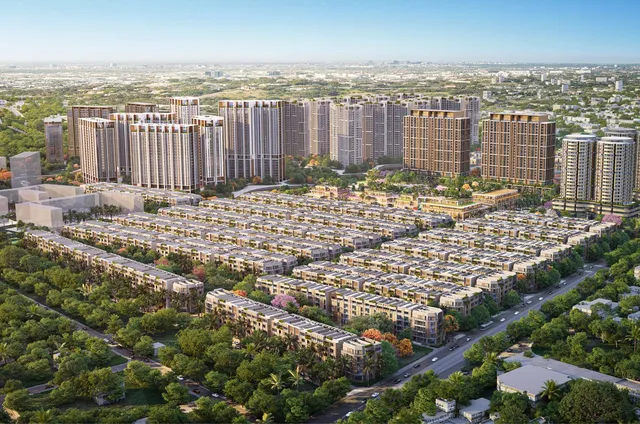 Selling now Foreign quota
 Masterise Homes · Luxury apartment & integrated township
The Global City
An Phu, Thu Duc City (former District 2), HCMC
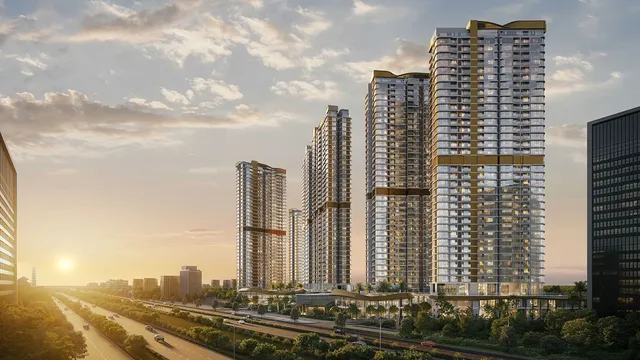 Selling now Foreign quota
 Gamuda Land · Luxury apartment
Eaton Park
An Phu, Thu Duc City, HCMC
 Selling now Foreign quota
 SonKim Land × Hongkong Land · Branded residences
The Metropole Thủ Thiêm
Thu Thiem, Thu Duc City, HCMC