
Vietnam vs Thailand Property for Foreign Investors (2026 Comparison)
Foreign investors comparing Southeast Asia almost always end up with the same two finalists on the shortlist: Vietnam and Thailand. They sit side by side on the map, but they are very different propositions for a foreign buyer — different ownership law, different quotas, different price-to-yield maths, and very different economic trajectories in 2026.
This is a deliberately balanced head-to-head, not a Vietnam sales pitch. We sell Vietnamese new-build apartments to foreigners, so we have an obvious bias — and we will be upfront about the things Thailand genuinely does better. By the end you should be able to answer one question for yourself: which market fits your goal — and could the answer be “both”?
The headline difference: freehold title vs 50-year leasehold
The first thing that separates these two markets is what you actually walk away owning.
In Thailand, a foreigner can own a condominium unit on a genuine freehold basis. Your name goes on the title deed (the Chanote), the ownership is permanent with no expiry, and you can sell, lease, mortgage or bequeath it — provided the building has not exceeded its foreign quota. That is a powerful, clean form of ownership and it is the single biggest reason many Western and East Asian buyers instinctively prefer Thailand.
In Vietnam, there is no true freehold for foreigners, because under the Land Law 2024 all land is owned by the state on behalf of the people. Foreigners cannot own land at all. What you can own is the apartment itself, evidenced by an ownership certificate — the “Pink Book” — issued for a 50-year term, renewable under current rules. You own the structure for that period; you do not own the ground beneath it. (For the full legal mechanism, see our guide Can foreigners own land in Vietnam?.)
So at the title level, Thailand wins on simplicity and permanence. Vietnam asks you to accept a leasehold-style right with a renewal question hanging over the long term. How much that matters depends entirely on your time horizon and your appetite for the growth story underneath it.
Foreign ownership quotas: 49% vs 30%
Both countries cap how much of a building foreigners can hold — but the caps are structured differently.
- Thailand: foreigners may collectively own up to 49% of the total registered floor area of a condominium building on a freehold basis, under the long-standing Condominium Act. The other 51% must be Thai-held. Where the foreign quota in a building is full, developers often offer the unit on a registered long-term lease (commonly 30 years, renewable by contract) instead.
- Vietnam: foreigners are capped at 30% of the apartment units in a single condominium building, and at 10% of houses in a given landed project (subject to a per-ward cap). The cap is on unit count, not floor area.
In practice, both quotas mean the same thing for a buyer: in a popular building, the foreign allocation can sell out, so you need to confirm headroom before you commit. Vietnam’s 30% unit cap is tighter and is worth understanding in detail — we break it down in Foreign ownership 30% quota explained. One 2026 improvement on the Vietnam side: foreigner-to-foreigner resale is now clearly permitted under the Housing Law 2023, which materially improved exit liquidity compared with the old rules.
Prices and rental yields: where the money actually behaves
This is where the two markets diverge in an interesting way — Vietnam is not the cheap option many assume.
Primary new-build apartment prices in central Ho Chi Minh City have climbed sharply. By late 2025 the citywide primary average sat around USD 5,900/m², with prime Thu Thiem stock ranging roughly USD 6,800–11,600/m². Expat-favourite Thao Dien runs around USD 3,400–4,800/m², and even “affordable” Binh Thanh starts near USD 2,400/m². Bangkok, by comparison, averages roughly USD 4,100–4,900/m² city-centre, with prime Sukhumvit/Silom/Sathorn at about USD 6,200 and up. Resort Phuket spans a very wide range by project and beach.
On yields, the honest picture is the reverse of what the “Vietnam is the next Thailand” headlines imply:
- Phuket professionally managed short-stay condos frequently post some of the highest net yields in the region — often cited around 5–10% net, though volatile and management-dependent.
- Bangkok prime condo net yields have compressed toward roughly 3–5% net as prices outran rents.
- Ho Chi Minh City apartments typically generate around 3–5% gross — modest, and sometimes below Vietnamese bank deposit rates of 5–6%. That is a real weakness: in Vietnam you are usually buying for capital appreciation, not for day-one cash flow.
| Factor | Vietnam (HCMC focus) | Thailand (Bangkok / Phuket) |
|---|---|---|
| Foreigner ownership type | Apartment only; 50-yr leasehold, renewable. No land. | Condo freehold, permanent (within quota) |
| Foreign quota | 30% of units per building | 49% of floor area per building |
| Typical new-build price (central) | ~USD 3,400–6,800/m² (expat to prime) | ~USD 4,100–6,200/m² (central to prime) |
| Indicative yield | ~3–5% gross (often < deposit rates) | Bangkok ~3–5% net; Phuket ~5–10% net |
| 2026 GDP growth (forecast) | ~6.8–7.5% | ~1.5% |
| Foreign mortgages | Limited but possible (some banks, work permit) | Very rare; mostly cash / developer plans |
| Purchase-side taxes | 10% VAT on new units; ~2% sinking fund | ~2% transfer fee (foreigners excluded from 0.01% relief) |
| Sale / exit taxes | ~2% PIT on transfer value (indicative) | SBT 3.3% if held <5yrs (or 0.5% stamp) + withholding |
| Market maturity / liquidity | Emerging; resale improving | Mature, liquid, deep foreign-buyer market |
| Best fit | Growth-seeking investors | Yield + lifestyle + title security |
All figures are indicative for 2026, change frequently, and vary by building, location and management. They are not a valuation.
Economic growth: the strongest argument for Vietnam
If Thailand wins on title and liquidity, Vietnam wins decisively on macro momentum — and for a buy-to-hold investor, that matters.
In 2026 the divergence is stark. International forecasts put Vietnam’s GDP growth around 6.8–7.5% (World Bank ~6.8%, IMF ~7.1%, UOB ~7.5%), with Hanoi targeting even higher. Thailand’s 2026 real GDP growth is forecast far lower — the OECD has projected around 1.5%, weighed down by aging demographics and a mature economy. Several analyses suggest Vietnam could overtake Thailand in nominal GDP within roughly 2026–2027, driven by the “China+1” manufacturing shift, FDI inflows and infrastructure build-out.
A faster-growing economy with rising wages and urbanisation tends to support property demand over a 10–20 year hold. That is the core of the Vietnam thesis — and it is why we argue the case carefully rather than loudly in Is Vietnam real estate a good investment 2026?. Growth is a tailwind, not a guarantee; entry price and quota headroom still decide whether you profit.
Taxes, costs and exit: read the fine print
Transaction friction differs in both directions, so neither country is clearly “cheaper” overall.
Buying in Vietnam: expect roughly 10% VAT on new primary apartments and a ~2% sinking-fund (maintenance) contribution, plus registration and notary costs. Selling typically attracts a personal income tax around 2% of the transfer value (indicative) regardless of profit.
Buying in Thailand: the headline cost is a ~2% transfer fee (often split with the seller, but negotiable). Note a 2026 wrinkle: Thailand’s reduced 0.01% transfer/mortgage fee stimulus applies to Thai nationals only — foreign buyers are excluded. Selling within five years can trigger Specific Business Tax of 3.3% (otherwise 0.5% stamp duty), plus a withholding tax that for individuals typically works out to roughly 1–5% of appraised value. Foreigners must also bring purchase funds into Thailand in foreign currency and obtain a Foreign Exchange Transaction Form (FET) to register freehold — keep that paperwork, because you need it to repatriate proceeds on exit.
Annual holding tax is genuinely low in Thailand (Land and Building Tax roughly 0.02–0.1% for residential use). Vietnam’s annual carrying costs on an apartment are also modest. The bigger exit consideration in Vietnam is the clock on the 50-year right and how renewal will be handled — a long-term factor Thai freehold buyers simply do not face.
Financing and ease of purchase
For most foreign buyers, both markets are cash-dominated, but with a twist.
Thailand has the simpler, more standardised condo-buying process — but mortgages for foreigners from Thai banks are rare, so the practical reality is cash or developer instalment plans. Vietnam has more paperwork and quota verification, yet limited foreign mortgages do exist — some domestic and international banks lend to foreigners holding a valid work permit. So, counter-intuitively, financing can occasionally be more available in Vietnam than in Thailand, even though the overall process is more bureaucratic.
Neither is as frictionless as buying at home, and in both countries the quality of your developer, agent and lawyer matters more than the headline rule.
Risks: an honest list for both sides
Vietnam risks: the 50-year leasehold and its renewal uncertainty; the tighter 30% quota selling out in good buildings; a less mature resale market and thinner price transparency; legal/administrative complexity; and yields that can lag bank deposits, so the thesis depends on capital growth materialising.
Thailand risks: an aging population and low ~1.5% growth that caps long-run appreciation; yield compression in Bangkok; oversupply in some resort and condo segments; tightened enforcement against nominee structures (never use a Thai-proxy company to hold land — it is illegal and being pursued); and the open policy discussion around the 49% quota and lease terms, which introduces some forward uncertainty.
Who should pick which
There is no universally “better” country — only a better fit for your goal:
- Pick Thailand if you prioritise permanent freehold title in your own name, a deep and liquid market you can exit easily, simple paperwork, and lifestyle/short-stay yield (especially Phuket). It suits retirees, lifestyle buyers and capital-preservation investors who can accept low growth.
- Pick Vietnam if you are growth-oriented, comfortable with a renewable 50-year right and a 30% quota, and you want exposure to one of Asia’s fastest-growing economies and its manufacturing-driven urbanisation. It suits investors with a longer horizon who buy at a sensible entry price.
- Consider both if you can. A common approach among experienced investors is Thailand as the stable, title-secure yield-and-lifestyle anchor, and Vietnam as the higher-growth, higher-risk satellite. For a Vietnam-specific entry plan, our Vietnam property investment guide 2026 walks through budgets, districts and the step-by-step process.
A note on doing this properly
This article is general information for 2026 and not legal, tax or investment advice. Property law, quotas, tax rates and the figures above change, and they apply differently to your nationality, visa and financing situation. Before you commit in either country, retain a licensed independent lawyer and a qualified tax adviser in that jurisdiction.
If Vietnam is on your shortlist, Happy Land works directly with primary developers, so you see the genuine developer price and live foreign-quota availability per building — not inflated resale listings. Message us on Zalo or WhatsApp with your budget and target city, and we will tell you honestly whether a specific project has foreign-quota headroom and how the numbers compare. You can also browse our project listings to start with real inventory rather than guesswork.
Frequently asked questions
Can foreigners get true freehold in Vietnam like they can in Thailand?
No. This is the single biggest legal difference. In Thailand, a foreigner can own a condominium unit on a genuine freehold basis (permanent title, your name on the Chanote deed) as long as the building is within its 49% foreign quota. In Vietnam, all land belongs to the state and foreigners cannot own land at all. You buy the apartment and receive a Land Use Right / ownership certificate (the Pink Book) for a 50-year term, which is renewable under current rules. You own the structure for that period, not the land beneath it. See our guide on whether foreigners can own land in Vietnam for the full mechanism.
Which country has better rental yields, Vietnam or Thailand?
It depends heavily on the city and how the unit is run. Professionally managed short-stay condos in Phuket often post some of the highest net yields in Southeast Asia (frequently cited around 5–10% net), while Bangkok prime condos have compressed toward roughly 3–5% net. Ho Chi Minh City new-build apartments typically generate around 3–5% gross, which is modest and sometimes below Vietnamese bank deposit rates. If pure cash yield today is your priority, well-managed Thai resort stock often wins; Vietnam's case rests more on capital growth than on day-one income. Figures are indicative and vary by building, location and management.
Where is it easier for a foreigner to buy, and to get a mortgage?
Thailand's condo-buying process is generally simpler and more standardised: pay in foreign currency through the banking system, obtain a Foreign Exchange Transaction Form, and register the unit within the 49% quota. Mortgages for foreigners from Thai banks are rare, so most foreign buyers pay cash or use developer instalment plans. Vietnam's process involves more paperwork and quota checks, but some banks (including international names with valid work-permit applicants) do offer limited foreign mortgages, so financing can occasionally be more available in Vietnam. Neither market is as easy as buying in your home country.
Is Thailand really cutting its 49% foreign condo quota?
As of 2026 the 49% foreign-ownership quota remains in force, but Thai policymakers have publicly discussed proposals — including ideas to lower it toward 30–39%, and separately to extend foreign leasehold terms. Nothing sweeping has been enacted, and any change would most likely apply to new transactions while protecting existing freehold titles. Enforcement against nominee (Thai-proxy) structures has tightened. Treat the quota as stable today but subject to review, and confirm the current rule with a licensed Thai lawyer before committing.
Who should choose Vietnam and who should choose Thailand?
Broadly: choose Thailand if you want permanent freehold title in your own name, a mature and liquid resort market, simple paperwork, and you can live with low single-digit growth and an aging economy. Choose Vietnam if you are a growth-oriented investor comfortable with a 50-year (renewable) leasehold and a 30% building quota, and you want exposure to one of Asia's fastest-growing economies and its 'China+1' manufacturing story. Many investors who can afford it hold both, treating Thailand as the stable yield/lifestyle anchor and Vietnam as the higher-growth, higher-risk satellite.
Projects for sale now
Get the latest price list, availability & payment terms — free advice via Zalo/WhatsApp.
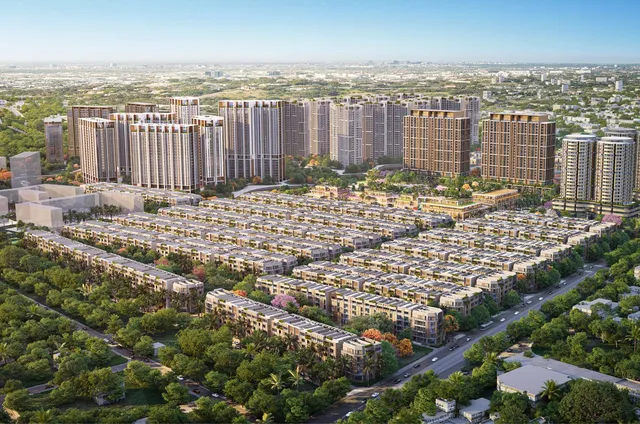 Selling now Foreign quota
 Masterise Homes · Luxury apartment & integrated township
The Global City
An Phu, Thu Duc City (former District 2), HCMC
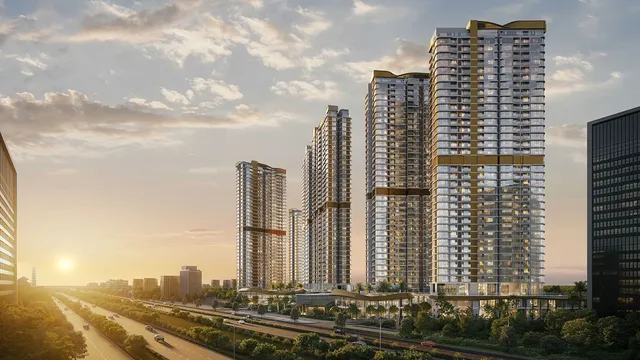 Selling now Foreign quota
 Gamuda Land · Luxury apartment
Eaton Park
An Phu, Thu Duc City, HCMC
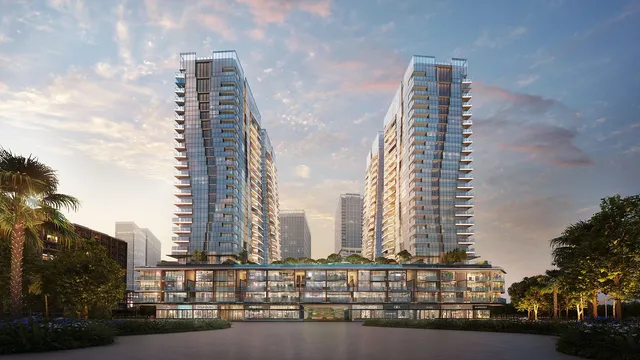 Selling now Foreign quota
 SonKim Land × Hongkong Land · Branded residences
The Metropole Thủ Thiêm
Thu Thiem, Thu Duc City, HCMC