
Owning Vietnam Property Through a Company: What Foreigners Should Know (2026)
One of the most common questions foreign buyers ask us is some version of: “Can I just set up a company to own property in Vietnam — like land, or a house, the way locals do?” It is a fair question, and the honest answer is more nuanced than the “yes/no” you see online. A foreign-invested company can hold land-use rights and own buildings for a genuine registered business, but a company is almost never a clean shortcut to owning a home or “owning land” as an individual.
This guide walks through what a company structure actually does, when it makes sense, when individual leasehold ownership is simpler, and the illegal nominee trap that catches careless buyers. This is general information for 2026, not legal, tax or investment advice — always confirm your specific situation with a licensed Vietnamese lawyer and tax adviser.
First, the thing nobody owns: land
Start here because it clears up most of the confusion. In Vietnam, no one owns land outright — not foreigners, not Vietnamese citizens, not Vietnamese companies. All land belongs to the people and is administered by the State. What people and businesses actually hold are land-use rights (LUR), evidenced by a certificate (the “pink book”).
So when someone says “set up a company and you can own land,” they are using loose language. A company cannot own land; at best it can hold land-use rights — usually a lease from the State, for a defined term and a defined purpose. This is true under the Land Law 2024 (effective 1 January 2025), which reorganised but did not abolish this fundamental principle.
For the individual-buyer side of this — what a foreigner can and cannot hold in their own name — see our companion guide, Can foreigners own land in Vietnam?.
What a foreign individual can already own (often enough)
Before reaching for a company, understand what you can do as an individual, because for most buyers it is enough.
Under the Housing Law 2023, a foreign individual who enters Vietnam lawfully may buy and own apartments and certain landed houses within eligible commercial housing projects (not social housing, not in restricted security zones). Key features:
- Leasehold-style term: ownership runs for 50 years, generally extendable once, so up to around 100 years in total.
- The 30% rule: foreigners may own up to 30% of the units in a single apartment building, plus ward-level caps on landed houses. We explain this in detail in Foreign ownership 30% quota explained.
- No land in your own name: you own the dwelling and a defined-term right, not the underlying land.
For a home, a holiday base, or a buy-to-let apartment, this individual route is clean: you sign the sale-and-purchase agreement, you get a certificate in your name, and you are done. No corporate accounting, no audit, no annual filings.
What a foreign-invested company can — and can’t — do
A foreign-invested enterprise (FIE) — broadly, a company with significant foreign ownership, established under the Law on Enterprises and the Law on Investment — is a real legal vehicle with real powers. Under the Land Law 2024, an FIE can access land-use rights through several routes:
- State land lease with annual rent, or a one-off lump-sum lease for the whole term (the one-off route carries fuller rights to transfer, sublease and mortgage during the lease).
- State land allocation with a land-use levy for certain housing projects.
- Transfers of land-use rights and attached assets within industrial parks, industrial clusters and economic zones — a notable expansion under the 2024 law, where previously FIEs could mostly only lease or sublease.
Typical lease terms run up to 50 years, extendable, with up to 70 years possible for projects in disadvantaged areas. The company owns the buildings and assets it constructs or acquires on that land for the term.
What a company cannot do is convert “I want to live here” into “I now own land freehold.” An FIE is licensed for a registered business purpose — operating a hospitality business, developing a project, leasing commercial space. It is not a passive bucket for holding your personal apartment, and using one that way invites tax, accounting and licensing problems with little upside.
If your business is real estate, note the Law on Real Estate Business 2023 (Law No. 29/2023/QH15, effective 1 January 2025). It dropped the old flat VND 20 billion minimum charter capital in favour of a minimum equity-ratio rule for developers (broadly, larger projects require at least 15% equity, smaller projects at least 20%), and it lets qualifying foreign-invested organisations conduct a fuller range of real-estate activities closer to domestic companies. These thresholds and the rules around them are indicative and change — verify current figures with counsel.
The honest cost and compliance picture
This is the part the “just set up a company” advice skips. An FIE is not a one-time cost; it is an ongoing obligation machine.
| Cost / obligation | What to expect (indicative, 2026) |
|---|---|
| Setup (IRC + ERC) | Investment Registration Certificate then Enterprise Registration Certificate; typically a few weeks end-to-end |
| Capital contribution | Charter capital generally paid in within ~90 days of the ERC |
| Corporate seal + digital signature | Small one-off costs (seal modest; e-signature token a low-hundreds USD multi-year subscription) |
| Bookkeeping | Monthly accounting fees, ongoing |
| Mandatory audit | FIEs must have annual financial statements independently audited — commonly a four-figure USD amount per year |
| Corporate income tax (CIT) | Standard 20%, with quarterly provisional payments |
| VAT | Standard 10% on applicable activity, with periodic filings |
| Other | Foreign contractor withholding, licensing renewals, statistical/investment reports |
For a single residential apartment, this overhead is wildly disproportionate. You would be paying thousands of dollars a year in compliance to hold an asset that an individual can own with a one-page certificate and no audit. That is why, for a home, a company is usually the wrong tool.
Figures above are indicative and change frequently — get a current quote from a Vietnamese accounting/tax firm before relying on them.
When a company structure genuinely makes sense
A company is the right answer when you have a real business reason for it, not a workaround. Good fits include:
- You operate a genuine business on the property — a hotel, serviced apartments, a restaurant, a co-working space, a clinic. You need the company anyway, and it holds the commercial premises.
- A portfolio of commercial assets — offices, retail, warehousing, industrial space — where you want corporate ownership, financing, and the ability to bring in partners or sell shares.
- Development — you are building or co-developing a project and need to hold project land-use rights and licences as a developer under the Law on Real Estate Business.
- Industrial / economic-zone land — manufacturing or logistics, where leasing or receiving transfers of LUR inside an industrial park is exactly what FIEs are built for.
In all of these, the company isn’t a disguise for personal ownership; it is the legitimate operating vehicle for an actual enterprise. The compliance cost is justified because the business generates the activity that compliance exists to govern.
When individual leasehold is simpler
Conversely, the individual route usually wins when:
- You want one home, a second home, or a single buy-to-let apartment.
- You value simplicity and low running costs over corporate flexibility.
- You don’t have a registered business that needs the property.
- You qualify to buy in an eligible commercial project within the foreign quota.
In short: buy as a person unless you have a business reason to be a company.
Individual vs company: side-by-side
| Factor | Foreign individual (leasehold) | Foreign-invested company (FIE) |
|---|---|---|
| Typical use case | Home, second home, single rental unit | Operating business, commercial portfolio, development |
| What you hold | Apartment/house ownership for ~50 yrs (renewable) | Land-use rights (lease/allocation/transfer) + buildings, for the project term |
| Underlying land | Never owned; not in your name | Never owned; LUR held by company for term |
| Residential quota | Subject to 30% per-building / ward caps | Different track; not a quota loophole |
| Setup complexity | Low — sign SPA, get certificate | High — IRC, ERC, capital, licences |
| Annual compliance | Minimal | Audit, CIT, VAT, reporting — significant |
| Running cost | Very low | Thousands of USD/yr typical |
| Best when… | You want a place to live or a simple rental | You run a real business or develop property |
| Worst when… | You genuinely need to operate a business on-site | You just want to hold a single residence |
The illegal nominee-company trap
Now the dangerous part. Because foreigners can’t own land and face quotas on housing, some buyers are tempted by a “nominee” structure: a Vietnamese person — or a company that is Vietnamese on paper but foreign-funded in reality — holds the property, while a private side agreement says the foreigner is the “true” owner.
This is not a structure. It is a risk. Vietnamese law recognises the person or entity named on the certificate as the owner. The side agreement designed to circumvent ownership rules can be treated by a court as a sham transaction and declared null and void. If that happens:
- The foreigner has no enforceable claim to the asset — only the registered nominee is protected.
- The foreigner is entirely dependent on the nominee’s cooperation to sell, refinance, or recover value.
- There is exposure to administrative fines and, in serious cases, more severe consequences for circumventing the law.
A foreign-funded “Vietnamese” shell created purely to dodge restrictions is the corporate version of the same trap, and it fails for the same reason. If anyone markets a company as a way to “secretly own land” or “beat the 30% quota,” walk away. We cover this pattern alongside other warning signs in Vietnam property scams & red flags.
The legitimate alternatives are the boring ones: own as an individual where you can, or build a properly licensed FIE for a real business. There is no honest third option.
How to decide — and verify
A simple decision path:
- State your real purpose. Home or rental? Lean individual. Operating business or development? Lean company.
- Check eligibility. For an apartment, confirm the project is foreign-eligible and within quota. For a company, confirm your activity is open to foreign investment and meets any capital/condition rules.
- Price the whole life, not just the purchase. For a company, include audit, tax and accounting for every year you’ll hold it.
- Run due diligence on the specific asset and seller before any money moves — see our Vietnam property due diligence checklist.
- Get independent professional sign-off. A licensed Vietnamese lawyer for the structure and certificate, a tax adviser for the numbers.
Do not let a broker or “fixer” choose the structure for you based on what is easiest to sell. The structure should follow your purpose and the law — not the other way around.
Talk to Happy Land
We work with foreign buyers every day and we will tell you honestly which route fits your situation — including when the answer is “you don’t need a company at all.” We sell genuine, foreign-eligible units from licensed developers at developer prices, with live inventory, so you can compare like-for-like before committing.
Message us on Zalo or WhatsApp with what you’re trying to do — a home, a rental, or a business — and we’ll walk you through the realistic options and connect you with independent legal and tax professionals for sign-off. You can also browse our project listings to see what’s currently available to foreigners.
This article is general information only and is not legal, tax or investment advice. Vietnamese laws, rates and figures cited (Land Law 2024, Housing Law 2023, Law on Real Estate Business 2023, Law on Enterprises, Law on Investment, CIT/VAT rates) are indicative for 2026 and subject to change. Always engage a licensed Vietnamese lawyer and tax adviser before making any property or company decision.
Frequently asked questions
Can a foreigner set up a company purely to own a residential apartment in Vietnam?
In practice this is usually overkill and often not the right tool. A foreign-invested enterprise (FIE) is licensed for a registered business activity, not for passively holding a home, and it carries audited accounting, annual reporting, corporate income tax and ongoing compliance costs. For a single apartment, individual foreign ownership of a 50-year (renewable) leasehold unit in an eligible commercial project under the Housing Law 2023 is almost always simpler and cheaper. A company makes sense when you run a genuine real-estate or hospitality business, hold multiple commercial assets, or develop a project — not as a workaround to 'own land' as an individual. Confirm your specific case with a licensed Vietnamese lawyer.
Can a foreign-owned company actually own land in Vietnam?
No entity — foreign or Vietnamese — owns land outright in Vietnam, because all land is owned by the people and administered by the State. What a foreign-invested enterprise can hold are land-use rights (LUR): typically a lease from the State (annual or one-off rent) or, under the Land Law 2024, transfers of land-use rights and attached assets within industrial parks and economic zones for registered projects. The company owns the buildings and assets on the land and holds the LUR for the lease term, commonly up to 50 years and extendable, with longer terms possible for projects in disadvantaged areas.
Is a company a way around the 30% foreign-ownership quota on apartments?
No. The per-building foreign cap and the ward-level house limits under the Housing Law 2023 are designed around foreign buyers, and registering through a foreign-invested enterprise does not magically unlock unlimited residential units. A genuine FIE acquiring commercial real estate operates under the Law on Real Estate Business and Land Law framework for businesses, which is a different track with its own conditions — not a loophole around the residential quota. If anyone markets a company structure as a 'quota workaround,' treat it as a red flag and get independent legal advice first.
What is the illegal nominee-company trap?
It is an arrangement where a foreigner funds a Vietnamese individual or a Vietnamese-on-paper company to hold property or land-use rights while a side agreement says the foreigner is the 'real' owner. Vietnamese law recognises the person or entity named on the certificate as the owner; a court can treat the side arrangement as a sham and void it, leaving the foreigner with no enforceable claim to the asset and exposed to fines or worse. It is not a structure — it is a risk. Never rely on a nominee to hold Vietnamese real estate.
How much does it cost to run a property-holding FDI company in Vietnam?
Beyond setup (Investment Registration Certificate plus Enterprise Registration Certificate, corporate seal, digital signature), the recurring burden is what surprises people: monthly bookkeeping, mandatory annual independent audit of financial statements for foreign-invested enterprises, quarterly provisional corporate income tax, VAT filings and other compliance. Audit alone commonly adds a four-figure US-dollar amount per year, on top of accounting fees. Figures are indicative and change — budget for ongoing professional fees, not just the one-time formation cost, and ask a Vietnamese tax adviser for a current quote.
So which route should most foreign buyers choose?
If you want a home or a buy-to-let apartment, individual leasehold ownership of an eligible unit in a licensed commercial project is usually the cleanest path. If you are building a real business — a hospitality operator, a portfolio of commercial assets, or a development — a properly licensed foreign-invested enterprise is the legitimate vehicle. The wrong answer for almost everyone is a nominee or a shell company created purely to 'hold' a residence. Decide based on your actual purpose, and have a licensed Vietnamese lawyer and tax adviser confirm the structure before you transfer money.
Projects for sale now
Get the latest price list, availability & payment terms — free advice via Zalo/WhatsApp.
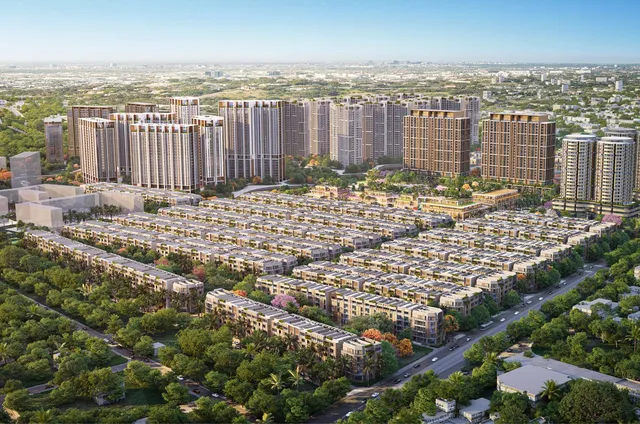 Selling now Foreign quota
 Masterise Homes · Luxury apartment & integrated township
The Global City
An Phu, Thu Duc City (former District 2), HCMC
 Selling now Foreign quota
 Gamuda Land · Luxury apartment
Eaton Park
An Phu, Thu Duc City, HCMC
 Selling now Foreign quota
 SonKim Land × Hongkong Land · Branded residences
The Metropole Thủ Thiêm
Thu Thiem, Thu Duc City, HCMC