
Is Vietnam Real Estate a Good Investment in 2026?
Is Vietnam real estate a good investment in 2026? For the right buyer with a multi-year horizon, the answer is a qualified yes, but it is not a passive, risk-free bet. This guide gives you the honest version: the growth story, the hard numbers, the legal limits foreigners face, and the risks that listing agents tend to skip. Treat it as general information, not legal, tax, or investment advice.
The short answer: a qualified yes for patient, informed buyers
Vietnam in 2026 offers one of Asia’s stronger growth-and-yield combinations, but only investors who accept leasehold limits, a longer hold, and rigorous due diligence are likely to do well. The macro backdrop is genuinely supportive. The World Bank projects Vietnam GDP growth of around 6.3% in 2026, and the IMF a more conservative 5.6% — either way, among the fastest in the region. Registered foreign direct investment reached roughly US$38–40 billion in 2025, with disbursed capital at a record high, signalling durable confidence in the economy that underpins housing demand.
Property professionals echo this. Savills has described Vietnam as a growth leader as Asia-Pacific real estate stabilises in 2026, and several houses point to an infrastructure-led recovery. That said, “good investment” is not a property-wide guarantee. It depends heavily on the project, the entry price, the foreign-ownership quota, and your exit plan. The rest of this article helps you separate the genuine opportunity from the hype.
If you would rather discuss your specific situation than read every section, you can speak with our team directly at any point.
The case FOR investing: growth, yields, and infrastructure
The bull case rests on three pillars: a young fast-growing economy, rental yields that beat most of developed Asia, and a once-in-a-generation infrastructure build-out. Each is worth examining honestly.
Economic momentum. Vietnam has a young population, rising urban middle class, and continued manufacturing relocation from China. This translates into structural housing demand in Ho Chi Minh City (HCMC) and Hanoi rather than a speculative bubble alone.
Rental yields. HCMC apartments typically deliver gross rental yields of roughly 5–7%, with most foreign investors landing at around 4–6% net after management fees (often 8–10% of rent), maintenance, and vacancy. That comfortably exceeds gross yields in Singapore, Hong Kong, or most Japanese metros, though it sits below some frontier markets. Yields are a reference range, not a promise — they vary by district, building, and tenant mix.
Infrastructure. This is the strongest part of the story. In July 2025 HCMC absorbed neighbouring Binh Duong and Ba Ria–Vung Tau, lifting the metropolitan population past 14 million as Vietnam consolidated 63 provinces into 34. Metro Line 1 (Ben Thanh–Suoi Tien) is operating, Long Thanh International Airport began operations in phases from late 2025 into 2026, and Ring Road 3 sections are opening through mid-2026. Infrastructure of this scale historically lifts land values along its corridors — which is exactly why location selection matters so much.
| Bull-case factor | 2026 reference point |
|---|---|
| GDP growth | ~5.6% (IMF) to 6.3% (World Bank) |
| Registered FDI (2025) | ~US$38–40 billion |
| HCMC gross rental yield | ~5–7% gross / ~4–6% net |
| Population (Greater HCMC) | 14 million+ after 2025 merger |
| Major infrastructure | Metro Line 1, Long Thanh airport, Ring Road 3 |
To see how specific developments sit relative to this infrastructure map, browse our current project listings, including transit- and airport-adjacent locations.
The case AGAINST: the honest cons and constraints
The biggest constraints are structural, not cyclical: foreigners get leasehold rather than freehold, ownership quotas cap your buyer pool, and prices have already run hard. None of these is a dealbreaker on its own, but ignoring them is how people overpay.
Leasehold, not land ownership. Under the Housing Law 2023 and Land Law 2024, foreigners buy a 50-year, renewable ownership term on the dwelling — the underlying land stays with the Vietnamese state. Renewal is generally expected but is not automatically guaranteed; you (or a future buyer) must apply to the provincial People’s Committee at least three months before expiry. This affects long-term resale value and how you should negotiate price. We cover the mechanics in our buying process guide for foreigners.
The 30% quota. Foreigners may own up to 30% of units in a single condominium block, and landed homes are capped per ward-equivalent population area. Popular HCMC projects often hit the foreign quota within months of launch. If your building’s foreign quota is full when you sell, your buyer pool shrinks to Vietnamese citizens only — which can dent pricing power.
Prices have already risen sharply. HCMC primary apartment prices climbed substantially through 2025, with some reports citing full-year increases above 20% and Q1 2026 average primary prices near US$7,000–7,300 per sqm amid record-low new supply. Strong past growth raises entry costs and lowers the margin of safety. Top areas such as Thu Duc City (Thao Dien, An Phu, Thu Thiem) may still see projected 2026 gains of roughly 8–14%, but that is a forecast, not a guarantee.
Other frictions: developer-dependence on off-plan delivery timelines, currency exposure (VND vs. your home currency), and a market that rewards patience over quick flips. Most advisors suggest a hold of 3–5 years or more.
Costs, taxes, and getting your money out
Vietnam’s transaction taxes are relatively light and apply equally to foreigners, but rental and exit taxes plus repatriation paperwork need planning. Here is the honest snapshot for 2026 — always confirm current figures with a licensed tax advisor, as rules are being reformed.
| Item | Typical 2026 treatment |
|---|---|
| VAT (new developer units) | ~10%, usually included in quoted price |
| Registration fee | ~0.5% of value, paid by buyer |
| Maintenance (sinking) fund | 2% of value, one-off |
| Rental income tax | ~10% of gross (5% VAT + 5% PIT) above thresholds* |
| Sale / capital gains | Flat 2% of transfer price (profit or not) |
*Draft 2026 reforms may raise rental-income exemption thresholds; the detail is moving, so verify before relying on it. Our taxes and costs guide goes deeper.
Repatriation. You can send sale proceeds abroad through official banking channels, but documentation is strict: notarised sale contract, the ownership certificate (the “pink book”), tax receipts, and — critically — proof your original purchase funds came from overseas. Keep every record from day one. See our repatriation of funds guide for the full checklist.
How to invest wisely (and reduce the risks)
The single biggest risk reducer is project and title due diligence — far more than market timing. Concentrate your energy here:
- Confirm the pink book and the foreign quota in writing before paying meaningful deposits. Verify the remaining ownership term and the developer’s legal right to sell to foreigners.
- Choose developers with a delivery track record and projects positioned near the infrastructure corridors above (metro, Ring Road 3, Long Thanh).
- Model net, not gross, yield — subtract management, maintenance, vacancy, and the 2% exit tax.
- Plan your exit early, including the realistic buyer pool given the quota.
- Budget a multi-year hold and keep a currency buffer.
Liquidity, transparency, and disclosure standards differ from those in developed markets; working with a knowledgeable local partner materially lowers execution risk. You can book a no-obligation consultation to pressure-test a specific project against these criteria.
So, is it right for you?
Vietnam real estate in 2026 suits investors seeking growth and yield who can accept leasehold limits and a 3–5 year-plus horizon — and it is poorly suited to anyone wanting freehold certainty, fast liquidity, or a hands-off bet. The fundamentals (demographics, FDI, infrastructure) are among Asia’s most compelling, and the tax regime treats foreigners fairly. The catch is that recent price gains and structural ownership limits mean discipline at the point of purchase decides your outcome more than the macro story does.
If that profile fits you, the practical next step is matching your budget and goals to specific, quota-checked projects rather than buying the market in the abstract. Start with our foreigner buying guide and current project portfolio, then talk to us. This article is general information only and not legal, tax, or investment advice — confirm all figures with licensed professionals before committing funds.
Frequently asked questions
Is Vietnam real estate a good investment for foreigners in 2026?
For patient, well-advised buyers, yes — Vietnam offers strong GDP growth (around 5.6–6.3%), HCMC net rental yields near 4–6%, and major infrastructure upside. But foreigners get a 50-year renewable leasehold rather than freehold, face a 30% per-building ownership quota, and buy into a market where prices have already risen sharply. It rewards a 3–5 year-plus horizon and rigorous due diligence, not quick speculation. This is general information, not investment advice.
Can foreigners actually own property in Vietnam?
Yes, within limits. Under the Housing Law 2023 and Land Law 2024, foreigners can own apartments and certain houses in approved commercial projects on a 50-year, renewable ownership term, while the land itself stays with the state. Foreign buyers are capped at 30% of units per condominium block and a set number of landed homes per ward-equivalent area. Always confirm a project's pink book and remaining foreign quota in writing before paying.
What rental yields can I expect in Ho Chi Minh City?
HCMC apartments typically deliver roughly 5–7% gross rental yield, with most foreign investors achieving around 4–6% net after management fees (often 8–10% of rent), maintenance, vacancy, and taxes. Yields vary by district, building quality, and tenant demand, so treat these as reference ranges rather than guarantees and always model net rather than gross returns.
What taxes do foreigners pay when buying and selling property in Vietnam?
Foreigners pay the same rates as locals. Expect VAT of about 10% on new developer units (usually included in the price), a 0.5% registration fee, and a one-off 2% maintenance fund. Rental income is broadly taxed around 10% of gross above thresholds, and sales incur a flat 2% of the transfer price regardless of profit. Reforms are in progress for 2026, so verify current figures with a licensed tax advisor.
Can I send my money back home after selling Vietnamese property?
Yes, proceeds can be repatriated through official banking channels, but documentation is strict. You will typically need the notarised sale contract, the ownership certificate (pink book), tax payment receipts, and proof that your original purchase funds came from abroad. Keep complete records from your first payment onward to avoid delays during State Bank compliance checks.
Projects for sale now
Get the latest price list, availability & payment terms — free advice via Zalo/WhatsApp.
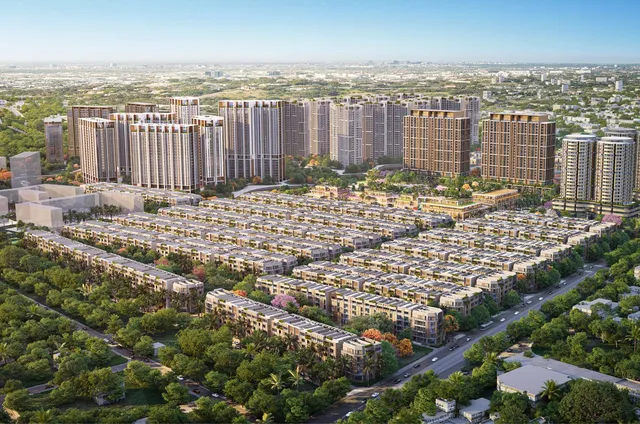 Selling now Foreign quota
 Masterise Homes · Luxury apartment & integrated township
The Global City
An Phu, Thu Duc City (former District 2), HCMC
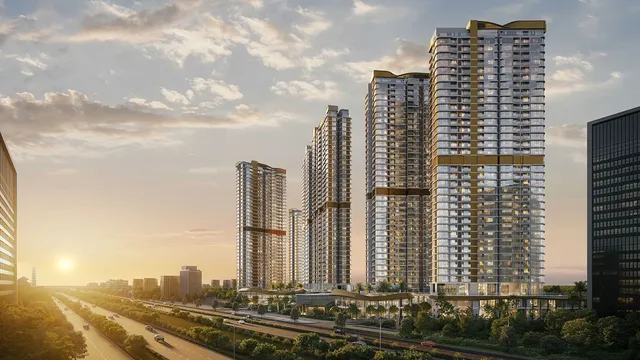 Selling now Foreign quota
 Gamuda Land · Luxury apartment
Eaton Park
An Phu, Thu Duc City, HCMC
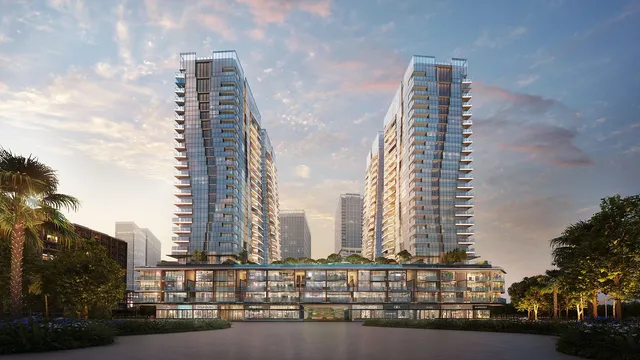 Selling now Foreign quota
 SonKim Land × Hongkong Land · Branded residences
The Metropole Thủ Thiêm
Thu Thiem, Thu Duc City, HCMC