
Currency & Exchange-Rate Risk When Buying Vietnam Property (Foreigner Guide)
Foreign buyers spend weeks comparing floor plans, developers and rental yields, and often almost no time on the exchange rate — yet FX can move your real return as much as the property itself. A Vietnam apartment is priced, rented and resold in Vietnamese dong (VND), but you probably think, earn and eventually want your money back in US dollars, euros, pounds or another currency. Everything that happens in between is exchange-rate exposure. This guide explains how currency risk really works on a Vietnam property, why non-USD investors carry an extra layer of it, how it touches your rental income, and the practical steps that keep FX from quietly eating your gains.
This is general information for foreign property buyers, not investment, tax or foreign-exchange advice. Exchange rates, tax rates and rules change. Confirm specifics with your bank and a licensed advisor before you transact.
Currency risk is a round trip, not a single moment
Your home-currency result is not just “did the property go up?” — it is the property’s dong-price change multiplied by how the exchange rate moved across your entire round trip. For most foreign buyers the journey looks like this: convert home currency into dong to buy, hold for some years, then convert dong back into home currency on exit — with rental income converted along the way.
That means the exchange rate is priced in at least twice: once when you enter and once when you leave. Even a property that rises nicely in dong terms can deliver a smaller — or occasionally larger — gain once translated back to your home currency. The single most useful habit is to stop looking at returns only in dong and start checking them in a hard currency, because that is the number that actually lands in your account.
The dong is a managed float that tracks the US dollar
The Vietnamese dong is not hard-pegged, but it is closely managed: the State Bank of Vietnam sets a daily central reference rate and allows the dong to trade within a band, and in practice it tracks the US dollar while depreciating in small, controlled steps over time. Two consequences follow for an investor.
First, USD/VND is the exchange rate that matters most, even if you are not American. Because the dong broadly shadows the dollar, the dollar is effectively the reference currency of Vietnamese real estate for foreigners.
Second, the dong has historically weakened gradually against the dollar rather than holding flat. Vietnam runs higher inflation than most developed economies and manages its currency with export competitiveness in mind, so the long-run direction has been slow depreciation. For you, that shows up as a currency drag: part of any dong-price gain is offset by the dong being worth slightly less in dollars than when you bought. It is rarely dramatic in a single year, but over a multi-year hold it adds up, which is exactly why you weigh it against the property’s appreciation. See our views on price growth in Vietnam property capital appreciation and on the wider case in is Vietnam real estate a good investment in 2026.
Non-USD investors carry two FX legs
If you think in dollars, you have one main FX exposure — VND against USD. If you think in euros, pounds, Australian dollars, won or yen, you have two. The second leg is your home currency against the US dollar, and because the dong tracks the dollar, that leg often dominates your outcome.
Work it through with the simple relationship:
VND / home currency ≈ (VND / USD) × (USD / home currency)
- The VND/USD leg is the managed, gradual depreciation described above — relatively slow and directional.
- The USD/home-currency leg is ordinary global FX — and it can be volatile. A big move in the dollar against your currency can swamp everything happening in the Vietnamese property market.
The practical takeaway: a European or Australian investor’s Vietnam return is partly a bet on where their own currency sits versus the dollar when they exit. That is not a reason to avoid the market — it is a reason to plan the exit with FX in mind rather than assuming the local price story is the whole story.
Illustrative round trip (assumptions only, not a forecast)
To see how FX changes the outcome, here is a deliberately simplified example. These are hypothetical assumptions to show the mechanism — not real rates or predictions.
| Scenario | Dong-price change over the hold | Exchange rate at exit vs entry | Result in home currency (concept) |
|---|---|---|---|
| FX neutral | +20% | Unchanged | Roughly +20% |
| Home currency weakens vs USD/VND | +20% | Dong worth more in your currency | More than +20% |
| Home currency strengthens vs USD/VND | +20% | Dong worth less in your currency | Less than +20%, gain shrinks |
| Weak price growth + strong home currency | +5% | Dong worth less in your currency | Possible loss after FX drag |
Same “+20% in dong,” very different outcomes once converted. The lesson is not to predict the rate — it is to make sure the deal still works if FX moves against you, by choosing a yield and holding period with room to spare.
Rental income is exposed too — use a natural hedge
Currency risk is not only an exit event; it hits every rent payment. Rent is collected in dong, and each time you remit it home you convert at that day’s rate, so your take-home yield floats with FX even when the tenant pays the same dong amount.
The cleanest defence is a natural hedge: pay your dong-denominated costs — management and maintenance fees, local taxes, minor repairs — out of your dong rental income, and only convert the surplus. What you never exchange cannot be hit by the exchange rate. It also keeps a cleaner record for later remittance. For the income side, see Ho Chi Minh City rental yields and the tax treatment in rental income tax for foreigners.
FX and getting your money out are the same conversation
The exchange rate only matters if you can actually move the money — so currency risk and repatriation are two halves of one plan. Vietnam lets foreigners repatriate sale proceeds and rental income, but generally only funds that entered through official banking channels with a documented trail, and after tax is settled. If you convert and pay informally to chase a better rate, you can jeopardise your ability to exit at all.
So the FX-smart approach and the repatriation-smart approach are identical: bring money in through an authorized bank, keep every remittance record, and convert through the formal system. The details are in repatriating funds from a Vietnam property sale and transferring money to buy property in Vietnam, and the exit tax in selling property and foreigner taxes.
Seven practical ways to limit FX drag
You cannot eliminate currency risk on a foreign-currency asset, but you can manage it down.
- Track gains in US dollars, not just dong. The dollar view exposes the currency drag that a dong-only view hides.
- Hold for the long term. Short flips pay the round-trip FX cost twice; a longer hold gives property appreciation time to absorb currency swings.
- Use the natural hedge. Pay dong costs from dong rent; convert only the surplus.
- Avoid heavy leverage in your home currency. Borrowing to invest in a foreign-currency asset amplifies FX moves in both directions.
- Build an FX buffer into your target yield. Ask whether the deal still works if the rate moves a few percent against you before you commit.
- Keep a documented banking trail. It protects both your exit and your ability to repatriate — the FX plan is worthless if the money is stuck.
- Do not try to time the currency. Treat FX as an uncontrollable input and build a plan that survives it, rather than betting on a direction.
For a broader regional comparison, Vietnam vs Thailand for foreign investors puts the currency question alongside the other trade-offs.
Conclusion
Currency risk is the part of a Vietnam property investment that foreign buyers notice last and feel most. The dong is a managed float that tracks the US dollar and tends to depreciate gradually, so your real return is always price growth and FX combined — and non-USD investors carry an extra leg through their own currency’s move against the dollar. You cannot control the rate, but you can plan around it: measure in dollars, hold for the long run, hedge naturally with dong income against dong costs, keep leverage modest, build in a buffer, and protect your repatriation trail. Do that, and FX becomes a managed variable rather than a nasty surprise at exit.
This article is general information only and not investment, tax or foreign-exchange advice. Rates and rules change and individual situations differ — confirm your specifics with your bank and a licensed advisor before transacting.
As a primary-market distributor of new developments in Ho Chi Minh City, Happy Land can help you plan a purchase with FX and repatriation in mind and point you to projects with resilient rental demand. Browse the current projects with a yield that leaves room for currency moves, or contact our team via Zalo or WhatsApp to talk it through.
Frequently asked questions
Is currency risk a big deal for foreign buyers in Vietnam?
Yes. A Vietnam apartment is a dong-denominated asset, so your real return in your home currency is the product of two things: how much the property rises in dong terms and how the exchange rate moves. The Vietnamese dong has historically depreciated gradually against the US dollar, which can quietly erode gains — a 'currency drag' on your return. Strong local price appreciation can offset it, but you should always look at your numbers in a hard currency, not just in dong.
Is the Vietnamese dong pegged to the US dollar?
Not a hard peg. The dong operates as a managed float: the State Bank of Vietnam sets a daily central reference rate and allows trading within a band, and in practice the dong tracks the US dollar closely while depreciating in small, controlled steps over time. The practical effect for you is that the dong moves largely with the US dollar against other currencies, so USD/VND is the exchange rate that matters most, even if you are not American.
How does currency risk affect non-USD investors like European or Australian buyers?
You carry two FX legs instead of one. The first is VND against the US dollar (a gradual, managed depreciation). The second is the US dollar against your home currency (euro, pound, Australian dollar, won, and so on), which can be volatile. Because the dong broadly tracks the dollar, your final home-currency result depends heavily on how your own currency moves versus the US dollar during your holding period — not just on the Vietnamese property market.
Does the exchange rate affect rental income too?
Yes. Rent is collected in dong, so when you remit it to your home country you convert at whatever rate applies on the remittance date, and that changes your take-home yield. A useful natural hedge is to pay dong-denominated costs — management fees, maintenance fund, local taxes — out of your dong rental income, and only convert the surplus. That way only the leftover is exposed to FX rather than the whole rent.
How can I reduce currency risk on a Vietnam property?
You cannot remove it, but you can shrink it: (1) track your gains in US dollars, not only in dong; (2) hold for the long term so property appreciation can absorb FX swings; (3) use the natural hedge of paying dong costs from dong income; (4) avoid heavy leverage in your home currency; (5) build an FX buffer into your target yield so the deal still works if the rate moves against you; (6) keep a documented banking trail so you can actually repatriate later; and (7) do not try to time the currency. Confirm tax and remittance specifics with a licensed advisor.
Projects for sale now
Get the latest price list, availability & payment terms — free advice via Zalo/WhatsApp.
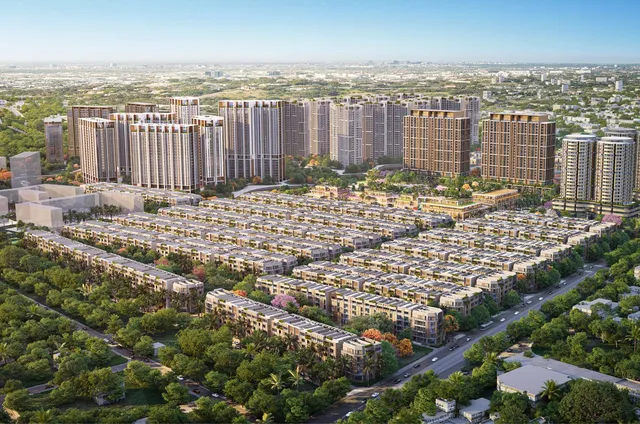 Selling now Foreign quota
 Masterise Homes · Luxury apartment & integrated township
The Global City
An Phu, Thu Duc City (former District 2), HCMC
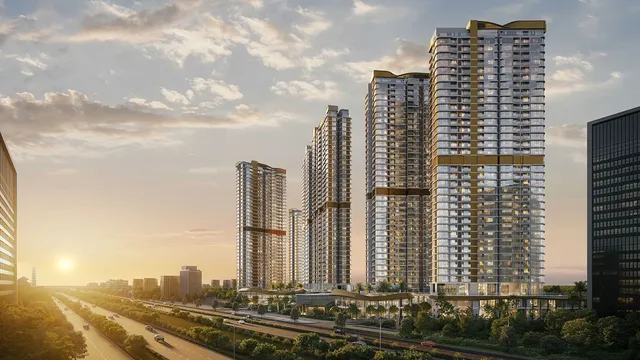 Selling now Foreign quota
 Gamuda Land · Luxury apartment
Eaton Park
An Phu, Thu Duc City, HCMC
 Selling now Foreign quota
 SonKim Land × Hongkong Land · Branded residences
The Metropole Thủ Thiêm
Thu Thiem, Thu Duc City, HCMC