
Vietnam Property Investment Guide for Foreigners (2026)
Vietnam has become one of Asia’s most talked-about property markets, and Ho Chi Minh City sits at the center of foreign investor interest in 2026. This guide gives you a clear, honest picture of what you can and cannot do as a foreign buyer, what returns to realistically expect, where the risks hide, and how the buying process actually works. It is general information for orientation, not legal, tax, or investment advice — always confirm your specific situation with a licensed lawyer and tax advisor before committing funds.
Foreigners can legally invest, but ownership has firm limits
Foreigners can own apartments and certain landed homes in Vietnam, but only as a 50-year leasehold inside approved commercial developments — never the underlying land. Under the Housing Law 2023 and Land Law 2024, the framework that governs purchases in 2026, a foreign individual receives a “Pink Book” ownership certificate valid for 50 years from issuance, renewable once for up to another 50 years (a maximum of roughly 100 years), subject to government policy at renewal time.
Two quotas shape what is available to you:
| Rule | Limit |
|---|---|
| Foreign ownership per condominium building | Max 30% of total units (per block/section if multi-block) |
| Foreign ownership of landed homes | Max 250 houses per ward-level (10,000-population) area |
| Land ownership | Not permitted — the state retains the land; you hold a Land Use Right on the building |
The practical takeaway: the best units in popular projects sell their foreign quota quickly, so eligibility verification should happen before you fall in love with a unit. If you want to see which developments currently have foreign quota open, our team tracks this live across our project portfolio.
The 2026 market favours capital growth over rental income
Vietnam is structurally a capital-appreciation market, not a high-yield rental market — set your expectations accordingly. The average apartment price in Ho Chi Minh City rose roughly 24% year-on-year into late 2025, reaching around US$4,000 per square metre, driven by limited new supply, infrastructure build-out (metro lines, ring roads, the new airport at Long Thanh), and strong domestic demand.
That growth story comes with a trade-off on rent. Gross rental yields in HCMC typically run 3.5%–4.5%, with prime District 1 and Thao Dien luxury units closer to 3%, while emerging districts can reach 5%–6.5% gross. After rental tax, management fees, vacancy, and furnishing, net yields commonly land around 2.5%–3.5% — below local bank deposit rates of roughly 5.5%–6%. In other words, you are buying primarily for price appreciation and currency/portfolio diversification, not for cash flow.
Figures here are market reference ranges, not guarantees; actual performance varies by project, district, unit, and timing.
Budget for total transaction and holding costs, not just the headline price
Plan for several percent in transaction costs on top of the purchase price, plus ongoing holding taxes and fees. The most material line items for foreign buyers in 2026 typically include:
| Cost | Typical rate / basis |
|---|---|
| VAT (on new developer purchases) | ~10% (often shown inside the listed price) |
| Registration / “ownership registration” fee | ~0.5% of declared value |
| Sinking (maintenance) fund | ~2% of unit value, one-time |
| Management/HOA fees | Monthly, varies by project |
| Rental income tax | Up to ~10% on gross rent (5% VAT + 5% PIT) above thresholds |
| Sale/transfer tax (when you sell) | 2% of the transfer price (flat, profit or not) |
A notable 2026 change: individuals with annual rental income at or below VND 500 million may be exempt from VAT and PIT on that rent, and foreign individuals owning rental property are exempt from the annual business licence tax. For a structured walkthrough, see our guides on taxes and costs of buying property in Vietnam. Tax rules change and depend on your residency and home-country treaties — treat the above as a starting point and verify with a tax professional.
Financing is hard, so most foreigners buy in cash
Mortgage financing for foreigners in Vietnam is very limited in 2026 — budget to purchase with cash or offshore funds. Most local banks restrict home loans to Vietnamese citizens or overseas Vietnamese (Viet Kieu). Where lending is available, it usually requires documented local income from a Vietnamese employer plus long-term residency, or a Vietnamese spouse as primary borrower, and loan-to-value typically tops out at 50%–70% (a 30%–50% deposit).
This has two consequences. First, your capital is committed up front, so liquidity planning matters. Second, because you cannot rely on a bank’s due diligence, you must run your own legal checks — confirm the developer has the right to sell to foreigners, the project’s foreign quota is not full, and the land/construction permits are valid. Our buying process guide for foreigners sets out the document trail step by step.
Off-plan offers upside, but carries the market’s biggest risks
Off-plan units are usually cheaper, but completion risk and delayed certificates are the two failure points to watch. Developers often price off-plan stock 10%–15% below finished value, with staged payments — commonly 15%–30% at signing, then instalments over 18–36 months as construction progresses. The upside is entry price and unit choice; the downside is real:
- Completion risk: if a developer stalls, your staged payments are exposed. Stick to developers with a delivery track record and audited financials.
- Pink Book delays: many foreign owners report waiting 2–5 years after handover to receive their ownership certificate, which complicates resale and remittance.
- Quota and legal slippage: verify in writing that your specific unit counts within the foreign 30% allocation.
Choosing an established developer is the single biggest risk reducer. You can compare delivery-proven projects such as The Global City, Eaton Park, and Vinhomes Grand Park to see what “bankable developer” looks like in practice. If you would like a candid read on a specific project’s risk profile, reach out to our advisors — we would rather flag a problem early than sell you a headache.
Getting your money back out requires planning from day one
You can repatriate sale proceeds and rental income, but only through a compliant paper trail — set it up before you buy, not after. Vietnam’s foreign-exchange rules require that funds used to purchase came in through legitimate banking channels, and that you can evidence tax compliance (VAT/PIT certificates) when remitting rent or sale proceeds abroad. In practice this means routing your purchase capital through a Vietnamese bank account, keeping every tax receipt, and coordinating with your bank on outbound transfers.
Skipping this discipline is the most common way foreign investors get stuck with money trapped in-country. Our dedicated guide on repatriation of funds from Vietnam property explains the documentation chain in detail. This is an area where a good lawyer pays for themselves many times over.
The buying process, step by step
A clean foreign purchase follows a predictable sequence — the key is verifying eligibility before money moves. A typical path looks like this:
- Confirm eligibility — valid passport and lawful entry; check the project’s foreign quota is open.
- Legal due diligence — developer’s right to sell, permits, mortgage status of the land, and quota allocation for your unit.
- Reservation / deposit agreement — small holding deposit; read cancellation terms carefully.
- Sale and Purchase Agreement (SPA) — review (ideally with an independent lawyer) before signing; note the payment schedule.
- Staged payments through a Vietnamese bank account, keeping all transfer records.
- Handover and registration — receive the unit, pay registration fee and sinking fund, then await the Pink Book.
For first-time buyers, our foreigner guide and about page explain how Happy Land supports each stage, including independent legal referral.
Is Vietnam right for your portfolio?
Vietnam suits investors with a 5–10 year horizon who want growth and diversification and can buy in cash — it is a poor fit for income-focused or short-term flippers. The honest summary: strong macro tailwinds and price momentum, modest rents, real legal and completion risks that are manageable with good advice, and a 50-year leasehold rather than freehold. If that profile matches your goals, the next step is simply matching budget and risk tolerance to the right project and developer.
To explore current foreign-eligible options or get a frank assessment of your plan, talk to the Happy Land team. We work for buyers who want the full picture — including the parts other agents leave out.
Disclaimer: This article is general information current to 2026 and is not legal, tax, immigration, or investment advice. Prices, taxes, and regulations change and vary by individual circumstances. Always engage a licensed Vietnamese lawyer and tax advisor before making any property decision.
Frequently asked questions
Can foreigners actually own property in Vietnam in 2026?
Yes, but with limits. Under the Housing Law 2023 and Land Law 2024, foreigners can own apartments and certain landed homes in approved commercial projects on a 50-year leasehold (renewable once), receiving a Pink Book certificate. You cannot own the underlying land, and foreign ownership is capped at 30% of units per building. This is general information, not legal advice.
What rental yield can I realistically expect in Ho Chi Minh City?
Gross yields typically run about 3.5%–4.5%, with prime luxury units nearer 3% and emerging districts reaching 5%–6.5%. After rental tax, management fees, and vacancy, net yields often land around 2.5%–3.5% — below local deposit rates. Vietnam is better viewed as a capital-appreciation market than an income market. Figures are reference ranges, not guarantees.
How much tax do foreigners pay when buying and selling Vietnamese property?
Expect roughly 10% VAT on new developer purchases (often inside the price), about a 0.5% registration fee, and a one-time ~2% sinking fund. Rental income can be taxed up to ~10% (5% VAT + 5% PIT) above thresholds, and a sale is taxed at a flat 2% of the transfer price. Rules change and depend on your residency — confirm with a tax advisor.
Can a foreigner get a mortgage to buy property in Vietnam?
Rarely. Most Vietnamese banks restrict home loans to citizens or overseas Vietnamese. Where available, financing usually needs documented local income and residency or a Vietnamese spouse as borrower, with deposits of 30%–50%. The large majority of foreign buyers purchase with cash or offshore funds in 2026.
Will I be able to take my money back out of Vietnam when I sell?
Yes, if you plan correctly. You must bring purchase funds in through legitimate banking channels and keep tax-payment evidence (VAT/PIT certificates) to remit rent or sale proceeds abroad. Setting up a compliant paper trail from day one is essential; missing documentation is the most common reason funds get stuck. Consult a lawyer on the process.
Projects for sale now
Get the latest price list, availability & payment terms — free advice via Zalo/WhatsApp.
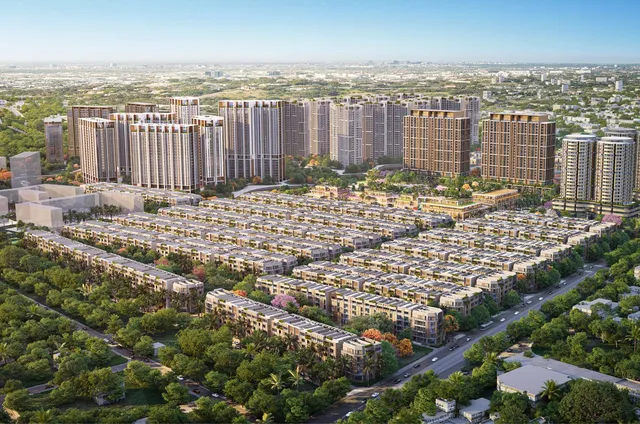 Selling now Foreign quota
 Masterise Homes · Luxury apartment & integrated township
The Global City
An Phu, Thu Duc City (former District 2), HCMC
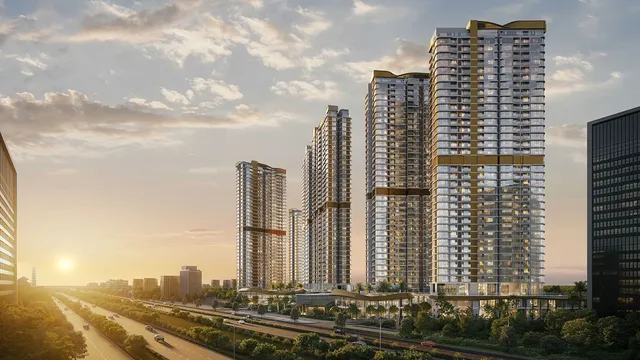 Selling now Foreign quota
 Gamuda Land · Luxury apartment
Eaton Park
An Phu, Thu Duc City, HCMC
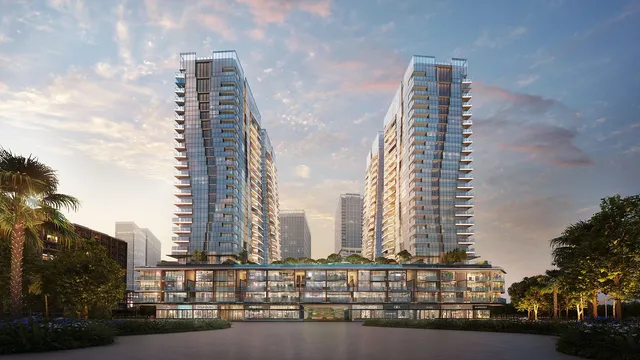 Selling now Foreign quota
 SonKim Land × Hongkong Land · Branded residences
The Metropole Thủ Thiêm
Thu Thiem, Thu Duc City, HCMC