
Serviced Apartment Investment in Vietnam for Foreigners (2026)
Serviced apartments are one of the most talked-about — and most misunderstood — property products for foreign investors in Ho Chi Minh City. They promise higher rent per square metre than a plain condo and a ready tenant base of expat professionals, but they also carry heavier operating costs, tighter legal rules around who can run them, and more dependence on a single demand pool.
This guide explains what a serviced apartment actually is versus a normal condo, an officetel and a condotel; who rents them; the yields you can realistically expect after costs; whether a foreigner can own and operate one; and the areas and risks that matter most in 2026. It is general information only, not legal, tax or investment advice — always confirm specifics with a licensed professional.
What “serviced apartment” actually means
A serviced apartment is a residential unit that comes bundled with hotel-style services: housekeeping and linen changes, furniture, reception or front-desk support, utilities management, and sometimes laundry, gym access or breakfast. The tenant pays a single inclusive rent and walks in with a suitcase. The target market is people who want the privacy and space of an apartment but the convenience of a hotel — typically expatriate executives, relocating families on a corporate package, and long-stay business travellers staying weeks to months rather than days.
That bundling is the whole investment thesis. Because you sell convenience, not just floor space, you can command a higher rent per square metre than an unfurnished long-let condo. But it is also why serviced apartments are operationally demanding: somebody has to clean, restock, handle check-ins, fix the air-conditioning at 9pm, and keep occupancy high enough to cover the fixed staffing cost. A condo you can lease once a year and largely forget; a serviced apartment is a small business.
It is important to separate two different things that both get called “serviced apartments.” One is a purpose-built serviced apartment building run by an operator (think branded residences or dedicated serviced blocks). The other is an individual owner who furnishes a condo and offers light services or short-stay lettings. The legal and tax treatment of these two can differ sharply, and that distinction trips up a lot of foreign buyers.
Serviced apartment vs condo vs officetel vs condotel
These four products look similar on a brochure but sit on different legal foundations. The land-use classification — residential, commercial, or mixed-use/tourism — drives your ownership certificate, your leasehold term, and whether you can legally run the unit as serviced or short-stay accommodation. Get this wrong and you can buy something you cannot operate the way you intended.
| Product | Typical land/legal basis | Foreign ownership | Best for | Investor watch-outs |
|---|---|---|---|---|
| Standard condo (apartment) | Residential | Yes, in eligible projects; ~50-yr renewable leasehold; 30% per-building cap | Long-term residential rental, capital growth | Lower gross yield; furnishing optional |
| Serviced apartment (purpose-built) | Often commercial / mixed-use | Varies by project; may differ from residential rules | Expat long-stay, corporate leasing | Confirm ownership term and operating rights; higher running cost |
| Officetel | Usually commercial / mixed-use | Allowed in some projects; often shorter term | Small office + live, young professionals | Often not classed as full residential; stay/registration limits |
| Condotel | Tourism / commercial | Project-dependent; frequently shorter leasehold | Resort/hotel pooled rental | Operator-dependent income; weaker legal certainty historically |
The single biggest mistake foreign buyers make is purchasing an officetel or condotel believing it is a standard residential apartment, then discovering its commercial or tourism land-use classification limits how long they can register a stay there, or changes their ownership rights. A genuine serviced apartment block may also sit on commercial or mixed-use land. None of this makes these products bad — but each demands that you read the land-use status and the ownership certificate (“pink book”) carefully, with a lawyer, before you sign.
For the underlying rules on what foreigners can buy at all, see our guide on whether Vietnam real estate is a good investment in 2026.
Who rents serviced apartments in HCMC
The tenant base is narrower and more specific than for mainstream rentals, and understanding it is half the investment decision. The core demand comes from:
- Expat professionals and executives on assignment, who want a turnkey home near the office or international schools and whose company often pays.
- Relocating families, particularly in Thao Dien and District 7, who prioritise managed compounds, Western amenities and school proximity over price.
- Long-stay business travellers and consultants doing projects of a few weeks to a few months, who would otherwise be in a hotel.
- Returning Viet Kieu and remote workers who want a serviced base without committing to a year-long unfurnished lease.
This is a higher-paying but thinner and more cyclical pool than ordinary residential tenants. It tracks foreign direct investment, multinational hiring, and corporate travel budgets. When those soften, the serviced segment feels it first — which is why serviced vacancy in HCMC has tended to run higher than mainstream apartments (industry figures often cite serviced vacancy around the mid-teens versus single digits for plain residential). You are trading a higher ceiling on rent for a higher floor on vacancy risk.
Yields: higher gross, but mind the operating drag
Serviced apartments are usually pitched on gross yield, and the numbers look attractive. Well-located serviced or short-stay units in HCMC are commonly quoted at roughly 7–10% gross, versus around 4–6% gross for a plain residential condo. Rents in HCMC have also been rising roughly 5–8% year-on-year on the back of solid GDP growth and tight inner-city supply.
The catch is everything between gross and net. Serviced operation carries costs a long-let condo does not:
- Management or operator fees (often a meaningful slice of revenue)
- Housekeeping, linen and consumables
- Furniture and fit-out, plus periodic replacement
- Higher utilities (you, not the tenant, usually carry them)
- Marketing, platform fees and void-period cleaning
- Higher vacancy between short and medium stays
- Rental tax (covered below)
After all of that, a realistic net yield commonly lands around 4–6% — and the operating-cost load on short-stay/serviced models can absorb something like a third to 40% of gross revenue. In other words, a serviced apartment’s gross advantage over a condo can shrink substantially once you reach the net line, while the workload and risk are much higher. That can still be a good outcome, especially combined with capital appreciation in prime areas, but only if you model it honestly rather than anchoring on the headline gross.
For a fuller treatment of returns, read our dedicated guide on rental yield in Ho Chi Minh City, and for the practical mechanics of leasing, see renting out your apartment in Vietnam.
Can foreigners own and operate one?
Two separate questions hide inside this: can you own it, and can you operate it as a serviced/short-stay business.
Ownership. Under the Housing Law 2023, foreigners can own apartments in eligible projects, generally on a renewable leasehold of up to 50 years, subject to a cap of 30% of the units in any one building. A genuinely positive recent change is that foreign owners may now sell to other foreigners, which improves secondary-market liquidity compared with the old framework. But these residential rules apply cleanly to residential-classified apartments. Where a serviced apartment, officetel or condotel sits on commercial or mixed-use/tourism land, the ownership certificate, leasehold term and conditions can differ from the standard residential pathway — so the land type, confirmed against the project’s legal paperwork and the Land Law 2024 framework, is decisive.
Operating. Running an accommodation business is more regulated than simply owning and renting long-term. Operating serviced or short-stay lettings generally requires that the building’s legal status permits such use, plus business registration, fire-prevention and security compliance, guest reporting to authorities, and proper tax declaration. Critically, Ho Chi Minh City tightened short-term rental rules in 2025, broadly restricting short-stay operations to developments legally designated for tourism or mixed use — a response to noise, safety and security complaints in ordinary residential buildings. Many standard residential condominiums are simply not structured to permit serviced or short-stay operation, even if you own the unit outright. If your plan depends on serviced or short-stay income, confirm the building’s legal status before purchase, not after.
Self-manage vs operator
If the unit can legally be run as serviced, you then choose how to run it:
- Self-manage. You keep more of the gross and control the guest experience, but you take on staffing, scheduling, maintenance calls, marketing and compliance. Realistic mainly if you live in HCMC or have trusted local help. For most non-resident foreign owners, fully self-managing a serviced operation is impractical.
- Professional operator / management company. A specialist handles bookings, housekeeping, maintenance and often compliance, for a fee or revenue share. You trade yield for passivity and professionalism. This is how most foreign owners realistically access the serviced model.
- Long-let furnished hybrid. Many foreign owners land here: furnish the condo well and let it to expat tenants on 6–12 month leases via an agent. You capture some of the serviced premium with far less operational drag and cleaner legal footing than running formal short-stay accommodation.
For many foreign buyers, the furnished long-let hybrid is the pragmatic sweet spot — higher rent than a bare condo, without the regulatory and staffing weight of a true serviced operation.
Best areas in HCMC
Location for serviced and expat-grade rentals is about being where the tenant base already is.
- Thao Dien / District 2 (Thu Duc City). The classic expat-family enclave: international schools, Western dining, managed compounds, riverside living. Strong, sticky demand and premium rents — but also concentrated competition.
- District 7 (Phu My Hung). Planned, green and family-oriented, with international schools and hospitals. A perennial favourite for professionals and families; deep, stable tenant pool.
- District 1. The central business district. Best for corporate short-stay, business travellers and executives who want to walk to the office. Highest prices, strongest short-stay logic, tightest supply.
Each area has different entry prices, supply pipelines and competitive intensity, so the right pick depends on your budget and operating model. Our guide to the best areas to buy property in HCMC for foreigners goes deeper on each district.
Taxes and running costs
For an individual landlord, rental income above the VND 100 million per year threshold (roughly US$4,000) is generally subject to about 5% VAT plus 5% personal income tax — around 10% combined — plus a small business licence tax. Serviced and corporate leases are frequently quoted before tax, so an extra ~10% is added on top. Running the activity as a formal registered business changes the tax treatment and obligations. Thresholds and rates change, so confirm your exact position with a licensed Vietnamese tax adviser. Budget tax alongside management, furnishing, utilities and vacancy when you build your net-yield model.
Risks to weigh honestly
- Operating intensity. This is a business, not a passive asset; underestimating the workload (or the operator fee) erodes returns.
- Demand concentration. Reliance on expat and corporate demand makes income sensitive to FDI cycles, multinational hiring and travel budgets.
- Vacancy. The serviced segment has historically run higher vacancy than mainstream rentals.
- Legal/land-use. Buying an officetel/condotel thinking it is residential, or a unit that cannot legally be run as serviced, can derail the entire plan.
- Capital and liquidity. Furnishing and fit-out are real upfront capital; the 30% per-building cap can affect resale, though foreigner-to-foreigner resale is now permitted.
- Regulatory change. Short-term rental rules tightened in HCMC in 2025 and could evolve further.
Talk to Happy Land
Serviced apartments can outperform plain residential on gross rent and suit investors who want exposure to HCMC’s expat demand — but only when the land-use status, operating rights and net economics genuinely stack up. The honest path is to verify the legal classification first, then model net (not gross) yield with real operating costs, then choose self-manage, operator or furnished long-let.
This article is general information only and not legal, tax or investment advice; figures are indicative and change — engage a licensed lawyer and tax adviser before committing. If you would like help identifying eligible, legally-clear projects for foreign ownership and serviced-style letting in HCMC, reach out to Happy Land on Zalo or WhatsApp, and browse our project listings to see current developer-price, foreign-eligible inventory.
Frequently asked questions
Can a foreigner legally own a serviced apartment in Vietnam?
It depends on how the unit is legally classified. Foreigners can own residential apartments in eligible projects under the Housing Law 2023, typically on a renewable 50-year leasehold and within the 30% foreign-ownership cap per building. A genuine purpose-built serviced apartment block, or an officetel or condotel, may sit on commercial or mixed-use land rather than residential land, which changes the ownership certificate, the leasehold term and your operating rights. Always confirm the land-use classification and the pink book status with a licensed lawyer before signing.
What is the difference between a serviced apartment and a normal condo for an investor?
A normal condo is residential property you rent on a standard 6 to 12-month lease, where the tenant manages their own utilities and cleaning. A serviced apartment bundles housekeeping, linen, often furniture, reception and sometimes meals into the rent, targeting expat professionals and long-stay corporate guests. Serviced units can command higher gross rent per square metre, but they carry materially higher operating costs and need active or outsourced management to keep occupancy up.
What yield can I expect from a serviced apartment in Ho Chi Minh City?
Indicative gross yields for well-located serviced or short-stay units are often quoted at roughly 7 to 10%, versus around 4 to 6% gross for plain residential condos in HCMC. However, after management fees, staffing, utilities, furnishing replacement, vacancy and tax, net yields commonly compress to roughly 4 to 6%. The serviced segment also tends to run higher vacancy than mainstream rentals. Treat all figures as indicative and changing; model your own numbers before committing.
Can I run my Vietnamese apartment as a short-term serviced rental as a foreigner?
Operating an accommodation business is more regulated than simply owning and long-term renting. Running serviced or short-stay lettings generally requires that the building's legal status permits it, plus business registration, fire-safety and security compliance, guest reporting and tax declaration. Ho Chi Minh City tightened short-term rental rules in 2025, broadly restricting short-stay operations to developments legally designated for it. Many ordinary residential condos are not structured for serviced operation, so verify before you buy.
Where are the best areas in HCMC to buy a serviced apartment?
The strongest expat tenant demand sits in Thao Dien and the wider District 2 (Thu Duc City) area, Phu My Hung in District 7, and central District 1. Thao Dien and District 7 are favoured by families and professionals for international schools, Western amenities and managed compounds; District 1 suits corporate short-stay and business travellers. Each area has different price points, supply pipelines and competition, so the right choice depends on your budget and operating model.
What taxes apply to serviced apartment rental income in Vietnam?
For individual landlords, rental income above the VND 100 million per year threshold (around US$4,000) is generally subject to roughly 5% VAT plus 5% personal income tax, about 10% combined, plus a small business licence tax. Serviced or corporate leases are often quoted before tax, so an extra 10% is typically added. Operating as a formal business changes the tax treatment. Rules and thresholds change, so confirm your position with a licensed Vietnamese tax adviser.
Projects for sale now
Get the latest price list, availability & payment terms — free advice via Zalo/WhatsApp.
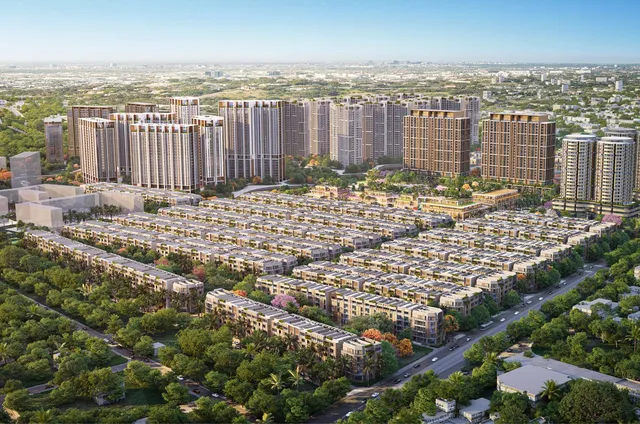 Selling now Foreign quota
 Masterise Homes · Luxury apartment & integrated township
The Global City
An Phu, Thu Duc City (former District 2), HCMC
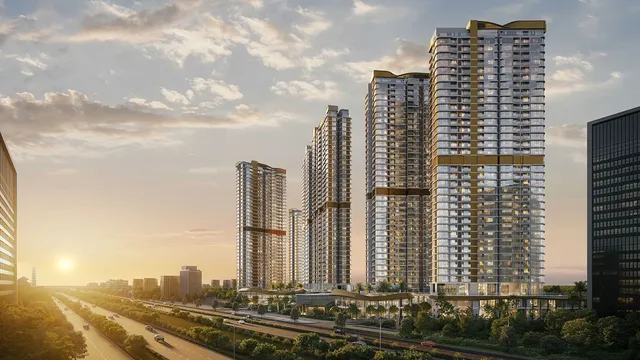 Selling now Foreign quota
 Gamuda Land · Luxury apartment
Eaton Park
An Phu, Thu Duc City, HCMC
 Selling now Foreign quota
 SonKim Land × Hongkong Land · Branded residences
The Metropole Thủ Thiêm
Thu Thiem, Thu Duc City, HCMC