
Rental Yield in Ho Chi Minh City 2026: Gross vs Net by District
If you are weighing an apartment purchase in Ho Chi Minh City (HCMC) for income, the single number that matters most is also the most misunderstood: rental yield. Headline “yields” quoted in agent brochures are almost always gross, before any of the costs that actually hit your bank account. This guide gives you the realistic 2026 picture — gross versus net, district by district, with the real expenses subtracted — so you can underwrite a deal honestly instead of optimistically.
This article is general information for foreign buyers and investors, not legal, tax, or financial advice. Yield figures are market estimates that vary by building, unit, and tenant; tax rules change. Always confirm numbers for a specific property with a licensed advisor.
Rental yields in HCMC are modest by design — gross 3.5–5%, net 2.5–3.5%
The honest headline: Ho Chi Minh City is a capital-appreciation market with thin rental yields, not a high-cashflow market. Across credible 2025–2026 data sets, citywide gross rental yields for apartments cluster around 3.5% to 4.6%, while net yields — what you keep after costs and tax — typically land between 2.5% and 3.5%. Premium, expensive units in District 1 and Thao Dien actually yield the least on a percentage basis (often under 3.5% gross), because prices have run far ahead of rents.
This is normal for a fast-growing Asian city. Investors here have historically been paid through price growth and currency/development upside rather than monthly cashflow. If a seller promises you 7–8% net “guaranteed,” treat it as a marketing claim and ask exactly how it is calculated.
If you want a property matched to a realistic income target rather than a headline, our team can model it with you — book a no-pressure consultation with Happy Land.
Gross vs net: the gap is usually 1.0–1.7 percentage points
Gross yield flatters; net yield is what you actually earn. The formulas are simple, but the discipline is in subtracting every real cost.
- Gross yield = (annual rent ÷ purchase price) × 100
- Net yield = (annual rent − annual costs − tax) ÷ purchase price × 100
Here is a realistic worked example for a mid-market two-bedroom condo, using round 2026 reference figures (illustrative, not a quote):
| Line item | Reference figure |
|---|---|
| Purchase price | US$200,000 |
| Monthly rent | US$700 |
| Annual rent (gross) | US$8,400 |
| Gross yield | 4.2% |
| Building management fee (paid by owner if not passed on) | −US$600/yr |
| Property/leasing management (8% of rent) | −US$672/yr |
| Vacancy allowance (~1 month/yr) | −US$700/yr |
| Repairs, furnishing depreciation, insurance | −US$600/yr |
| Rental tax (see tax section) | −US$0–840/yr |
| Net income | ~US$5,000–5,800 |
| Net yield | ~2.5–2.9% |
The lesson: a “4.2% property” is realistically a 2.5–3.0% net property once you run it like a business. Optimised units in cheaper districts with low vacancy can push net toward 3.5%.
District matters more than building — cheaper districts often yield more
Counter-intuitively, the prestige districts produce the lowest yields, while mid-tier districts produce the highest. Because yield is rent divided by price, the districts where prices have risen fastest (District 1, Thu Thiem, Thao Dien) compress yields, while areas with solid rents but lower entry prices (District 10, Tan Binh, parts of Binh Thanh and Thu Duc) screen better.
The table below is a 2026 directional guide for apartments. Ranges are estimates synthesised from multiple market sources; individual buildings vary widely.
| Area / district | Typical entry price (apartment) | Tenant profile | Est. gross yield | Est. net yield |
|---|---|---|---|---|
| District 1 (central CBD) | Highest in city | Senior expats, executives | ~2.8–3.5% | ~1.8–2.5% |
| Thu Thiem (District 2 area) | Very high, new luxury | Affluent locals, expats | ~3.0–3.8% | ~2.0–2.8% |
| Thao Dien (District 2 area) | High | Western expat families | ~3.2–4.0% | ~2.2–3.0% |
| District 7 / Phu My Hung | High-mid | Korean/Japanese families, locals | ~3.5–4.5% | ~2.5–3.3% |
| Binh Thanh | Mid | Young professionals, locals | ~4.0–5.0% | ~2.8–3.6% |
| District 10 / Tan Binh | Mid-low | Locals, students, workers | ~4.5–5.9% | ~3.0–3.8% |
| Thu Duc (outer / new projects) | Lower | Locals, first-time renters | ~3.5–5.0% | ~2.3–3.5% |
A few honest caveats. Higher headline yields in mid-tier districts often come with higher vacancy risk, more tenant turnover, and rent paid in VND (currency exposure if you think in USD). Expat-heavy Thao Dien and District 7 deliver lower yields but more stable, often USD-referenced, longer leases — many investors accept a lower number for that reliability.
The cost stack: where 1.5 percentage points disappear
Net yield is gross yield minus a predictable stack of costs, so model all of them before buying. The recurring drains in 2026 are:
- Building management fee — charged per sqm; payable monthly. Sometimes passed to the tenant, often not on lower-rent units.
- Property/leasing management — typically 6–10% of collected rent if you use an agency (essential for absentee foreign owners), plus a placement fee of roughly half a month to one month’s rent per new tenancy.
- Vacancy — budget at least 1 month per year; longer in oversupplied submarkets.
- Furnishing, repairs, depreciation — most HCMC rentals are let furnished; furniture wears out and is a real cost.
- Sinking fund — a one-time 2% of the pre-tax value at handover, not annual, but it is real capital.
- Currency conversion / repatriation costs when sending profits abroad — see our guide to repatriating funds from Vietnam property.
For a full breakdown of one-off and ongoing costs, see our taxes and costs of buying property in Vietnam guide.
Rental income tax in 2026: 10% on gross, above a rising threshold
For individual landlords, Vietnam taxes gross rent at a flat 5% VAT plus 5% personal income tax (10% combined) once you exceed an annual revenue threshold. Two changes matter for 2026:
- The combined rate remains 10% of gross rent (not of profit) for revenue above the threshold.
- The tax-free revenue threshold is being raised as part of Vietnam’s 2026 tax reforms — from the long-standing VND 100 million/year to a higher figure (reported in the VND 200 million–500 million range depending on the implementing rule and effective date). Business licence fees on rental activity are also being abolished from 1 January 2026.
Because the exact threshold and timing are being finalised in implementing decrees, you should not plan around a precise number. Treat the above as general information and confirm the current threshold and your filing obligations with a Vietnamese tax professional before relying on it. The practical takeaway: a smaller landlord with one modest unit may fall under the exemption and pay little or no rental tax, while a higher-rent or multi-unit owner should model the full 10% on gross.
If tax and structuring questions are your main hesitation, send your situation to the Happy Land team and we can connect you with the right advisors.
How to actually raise your net yield
You cannot change the district’s average, but you can beat it with execution. The levers that move net yield in HCMC:
- Buy below market, not at launch hype. Your yield is fixed by the price you pay on day one.
- Target mid-tier districts with genuine rental demand (near universities, business parks, metro stations) rather than the most expensive postcode.
- Minimise vacancy with professional management and realistic asking rents — an empty premium unit yields 0%.
- Furnish smartly to the tenant profile rather than over-spending.
- Choose developments with proven leasing track records. Established, well-managed projects let faster and hold rents. Browse our shortlisted HCMC projects, including The Global City, Eaton Park, and Vinhomes Grand Park, each with different yield-versus-appreciation profiles.
New foreign investors should also read our buying process for foreigners and the broader foreigner guide to understand ownership limits (the 30% per-building cap, 50-year leasehold for foreigners) before underwriting any yield.
The bottom line
In 2026, a realistic HCMC apartment delivers roughly 3.5–4.5% gross and 2.5–3.5% net — and the deal lives or dies on price, vacancy, and management, not on the brochure number. Treat anything above that range with healthy scepticism, run the full cost stack, and decide whether you are buying for cashflow (lean toward mid-tier districts) or for stable expat tenancy and appreciation (lean toward District 7 and Thao Dien). Either way, go in with eyes open.
Want a property modelled against a specific net-yield target, with the costs and tax laid out plainly? Talk to Happy Land — we would rather give you an honest number than a flattering one.
Frequently asked questions
What is a realistic rental yield in Ho Chi Minh City in 2026?
For apartments, expect roughly 3.5–4.5% gross and about 2.5–3.5% net after building fees, management, vacancy, and tax. Prestige units in District 1 and Thao Dien often yield less (under 3.5% gross) because prices have outpaced rents, while mid-tier districts such as District 10, Tan Binh, and Binh Thanh can show higher gross figures. These are market estimates, not guarantees.
What is the difference between gross and net rental yield?
Gross yield is annual rent divided by purchase price — the number agents usually quote. Net yield subtracts real costs (building management fee, leasing/property management of roughly 6–10% of rent, vacancy, repairs, and rental tax) before dividing by price. In HCMC the gap is typically 1.0–1.7 percentage points, so a 4.2% gross property is realistically around 2.5–3.0% net.
How is rental income taxed for foreign landlords in Vietnam?
Individual landlords are generally taxed at 5% VAT plus 5% personal income tax — 10% combined — calculated on gross rent, not profit, once annual rental revenue exceeds a set threshold. For 2026 that tax-free threshold is being raised from VND 100 million, and business licence fees on rentals are being removed. Exact figures are being finalised in implementing rules, so confirm your obligation with a Vietnamese tax professional. This is general information, not tax advice.
Which HCMC districts have the highest rental yields?
On a percentage basis, mid-tier districts with lower entry prices but solid rental demand — such as District 10, Tan Binh, and parts of Binh Thanh and Thu Duc — tend to screen highest (estimated ~4.5–5.9% gross). The trade-off is higher tenant turnover and vacancy risk, and rent usually paid in VND. Expat areas like District 7 and Thao Dien yield less but offer more stable, longer tenancies.
Is Ho Chi Minh City property a good cashflow investment?
HCMC is primarily a capital-appreciation market, not a high-cashflow one. Net yields of 2.5–3.5% mean monthly income is modest; historically investors have been rewarded more through price growth and development upside. If you need strong cashflow, set realistic expectations, target mid-tier districts, and manage vacancy tightly. If you prioritise stability and appreciation, expat-focused districts make more sense.
Projects for sale now
Get the latest price list, availability & payment terms — free advice via Zalo/WhatsApp.
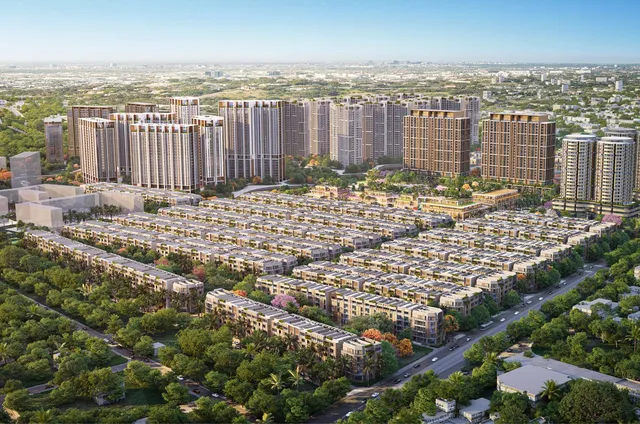 Selling now Foreign quota
 Masterise Homes · Luxury apartment & integrated township
The Global City
An Phu, Thu Duc City (former District 2), HCMC
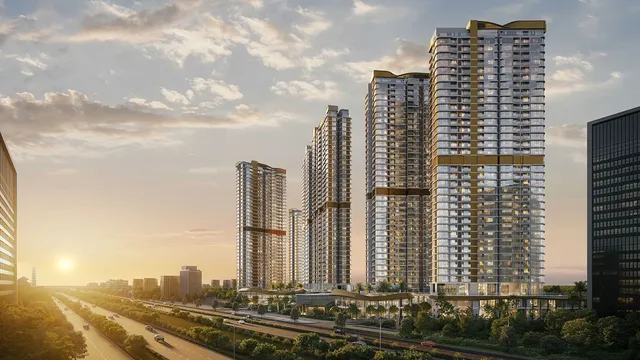 Selling now Foreign quota
 Gamuda Land · Luxury apartment
Eaton Park
An Phu, Thu Duc City, HCMC
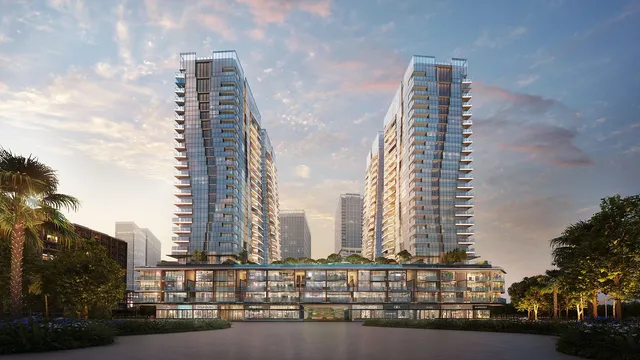 Selling now Foreign quota
 SonKim Land × Hongkong Land · Branded residences
The Metropole Thủ Thiêm
Thu Thiem, Thu Duc City, HCMC