
Retiring in Vietnam: A Foreigner's Property & Living Guide (2026)
Vietnam has quietly become one of Asia’s most talked-about retirement destinations — warm weather, low costs, fast-improving private hospitals and a famously welcoming culture. But there is one fact that surprises almost every foreigner who looks seriously at retiring here: Vietnam has no retirement visa. That single gap shapes everything else, from how you legally stay to whether buying a home makes sense.
This guide is an honest, practical 2026 overview for foreigners considering retiring in Vietnam — why people choose it, the visa reality, whether a retiree can buy and own a home, and how to think about cost of living, healthcare, and leaving the property to your family. It is general information for foreign buyers, not legal, tax, or immigration advice; visa and tax rules change quickly, so confirm your specific situation with a licensed Vietnamese professional before acting.
Why foreigners choose to retire in Vietnam
The appeal is easy to understand once you visit. Vietnam offers a genuinely low cost of living, a year-round warm climate (tropical in the south, four mild seasons in the north), long coastlines, and an expat-friendly culture where retirees report feeling safe and welcomed. Several mid-sized cities now have established foreign communities, English-speaking medical centres, and the cafes, gyms and international groceries that make day-to-day life comfortable.
The headline draw is value. Multiple cost-of-living indices put Vietnam roughly 55–70% cheaper than the United States, and a retiree can live a modern, comfortable life in a coastal city for well under USD 2,000 a month. Private healthcare has improved dramatically — hospitals like FV Hospital in Ho Chi Minh City and the Vinmec network deliver modern facilities with English-speaking staff at a fraction of Western prices. Add fast domestic and regional flights, reliable fibre internet, and a low crime rate, and the lifestyle case is strong.
What holds people back is rarely the lifestyle — it is the paperwork. Vietnam never built a residency program for retirees, so the honest planning question is not “where will I live?” but “on what visa will I legally stay, year after year?” Get that right and the rest follows.
The visa reality: Vietnam has no dedicated retirement visa
Let’s be direct, because a lot of online content blurs this. As of 2026, Vietnam has no retirement visa and no visa category granted on the basis of age, pension income, or retiree status. There is no equivalent of Thailand’s or the Philippines’ retirement visa. Foreigners who “retire” in Vietnam are, in immigration terms, using ordinary visa and residence categories built for other purposes.
A second point that trips people up: owning property does not grant you any visa or right to stay. Property law and immigration law are entirely separate systems in Vietnam. You can buy a qualifying apartment while on a tourist e-visa, and that purchase does nothing to extend how long you may remain. We cover this in depth in our reality-check guide on the Vietnam golden visa & residency through property — essential reading before anyone tells you an apartment comes with residency.
So what do real retirees actually use? Below are the routes in practice. Durations and thresholds are indicative and subject to change.
| Route | Who it fits | Typical stay | Honest notes |
|---|---|---|---|
| TT family visa (married to a Vietnamese citizen) | Foreigners with a Vietnamese spouse, parent or child | Visa up to ~12 months; TRC up to 3 years, renewable | The single best retiree route. Leads to a multi-year temporary residence card and the strongest property rights. |
| 5-year visa-exemption certificate | Spouses of Vietnamese citizens and people of Vietnamese origin (Việt Kiều) | 180 days per entry, renewable; certificate valid 5 years | Excellent if you qualify by marriage or heritage — minimal renewals. Not available to most other foreigners. |
| DT investor visa (DT1–DT4) | Retirees willing to invest in a registered Vietnamese company | 1 year (DT4) up to 5 years (DT1/DT2) | Requires a genuine capital contribution to a company, not a home purchase. Carries tax and compliance costs. |
| DN business visa | Retirees sponsored by a Vietnamese company | Typically up to 12 months | Needs a sponsoring entity; not a clean “passive retiree” fit. |
| E-visa / tourist visa | Anyone, short-term | 90 days (e-visa), often multiple-entry | The default for trial stays and “perpetual visitor” living. Not a long-term residence solution and no path to a TRC. |
The two routes that genuinely suit a retiree are the family-based ones. If you are married to a Vietnamese citizen, the TT visa plus a Temporary Residence Card (TRC) — and potentially the 5-year visa-exemption certificate — is the cleanest, cheapest, longest-lasting path, and it also unlocks the best property rights (more on that below). Việt Kiều (overseas Vietnamese) are in an even stronger position thanks to the Land Law 2024.
For everyone else — a foreigner with no Vietnamese family and no desire to run a company — there is, frankly, no elegant long-term route today. Many such retirees live on rolling e-visas and occasional business visas, accepting periodic renewals and the uncertainty that comes with them. A separate, narrow option exists: a Permanent Residence Card, but the main qualifying routes are three years of continuous family-sponsored residence, recognised contributions to Vietnam, or qualifying employment — not retirement. Always confirm current rules with a licensed Vietnamese immigration lawyer, because immigration practice shifts and a proposed investor “golden visa” remains only a proposal as of 2026.
Can a retiree buy and own a home in Vietnam?
Yes — within clear limits, and with one powerful exception for the married. The framework comes from the Housing Law 2023 and Land Law 2024 (both in force from 2025).
The general rule for foreigners. Eligible foreign individuals can buy apartments (and certain landed homes inside qualifying commercial projects) and hold them on a renewable 50-year ownership term — not the freehold a Vietnamese citizen enjoys. Foreigners cannot own land itself, only the dwelling. Two quotas apply: a building may sell no more than 30% of its apartments to foreigners, and a landed-housing project no more than 10% (or 250 houses) of its homes. We explain the mechanics in Can foreigners own land in Vietnam? and the step-by-step buying process for foreigners.
The marriage exception — and why it matters so much for retirees. A foreigner legally married to a Vietnamese citizen sits in a different, far better position. Married couples can co-own a home with the Vietnamese spouse on standard long-term (effectively indefinite) tenure, outside the 30% quota and outside the 50-year clock. In practice this is the difference between holding a depreciating-tenure leasehold and owning a family home on the same footing as locals. For a retiree planning to live out their years here with a Vietnamese partner, this exception is genuinely transformative — it is one of the main reasons spouse-sponsored retirees are the best-positioned group of all.
The crucial caveat, repeated because it is so often misunderstood: buying a home gives you no visa. Ownership and the right to stay are decided separately. A retiree should plan the property question and the visa question as two distinct projects — and solve the visa first.
Cost of living and healthcare snapshot
Vietnam’s affordability is real but lifestyle-dependent. Coastal cities favoured by retirees are cheaper than Ho Chi Minh City; living “local” costs a fraction of living “Western.” The table below gives indicative monthly figures for 2026 in a typical retiree city such as Da Nang or Nha Trang. For a deeper, district-by-district breakdown of the biggest city, see our cost of living in Ho Chi Minh City 2026 guide.
| Item | Single retiree (USD/mo) | Couple (USD/mo) | Notes |
|---|---|---|---|
| Rent (modern 1–2BR, furnished) | 350–650 | 500–900 | Lower outside city centres; HCMC expat areas run higher |
| Food (mix local + Western) | 250–400 | 450–700 | Local meals from ~USD 2; Western dining adds up |
| Utilities + internet | 60–140 | 80–160 | Air-con in hot season is the main variable |
| Transport | 30–80 | 50–120 | Motorbike, Grab, or occasional taxi |
| Health insurance | 130–340 | 260–680 | International cover; rises sharply with age |
| Comfortable total | ~1,100–1,800 | ~1,800–2,800 | Excludes travel, one-off costs and big medical events |
Healthcare is the line item retirees most often get wrong. Public hospitals are inexpensive but can be inconsistent and crowded; the practical choice for foreign retirees is private care, where consultations commonly start around USD 30–60 and quality at the leading hospitals is genuinely international. The catch is that you pay out of pocket unless insured, and home-country schemes such as US Medicare do not cover treatment abroad. Comprehensive international health insurance is close to non-negotiable for a retiree, and premiums climb steeply with age and pre-existing conditions — get quotes before you commit, as some insurers limit new cover past certain ages.
A quick word on tax: if you stay under 183 days a year and keep no registered permanent home here, you are generally a non-resident for Vietnamese tax and a foreign pension is typically not taxed in Vietnam. Become a tax resident and worldwide income can come into scope. Your home country may still tax the pension regardless. This is genuinely individual — speak to a cross-border tax adviser before relocating.
Best areas for retirees
There is no single “right” answer — it depends on whether you prioritise beach calm, a big-city hospital, or a tight-knit expat scene.
- Da Nang — the consensus favourite. A clean, walkable beach city with modern infrastructure, an international airport, a growing expat community and improving private healthcare. Balanced pace, lower costs than HCMC.
- Hoi An — a UNESCO-listed riverside town near Da Nang, beloved for its slow, cultural lifestyle. Quieter and more charming, with Da Nang’s hospitals 40 minutes away.
- Nha Trang — a beach-resort city with a strong private-healthcare presence and a long-established foreign community; sunny and relaxed.
- Ho Chi Minh City (Saigon) — best if top-tier private hospitals, the widest dining and an international airport hub matter most. Pricier and busier; expat districts include Thao Dien (District 2/Thu Duc) and Phu My Hung (District 7).
- Hanoi — the cultural and historical heart, with four distinct seasons (a real winter), excellent food and strong hospitals. Suits retirees who want city life over beach life.
A practical tip: spend a season in any city before committing. The southern heat is constant; the north has a genuine cool season some love and others dislike.
Buy vs long-term rent for retirees
For most retirees, renting first is the smarter opening move — and for many, the permanent one. Reasons:
- Flexibility. Until your visa pathway is settled and you have lived through a full year in your chosen city, locking capital into a 50-year leasehold is premature. Renting lets you change cities, or leave Vietnam, with weeks of notice.
- Lower commitment and maintenance. Rent shifts upkeep, building fees and the resale risk to the landlord. Furnished apartments are widely available, so you can arrive light.
- Modest yields cut both ways. Net rental yields for foreign landlords are typically a modest ~2.6–3.1% after costs — which is good news for renters: renting is often cheap relative to the capital a purchase would tie up. See our renting vs buying in Ho Chi Minh City discussion for the maths.
When buying does make sense for a retiree: you are confident of long-term residence (a spouse-sponsored retiree is the textbook case), you want a permanent base you can renovate to your taste, or you specifically want a Vietnamese asset to leave to heirs. If you buy, buy carefully — confirm the building’s foreign quota has room, that the project is properly licensed, and that ownership documents are clean. Our buying process for foreigners walks through the due-diligence steps.
Estate and inheritance planning
This is the part retirees postpone and shouldn’t. If you own (or co-own) a home in Vietnam, plan now for what happens to it.
Key principles for 2026: foreign heirs can inherit a Vietnamese apartment if they qualify to own it (the building is within its 30% foreign cap and the heir is eligible). If they don’t qualify, Vietnamese law lets them “enjoy the value” — in practice, sell the unit (often to a Vietnamese buyer, who faces no quota) and remit the net proceeds abroad. So heirs rarely lose the value, even when they can’t keep the apartment. An inheritance does not reset the 50-year clock; the heir takes the remaining term.
Two traps to avoid. First, for real estate located in Vietnam, Vietnamese succession law applies regardless of your nationality — a will drafted purely abroad rarely settles a Vietnamese property cleanly, and it must be legalised, translated and notarised here to be recognised. Second, Vietnam enforces compulsory heirship: certain close relatives (minor children, spouse, dependent parents and adult children unable to work) are each entitled to a minimum share even if your will excludes them. For the full picture — including the family-transfer tax exemptions and the stronger position of spouses and Việt Kiều — read our dedicated guide on inheritance & gifting of property for foreigners. The practical step is simple: sit down with a Vietnamese notary or lawyer and put a recognised, Vietnam-compliant plan in place.
Your retirement-in-Vietnam checklist
| Step | What to confirm | Why it matters |
|---|---|---|
| 1. Visa pathway | Which route fits you (TT/spouse, DT investor, DN, rolling e-visa)? | No retirement visa exists — solve this first |
| 2. Tax position | Resident vs non-resident; home-country and treaty effects | Determines whether your pension is taxed here |
| 3. Healthcare | International insurance quotes before moving | Premiums rise with age; Medicare doesn’t travel |
| 4. Trial stay | Live a season in your shortlisted city | The climate and pace must suit you year-round |
| 5. Rent first | Secure a furnished rental for 6–12 months | Flexibility while you confirm visa and area |
| 6. Buy (optional) | Quota room, clean title, licensed project | Only once long-term residence is certain |
| 7. Estate plan | Vietnam-compliant will + notary | Foreign wills alone rarely settle local property |
Retiring in Vietnam can be wonderful — but it rewards people who plan the unglamorous parts (visa, insurance, estate) as carefully as the beach photos. Solve the visa, insure your health, rent before you buy, and decide on ownership only when long-term residence is genuinely settled.
This article is general information for foreign retirees and buyers, not legal, tax, or immigration advice. Visa, tax and property rules in Vietnam change, and figures are indicative. Always confirm your specific situation with a licensed Vietnamese immigration lawyer, tax adviser, and notary before acting.
If you’d like help thinking through the property side — whether to rent or buy, which projects have foreign-quota availability, and how ownership works for your situation — message the Happy Land team on Zalo or WhatsApp for a straightforward, no-pressure conversation. You can also browse our project listings to see what’s available with developer pricing and live inventory.
Frequently asked questions
Is there a retirement visa for Vietnam in 2026?
No. As of 2026 Vietnam still has no dedicated retirement visa and no visa category based on age, pension income or retiree status alone. Retirees use other routes instead — most commonly the TT family visa via a Vietnamese spouse (which can lead to a multi-year temporary residence card), a DT investor visa tied to a genuine company investment, a DN business visa, or simply rolling 90-day e-visas and short tourist stays. This is general information, not immigration advice; confirm your eligibility with a licensed Vietnamese immigration lawyer.
Can a foreign retiree buy and own a home in Vietnam?
Yes, within limits. Foreigners can buy apartments (and some landed homes in qualifying projects) on a renewable 50-year ownership term, capped at 30% of units per building and 10% of homes in a landed project. You cannot own land outright. The big exception is marriage: a foreigner married to a Vietnamese citizen can co-own a home with their spouse on long-term (effectively indefinite) tenure, outside the quota. Buying a home does not give you a visa — the two are separate legal systems.
How much does it cost to retire in Vietnam per month?
A comfortable single-retiree budget in a coastal city like Da Nang or Nha Trang is roughly USD 1,100–1,800 a month including modern rented housing, a mix of local and Western food, transport and health insurance. Couples often run USD 1,800–2,800. Ho Chi Minh City costs more, especially in expat districts. International health insurance is the line item retirees most often underestimate — budget USD 1,500–4,000+ a year depending on age and cover. Figures are indicative and change.
Should a retiree rent or buy property in Vietnam?
For most retirees, especially in the first one to three years, renting is the safer choice. It avoids tying up capital in a 50-year leasehold, keeps you flexible while you confirm your visa pathway and favourite area, and shifts maintenance to the landlord. Buying makes sense once you are confident of long-term residence — for example a spouse-sponsored retiree — or you specifically want an asset to leave to heirs. Many retirees rent for a year first, then decide.
What happens to my Vietnamese apartment when I die?
Foreign heirs can inherit a Vietnamese apartment if they qualify to own it (building within its 30% quota, eligible heir). If they don't qualify, Vietnamese law lets them 'enjoy the value' — typically by selling the unit and remitting the net proceeds abroad. For real estate in Vietnam, Vietnamese succession law applies regardless of your nationality, and compulsory-heirship rules can override a foreign will, so a will drafted purely abroad rarely settles things cleanly. Plan this with a Vietnamese notary.
Do I pay Vietnamese tax on my foreign pension?
Generally, if you are a non-resident for Vietnamese tax purposes (broadly, present under 183 days a year and without a permanent home registered here), Vietnam taxes only Vietnam-sourced income, so a foreign pension is usually not taxed in Vietnam. If you become a Vietnamese tax resident, worldwide income can fall into scope. Your home country may still tax the pension, and double-tax treaties matter. This is not tax advice — speak to a cross-border tax adviser before you move.
Projects for sale now
Get the latest price list, availability & payment terms — free advice via Zalo/WhatsApp.
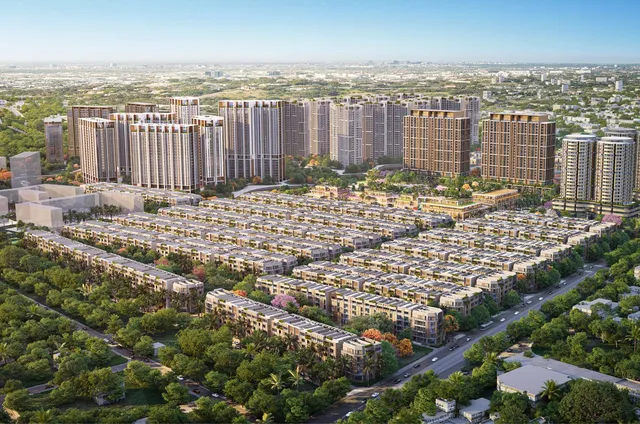 Selling now Foreign quota
 Masterise Homes · Luxury apartment & integrated township
The Global City
An Phu, Thu Duc City (former District 2), HCMC
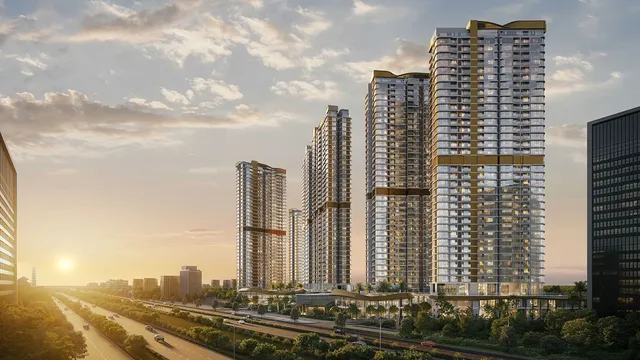 Selling now Foreign quota
 Gamuda Land · Luxury apartment
Eaton Park
An Phu, Thu Duc City, HCMC
 Selling now Foreign quota
 SonKim Land × Hongkong Land · Branded residences
The Metropole Thủ Thiêm
Thu Thiem, Thu Duc City, HCMC