
Capital Appreciation in Vietnam Property: What Foreign Investors Should Expect (2026)
Capital appreciation — the rise in a property’s price over time — is the part of Vietnam’s investment story that gets the most attention and the most hype. For foreign buyers, it is also the part most often misunderstood: primary-market prices in Ho Chi Minh City have risen strongly over the past decade, but that growth has been cyclical, uneven, and is never guaranteed. This guide gives you a sober framework — distinct from rental income — for thinking about price growth as a foreign investor in 2026, with a worked total-return table rather than a promise.
This is general information, not legal, financial or investment advice. Figures are indicative and change. Always engage a licensed Vietnamese lawyer and a qualified tax or financial adviser before committing capital.
Appreciation vs. yield: two different returns
A property generates return in two ways. Rental yield is the annual income you collect (rent, net of costs) expressed as a percentage of the property’s value. Capital appreciation is the change in the property’s price when you eventually sell. They behave very differently and respond to different forces.
Vietnam has historically been a capital-growth market with modest yields. Gross rental yields in central Ho Chi Minh City have typically sat in the low single digits — often around 3% in the city centre and closer to 3.9% outside it — while headline price growth in strong years has been far larger. That is the opposite of mature markets where yields are higher and price growth is slow. The practical implication: if you have historically made money in Vietnam, a large share of it likely came from price appreciation, not rent.
That matters because appreciation is the less reliable of the two. Rent tends to be relatively steady; price growth is cyclical and can stall or reverse. Building your case on appreciation alone is the single most common mistake foreign buyers make. For the income side of the equation, see our dedicated guide on rental yield in Ho Chi Minh City.
What has driven Ho Chi Minh City price growth
Several structural forces have pushed prices up over the past decade, and most remain intact heading into 2026:
- Constrained central supply. Land in the inner districts is scarce and slow to release. New land-price frameworks and revised real-estate laws taking effect from 1 January 2026 raise developers’ upfront obligations, which keeps construction costs — and therefore primary prices — high. Limited supply at the centre supports prices even when demand cools.
- Infrastructure build-out. This is the clearest local driver. Metro Line 2 (Ben Thanh–Tham Luong) broke ground in January 2026 and is targeted for completion around 2030; the Thu Thiem–Long Thanh rail line is slated to start before mid-2026; Ring Road 3 is expected to open to traffic around mid-2026; and Long Thanh International Airport’s first phase is being pushed toward a 2026 commercial opening. Property close to new stations and corridors has historically commanded a premium — units within a short walk of a confirmed metro station have traded at meaningful premiums to comparable units further away.
- Urbanisation and rising incomes. A young, urbanising population and steady GDP growth (commonly in the 6–7% range) expand the pool of domestic buyers, who are the main demand engine. Foreign buyers are a small slice on top.
- Clearer foreign-ownership rules. Foreign individuals can own apartments on a renewable basis (commonly framed as up to 50 years), subject to the 30% cap per condominium project. Clearer rules have supported foreign demand at the margin.
These drivers explain the past. They do not entitle any specific unit to a particular future return.
The honest reality: strong past, modest yields, cyclical growth
Here is the part the hype pages skip. HCMC primary prices have risen sharply at times — in 2025 some quarters showed average apartment prices up more than 20% year-on-year, with the Q4 2025 average reported around US$4,057 per square metre. But 2026 is widely described as a consolidation year, not a boom. The “buy-and-win” mentality of 2020–2022 has largely disappeared, speculative capital is subdued, and higher interest rates from late 2025 squeezed leveraged investors.
Analysts forecasting forward are deliberately modest: typically mid-to-high single-digit annual gains (roughly 5–8%) for well-located projects with clean legal status, with sharp double-digit jumps seen as unlikely. Sharp declines also look unlikely because input costs stay high — but “prices won’t crash” is not the same as “prices will rise.” Quality assets with transparent legal status and genuine cash flow are expected to hold and grind higher; highly leveraged bets on rapid price gains face headwinds.
Treat any single-year growth figure — yours or a salesperson’s — as a scenario, not a forecast. For the broader cycle, read our Vietnam real estate market outlook 2026.
What lifts a specific unit
City-level averages are almost useless for an individual purchase. Two units in the same city can diverge wildly. What separates the winners:
- Micro-location. Proximity to employment, schools and — increasingly — confirmed transport. A 500-metre walk to a metro station can be worth a double-digit premium.
- Infrastructure timeline, not just the promise. Value accrues as a project moves from “announced” to “under construction” to “open.” Buying ahead of a credible, funded, dated project is different from buying on a rumour. Confirm what is actually funded and scheduled.
- Developer brand and delivery record. Established developers deliver on time, at quality, and with cleaner paperwork. Their resale liquidity is better, which protects both upside and downside.
- Off-plan-to-handover uplift. Buying early in a strong project’s launch and holding to handover has historically captured an uplift — but only if the developer delivers and the market cooperates. It is a real lever and a real risk.
- Legal completeness. A clear path to the ownership certificate (the “pink book”), confirmed foreign-ownership quota within the 30% cap, and clean title are what make a unit sellable later. An asset you cannot cleanly resell has no realisable appreciation. This is the single most important downside protection.
Total return = yield + appreciation (a worked example)
The only honest way to judge a purchase is total return, combining income and price change, then subtracting costs, exit tax and currency effects. The table below is an illustration, not a forecast — it shows how the pieces interact for a hypothetical US$200,000 apartment held five years. All figures are indicative and rounded.
| Component | Conservative | Base case | Optimistic |
|---|---|---|---|
| Purchase price (VND, ~US$200,000) | 200,000 | 200,000 | 200,000 |
| Assumed annual price appreciation | 3% | 6% | 9% |
| Price after 5 years (US$ equiv., before FX) | 231,900 | 267,600 | 307,700 |
| Net rental yield p.a. (after costs) | 2.5% | 3.0% | 3.5% |
| Cumulative net rent over 5 years | 25,000 | 30,000 | 35,000 |
| Gross sale price (US$ equiv.) | 231,900 | 267,600 | 307,700 |
| Exit tax: ~2% of transfer price | -4,640 | -5,350 | -6,150 |
| Selling/agency/legal costs (~2%) | -4,640 | -5,350 | -6,150 |
| VND depreciation drag (~4% p.a. vs home ccy) | -41,800 | -48,200 | -55,400 |
| Net proceeds + rent, home-currency terms | ~205,800 | ~238,700 | ~275,000 |
| Approx. total return over 5 years | ~+3% | ~+19% | ~+38% |
Read the conservative column carefully: a 3% annual dong-denominated price rise, after a 2% exit tax, selling costs and currency depreciation, can net out to roughly breakeven once converted home. Appreciation has to clear those drags before you make real money. The base and optimistic columns show healthy returns — but they depend on price growth that is not guaranteed.
The currency factor (do not ignore this)
You transact in Vietnamese dong, but you almost certainly measure success in your home currency. The dong has tended to depreciate gradually against the US dollar: the period-average rate moved from roughly 25,500 VND/USD in 2024 toward 26,000+ in 2025, and analysts forecast further depreciation of about 3–5% in 2026. Against a stronger home currency, the drag can be larger.
The arithmetic is unforgiving: a 7% dong-denominated price gain can shrink to a low-single-digit gain after a 4% currency move. Over a multi-year hold, currency can quietly consume a large slice of your appreciation. Always model your return in your own currency, and consider currency a risk you are taking on top of property risk — not a footnote.
Holding horizon and exit costs
Vietnamese property is illiquid relative to listed assets. Off-plan units take years to hand over; resale can take months to find a buyer, especially in a consolidation phase. A realistic horizon is at least five to seven years — long enough to ride out a cycle, capture infrastructure delivery, and amortise transaction costs. Short holds are punished by entry and exit friction.
On exit, Vietnam generally applies a flat 2% personal income tax on the transfer (sale) price for individuals — not on the calculated gain. You typically pay 2% of the gross sale price whether or not you profited, and you generally cannot deduct your purchase price or renovations. Foreign individuals pay the same rate as locals. Add registration fees, notary and agency costs. Because the tax is on the gross price, it bites even on a flat sale — so factor it into your appreciation assumptions from day one. Our detailed guide on selling property in Vietnam as a foreigner: taxes walks through the mechanics, and the full purchase-side picture is in our Vietnam property investment guide 2026.
A sober checklist before you bank on appreciation
Before assuming price growth, pressure-test the purchase:
- Is the legal path clean? Confirmed foreign-ownership quota, clear route to the ownership certificate, reputable developer.
- Is the infrastructure funded and dated, or just announced? Value accrues to delivery, not press releases.
- Does it work on yield alone? If the rental income roughly covers your holding costs, appreciation becomes upside rather than the whole thesis.
- What is the return in your currency, after exit tax, costs and a realistic VND depreciation assumption?
- Can you hold five-plus years without needing to sell at the wrong moment?
If the deal only works on aggressive appreciation, it is a speculation, not an investment — and 2026 is not a speculator’s market.
Talking to Happy Land
Happy Land works directly with developers on Vietnam’s primary market, so we can show you live inventory, the developer price (no resale markup), confirmed foreign-ownership quota, and the realistic legal and handover timeline for a specific unit — the things that actually drive whether a property can appreciate and be cleanly resold. We will give you the sober version, including the costs and currency drags above, not a guaranteed-returns pitch.
This article is general information only and is not legal, financial or investment advice. Property prices, tax rates, exchange rates and laws change, and outcomes for any individual unit vary widely. Always consult a licensed Vietnamese lawyer and a qualified tax or financial adviser before you buy. To discuss specific projects with the numbers run honestly, message Happy Land on Zalo or WhatsApp, or browse our project listings.
Frequently asked questions
How much do apartments in Ho Chi Minh City appreciate per year?
There is no fixed rate, and past results do not predict the future. Historically, primary-market HCMC apartment prices rose strongly over the 2017-2025 period, with some quarters in 2025 showing year-on-year average price increases above 20%. Most analysts forecasting 2026 onward are more sober, projecting mid-single-digit to high-single-digit annual gains (roughly 5-8%) for well-located projects with clean legal status, and warning that speculative double-digit jumps are unlikely now that easy gains have faded. Appreciation is cyclical, location-specific and never guaranteed.
Is capital appreciation or rental yield more important for foreign buyers in Vietnam?
Both matter, and the honest framing is total return = rental yield + capital appreciation, minus costs, taxes and currency effects. Vietnam has historically been a capital-growth story with modest gross yields (often around 3-4% in central HCMC). That means a large part of any return has come from price appreciation rather than rent. Because appreciation is uncertain and cyclical, you should not buy on the assumption of price growth alone. See our separate guide on rental yield in Ho Chi Minh City for the income side.
Does Vietnam tax the capital gain when a foreigner sells property?
Vietnam generally applies a flat personal income tax of 2% on the transfer (sale) price for individuals, not on the calculated gain. This means you typically pay 2% of the gross sale price whether or not you made a profit, and you usually cannot deduct your purchase price or renovation costs. Foreign individuals pay the same rate as Vietnamese sellers. Registration fees and notary costs also apply. Rules change and exemptions are narrow, so confirm the current treatment with a licensed Vietnamese tax adviser; our exit-tax guide covers this in more detail.
How does the Vietnamese dong affect my returns as a foreign investor?
You buy and sell in dong, but you likely measure success in your home currency. The VND has tended to depreciate gradually against the USD (the average rate moved from roughly 25,500 in 2024 toward 26,000+ in 2025, with forecasts of further 3-5% depreciation in 2026). A 7% dong-denominated price gain can shrink to a low-single-digit gain once converted back to a stronger home currency. Always model your return in your own currency, not just in dong.
What makes one specific apartment appreciate more than another?
Location relative to jobs and transport, the timeline and credibility of nearby infrastructure (metro stations, ring roads, the new Long Thanh airport), the developer's brand and delivery track record, the off-plan-to-handover uplift on well-chosen projects, and legal completeness (clear pink book / ownership certificate path and confirmed foreign-ownership quota). Two units in the same city can perform very differently. Clean legal status and a strong developer protect the downside as much as they support the upside.
Projects for sale now
Get the latest price list, availability & payment terms — free advice via Zalo/WhatsApp.
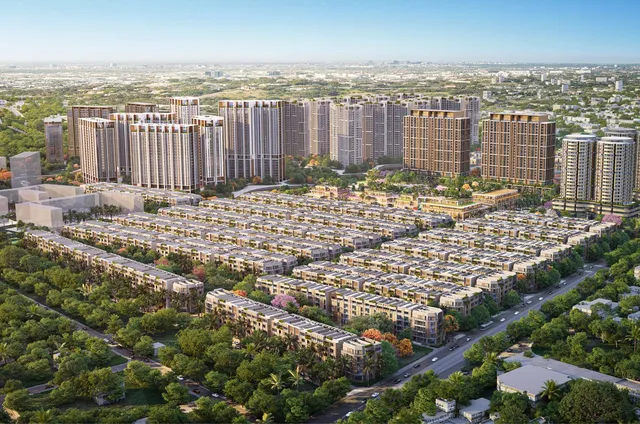 Selling now Foreign quota
 Masterise Homes · Luxury apartment & integrated township
The Global City
An Phu, Thu Duc City (former District 2), HCMC
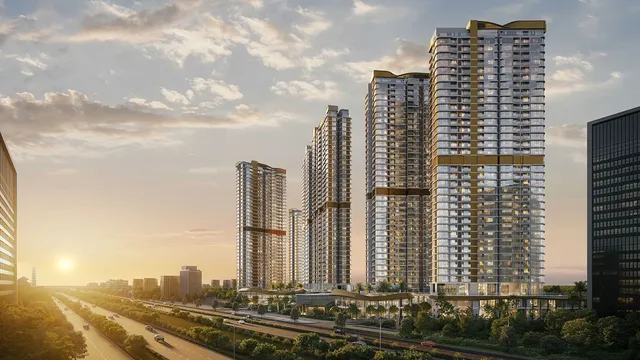 Selling now Foreign quota
 Gamuda Land · Luxury apartment
Eaton Park
An Phu, Thu Duc City, HCMC
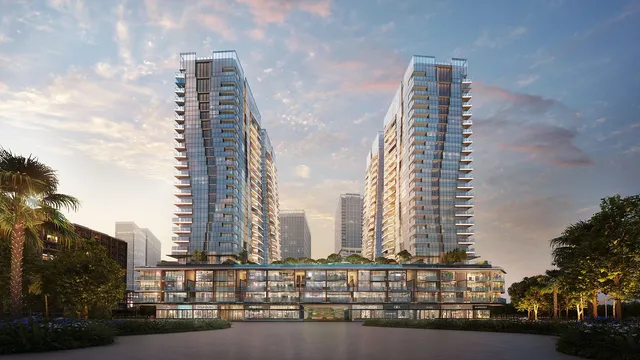 Selling now Foreign quota
 SonKim Land × Hongkong Land · Branded residences
The Metropole Thủ Thiêm
Thu Thiem, Thu Duc City, HCMC