
The New Ho Chi Minh City (2025 Merger): What It Means for Foreign Property Buyers
On 1 July 2025, Vietnam carried out its largest administrative reorganization in decades, and Ho Chi Minh City was one of the biggest changes on the map. The city absorbed the former provinces of Binh Duong and Ba Ria-Vung Tau, the old district (quan/huyen) layer was abolished, and the whole country went from 63 provinces and cities down to 34. If you own property here, are mid-purchase, or are researching your first apartment, this guide explains what actually changed, what did not, and how to read the new city as a foreign buyer.
What the 2025 reorganization actually did
According to public information, from 1 July 2025 Vietnam consolidated 63 provinces and centrally-run cities into 34 first-level units - 6 centrally-run cities and 28 provinces. The reform also removed the intermediate district level entirely, moving the country to a two-tier local government model: the province or city sits directly above wards, communes and special zones. There is no longer a “district” between them.
For Ho Chi Minh City specifically, the change was dramatic. The former HCMC merged with two neighbouring provinces - Binh Duong to the north (Vietnam’s industrial heartland) and Ba Ria-Vung Tau to the southeast (its coast and deep-water ports) - into a single expanded city. According to public information, the new HCMC covers roughly 6,772 km² and is home to about 14 million people, and its share of national GDP rose from around 15.5% to roughly 24%. In one stroke, HCMC became Vietnam’s first true megacity by territory as well as by economy.
The internal map was redrawn too. Instead of the old districts (District 1, District 7, Thu Duc, Binh Duong’s Thu Dau Mot, Vung Tau city and so on), the expanded HCMC is now organized into 168 units: 113 wards, 54 communes and 1 special zone. That special zone is Con Dao, the island group off the southern coast. This “168” figure is why you will see the new administrative structure referred to as “168 wards” in shorthand, even though it is more precisely 113 wards plus 54 communes plus one special zone.
Why this matters for property
A merger of this size touches property in three practical ways: the size and variety of what falls under “HCMC,” the infrastructure story that supports prices, and the official valuation framework used for taxes and fees.
A much larger, more varied city under one name. Before July 2025, a coastal villa in Vung Tau or an industrial-park-adjacent townhouse in Binh Duong was, on paper, in a different province from a District 1 apartment. Now they are all “Ho Chi Minh City.” That gives foreign buyers a far wider menu under a single, internationally recognized city name - dense central urban wards, industrial and logistics corridors, and beachfront areas - without changing the physical distance between them.
Infrastructure is the real engine. The merger is being paired with major connective infrastructure that the market watches closely. According to public information, Ring Road 3 is in its final stages and targeted to be operational around April 2026; Ring Road 4 and the HCMC-Vung Tau expressway are advancing; several metro lines are planned to connect toward the airport; and Long Thanh International Airport (just east of the city, in the direction of the former Ba Ria-Vung Tau area) welcomed its first flights in December 2025 and is preparing phase-1 commercial operation around mid-2026. These projects shorten travel times between the old core, the industrial north and the coast - which is exactly what turns a “merged on paper” city into an economically integrated one.
A unified valuation framework. During the transition after July 2025, the three former areas kept their own official land-price tables. According to public information, HCMC then approved a single unified land-price table applied citywide from 1 January 2026 - the first for the expanded city. The adjustments were uneven: the central former-HCMC core rose only modestly, while faster-growing former-Binh Duong and former-Ba Ria-Vung Tau areas saw larger increases. These tables are used to calculate taxes, registration fees and land-related financial obligations, so they matter for your closing costs even if they are not the same as market price.
The three regions of the new HCMC at a glance
The expanded city is easiest to understand as three broad zones, each with a different character. The table below is a simplified, indicative overview - not an exhaustive or legal description.
| Zone (former unit) | Character | Typical property | What foreign buyers watch |
|---|---|---|---|
| Central core (former Ho Chi Minh City) | Established CBD, mature residential districts, most international amenities | Condos, serviced apartments, some landed homes in projects | Deepest foreign-eligible condo supply; highest official land prices (~VND 687m/m² on Dong Khoi, Nguyen Hue, Le Loi per public information); modest land-table increase |
| Industrial north (former Binh Duong) | Manufacturing and logistics hub, fast-growing new townships | New apartment projects, townhouses near industrial parks | Rental demand from workers/experts; larger land-table increases; heavier speculation risk on merger hype |
| Southeast coast (former Ba Ria-Vung Tau) | Beach, deep-water ports, tourism and second-home market | Coastal apartments, villas, resort-style projects; Con Dao special zone | Lifestyle and tourism demand; airport and expressway upside; verify project legal status carefully |
Prices, distances and administrative details are indicative and change over time. For a specific project, always confirm the current ward/commune name, the developer’s legal paperwork and the foreign quota. To see how these zones compare for a foreign buyer’s shortlist, our guide to the Best areas to buy property in HCMC for foreigners breaks it down in more detail.
What did NOT change: foreign-ownership rules
This is the single most important point for our clients, so we will be blunt: the 2025 merger was an administrative and territorial reform, not a change to foreign-ownership law. According to public information, the rules that govern whether and how a foreigner can buy are set by the Housing Law 2023 and the Land Law 2024, and those were not rewritten by the reorganization.
In practice, the core framework foreign buyers already knew still applies:
- Property type. Foreigners can generally buy apartments and licensed landed homes within eligible commercial housing projects - not agricultural land, and not “land use rights” in their own name the way Vietnamese citizens can.
- Quotas. Foreigners may own up to 30% of the apartments in any single building, and up to 250 landed houses in an area equivalent to one ward.
- Term. A foreign individual’s ownership term is 50 years from the certificate date, extendable once if conditions are met.
None of these numbers were changed by the merger. What did change is the geography those quotas are measured against - for example, “an area equivalent to one ward” now refers to the new post-merger wards. For a full plain-English explanation of what foreigners can and cannot own, see Can foreigners own land in Vietnam?.
Just as importantly, according to public information, existing certificates (“pink books”) remain valid. Nobody has to re-issue a title simply because a district was abolished or a ward was renamed. Your ownership is not weakened by the address change; you typically update the address at your next transaction or through normal administrative channels.
What changes in day-to-day terms for owners and buyers
Your address. Many addresses were rewritten. A property once described as “District X, HCMC” or “Thu Dau Mot, Binh Duong” may now sit in a newly named ward or commune of the expanded HCMC. This is cosmetic for your legal title but real for practical life: utility accounts, delivery, bank records and contracts may reference the new name. Keep both the old and new address on file during the transition.
How to read listings. Because Vung Tau and Binh Duong are now “HCMC,” a listing that says “Ho Chi Minh City” can be an hour or more from District 1. Do not assume city-centre proximity from the city name alone - check the specific ward/commune and the real travel time. This is a new source of confusion that did not exist before July 2025.
Closing costs and valuations. With the unified land-price table from 1 January 2026, the official values used for fees and taxes were reset citywide. Ask for the current figures for your specific location before budgeting closing costs, especially in former-Binh Duong and former-Ba Ria-Vung Tau areas where the increases were larger.
Speculation caution. Merger news is a classic trigger for price spikes, particularly on the fast-growing fringes now labelled “HCMC.” Some of that reflects genuine long-term upside from integration and infrastructure; some is short-term hype that can reverse. Anchor your decision to the specific project’s legal status, developer track record, handover timeline and real end-user or rental demand - not to headlines. For our broader read on where the market is heading, see the Vietnam real estate market outlook 2026.
A practical checklist for foreign buyers in the new city
Before you commit in the expanded HCMC, run through this short list:
- Confirm the exact location. Get the new ward/commune name and cross-check the real distance and travel time to where you actually want to be. “HCMC” is now a big place.
- Verify foreign eligibility per project. The city label does not make a project foreign-eligible. Confirm the specific project is licensed for foreign ownership and that its 30% building quota is not already full.
- Check the legal paperwork. Ask to see the project’s approvals and the basis for issuing pink books to foreign buyers. Coastal and newly urbanizing areas especially reward careful due diligence.
- Budget with the 2026 land table. Use current official values for your location to estimate fees and taxes, not last year’s numbers.
- Match the zone to your goal. Central core for liquidity and rental depth; industrial north for yield tied to jobs; coast for lifestyle and tourism upside - each carries a different risk profile.
The bottom line
The 2025 reorganization made Ho Chi Minh City much bigger and more varied - one megacity that now includes industrial Binh Duong and coastal Ba Ria-Vung Tau, organized into 168 wards, communes and a special zone, with the district layer gone. For infrastructure, scale and long-term positioning, that is a genuinely positive story. But for the practical question “can I, a foreigner, buy this, and is my title safe?” the answer is unchanged: the same Housing Law and Land Law rules apply, existing pink books remain valid, and eligibility is still decided project by project. The main new discipline is reading addresses carefully and treating merger-driven price spikes with a cool head.
This article is general information based on public sources as of 2026 and is not legal advice; administrative and pricing details can change, so please verify specifics with official sources (the local land office and your project’s licensing) or a licensed advisor before acting. If you would like help checking whether a specific building or area in the new HCMC is foreign-eligible - and to compare live, developer-price inventory across the central core, the industrial north and the coast - message us anytime on Zalo or WhatsApp, or start with Browse projects.
Frequently asked questions
Did the 2025 merger change the rules on foreigners buying property in Vietnam?
No. The reorganization was an administrative and territorial change, not a change to the Housing Law 2023 or Land Law 2024. According to public information, foreign individuals can still own apartments and licensed landed homes in eligible projects, capped at 30% of the units in any one apartment building and up to 250 landed houses in an area equivalent to one ward, on a 50-year ownership term that can be extended once. The merger did not tighten or loosen these limits. Always confirm a specific project's foreign quota before you commit.
My apartment's address changed after the merger. Is my pink book still valid?
Yes. According to public information, existing certificates (pink books) remain valid and there is no forced re-issuance simply because a district was abolished or a ward was renamed. Your title is not weakened by the address change. You can update the address on the certificate later when you next transact (sale, mortgage, or inheritance) or through the normal administrative channel. Keep both the old and new address references on file, and verify your specific case with the local land office.
Is Vung Tau or Binh Duong now legally part of Ho Chi Minh City?
Yes. Since 1 July 2025 the former Binh Duong province and the former Ba Ria-Vung Tau province were merged into an expanded Ho Chi Minh City. Coastal Vung Tau and industrial Binh Duong are now wards and communes of the same city, not separate provinces. This is why property listings there increasingly say 'HCMC' - but the on-the-ground location, distance, and travel time to the old central core have not changed, so read addresses carefully.
Will the merger make property in the expanded city more expensive for foreigners?
It can push prices up in specific corridors, but not everywhere and not overnight. The official land-price tables (used for taxes and fees) were unified from 1 January 2026, with larger increases in fast-growing former Binh Duong and Ba Ria-Vung Tau areas than in the central core, according to public information. Market prices often move on infrastructure news (Ring Road 3, metro, Long Thanh airport) and can overshoot, so treat sharp 'merger spikes' with caution and focus on real end-user demand and delivery track record.
Which areas count as 'Ho Chi Minh City' now for a foreign buyer?
The expanded HCMC now spans roughly 6,772 km2 and about 14 million people across 168 wards, communes and one special zone (Con Dao), including the former Binh Duong and Ba Ria-Vung Tau territories. For a foreign buyer this means a much wider menu under one city name - central urban wards, industrial-adjacent zones, and coastal areas - but foreign-eligibility still depends on the specific project, not on the city label. Confirm eligibility project by project.
Should I wait for prices to settle before buying in the new city?
There is no single right answer. If you are an end-user or long-term holder in an established, foreign-eligible project with clear legal paperwork, the merger does not change your fundamentals. If you are chasing quick gains in a newly 'HCMC' fringe area purely on merger hype, more caution is warranted because speculative spikes can reverse. Decide based on the specific project's legal status, developer track record, handover timeline and genuine demand - message us and we can pull live, foreign-eligible inventory to compare.
Projects for sale now
Get the latest price list, availability & payment terms — free advice via Zalo/WhatsApp.
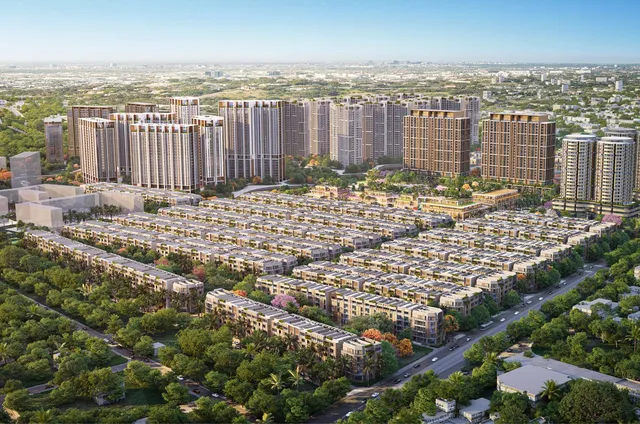 Selling now Foreign quota
 Masterise Homes · Luxury apartment & integrated township
The Global City
An Phu, Thu Duc City (former District 2), HCMC
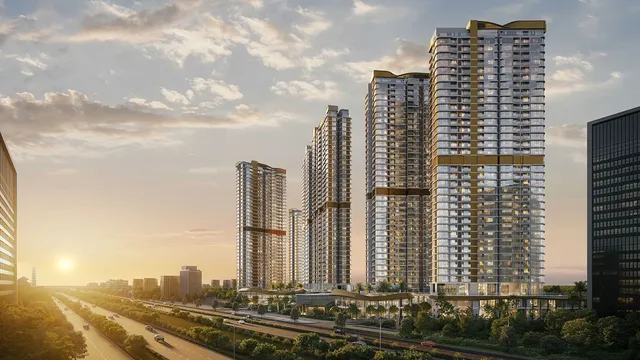 Selling now Foreign quota
 Gamuda Land · Luxury apartment
Eaton Park
An Phu, Thu Duc City, HCMC
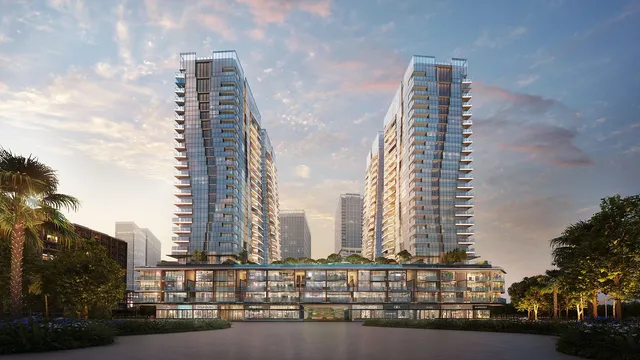 Selling now Foreign quota
 SonKim Land × Hongkong Land · Branded residences
The Metropole Thủ Thiêm
Thu Thiem, Thu Duc City, HCMC