
Vietnam Real Estate Market Outlook 2026 (HCMC Guide)
Ho Chi Minh City enters 2026 as the commercial heart of a newly enlarged “megacity,” with record primary apartment prices, a thin pipeline of new launches, and three landmark infrastructure projects — the Metro, Ring Road 3, and Long Thanh International Airport — all reaching milestones within the same 12 months. For foreign buyers and expat investors, the question is no longer whether the market is growing, but where in this fast-changing map the value sits. This guide breaks down the 2026 outlook across prices, supply, infrastructure, and foreign demand, with honest caveats throughout.
Disclaimer: This article is general market information, not investment, legal, or tax advice. All prices are reference ranges that move quickly; verify current figures and your eligibility with a licensed agent and lawyer before committing. Happy Land is an HCMC-based project distributor, not a regulator or financial adviser.
The headline: a high-priced, supply-constrained market with strong long-term fundamentals
The 2026 HCMC market is defined by record prices, scarce new supply, and powerful infrastructure-led tailwinds — a combination that rewards selective, long-horizon buyers over speculators. Average primary apartment prices in core HCMC reached an all-time high of roughly US$7,300/m² in Q1 2026, up sharply year-on-year, while citywide median resale pricing sits closer to US$3,650/m² (about 95 million VND/m²) depending on district and segment. That gap reflects a market where premium, fully-permitted launches dominate the new pipeline and affordable stock has all but vanished from central districts.
At the same time, Vietnam’s macro backdrop remains one of Asia’s strongest. The World Bank projects around 6.3% GDP growth for 2026 — among the best in East Asia and the Pacific — while more bullish houses such as VinaCapital model 8% in a base case. Registered FDI jumped 36% year-on-year to US$15.2 billion in Q1 2026, with manufacturing the dominant driver. For property, the takeaway is simple: the demand engine (jobs, wages, urbanisation) is intact, even as near-term affordability is stretched.
If you want to translate these dynamics into specific buildings and price points, the fastest route is to browse Happy Land’s current HCMC project list and compare live availability against the trends below.
Prices in 2026: premium-led, with a widening affordability gap
Expect prices to stay anchored at high levels in 2026, driven by input-cost pressure, scarce central land, and a launch mix skewed toward luxury. More than half of recent new launches were priced at 100 million VND/m² or higher, and the premium segment continues to set the pace. JLL expects roughly 9,000–9,300 new high-end units to launch across 2026, led by major developers such as Vingroup and Masterise.
| Segment (HCMC, 2026 reference) | Indicative primary price | Notes |
|---|---|---|
| Mass / mid-market (outer zones) | ~40–60 million VND/m² | Increasingly rare in core districts |
| High-end | ~70–100 million VND/m² | Bulk of new launches |
| Luxury / branded (Thu Thiem, D1) | 100 million VND/m²+ | Sets the headline records |
These are reference ranges only and vary by project, view, floor, and payment terms. The honest caveat: the same forces pushing prices up — limited supply, rising mortgage rates, and inflation — could also temper buyer appetite later in the year, particularly if global conditions weaken. A high asking price is not the same as a high return. To understand which projects justify their premium, the Happy Land advisory team can walk you through comparable pricing building by building.
Supply: a tight 2026 pipeline that gradually loosens
New supply is unusually tight at the start of 2026, but regulatory reforms are positioned to unlock stalled projects over the year. Core HCMC saw only around 1,200 new units launched in Q1 2026 — down sharply both quarter-on-quarter and year-on-year — as developers adopted a cautious “wait-and-see” stance. Across the full year, the city is projected to bring roughly 17,200 apartments to market, concentrated in large, legally-clean urban areas.
The more important structural story is reform. Land-clearance and licensing changes introduced under the Land Law 2024 and related decrees are expected to revive a large share of previously stalled projects — by some estimates up to 80% — which should ease the supply crunch over 2026–2027. For buyers, this means two things: legally-complete projects command a scarcity premium today, and patience may reward those willing to wait for a wider, more diverse pipeline. Either way, confirming a project’s legal status (the pink book / permit trail) is non-negotiable; our step-by-step buying process guide for foreigners explains exactly what to check.
Infrastructure: the three projects reshaping the 2026 map
The single biggest 2026 catalyst is infrastructure — Metro expansion, Ring Road 3, and Long Thanh Airport are all hitting milestones that redraw where value accrues. Transport access is the clearest driver of location premiums in HCMC, and three projects matter most.
HCMC Metro
Metro Line 1 (Ben Thanh–Suoi Tien) has been running since December 2024 and is designed to scale toward 600,000+ daily riders by 2030. The bigger 2026 news is Line 2: construction of the Ben Thanh–Tham Luong section broke ground in January 2026 (targeting 2030 completion), followed by groundbreaking on the Ben Thanh–Thu Thiem extension in April. Properties within walking distance of confirmed stations — especially along Line 1 corridors like Thu Duc — have historically captured the strongest uplift. Vinhomes Grand Park in Thu Duc is a frequently-cited example of a transit-and-township play.
Ring Road 3 (Vanh Dai 3)
The 76+ km Ring Road 3 expressway had passed roughly 73% completion by early 2026, with the full loop targeted to open by 30 June 2026 and a key elevated section slated to open earlier. By linking Thu Duc, the former Binh Duong and Dong Nai areas, and the Long Thanh corridor, Ring Road 3 compresses commute times across the entire eastern and northern growth belt — directly benefiting township projects on the city fringe.
Long Thanh International Airport
Long Thanh is the region’s once-in-a-generation catalyst. After a December 2025 technical opening, full commercial operations are scheduled to begin around mid-2026 (with the government setting Q4 2026 as the latest deadline), starting at an initial capacity scaling toward 25 million passengers a year and expanding from there. Sitting in Dong Nai, southeast of the city, the airport — paired with Ring Road 3 and the HCMC–Long Thanh–Dau Giay expressway — is reshaping the eastern corridor into a logistics, tourism, and residential frontier.
The “megacity” effect: a bigger, multi-centred HCMC
The July 2025 administrative merger turned HCMC into a multi-centred megacity, materially expanding the addressable property map. HCMC absorbed Binh Duong and Ba Ria–Vung Tau, creating a metropolis of roughly 6,772 km² and about 14 million people. Crucially, the merged city’s share of national GDP jumped from around 15.5% to roughly 24%, fusing HCMC’s finance and services with Binh Duong’s manufacturing and Ba Ria–Vung Tau’s ports, energy, and coastal tourism.
For buyers, this is more than a line on a map. It means industrial demand, port logistics, and beach-tourism markets now sit inside one administrative unit with coordinated planning — and that Thu Thiem is being built out as the new financial and administrative core, anchored by a ~47-hectare central square and the Metro Line 2 extension. Branded and luxury stock in this zone, such as The Metropole Thu Thiem, is positioned around that long-term institutional shift, while master-planned eastern hubs like The Global City target the broader Thu Duc growth story.
Foreign demand: real, rising, but quota-constrained
Foreign demand is structurally strong in 2026, but the 30% building quota and leasehold rules make eligibility — not just budget — the binding constraint. Under the Housing Law 2023 and Land Law 2024, foreign individuals can buy apartments and certain houses inside approved commercial projects on a 50-year renewable leasehold. Two caps govern availability:
- Condominiums: foreigners may own up to 30% of units in any single building.
- Landed property: capped at roughly 250 houses per 10,000-population ward area.
In high-demand HCMC projects, the foreign quota can fill before completion — sometimes well before — so the “available to foreigners” pool is much smaller than the headline launch numbers suggest. This is the single most common surprise for first-time foreign buyers, and why eligibility must be confirmed project-by-project, in writing, before you transfer any deposit. Our foreigner guide covers documentation, payment routing, and the practical questions to ask a developer.
Rental yields and the realistic investor case
HCMC offers moderate gross yields with meaningful capital-growth upside — a market for appreciation more than cash flow. Gross residential yields in 2026 typically run 3.5%–4.5%, with prime D1 and Thao Dien luxury units closer to 3% and compact studios/one-bedrooms reaching up to ~7% in the best locations. The honest number to plan around is the net yield: after management fees, vacancy, and costs, foreign landlords using a manager often net roughly 2.6%–3.1%.
That makes the realistic thesis clear: HCMC is primarily a capital-appreciation play powered by infrastructure and urbanisation, with rental income as a partial offset to holding costs — not a high cash-yield market. Currency exposure (VND), exit liquidity, and the leasehold clock all factor into total return. For a deeper, numbers-first breakdown, see our HCMC rental yield guide, and weigh yields against the capital-growth corridors mapped above.
How to approach the 2026 market as a foreign buyer
Putting it together, a disciplined 2026 strategy looks like this:
- Prioritise legal completeness. With supply tight, fully-permitted projects are worth a premium; never compromise on the permit trail.
- Buy the infrastructure, not the hype. Confirmed Metro stations, Ring Road 3 interchanges, and the Long Thanh corridor are the durable value drivers.
- Confirm foreign quota in writing — first. Eligibility, not budget, is the real gatekeeper.
- Model net yields and currency, not gross headlines. Plan for appreciation with modest income.
- Use a local, accountable partner to verify everything before you commit funds.
You can read more about how Happy Land works with foreign buyers on our about page.
Conclusion
The Vietnam (HCMC) real estate outlook for 2026 is genuinely two-sided: prices are at record highs and central affordable supply is scarce, yet the long-term fundamentals — 6%+ GDP growth, record FDI, a transformative megacity merger, and a once-in-a-generation infrastructure wave — are among the strongest in Asia. The winners in this market will be selective, patient, well-advised buyers who anchor decisions to legal certainty and confirmed infrastructure rather than headlines. If that describes you, the next step is a grounded conversation about specific, foreign-eligible projects — reach out to the Happy Land team to start.
Frequently asked questions
Is 2026 a good time for foreigners to buy property in Ho Chi Minh City?
It depends on your goal. The fundamentals are strong — 6%+ GDP growth, record FDI, the megacity merger, and major infrastructure all support long-term value. But prices are at record highs and new central supply is tight, so 2026 favours selective, long-horizon buyers focused on legally-complete, foreign-eligible projects rather than short-term speculators. This is general information, not investment advice.
How much do apartments cost in HCMC in 2026?
As a reference, average primary prices in core HCMC reached roughly US$7,300/m² in Q1 2026, with citywide median resale pricing nearer US$3,650/m². Most new launches are high-end or luxury (70–100 million VND/m² and above). Actual prices vary widely by district, project, floor, and view, so always verify current figures with a licensed agent.
Can foreigners legally buy apartments in Vietnam, and what are the limits?
Yes. Under the Housing Law 2023 and Land Law 2024, foreign individuals can buy apartments and certain houses in approved commercial projects on a 50-year renewable leasehold. Foreign ownership is capped at 30% of units per condominium building, and quotas apply project-by-project. In popular HCMC projects the foreign quota can fill quickly, so confirm eligibility in writing before paying any deposit.
How will Long Thanh Airport and Ring Road 3 affect property prices?
Both are major 2026 catalysts for the eastern and northern growth corridors. Long Thanh International Airport is scheduled for full commercial operations around mid-to-late 2026, and Ring Road 3 is targeted to open fully by 30 June 2026. Together with the HCMC–Long Thanh–Dau Giay expressway, they cut commute times and tend to lift land and township values along their corridors over time — though uplift is location-specific, not guaranteed.
What rental yield can I expect from a HCMC apartment in 2026?
Gross residential yields typically run about 3.5%–4.5% in 2026, with compact studios and one-bedrooms reaching up to ~7% in prime spots and luxury units closer to 3%. After fees, vacancy, and management, foreign landlords often net around 2.6%–3.1%. HCMC is best viewed as a capital-appreciation market with modest rental income rather than a high cash-yield one.
Projects for sale now
Get the latest price list, availability & payment terms — free advice via Zalo/WhatsApp.
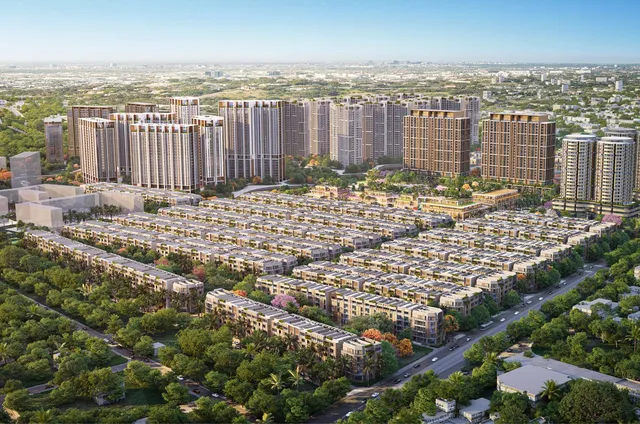 Selling now Foreign quota
 Masterise Homes · Luxury apartment & integrated township
The Global City
An Phu, Thu Duc City (former District 2), HCMC
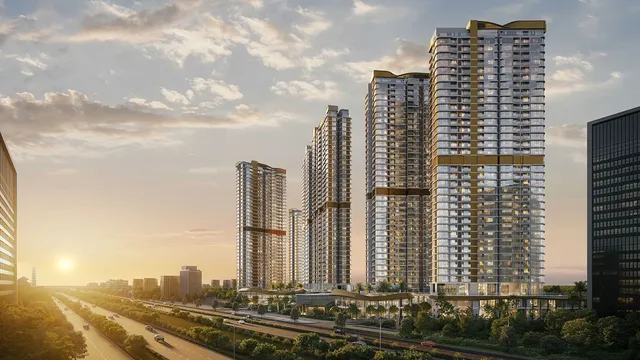 Selling now Foreign quota
 Gamuda Land · Luxury apartment
Eaton Park
An Phu, Thu Duc City, HCMC
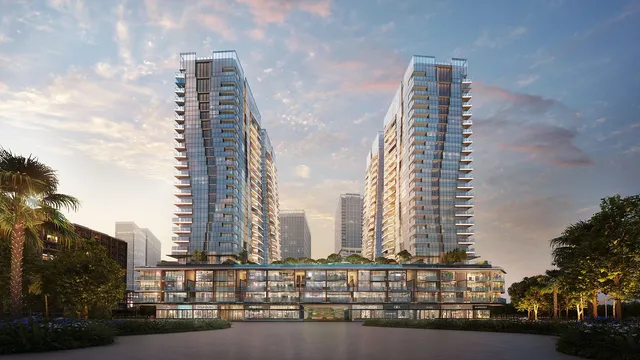 Selling now Foreign quota
 SonKim Land × Hongkong Land · Branded residences
The Metropole Thủ Thiêm
Thu Thiem, Thu Duc City, HCMC