
Can You Airbnb Your Apartment in Vietnam? Short-Term Rental Rules for Foreign Owners (2026)
“Can I just put my Vietnam apartment on Airbnb?” is one of the most common questions foreign owners ask — and one where the confident “yes, here’s how” advice floating around online is often wrong or dangerously out of date. The honest 2026 answer is that short-term rental of an ordinary residential apartment in Vietnam is tightly restricted, the rules in Ho Chi Minh City changed twice in about a year, and even where the city permits it your building can still say no. This guide lays out the real framework, why it exists, what actually clears you to host short-term guests, and the low-risk way most owners end up earning rental income instead.
This is general information current to mid-2026, not legal or tax advice. Short-term rental rules are changing quickly and vary by city and building; figures and decisions cited are reported and subject to change. Confirm the current local regulation, your building’s rules, and your tax position with the authorities and a licensed Vietnamese lawyer before you act.
The short answer: restricted, not a free-for-all
If you own an ordinary residential apartment, you cannot assume you may list it for nightly, Airbnb-style stays. Across 2025 and 2026, the direction of travel in Vietnam — and especially in Ho Chi Minh City — has been to treat short-term lodging in residential buildings as something that requires the right unit type, a licence, and the building’s blessing, rather than a default owner right.
There are effectively three gatekeepers you have to clear, and any one of them can stop you: the unit’s legal use/function, the city’s current regulation and licensing requirement, and your building’s own management-board rules. Miss any one and you are exposed to fines, forced cessation, and conflict with your management board. We will take them in turn.
The legal backbone: apartments are for living in
The foundation is the 2023 Housing Law (effective 1 August 2024), which prohibits using a residential apartment for non-residential purposes (Article 3.8 is the provision commonly cited). Running an apartment as a rotating short-stay lodging business is, in the authorities’ reading, a non-residential (commercial lodging) use — which is why it can be restricted even though you own the unit.
This is a national principle, and the Ministry of Construction has issued guidance reinforcing that apartments should not be used for non-residential purposes. Cities then implement and enforce it through their own regulations on the management and use of apartment buildings. In other words: national law sets the “residential use only” rule; local decisions and building rules put teeth on it.
Ho Chi Minh City’s back-and-forth: 2025 ban, 2026 conditional re-allowance
Ho Chi Minh City is where this has been most visible, and its recent history is the clearest illustration of how unsettled the area is.
- 2025 — ban. HCMC issued a regulation on the management and use of apartment buildings (reported as Decision 26/2025/QĐ-UBND, dated 27 February 2025) that banned short-term (Airbnb-style) rentals in ordinary residential apartments, leaving short stays permissible only in tourism-designated developments such as condotels. Officials pointed to safety: most residential buildings lack the fire-safety systems, separate power and water infrastructure, dedicated lifts and waste handling that a stream of transient guests requires.
- 2026 — conditional re-allowance. Rather than keep a flat ban, HCMC moved to a conditional framework (reported as Decision 19/2026/QĐ-UBND on the management and use of apartment buildings, reportedly effective 25 April 2026). The reported shift is that apartment use must align with the type and intended function of each unit, and for short-term tourist rental within apartment buildings, owners must register as licensed accommodation providers and comply fully with Vietnam’s tourism laws.
The takeaway is not the exact decision number or date — those are reported and may be refined — it is the shape of the rule: short-term rental is being pulled into the licensed-accommodation and tourism-law world, not left as an informal owner activity. Because it changed twice quickly, treat any blog post (including this one) as a starting point and verify the current HCMC regulation before you list anything.
The three gatekeepers you must clear
Putting it together, before a single night is booked you need all three of these to line up.
| Gatekeeper | What it means | How to check |
|---|---|---|
| Unit type & function | Is the unit an ordinary residential apartment, or a tourism-designated / mixed-use unit built for short stays? | Certificate, project approvals, developer/management confirmation |
| City regulation & licence | Does the current local rule permit short-term tourist rental, and does it require you to register as a licensed accommodation provider under tourism law? | Current provincial/city decision; local authority |
| Management board rules | Does the building’s operating regulation allow transient short-term guests at all? | The building’s rules; the management board (BQT/BQL) |
Note the asymmetry: the city can permit short-term rental and your building can still forbid it. Management boards in a number of HCMC buildings prohibit short-term tenants outright, and those internal rules bind you as an owner. So even a perfectly licensed setup fails if your building says no.
Why buildings and cities resist it
Understanding the “why” helps you assess a specific building honestly. The core objections are practical:
- Fire safety. Residential buildings are certified for residential occupancy, not hotel-style transient use; a churn of guests who don’t know the building raises real evacuation and PCCC (fire prevention and fighting) risk. Officials have noted that most mixed-use residential buildings fail short-stay safety standards. Our apartment fire-safety (PCCC) checklist explains what a compliant building looks like.
- Security and residents. Long-term residents object to strangers with keys/fobs cycling through lifts and lobbies; management boards field the complaints.
- Infrastructure. Water, power and waste systems sized for residents can be strained by hotel-style turnover.
These are the reasons a management board’s prohibition tends to stick, and why the national rule frames apartments as residential in the first place.
The compliant path most owners actually take: long-term leasing
Here is the practical conclusion. For the large majority of foreign owners of ordinary residential apartments, the sensible, low-risk way to earn rental income is long-term residential leasing — monthly or (more commonly) yearly tenancies.
Long-term leasing aligns with the unit’s residential purpose, sidesteps the tourism-licensing and short-stay-safety layer entirely, is accepted by management boards, and is far easier to run — especially remotely. It is still taxable rental income, so factor that in. See renting out your apartment in Vietnam for the how-to, Ho Chi Minh City rental yields for the numbers, and rental income tax for foreigners for the tax treatment.
If your goal genuinely is short-stay or tourist income, the compliant vehicle is a tourism-designated product or a licensed serviced-apartment operation, not an ordinary residential unit repurposed as a hotel room. Our guide to serviced-apartment investment covers that category, which is designed and permitted for exactly this use.
If you still want to pursue short-term rental — a compliance checklist
Should you own (or plan to buy) a unit where short-term rental is genuinely on the table, work through this before counting on any income:
- Confirm the unit’s type and function in writing — is it tourism-designated / mixed-use, or ordinary residential? This is the first fork in the road.
- Read the current city regulation, not last year’s news. Does it permit short-term tourist rental for your unit type, and what licence does it require?
- Register as required — under the 2026 HCMC direction, that means registering as a licensed accommodation provider and complying with tourism law (guest reporting, safety, tax).
- Get the management board’s written position. If they prohibit short-term guests, stop here — their rule binds you.
- Meet fire-safety (PCCC) and guest-registration obligations as an accommodation provider, including reporting temporary stays.
- Sort the tax treatment for short-stay/tourism income with an adviser; it differs from simple residential rent.
- Get professional sign-off. A licensed Vietnamese lawyer should confirm your specific setup is compliant before you invest in furnishing and listing.
If any step returns a “no,” treat that as the answer for that unit — not a hurdle to work around.
What this means for foreign owners specifically
Foreign ownership does not add a special short-term-rental right — the restrictions above apply to owners generally, and a foreign owner also has to keep everything within the lawful, documented framework that protects their ability to repatriate income later. The clean pattern is: buy a residential apartment for capital growth and long-term rental, or buy into a tourism-designated product specifically if short-stay income is the plan and you will complete the licensing. What you should avoid is buying an ordinary apartment on the assumption that you can quietly Airbnb it — that assumption has been getting less safe, not more, and it puts you crosswise with both the city and your building.
Conclusion
Can you Airbnb your Vietnam apartment? For an ordinary residential unit, usually not without clearing three gatekeepers — the unit’s function, the current city licence regime, and your building’s own rules — and the framework has been tightening and shifting, most visibly in Ho Chi Minh City’s 2025 ban and 2026 conditional re-allowance. The dependable way to earn from your apartment is long-term leasing; the dependable way to earn short-stay income is a tourism-designated or licensed serviced product. Verify the current rules for your specific building and unit before you rely on any short-term plan.
This article is general information only and not legal or tax advice. Rules cited (the 2023 Housing Law, HCMC apartment-management decisions, tourism-licensing requirements) are reported, evolving, and vary by locality and building. Confirm the current position with the relevant authorities, your building’s management board, and a licensed Vietnamese lawyer before acting.
As a primary-market distributor in Ho Chi Minh City, Happy Land can help you tell residential from tourism-designated stock and choose a unit that fits your actual rental plan. Browse current projects or contact our team on Zalo or WhatsApp to talk through a compliant rental strategy for your budget.
Frequently asked questions
Can a foreigner legally Airbnb their apartment in Vietnam?
Only under tight, evolving conditions — not freely. Vietnam's 2023 Housing Law (Article 3.8) prohibits using a residential apartment for non-residential purposes, which is the basis authorities use to restrict Airbnb-style short-term lets in ordinary apartments. Ho Chi Minh City banned them for ordinary residential units in 2025, then moved to a conditional model in 2026 that ties short-term tourist rental to the unit's designated function plus registration as a licensed accommodation provider. On top of that, in practice your building's own operating rules can restrict or prohibit short-term guests, and those rules bind owners. Because the framework changed twice in about a year, confirm the current local regulation and your building's rules before relying on any of this.
Is Airbnb outright banned in Ho Chi Minh City?
It is not a simple yes/no. For ordinary residential apartments, HCMC effectively banned short-term (Airbnb-style) rentals in 2025, allowing short stays only in tourism-designated developments such as condotels. In 2026 the city shifted from a flat ban to a conditional framework (reported as Decision 19/2026/QĐ-UBND, reportedly effective 25 April 2026) that permits short-term tourist rental only where the unit's type and function allow it and the owner registers as a licensed accommodation provider under tourism law. So it is neither a blanket ban nor a free-for-all — it is conditional, and the details are still settling.
What about condotels or serviced apartments — can those be short-let?
Yes, that is the point of the distinction. Tourism-designated developments (condotels) and licensed serviced-apartment operations are built and permitted for short stays, with the fire-safety, utility and management systems that transient guests require. Ordinary residential apartments generally are not. If short-term or tourist income is your goal, a genuinely tourism-designated product — or a properly licensed serviced-apartment setup — is the compliant route, not an ordinary residential unit repurposed as a hotel room.
Can my building's management board stop me even if the city allows it?
Yes. Apartment management boards routinely prohibit short-term and transient guests for security, fire-safety and nuisance reasons, and their internal rules bind owners. Even where short-term rental is conditionally permitted, a building's own prohibition can in practice stop you. Always read the building's operating rules before assuming you can host short-term guests.
What is the low-risk way for a foreign owner to earn rental income?
Long-term residential leasing — monthly or yearly tenancies — is the straightforward, compliant path. It aligns with the apartment's residential purpose, avoids the licensing and tourism-law layer that short-term lodging triggers, and is still taxed as rental income. For most foreign owners this is the sensible default unless you specifically own a tourism-designated unit and complete the required licensing. It is also far easier to manage remotely.
Projects for sale now
Get the latest price list, availability & payment terms — free advice via Zalo/WhatsApp.
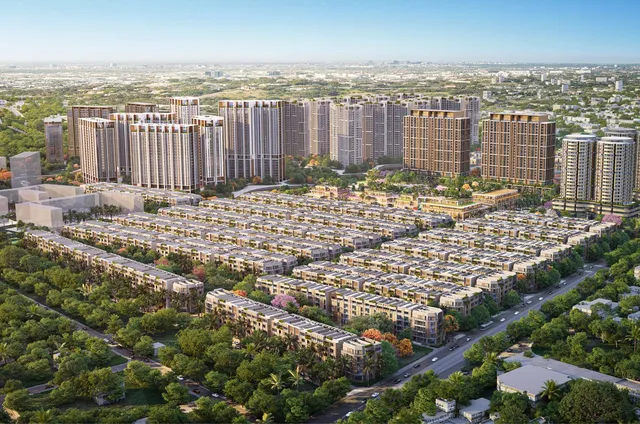 Selling now Foreign quota
 Masterise Homes · Luxury apartment & integrated township
The Global City
An Phu, Thu Duc City (former District 2), HCMC
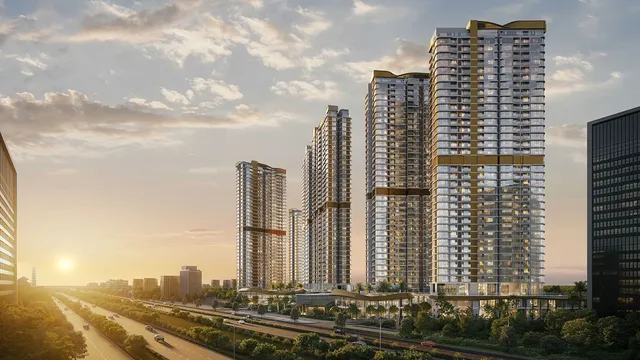 Selling now Foreign quota
 Gamuda Land · Luxury apartment
Eaton Park
An Phu, Thu Duc City, HCMC
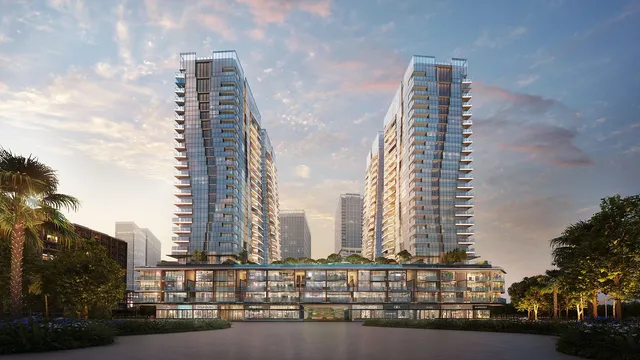 Selling now Foreign quota
 SonKim Land × Hongkong Land · Branded residences
The Metropole Thủ Thiêm
Thu Thiem, Thu Duc City, HCMC