
Vinhomes Review: Is It a Good Developer for Foreign Buyers? (2026)
Vinhomes is the name that comes up first for almost every foreign buyer researching new-build property in Vietnam — and for good reason. It is the country’s largest residential developer, the property arm of the Vingroup conglomerate, and the builder behind the mega-townships (Grand Park, Ocean Park, Smart City, Royal Island) that have reshaped the skylines around Hanoi and Ho Chi Minh City.
This review looks at Vinhomes specifically through a foreign buyer’s lens: what makes it a genuinely strong choice, where the honest downsides lie, which of its projects suit foreigners, and what you must verify before you sign anything. It is general information, not investment advice — figures are indicative and you should always confirm the legal documents for your specific unit.
Who is Vinhomes?
Vinhomes Joint Stock Company is the residential real-estate developer within Vingroup, one of Vietnam’s largest private conglomerates. It was spun off and listed on the Ho Chi Minh Stock Exchange in 2018 under the ticker VHM, where it is one of the most heavily weighted stocks on the index. According to public information, Vingroup holds a majority stake, with institutional investors such as Singapore’s GIC and KKR also on the register — a shareholder base that, for a foreign buyer, signals a level of governance and disclosure you don’t get from a private, single-owner developer.
The scale is the headline. Vinhomes describes a land bank on the order of 16,000+ hectares across dozens of provinces and cities, and it has delivered tens of thousands of homes across its completed townships. In one recent half-year alone it handed over several thousand low-rise units at a single project (Ocean Park 2), which tells you something important: this is a developer with the balance sheet and construction machinery to actually finish what it starts. For off-plan buyers, “will this get built and handed over?” is the single biggest risk — and Vinhomes has one of the strongest answers to that question in the market.
Vinhomes has also collected the expected industry recognition. It has been named Vietnam’s most reputable real-estate company by Vietnam Report for multiple consecutive years, and has picked up regional developer awards (according to public award listings). Treat awards as reputational signals rather than guarantees, but the consistency is notable.
The mega-township model and the “Vin ecosystem”
Vinhomes’ signature product is not really the apartment — it is the self-contained township, marketed as a “city within a city.” A flagship like Vinhomes Grand Park spans hundreds of hectares with tens of thousands of units, wrapped around a large central park and a full suite of on-site services.
That suite is the Vin ecosystem, and it is the real differentiator:
- Vinschool — private bilingual schools from kindergarten to high school, on site.
- Vinmec — private hospital or clinic network for healthcare within the township.
- Vincom — shopping malls anchoring the retail and F&B offer.
- Parks, sports facilities, internal shuttle buses, and increasingly EV infrastructure tied to Vingroup’s VinFast electric vehicles.
For a foreign family relocating to Vietnam, this integration is genuinely valuable: school, clinic, mall, gym and green space are a walk or a shuttle ride away, in a managed, secure environment with international-standard common areas. For a foreign investor, the ecosystem supports a deep, reliable rental market — tenants (expats and rising local middle class alike) pay for the convenience, which underpins occupancy.
The flip side of “city within a city” is density. These are very large communities with tens of thousands of residents, high-rise clusters, and the traffic and crowding that come with them. Some buyers love the energy and amenity; others find it impersonal or too busy. It is a matter of preference, but it is a real characteristic to weigh, not a marketing detail.
Foreign ownership: quota, eligibility and the pink book
Under Vietnam’s Housing Law, foreigners can own apartments in eligible condominium projects, but no more than 30% of the units in any single building may be foreign-owned. Crucially, this is counted per building, not per project. In a township with dozens of towers, each tower carries its own 30% allowance — so a sold-out foreign quota in one tower does not close the door on the tower next door. But popular buildings do fill their foreign quota, after which new foreign buyers can only buy from an existing foreign owner. We explain the mechanics in detail in The 30% foreign-ownership quota explained.
Two eligibility points matter specifically for Vinhomes’ product mix:
- Apartments vs. landed homes. Foreigners can generally buy apartments in eligible buildings. Landed villas and townhouses — a big part of the mega-township offer — are more restricted for foreign ownership, and some products sit on land tenures that change the picture. Confirm your target product type is actually available to foreigners.
- Live quota, in writing. Even in an eligible tower, you need the current foreign-quota figure for your exact unit before you pay a deposit. Get it in writing.
On the pink book (the Land Use Rights & house ownership Certificate, or Sổ Hồng) — the document that proves your ownership — Vinhomes’ scale is a genuine advantage. It has issued pink books across many completed projects, which is exactly the track record the safe-developer checklists tell foreign buyers to look for. That said, pink-book issuance to foreign owners in Vietnam can still take from many months to several years after handover, and that delay affects resale liquidity. Best practice: ask to see evidence of pink books already issued to foreign owners in the same or a comparable Vinhomes building, rather than assuming.
Which Vinhomes projects suit foreign buyers?
Happy Land distributes three Vinhomes projects, spanning very different maturity stages. Naming them honestly matters, because a completed, occupied township carries very different risks to a mega-project that has just broken ground.
| Project | What it is | Stage (public info) | Foreign-buyer note |
|---|---|---|---|
| Vinhomes Grand Park | ~271 ha “city within a city” township in Thu Duc (former District 9), HCMC, with the full Vin ecosystem | Largely completed and occupied; ongoing new phases | Most foreign-ready of the three — eligible apartment towers, live rental market, on-site schools/clinic/mall. Verify quota per tower and pink-book status. |
| Vinhomes Green Paradise Can Gio | ~2,870 ha coastal “megacity” in Can Gio, southeast HCMC, next to the UNESCO mangrove reserve; international hotel brands planned | Early stage — construction commenced 2025 per public information | Long-horizon, off-plan bet. Verify legal status, bank guarantee, licensing stage and foreign eligibility very carefully before any deposit. |
| Vinhomes Saigon Park Hoc Mon | ~1,080 ha township in Hoc Mon, the northwestern gateway to HCMC | Early stage — groundbreaking late 2025, phase-1 sales expected 2026 per public information | Early off-plan. Confirm the selling entity, contract type, licensing and foreign quota before committing. |
Vinhomes Grand Park is the natural starting point for most foreign buyers because it is already built and lived-in. You can see the finished product, the amenities work, and there is an active rental market — indicative net rental yields in the Thu Duc area are often cited around the 6–8% range (indicative, not guaranteed, and dependent on unit and timing). The honest caveats are density and distance: Grand Park sits well outside the central core, and the real-world commute to Districts 1 and 3 can run 40–60 minutes today, easing as Metro Line 1 and Ring Road 3 mature.
Green Paradise Can Gio and Saigon Park Hoc Mon are a different proposition entirely: enormous, early-stage master plans with long delivery horizons. Their upside is buying into a Vinhomes township early; their risk is everything that comes with off-plan purchases years from completion. For these, the developer’s strong balance sheet is reassuring, but your due diligence on legal status, licensing stage, bank guarantee and foreign eligibility needs to be even more rigorous.
You can see the full current line-up on our all projects page.
Strengths vs. points to verify
An honest, balanced summary for a foreign buyer:
| Strengths | Points to verify |
|---|---|
| Vietnam’s largest residential developer; listed (VHM), part of Vingroup — strong balance sheet and disclosure | Being big doesn’t waive your due diligence — check the specific unit, not the brand |
| Proven delivery at scale; low completion/abandonment risk vs. weaker developers | Off-plan mega-projects (Can Gio, Hoc Mon) still carry timeline and phasing risk |
| Pink books issued to owners across many completed projects | Confirm pink-book evidence for foreign owners in your building; issuance can still take years |
| Vin ecosystem (Vinschool, Vinmec, Vincom, parks) — real lifestyle and rental appeal | Density and very large resident populations; not to everyone’s taste |
| Deep, active rental markets in flagship townships | Secondary prices can swing; some towers sit near or below primary price for a time |
| Multiple towers per township = more foreign-quota headroom | Quota is per building and can be full in popular towers — get the live figure in writing |
| Professional, consistent property management | Monthly management fees, plus advance-fee prepayment at handover — budget for them |
| Metro and ring-road links improving outer-township access | Today’s commute from outer townships to the centre can be long |
The honest downsides for a foreign buyer
To keep this review balanced, the recurring criticisms worth taking seriously:
- High density. The flagship townships are huge and can feel crowded. If you want a quiet, low-rise, low-traffic setting, a Vinhomes mega-township may not suit you.
- Management fees. Expect an ongoing monthly service charge, often with one to a few years prepaid at handover. It buys genuine service quality, but it is a real, recurring cost that eats into net yield.
- Secondary-price swings. Vinhomes launches a lot of supply. In some towers and periods, resale prices have moved sideways or sat below the primary price for a while before recovering. Plan your holding period and don’t assume quick capital gains.
- Distance from the centre. Grand Park, and especially the newer Can Gio and Hoc Mon projects, are well outside central HCMC. Infrastructure is coming, but factor today’s commute into rental and resale expectations.
- Leasehold term. Foreign apartment ownership is a 50-year term from pink-book issuance, with renewal possible but not guaranteed — a factor for very long-term holders and heirs.
- Off-plan risk on new projects. Vinhomes’ financial strength lowers, but does not remove, the standard off-plan risks on early-stage mega-projects. Verify legal and bank-guarantee status.
What a foreign buyer must verify
Vinhomes’ brand strength is a good reason to shortlist a project — it is not a substitute for checking your own transaction. Before you pay any deposit, get written confirmation of:
- Foreign quota for your exact unit and building (per-building 30% cap, live figure).
- Contract type — a true sale-and-purchase leading to a pink book, not a long-term lease dressed up as ownership.
- Legal status and bank guarantee for off-plan units, plus the licensing/construction stage on new mega-projects.
- Selling entity — whether you are buying from Vinhomes / an authorised distributor or from a reseller, and on what terms.
- Pink-book evidence for foreign owners in the same or comparable Vinhomes building.
Always use independent local legal counsel to review the documents, and transfer funds only through official banking channels. Our step-by-step guide, How to vet a property developer in Vietnam, walks through exactly what to ask for.
The verdict
For a foreign buyer, Vinhomes is one of the safest developer defaults in Vietnam: the largest, listed, deep-pocketed builder with a proven record of completing projects and issuing pink books at scale, wrapped in a lifestyle ecosystem that supports both living and letting. That safety is real and it is rare in this market. The trade-offs — density, fees, secondary-price volatility, distance and off-plan risk on the newest projects — are equally real, and they should shape which Vinhomes project you choose and how long you plan to hold. A completed township like Grand Park is a very different risk profile to an early-stage megacity like Can Gio.
This is general information, not investment advice, and all figures here are indicative. Before committing to any Vinhomes unit, verify the legal documents, the live foreign-ownership quota, and the selling entity for that specific project and building.
Want help checking foreign-quota availability, the legal status, and pricing for a specific Vinhomes tower? Message us on Zalo or WhatsApp for current inventory and honest guidance, or browse the full line-up on our all projects page.
Frequently asked questions
Is Vinhomes a good developer for foreign buyers?
For most foreign buyers, Vinhomes is one of the safest developer choices in Vietnam. It is the country's largest residential developer, listed on the Ho Chi Minh Stock Exchange (VHM) as part of Vingroup, with a long, verifiable record of completing large projects and issuing pink books (the LURC ownership certificate) at scale. The main trade-offs are high density in its mega-townships, ongoing management fees, secondary-price volatility, and distance from the city centre for some projects. It is a strong default, but you still verify the foreign quota, legal status, and selling entity for your specific unit and building.
Which Vinhomes projects can foreigners buy, and is there a quota?
Foreigners can buy apartments in eligible Vinhomes condominium buildings, subject to Vietnam's 30% foreign-ownership cap, which is counted per building, not per project. In a huge township like Vinhomes Grand Park, that means each individual tower has its own 30% allowance, and popular towers can fill up. Some product types (certain landed villas and townhouses, or projects on leased land) may be restricted or unavailable to foreigners. Always get the live foreign-quota figure for your exact unit and building confirmed in writing before you pay any deposit.
How long does Vinhomes take to issue the pink book (ownership certificate)?
Vinhomes has issued pink books (Land Use Rights Certificates) at large scale across completed projects, which is a genuine strength versus weaker developers. However, in Vietnam generally, pink-book issuance to foreign owners can still take from many months to several years after handover, and delays affect resale. Ask your agent or the developer to show evidence of pink books already issued to foreign owners in the same or a comparable Vinhomes building, and treat the timeline as something to verify, not assume.
What are the main downsides of buying a Vinhomes apartment as a foreigner?
The honest downsides are: high density and very large resident populations in the flagship townships; monthly management fees plus advance-fee prepayment on handover; secondary-market prices that can swing and, in some towers, sit below or take time to exceed the primary price; distance from central Districts 1 and 3 for outer townships (a longer commute until metro and ring-road links mature); and the 50-year leasehold term with renewal that is possible but not guaranteed. None of these are unique to Vinhomes, but they matter for your exit and yield.
Is Vinhomes Grand Park good for foreigners?
Vinhomes Grand Park in Thu Duc (former District 9) is one of the most foreign-friendly Vinhomes townships: it is completed and occupied, has a full Vin ecosystem on site (Vinschool, Vinmec clinic, Vincom mall, a large central park), an active rental market popular with tenants, and eligible towers for foreign buyers. The trade-offs are its size and density and its distance from the centre, though Metro Line 1 and Ring Road 3 improve access. Confirm the foreign quota and pink-book status for the specific tower and unit before committing.
How do I verify a Vinhomes project before buying?
Get written confirmation of: the live foreign-ownership quota for your building; the sale-and-purchase contract type (true ownership with a future pink book, not a long-term lease); the legal status and any bank guarantee for off-plan units; the selling entity (whether you are buying from Vinhomes/an authorised distributor or a reseller); and, for new mega-projects, the construction and licensing stage. Use independent local legal counsel and transfer funds only through official banking channels. Our guide on how to vet a Vietnamese developer walks through each step.
Projects for sale now
Get the latest price list, availability & payment terms — free advice via Zalo/WhatsApp.
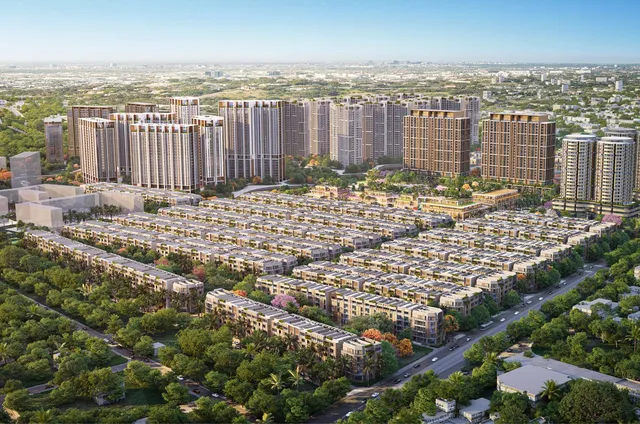 Selling now Foreign quota
 Masterise Homes · Luxury apartment & integrated township
The Global City
An Phu, Thu Duc City (former District 2), HCMC
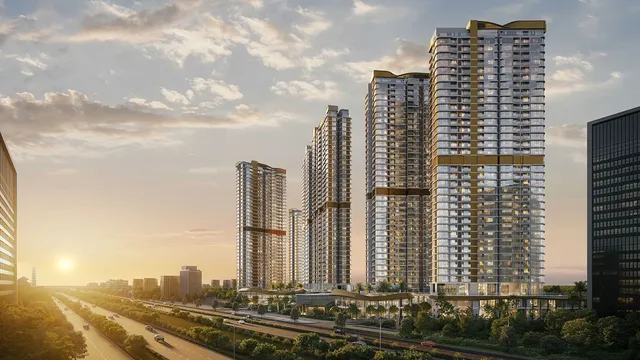 Selling now Foreign quota
 Gamuda Land · Luxury apartment
Eaton Park
An Phu, Thu Duc City, HCMC
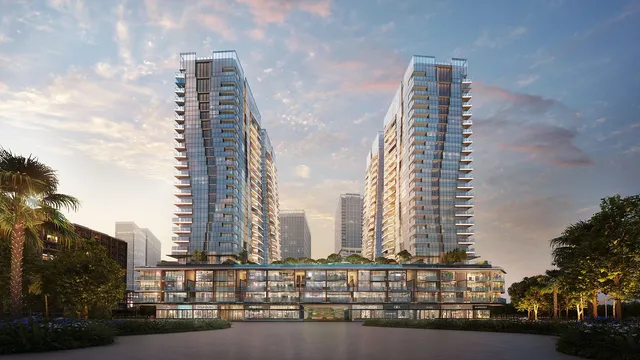 Selling now Foreign quota
 SonKim Land × Hongkong Land · Branded residences
The Metropole Thủ Thiêm
Thu Thiem, Thu Duc City, HCMC