
How to Vet a Property Developer in Vietnam Before Buying Off-Plan (2026)
When you buy an off-plan apartment in Vietnam, you are not really buying a home — you are buying a developer’s promise to build one and hand it over with a clean title. That promise is only as good as the company behind it. The single biggest risk in any off-plan purchase is not the floor plan, the price, or even the exchange rate; it is the developer failing to finish, finishing late, or finishing without ever delivering a pink book (the ownership certificate).
This guide gives foreign buyers a practical framework for vetting the developer before you sign or deposit. It is not a ranking of “best” developers — those lists go stale and a strong brand never replaces project-level due diligence. Instead it shows you what to verify, which signals separate a serious developer from an unknown one, and the red flags that should make you walk away.
Why the developer is the off-plan risk
With a completed, occupied building you can inspect the unit, confirm the title exists, and see that residents live there. With off-plan you are paying in installments for something that does not yet exist, sometimes years before handover. Every protection you have — your money back, your title, your building actually getting built — depends on the developer’s solvency and integrity.
Foreign buyers carry extra exposure. You may not read Vietnamese contracts fluently, you cannot easily chase a developer through local courts, and you are often buying remotely. Many foreign owners also report waiting two to five years for their pink book to be issued after completion — and whether that happens at all depends heavily on the developer’s diligence and finances. If you only do one piece of due diligence on an off-plan deal, make it the developer.
If you are still weighing off-plan against a finished unit, read our companion guide on off-plan vs completed property in Vietnam first — it frames the trade-off this guide assumes you have already made.
The four pillars of developer vetting
Think of vetting in four layers. Reputation tells you what kind of company you are dealing with; the legal sale conditions tell you whether this specific project is allowed to be sold to you at all; financial health tells you whether they can finish; and the contract tells you what you can recover if they do not.
1. Delivery track record
A developer’s history is the best predictor of your outcome. The questions that matter most:
- Do past projects finish, and roughly on time? Look for a portfolio of completed, handed-over buildings — not a portfolio of renderings and “coming soon” launches. A developer with five delivered projects has shown it can execute; one with a single perpetually delayed flagship has not.
- Did residents actually receive pink books, and how long did it take? This is the most underrated check. Visit a completed project by the same developer, talk to residents and building management, and ask specifically: did owners get their ownership certificates, and after how long? A developer with a pattern of long or never-issued pink books is telling you exactly what your experience will be.
- What is the build quality and after-handover service like? Walk a completed building. Look at common areas, lifts, parking, water and the state of maintenance two or three years post-handover. Property-management quality persists and directly affects resale value.
- What do residents and the expat community say? Expat Facebook groups and forums in Ho Chi Minh City, Hanoi and Da Nang are candid about which developers honor commitments and which do not. Treat a single complaint as noise and a consistent pattern as signal.
2. Legal sale conditions — the part most guides skip
This is where most online advice falls short. A developer can be famous and still launch a tower that is not yet legally sellable. Under the Law on Real Estate Business 2023 (effective 1 August 2024), an off-plan property cannot be lawfully sold until specific conditions are met. Verifying them is the heart of vetting, because a developer that sells before they are met is either cutting corners or hiding a problem.
The key pre-sale conditions to confirm for the specific project and tower:
- Eligibility notice from the provincial Department of Construction. Before offering off-plan units, the developer must publicly disclose project information and notify the provincial construction authority, which confirms the property is eligible to be put into business. Ask to see the written notice or confirmation for your tower. (Information-disclosure and notification obligations sit in the Law on Real Estate Business 2023 around Article 24 — but always have a licensed lawyer confirm the current article and the actual document.)
- Foundation completion. For off-plan apartments, foundation construction of the building must be finished before sales begin. If the developer is “selling” while there is still a bare site, that is a major warning.
- Bank guarantee in place. The developer must arrange a commercial bank that agrees to guarantee its financial obligations to buyers if it fails to deliver as promised. We cover how to verify the guarantee letter — and the important 2024 change that lets the buyer choose whether to take it — in our dedicated off-plan bank guarantee in Vietnam guide.
- Land-use and project approvals. The land must be lawfully allocated, financial obligations to the State paid, and the project formally approved. Your lawyer verifies this; you confirm the developer will hand the documents over for review without resistance.
- Foreign ownership quota available in your tower. Foreigners are capped at 30% of units in any apartment building. Confirm the specific unit sits inside the available foreign quota, in writing, before depositing.
3. Financial health
A developer can have a great history and still be over-leveraged on its current pipeline. You will not get audited statements as a retail buyer, but you can read proxy signals: is the company listed (Vinhomes, Nam Long, Khang Dien and Phat Dat are publicly traded, so their financials and pre-sales are disclosed)? Is it launching many projects at once on thin cash? Vietnam’s 2022–2023 liquidity squeeze stalled numerous projects from over-extended developers, so prefer a developer with demonstrated funding depth and a bank guarantee from a reputable bank over one relying on your deposits to fund construction.
4. Contract and payment terms
Finally, the contract should respect the legal payment caps — and a developer that ignores them is signaling both non-compliance and possible cash-flow stress.
| Stage | Legal cap under Law on Real Estate Business 2023 | What it protects |
|---|---|---|
| Deposit (before SPA) | Max 5% of price | Limits money at risk pre-contract |
| Total before handover — domestic developer | Max 70% of contract value | Keeps leverage until you get the unit |
| Total before handover — foreign-invested developer | Max 50% of contract value | Stronger buffer with FIE developers |
| Final retention | 5% withheld until ownership certificate (pink book) issued | Pressures the developer to deliver title |
A developer demanding a “reservation fee,” “priority deposit” or installment schedule that exceeds these caps is operating outside the law. Figures are indicative of the current framework and subject to change — confirm with a licensed lawyer.
Strong developer vs unknown developer
You will hear that brand-name developers are “safe.” That is partly true and partly dangerous. A strong developer materially lowers — but never eliminates — your risk. Use the contrast below as a lens, not a guarantee.
| Signal | Strong developer | Unknown / weak developer |
|---|---|---|
| Delivery history | Multiple completed, occupied projects | One flagship, mostly renderings |
| Pink books | Residents received titles, timelines known | No track record, or long delays |
| Financials | Listed or transparent, funded pipeline | Opaque ownership, deposit-funded |
| Legal docs | Provides eligibility notice, guarantee, approvals on request | Evasive, “documents coming later” |
| Sales conduct | Lets you take time and use a lawyer | Pressure, deadlines, discounts to rush |
| Bank guarantee | Arranged with a reputable bank | Absent or vague |
Internationally recognized names operating in Vietnam — Vinhomes, Masterise Homes, Nam Long, Khang Dien, plus Singapore-backed developers such as CapitaLand and Keppel Land — generally have the track record and balance sheets that put them in the left column. But even with these names, you still verify the specific project and unit: a strong developer can launch a tower where the eligibility notice is pending or the foreign quota is full. Vet the project, not just the logo.
Red flags that should stop a deal
Some signals are serious enough that they outweigh an attractive price. Treat any of these as a reason to pause and get legal advice — or walk away:
- Pre-sale before eligibility. The developer is taking money before the Department of Construction notice, foundation completion or public information disclosure are in place. This is the most common and most serious red flag.
- No bank guarantee, or a vague promise of one. A guarantee that “will be arranged” is not a guarantee.
- Deposits above the 5% cap, or installment demands exceeding the 70%/50% pre-handover limits.
- Opaque ownership. You cannot tell who actually controls the project company, or it sits behind shell entities.
- Pressure and artificial urgency. “This price is only today,” or discouraging you from using a lawyer. Reputable developers expect legal review.
- No foreign quota confirmation in writing for your specific unit.
- A history of stalled or litigated projects surfacing in news or expat forums.
For the full catalogue of off-plan and title scams — and how the money actually disappears — read our Vietnam property scams & red flags guide, and run every deal through our Vietnam property due diligence checklist.
Your developer vetting checklist
Work through this before you deposit. If you cannot tick a box, get an answer before any money moves.
| # | Item to verify | How / who | Status |
|---|---|---|---|
| 1 | Multiple completed, handed-over projects | Developer portfolio; visit a finished building | ☐ |
| 2 | Residents received pink books; timeline known | Talk to residents/management on site | ☐ |
| 3 | Build quality & management hold up 2–3 yrs post-handover | Walk a completed project | ☐ |
| 4 | Department of Construction eligibility notice for this tower | Request written notice; lawyer confirms | ☐ |
| 5 | Foundation construction complete | Site visit; documentation | ☐ |
| 6 | Bank guarantee arranged with a reputable bank | See bank-guarantee guide; verify letter | ☐ |
| 7 | Land-use rights, approvals, State obligations paid | Licensed Vietnamese lawyer reviews | ☐ |
| 8 | Foreign 30% quota available for your unit, in writing | Developer confirmation + lawyer | ☐ |
| 9 | Deposit ≤ 5%; installments within 70%/50% caps; 5% retained to pink book | Read the SPA | ☐ |
| 10 | Transparent ownership; clean news/forum record | Public filings, expat groups | ☐ |
| 11 | Developer welcomes (not resists) independent legal review | Sales conduct | ☐ |
Putting it together
A reputable developer and a legally eligible project are two different things, and a safe off-plan purchase needs both. Start with reputation and delivery track record to decide who you are willing to deal with, then verify the legal sale conditions and contract terms for the exact unit you want. The developer that has built and titled real buildings, shows you its eligibility notice and guarantee without prompting, respects the payment caps, and lets you take your time with a lawyer is the one worth your deposit. The one that rushes you, hides documents, or sells before it is legally allowed to is telling you everything you need to know.
This article is general information for 2026 and is not legal or financial advice. Vietnamese real-estate law — including article numbers, payment caps and procedures — changes and is applied case by case; rates and figures are indicative. Always engage a licensed Vietnamese lawyer to review the developer, the project approvals and your contract before you commit funds.
Vetting a developer or a specific off-plan project? Happy Land works directly with primary-market developers, sees the live legal and sale-eligibility status of each project, and can flag the developers and towers that pass — or fail — the checks above. Message us on Zalo or WhatsApp for a candid read on any developer, and browse our project listings to start from launches we already stand behind.
Frequently asked questions
How do I check whether a Vietnamese developer is actually allowed to sell an off-plan unit?
Ask for the written eligibility notice the developer must obtain from the provincial Department of Construction confirming the property may be put into business, plus evidence that foundation construction is complete and that information about the project has been publicly disclosed. Under the Law on Real Estate Business 2023 (effective 1 August 2024), these are legal pre-conditions for any off-plan sale. If the developer cannot show them, the unit is not yet legally sellable and you should not pay a deposit.
Is a bank guarantee still mandatory for off-plan projects in Vietnam in 2026?
The developer is still required to arrange a bank that agrees to guarantee its financial obligations to buyers if it fails to deliver, under the Law on Real Estate Business 2023. What changed is that the individual buyer may now choose whether to take that guarantee for their own contract. As a foreign buyer with limited recourse, you should generally keep it. See our off-plan bank guarantee guide for how to verify the guarantee letter is real.
What is the single biggest red flag when vetting a developer?
Any pressure to pay before the project is legally eligible to be sold — for example, a 'reservation' or 'priority deposit' above the 5% cap, or any payment taken before the Department of Construction eligibility notice, foundation completion and public disclosure are in place. Rushing you past legal review, or being unable to produce documents, is the clearest sign to walk away. Our scams and red flags guide covers the common patterns.
How much can a developer ask me to pay before I get the pink book?
Under the Law on Real Estate Business 2023, a deposit is capped at 5% of the price, and total installments before handover are capped at 70% of the contract value for domestic developers and 50% for foreign-invested developers. The final 5% may be withheld until the ownership certificate (pink book) is issued. A developer demanding more than these caps is operating outside the law, which itself is a red flag about both compliance and cash flow.
Are big-name developers always safe to buy from?
A strong delivery record and financial depth materially reduce risk, but no brand removes the need for project-level due diligence. A reputable developer can still launch a project where the land or sale paperwork is incomplete, or where a particular tower lacks foreign quota. Vet the specific project and unit — eligibility notice, guarantee, foreign quota, contract terms — not just the company logo.
Projects for sale now
Get the latest price list, availability & payment terms — free advice via Zalo/WhatsApp.
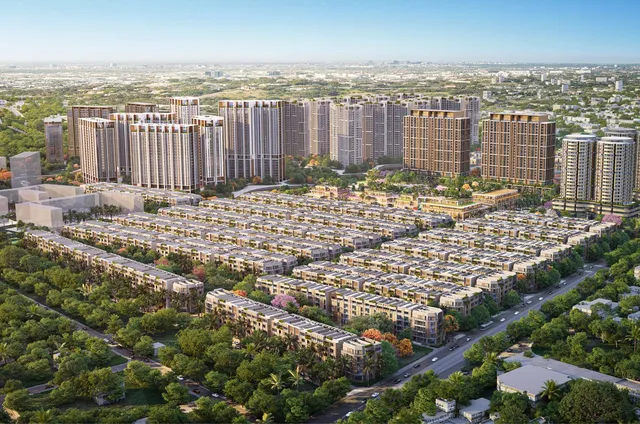 Selling now Foreign quota
 Masterise Homes · Luxury apartment & integrated township
The Global City
An Phu, Thu Duc City (former District 2), HCMC
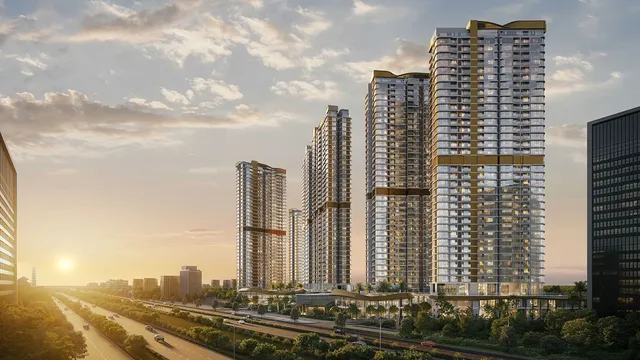 Selling now Foreign quota
 Gamuda Land · Luxury apartment
Eaton Park
An Phu, Thu Duc City, HCMC
 Selling now Foreign quota
 SonKim Land × Hongkong Land · Branded residences
The Metropole Thủ Thiêm
Thu Thiem, Thu Duc City, HCMC