Gamuda Land Review: Is It a Good Developer for Foreign Buyers in Vietnam? (2026)
Gamuda Land is one of a small group of foreign developers that most international buyers hear about early when researching Ho Chi Minh City real estate — the Malaysian group behind the sprawling green township of Celadon City, Gamuda City in Hanoi, and the premium Eaton Park in Thu Duc. This review looks honestly at what Gamuda Land does well for foreign buyers, where the genuine points to verify sit, and which of its projects can actually be owned under Vietnam’s foreign-ownership rules.
As a distributor selling these projects to foreign buyers, our interest is in you buying something you can legally own and are happy with — so this is a balanced assessment, not a brochure. All figures below are indicative and drawn from public information; verify legal documents per project before committing.
Who is Gamuda Land?
Gamuda Land is the property-development arm of Gamuda Berhad, a Malaysian engineering, infrastructure and property group listed on the Main Board of Bursa Malaysia (ticker MYX: 5398). That listing matters for a foreign buyer: it means the parent is a publicly disclosed, audited entity rather than an opaque private holding, and its financials, sales figures and project pipeline are reported to a regulated exchange. Gamuda Berhad’s roots are in large infrastructure — highways, tunnels, metro systems — which is part of why its property arm leans heavily on master-planned townships rather than one-off towers.
Gamuda Land entered Vietnam in 2007, making Vietnam one of its longest-running overseas markets. Its first project was Gamuda City in Hanoi, a large township built around Yen So Park. In Ho Chi Minh City it is best known for Celadon City in Tan Phu, and more recently for a wave of acquisitions that added Elysian, Eaton Park, The Meadow and Artisan Park (Binh Duong) to its portfolio. According to public reporting, Vietnam has become Gamuda’s largest overseas property market by revenue — contributing on the order of MYR1.1 billion in the first half of its FY2025 — which tells you the company is committed to the market rather than testing it.
Track record and delivery — the most important signal
For a foreign buyer, the single most reassuring thing a developer can show is completed, handed-over projects with residents living in them and ownership certificates issued. Gamuda Land scores well here relative to many local players.
- Celadon City (Tan Phu, HCMC) is an 82-hectare integrated township. According to public information, several of its precincts — including the Emerald and Ruby precincts — have been completed and handed over, and the wider development is home to tens of thousands of residents, with Aeon Mall Tan Phu, schools and large parks on site. That is a mature, lived-in community, not a render.
- Gamuda City (Hanoi) is a long-running township that has delivered multiple phases over more than a decade.
A developer that has repeatedly reached handover — and therefore pink-book (ownership certificate) issuance — is materially lower-risk than one selling its first-ever project on a plan. That said, delivery history is project-specific: a strong record at Celadon City does not automatically guarantee the timeline of a newer project like Eaton Park, which is still under construction with completion targeted around 2027 per public sources. Use the group’s track record as encouragement, then verify the specific project.
Master-planning and build quality
Gamuda Land’s clearest differentiator is master-planning and landscaping. Its townships are built around large central parks and low construction density — Celadon City is frequently cited as having around 20% built density, with the remainder given over to greenery and amenities. For buyers used to dense, tower-only developments, this is a genuine lifestyle advantage and tends to support resale and rental appeal.
On construction quality, Gamuda Land states that its residential projects follow Singapore’s CONQUAS (Construction Quality Assessment System) benchmark, an independent quality-scoring standard. It has also collected industry recognition: it was named Best Developer at the PropertyGuru Vietnam Property Awards (2024) and Best Community Developer (2025), winning multiple statuettes across editions, and was recognised as an HR Asia “Best Company to Work For.” Awards are marketing signals rather than guarantees, and you should treat them that way — but combined with a real delivery record they add up to a credible quality story.
Foreign-buyer friendliness
Gamuda Land is, in practice, one of the more foreign-buyer-oriented developers in Ho Chi Minh City. Its sales operations, documentation and international marketing are set up with overseas buyers in mind, and its premium projects are actively sold to the foreign segment. Eaton Park, in particular, has been marketed heavily to international buyers and reportedly reached over RM2 billion in gross development value within eight months of launch — a level of demand that both signals popularity and means foreign quota can fill quickly.
That popularity is a double-edged sword for you: strong foreign demand is a good sign of a desirable product, but it also means the 30% foreign-ownership quota on a given building may already be heavily taken up. The practical implication is simple — confirm live quota for your exact unit in writing before you pay anything.
The legal picture: a foreign developer working through Vietnamese entities
Here is the nuance foreign buyers most often miss. Gamuda Land is a foreign (Malaysian) developer, but it does not — and legally cannot — hold Vietnamese residential land in its own foreign name. It develops through Vietnamese project companies, and its recent HCMC growth has come largely by acquiring those local entities outright:
- For Eaton Park, Gamuda acquired 100% of Tam Luc Real Estate JSC, the Vietnamese company holding the land, in July 2023 for a reported ~VND7,300 billion (~US$315.8 million). It also secured a VND3,750 billion project loan, per public reporting.
- Celadon City began as a 60:40 joint venture with Sacomreal (Saigon Thuong Tin Real Estate JSC, linked to Sacombank) in 2010; Gamuda bought out Sacomreal’s 40% stake in 2015 for a reported ~US$66.5 million, so the project is now wholly Gamuda-controlled.
Why does this matter for your pink book? Because the certificate is issued based on the Vietnamese selling entity’s rights and permits — its land-use right, construction permit, and the specific approval allowing sales to foreigners — not on the Malaysian parent’s brand. A strong foreign parent gives you comfort about capital and completion; it does not substitute for checking that the local project company’s paperwork is in order for the exact tower you are buying. This is exactly the kind of check our guide on how to vet a property developer in Vietnam walks through.
Honest strengths and points to verify
| Factor | Strength | Point to verify |
|---|---|---|
| Parent company | Listed on Bursa Malaysia (MYX: 5398); audited, disclosed financials | Group strength ≠ project-level legal safety |
| Time in Vietnam | Present since 2007; Vietnam is its largest overseas market | Newer acquired projects have shorter individual track records |
| Delivery record | Celadon City & Gamuda City precincts completed and handed over | Confirm the specific project’s completion timeline and progress |
| Master-planning | Large parks, low density, strong landscaping | Amenity delivery timing can lag the first towers |
| Build quality | States CONQUAS standard; PropertyGuru award wins | Awards are signals, not warranties — inspect on handover |
| Foreign eligibility | Premium condos actively sold to foreigners | 30% quota fills fast; get live quota in writing per unit |
| Legal structure | Develops via wholly-owned Vietnamese entities (e.g. Tam Luc for Eaton Park) | Verify the selling entity’s land-use right, permit & sale approval |
| Pink book | Issued to buyers after handover on delivered projects | For off-plan units, confirm timeline & bank guarantee |
None of the “points to verify” are red flags specific to Gamuda Land — they are the standard, non-negotiable checks that apply to any developer in Vietnam. Gamuda’s profile happens to satisfy several of the reassurance items (listed parent, delivery history, foreign-friendly sales) better than most.
The Gamuda Land projects Happy Land distributes
Happy Land distributes two Gamuda Land projects, both foreign-relevant:
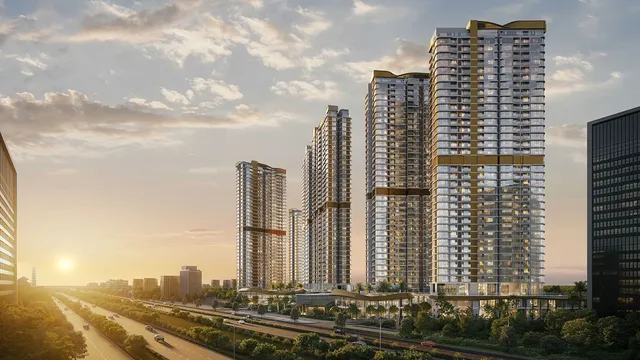
- Eaton Park — a premium high-rise development on Mai Chi Tho Boulevard in An Phu, Thu Duc (former District 2), on roughly 3.7 hectares with around six towers and close to 2,000 apartments. It is Gamuda’s flagship premium play in HCMC, developed through the wholly-acquired Tam Luc entity, targeted for completion around 2027, and eligible for foreign buyers subject to quota.
- Celadon City – The Glen — a newer residential precinct within the established, largely delivered Celadon City township in Tan Phu, giving buyers a rarer combination in Vietnam: a new building inside a mature, amenity-rich, already-lived-in community rather than an empty master plan.
For a foreign buyer, that pairing is useful. Eaton Park offers premium positioning and a central, riverside-adjacent Thu Duc location; The Glen offers a proven township environment with existing schools, retail (Aeon Mall) and parks already operating. Which suits you depends on budget, whether you prioritise prestige/location or community maturity, and — crucially — on which units currently carry available foreign quota.
What a foreign buyer must verify before buying
Before any deposit on a Gamuda Land unit (or any Vietnamese project), confirm the following in writing:
- Foreign quota — that the 30% cap on the specific building has room for your unit right now. Popular Gamuda towers can be close to full. See the 30% foreign-ownership quota explained.
- The selling entity — the exact Vietnamese company on your contract (e.g. the Tam Luc-derived entity for Eaton Park) and that it holds the land-use right and construction permit.
- Legal status / eligibility for sale — the official approval permitting sales, and for foreigners specifically, in that project.
- Bank guarantee — for off-plan purchases, the mandatory bank guarantee protecting your payments if the developer fails to deliver.
- Pink-book pathway — confirmation of the ownership-certificate process and expected timing after handover.
- The ownership form — apartment freehold-style ownership under the 50-year renewable foreign framework versus landed products foreigners generally cannot own.
Gamuda Land’s profile makes items 1–5 more likely to check out cleanly than with a weaker developer — but you still confirm them, in writing, for your specific unit. Never rely on brand reputation as a substitute for documents.
Bottom line
On the public evidence, Gamuda Land is a credible, foreign-friendly developer with a listed Malaysian parent, nearly two decades in Vietnam, a real delivery record at Celadon City and Gamuda City, strong master-planning, and stated CONQUAS quality standards. For a foreign buyer, that combination — an audited parent plus proof it has actually handed over homes and issued pink books — puts it in the more reassuring tier of developers active in Ho Chi Minh City. The honest caveats are the universal ones: verify foreign quota, the Vietnamese selling entity, legal status, bank guarantee and pink-book pathway for the specific unit, and remember that a strong newer project like Eaton Park still carries the normal off-plan timeline risk.
This is general information, not investment advice, and every figure here is indicative and based on public sources. You should have the legal documents, foreign quota, ownership form and selling entity independently verified for any specific project before committing.
If you’d like current, unit-level answers — live foreign quota, developer price and pink-book status for a specific Eaton Park or Celadon City – The Glen unit — message us on Zalo or WhatsApp and we’ll check it directly against the developer’s records. You can also browse all projects to compare Gamuda Land against other developers we distribute.
Frequently asked questions
Is Gamuda Land a reputable developer in Vietnam?
By most public measures, yes. Gamuda Land is the property arm of Gamuda Berhad, a company listed on Bursa Malaysia (MYX: 5398), and has operated in Vietnam since 2007. It has completed and handed over large parts of Celadon City in Ho Chi Minh City and Gamuda City in Hanoi, was named Best Developer at the PropertyGuru Vietnam Property Awards (2024) and Best Community Developer (2025), and states its projects follow Singapore's CONQUAS construction-quality benchmark. As with any developer, reputation at the group level does not replace project-level legal checks — always verify the specific selling entity and permits for the tower you are buying in.
Can foreigners buy apartments in Gamuda Land projects like Eaton Park?
Yes, foreign buyers can purchase in eligible Gamuda Land condominium projects, including Eaton Park in Thu Duc, subject to Vietnam's 30% foreign-ownership quota per apartment building. Because the quota fills on a first-come basis, you must ask the sales team to confirm in writing that live foreign quota exists for your specific unit before you place any deposit. Landed products (villas, shophouses) generally cannot be owned freehold by foreigners. See our guide on the 30% foreign-ownership quota for the full rules.
Is Gamuda Land a foreign developer, and does that create legal risk for buyers?
Gamuda Land is a foreign (Malaysian) developer, but it develops in Vietnam through Vietnamese project companies — for example, it acquired 100% of Tam Luc Real Estate JSC, the local entity holding the Eaton Park land, according to public reporting. What matters for your ownership certificate (pink book) is not the parent's nationality but whether the Vietnamese selling entity holds a valid land-use right, construction permit, and eligibility-for-sale approval for the specific project. Verify those documents per project rather than relying on the Gamuda brand alone.
Has Gamuda Land actually delivered projects and issued pink books in Vietnam?
Yes. Major precincts of Celadon City in Tan Phu (such as the Emerald and Ruby precincts) and Gamuda City in Hanoi have been completed and handed over, with tens of thousands of residents living there, according to public information. A delivery track record is one of the strongest signals a foreign buyer can look for. For newer, still-under-construction projects like Eaton Park (targeted for completion around 2027 per public sources), pink books are issued after handover, so confirm the expected timeline and any bank guarantee in writing.
Which Gamuda Land projects does Happy Land distribute, and are they foreign-eligible?
Happy Land distributes Eaton Park in Thu Duc (premium high-rise) and Celadon City – The Glen in Tan Phu (integrated township). Both are condominium products that can carry foreign quota, but the live quota is unit-specific and changes as units sell. Message us on Zalo or WhatsApp and we will confirm the current foreign quota, price and pink-book status for a specific unit directly against the developer's records.
Projects for sale now
Get the latest price list, availability & payment terms — free advice via Zalo/WhatsApp.
 Selling now Foreign quota
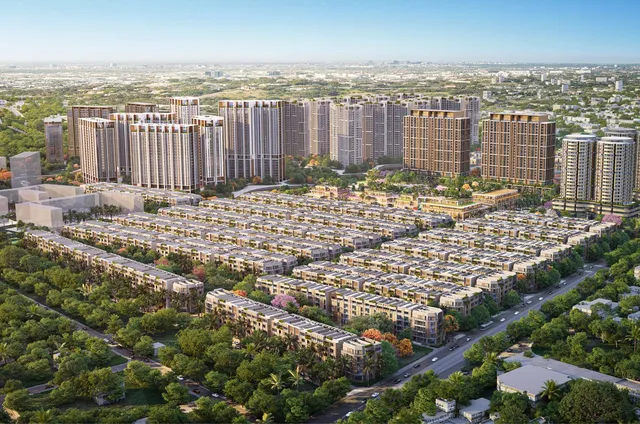
 Masterise Homes · Luxury apartment & integrated township
The Global City
An Phu, Thu Duc City (former District 2), HCMC
 Selling now Foreign quota
 Gamuda Land · Luxury apartment
Eaton Park
An Phu, Thu Duc City, HCMC
 Selling now Foreign quota
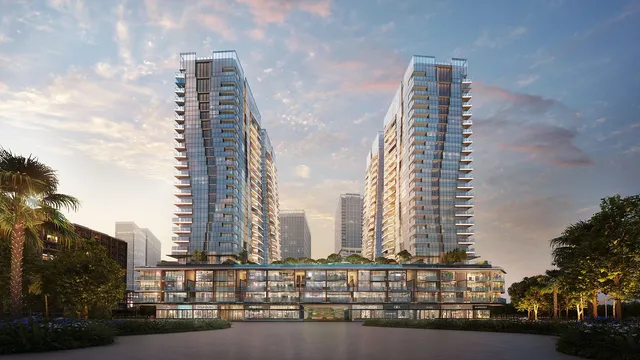
 SonKim Land × Hongkong Land · Branded residences
The Metropole Thủ Thiêm
Thu Thiem, Thu Duc City, HCMC