
District 1 Luxury Apartments & Branded Residences (2026)
District 1 is Ho Chi Minh City’s historic core, its financial heart, and the address that foreign buyers consistently rank as the single most prestigious place to own a home in Vietnam. With the arrival of Marriott, JW Marriott, and Ritz-Carlton branded residences in the Ba Son riverfront precinct, the district has, for the first time, a genuine ultra-prime market. This guide explains what is actually for sale, what it costs, what foreigners can and cannot own, and how to think about District 1 honestly as both a home and an investment.
This is general information for orientation, not legal, tax, or investment advice. Always confirm current figures and your personal eligibility with a licensed lawyer and tax adviser before committing.
Why District 1 commands a premium foreigners rarely question
District 1 is the only HCMC address that combines the central business district, heritage landmarks, the Saigon River waterfront, and the city’s deepest pool of international tenants — which is why prices and rents hold up through cycles. It contains Ben Thanh Market, the Opera House, Nguyen Hue walking street, the consular quarter, the head offices of most banks and multinationals, and the Metro Line 1 spine that opened in late 2024. For a foreign owner, that concentration matters: it underpins both daily livability and the resale and rental demand that protect your capital.
Crucially, supply of genuinely new luxury stock inside District 1 is tightly constrained. There is very little undeveloped land, heritage protections limit what can be built, and most large new towers are now being delivered in adjacent areas like Thu Thiem rather than in the old core. Scarcity in the most sought-after district is the structural reason District 1 luxury pricing sits well above the citywide average. You can review the projects we cover across the city on our /en/projects page.
If you are at the research stage and want a neutral read on the area before you shortlist anything, our team is happy to walk you through current District 1 availability — reach out via our contact page and we will send a current options sheet.
Ba Son: from naval shipyard to Vietnam’s branded-residence capital
Ba Son — the riverfront strip between the old shipyard site and the Thu Thiem (Ba Son) Bridge — is now the densest cluster of internationally branded residences in Vietnam, anchored by Grand Marina Saigon. The Ba Son shipyard was one of the oldest in the country; its redevelopment by Masterise Homes created a roughly 10-hectare masterplan on the District 1 waterfront that is positioned as one of the largest Marriott-branded residential projects in the world.
What “branded residence” means in practice: the homes carry a hotel operator’s name (Marriott, JW Marriott, Ritz-Carlton) and come with hotel-grade services — concierge, security, housekeeping on request, and lifestyle management — plus interiors and amenities held to the brand’s global standards. Buyers pay a premium for that brand assurance, the management quality, and the resale recognition the name carries internationally. The trade-off is higher entry prices and higher ongoing service charges than an unbranded luxury tower.
Across the river, but functionally part of the same prime corridor, Thu Thiem is delivering its own wave of high-end and branded product. The Ba Son (Thu Thiem 2) Bridge connects the two in minutes, which is why District 1 buyers increasingly compare riverfront options on both banks. Our /en/projects/the-metropole-thu-thiem page covers the most prominent Thu Thiem luxury development, while /en/projects/eaton-park and /en/projects/the-global-city show how premium eastern-corridor projects compare on price per square metre.
District 1 luxury prices in 2026: what the numbers actually say
Ultra-prime branded residences in District 1 transact at the very top of the Vietnamese market — Grand Marina Saigon has been quoted around US$16,000 per square metre, with entry units commonly above US$1 million — while broader District 1 luxury sits well below that. Prices move constantly and depend on tower, floor, view, and primary-versus-resale status, so treat every figure below as an indicative reference range, not a quote.
| Segment (District 1 / Ba Son area) | Indicative price guide (2026) | Notes |
|---|---|---|
| Ultra-prime branded (JW Marriott / Ritz-Carlton tier) | ~US$15,000–18,000+ / m² | Entry units often above US$1M; finite supply |
| Premium branded / high-floor riverfront | ~US$8,000–12,000 / m² | Brand and view drive the spread |
| Established District 1 luxury (resale) | ~US$6,000–9,000 / m² | Wider availability, more negotiable |
For context, much of HCMC’s mainstream new supply through 2024–2026 has concentrated in the 5–10 billion VND per unit band — a different market entirely from District 1 ultra-prime. The premium you pay in the old core buys location scarcity and brand, not extra floor area.
A practical point for foreign buyers: advertised primary prices may or may not include VAT, and that single detail can swing your total outlay by double digits. Always ask whether the headline number is VAT-inclusive before you compare two projects. To pressure-test a specific unit’s all-in cost, ask us for a transparent cost breakdown on the exact apartment you are considering.
What foreigners can — and cannot — own in District 1
Foreigners can buy condominium units in eligible District 1 projects on a renewable 50-year leasehold, but no foreigner can own the land itself, and each building is capped at 30% foreign ownership. These rules flow from the Housing Law 2023 and Land Law 2024 and apply nationwide.
The essentials, as we understand them in 2026:
- Eligible product only. You can buy apartments, and in limited cases villas/townhouses, but only inside licensed commercial developments that have been cleared to sell to foreigners. Not every District 1 tower qualifies.
- The 30% cap. A maximum of 30% of units in any single apartment building (calculated per block in multi-tower projects) may be foreign-owned. In a hot branded tower, the foreign quota can fill quickly, so confirm availability before you fall in love with a unit.
- 50-year leasehold, renewable once. Individuals hold ownership for 50 years from the issue date of the pink book (ownership certificate), with one extension of up to a further 50 years available by applying to the provincial People’s Committee at least three months before expiry. Vietnamese spouses can change this picture — take advice.
- No land ownership. What you hold is a Land Use Right on the building plus title to your unit, never the land.
Because eligibility and quota status are project-specific, this is exactly where good representation pays off. Our /en/foreigner-guide and the step-by-step /en/guides/buying-process-for-foreigners walk through documentation, payment routing, and the pink-book timeline in detail.
Taxes, fees, and yields: the honest financial picture
Budget roughly 10–14% on top of a new-build price for VAT, the registration fee, and the mandatory maintenance fund — and expect gross rental yields of about 4–5% in USD terms on prime District 1 stock. The fee structure is the same for foreigners and Vietnamese; the friction for foreigners is eligibility, not extra taxes.
Typical buyer-side costs to model:
- VAT: generally 10% on the building/asset portion of a new developer sale (land-use rights are VAT-exempt; individual resales typically carry no VAT).
- Maintenance fund: a mandatory 2% of the unit price, contributed once to the building’s sinking fund.
- Registration fee: approximately 0.5% to obtain the pink book, plus notarisation and admin charges.
- Ongoing: branded residences carry premium monthly service charges — confirm the rate per square metre, as it materially affects net yield.
On the income side, individual landlords face roughly 10% combined tax on gross rent (about 5% VAT plus 5% personal income tax), with a VAT exemption below 100 million VND of annual rental. When you sell, personal income tax is 2% of the gross transaction value — not the gain — payable by the seller. Repatriating sale proceeds is permitted through proper banking channels with documentation; we cover the mechanics in /en/guides/repatriation-of-funds-vietnam-property, and the full cost stack in /en/guides/taxes-and-costs-buying-property-vietnam.
Net of those costs, District 1 is best understood as a capital-preservation and prestige play with solid USD rent, rather than a high-yield bet. Prime central yields of 4–5% are stable but not spectacular; the case rests on scarcity, brand, and long-run HCMC growth.
Choosing well: branded core vs. riverfront alternatives
The right choice depends on whether you prioritise the District 1 address and brand assurance, or are willing to cross the river for newer towers, larger floor plans, and lower price-per-square-metre. Both are defensible.
If your priority is the trophy address and turnkey hotel service, the Ba Son branded cluster is unmatched. If you want comparable luxury with more negotiating room and modern masterplans, the eastern corridor and Thu Thiem deserve a look — /en/projects/the-prive, /en/projects/masteri-grand-view, /en/projects/lumiere-riverside, and /en/projects/vinhomes-grand-park span a range of price points and delivery timelines worth comparing side by side. You can learn more about how we work and who we represent on /en/about.
Conclusion
District 1 — and the Ba Son branded-residence cluster in particular — represents the apex of Vietnam’s residential market: scarce, prestigious, internationally recognised, and priced accordingly. For a foreign buyer, the path is clear but detail-sensitive: confirm the project is foreign-eligible, check the 30% quota has room, model the full 10–14% of buying costs, and decide whether the brand premium fits your goals. Do those four things well and District 1 is one of the most resilient addresses you can own in Southeast Asia. When you are ready to see real, current availability matched to your budget, start a no-obligation conversation with our team.
Frequently asked questions
Can a foreigner buy a luxury apartment in District 1, Ho Chi Minh City?
Yes. Foreigners can buy condominium units in District 1 projects that are licensed to sell to foreigners, on a 50-year renewable leasehold. Each building is capped at 30% foreign ownership, and you own the unit plus a land-use right, never the land itself. Always confirm a specific tower's eligibility and remaining foreign quota before committing. This is general information, not legal advice.
How much do branded residences at Ba Son / Grand Marina Saigon cost?
Ultra-prime branded residences in the Ba Son area have been quoted around US$16,000 per square metre, with entry units commonly above US$1 million, depending on tower, floor, and view. These are indicative reference figures that change frequently and may or may not include VAT, so request a current, VAT-clear quote on the exact unit before comparing projects.
What taxes and fees do foreigners pay when buying in District 1?
On a new-build, budget roughly 10–14% on top of the price: typically 10% VAT on the building portion, a mandatory 2% maintenance fund, and about 0.5% registration fee, plus notarisation and admin costs. When you sell, personal income tax is 2% of the gross sale value. Confirm current rates with a licensed tax adviser, as figures can change.
What rental yield can I expect from a District 1 luxury apartment?
Prime central HCMC luxury stock typically generates gross rental yields of about 4–5% in USD terms, supported by deep international tenant demand. Net yield is lower once you account for premium branded-residence service charges and roughly 10% combined tax on gross rent. District 1 is best viewed as a capital-preservation and prestige asset rather than a high-yield one.
Is District 1 or Thu Thiem the better choice for a foreign buyer?
It depends on your priorities. District 1, especially the Ba Son branded cluster, offers the trophy address, brand assurance, and turnkey hotel service at the highest prices. Thu Thiem and the eastern corridor, connected by the Ba Son Bridge, often deliver newer towers, larger layouts, and a lower price per square metre. Comparing both banks of the river side by side is usually the smartest approach.
Projects for sale now
Get the latest price list, availability & payment terms — free advice via Zalo/WhatsApp.
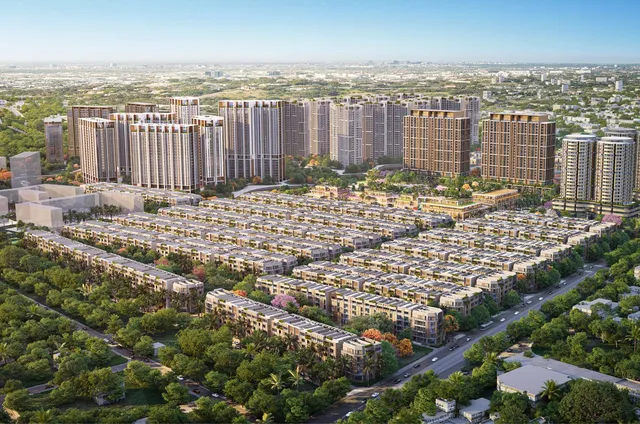 Selling now Foreign quota
 Masterise Homes · Luxury apartment & integrated township
The Global City
An Phu, Thu Duc City (former District 2), HCMC
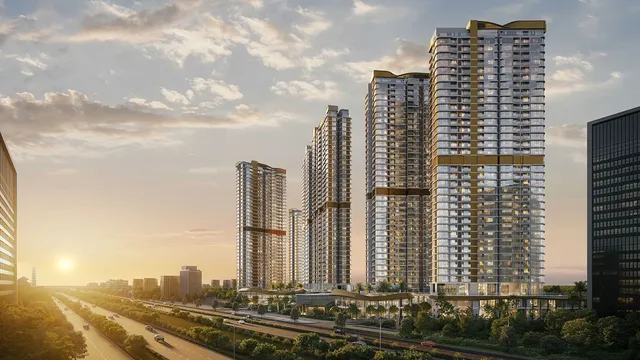 Selling now Foreign quota
 Gamuda Land · Luxury apartment
Eaton Park
An Phu, Thu Duc City, HCMC
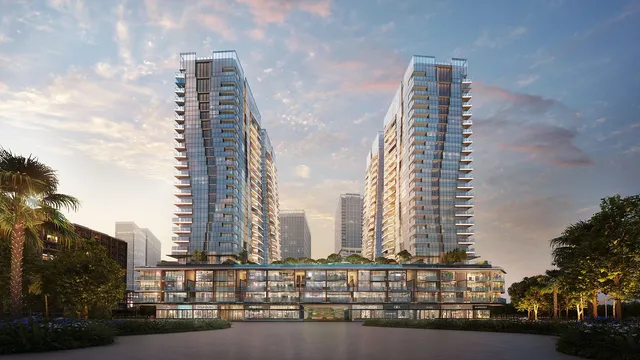 Selling now Foreign quota
 SonKim Land × Hongkong Land · Branded residences
The Metropole Thủ Thiêm
Thu Thiem, Thu Duc City, HCMC