
CapitaLand Review: Is It a Good Developer for Foreign Buyers in Vietnam? (2026)
If you are a foreign buyer researching who actually builds the condos you are being shown in Ho Chi Minh City, CapitaLand is a name you will meet quickly — and one that carries more weight than most. It is the development arm of a large Singapore-headquartered real-estate group, it has been building in Vietnam since 1994, and its premium condos are among the properties international buyers know best. This review looks honestly at what that reputation is built on, which CapitaLand projects suit foreign buyers, and — just as important — the points you should still verify before you sign anything.
This is general information for foreign buyers, not investment advice. Figures are indicative and should be confirmed against the legal documents for each specific project.
Who is CapitaLand?
CapitaLand is one of Asia’s largest and best-known real-estate names, headquartered and rooted in Singapore. In 2021 the group restructured into two arms: CapitaLand Investment (CLI), a Singapore Exchange-listed global real-asset manager (SGX: 9CI) reporting roughly S$125 billion of funds under management as at early 2026, and CapitaLand Development (CLD), the privatised property-development business that builds the residential projects foreign buyers actually purchase in Vietnam (according to public information).
For a foreign buyer, that structure matters more than it first appears. The projects you buy are delivered by CapitaLand Development, while the broader group sits inside a Singapore-listed, publicly scrutinised corporate framework. Singapore-standard governance, disclosure and financial discipline are exactly the credibility signals that international buyers look for when they cannot easily audit a developer’s balance sheet from abroad. It does not guarantee any single project’s outcome, but it is a materially different starting point from a small, unlisted local developer with no track record.
In Vietnam specifically, CapitaLand has built up one of the deepest foreign-developer footprints in the country: reporting indicates around 30 projects and well over 18,000 homes across cities including Ho Chi Minh City, Hanoi, Binh Duong, Da Nang, Hai Phong and Nha Trang over more than three decades.
Track record: delivery, build quality and pink books
The single most valuable thing a developer can offer a foreign buyer in Vietnam is a boring, predictable delivery record — projects that complete, apartments that get handed over, and pink books (ownership certificates) that actually reach buyers. This is where CapitaLand’s reputation is strongest.
The group’s Vietnam portfolio spans a long line of completed, occupied condominiums that foreign buyers recognise — including The Vista, Vista Verde, Feliz en Vista, d’Edge Thao Dien, D1Mension, Zenity and De La Sol. Public announcements document pink books being issued at The Vista (its first Vietnam residential project) as far back as 2013, at Vista Verde in 2019, and at D1Mension and Zenity in 2021 — and finished apartments being handed over at De La Sol from late 2023. That is a multi-cycle record of completing and titling projects, not a single lucky delivery.
On build quality, CapitaLand positions itself at the premium end: international design standards, resort-style amenities, and a strong sustainability push (a large share of its global portfolio carries green-building certification, and its Vietnam projects have won design and sustainability awards). At the PropertyGuru Vietnam Property Awards 2025 the developer was recognised as Best Developer along with a suite of other accolades, and it has been named Vietnam’s best real-estate developer by Euromoney (according to public information — worth confirming from the awards bodies if this matters to your decision).
None of this makes CapitaLand risk-free. Awards and brand do not substitute for reading a specific project’s legal file. But as a baseline, a foreign buyer choosing a completed or well-advanced CapitaLand condo is starting from a lower completion-and-quality-risk position than the market average.
Why foreign buyers gravitate to CapitaLand
A few practical reasons explain why CapitaLand condos are consistently popular with international buyers:
- Familiar, foreign-friendly product. Layouts, finishes and amenities are designed to international expectations, and the brand is understood by buyers across Singapore, Hong Kong, mainland China, Korea, Japan and beyond.
- English-language process and documentation are generally more accessible than with purely local developers.
- Governance and financial backing. The Singapore-listed group framework gives buyers confidence that the developer will still be standing at handover — a real concern in a market that has seen local developers stall.
- Resale demand within the foreign quota. Because premium CapitaLand projects attract foreign buyers, the foreign-eligible (30% quota) units are the only ones other foreigners can legally buy on resale, which can support liquidity for that slice of the market.
The flip side of popularity is that the foreign quota in the most desirable buildings can sell out — so availability, not eligibility, is often the real constraint.
Foreign ownership: the 30% quota and 50-year leasehold
Under Vietnam’s Housing Law, foreign individuals and organisations can buy apartments in eligible condominium projects, capped at 30% of the units in each apartment building, and hold them on a renewable 50-year leasehold. CapitaLand’s condo projects are generally structured to sell within this framework, and historically the foreign quota in its flagship projects has been in demand.
Two things follow from this for a foreign buyer. First, “CapitaLand is foreign-friendly” is true at the brand level but must be checked at the building-and-unit level — the specific block you want may already be at its 30% foreign cap. Second, the 50-year leasehold is renewable and does not expire silently, but you should understand the renewal mechanism and how it is documented for your project. Our guide on whether foreigners can own land in Vietnam explains the quota, leasehold and land-versus-apartment distinction in plain English.
CapitaLand projects Happy Land distributes
Happy Land distributes a focused set of CapitaLand projects. Below is an honest, foreign-buyer-oriented snapshot. Availability and foreign quota change constantly, so treat every figure as indicative and confirm live.
| Project | Location / segment | Developer / role | Foreign-buyer note |
|---|---|---|---|
| De La Sol District 4 | District 4, HCMC — high-end condo, “CBD-lite” next to District 1 | CapitaLand Development (Singapore), wholly-developed | Completed and handed over from late 2023; ~870 units; popular with foreign buyers — verify remaining 30% quota per block |
| Sycamore Binh Duong | Binh Duong New City — large master-planned township (~18.9 ha) | CapitaLand joint venture with UOA Group (Malaysia) | Multi-phase apartments, townhouses and villas; JV structure — confirm which entity contracts with you and the phase’s legal status |
| CapitaLand Can Gio (see all projects) | Can Gio, HCMC’s southern coastal growth frontier — complex/mixed-use | CapitaLand development within the emerging Can Gio growth area | Newer/less-proven than the flagship condos; verify legal completeness, phase, launch status and selling entity carefully |
A few honest observations on these:
De La Sol is the most “proven” of the three for a foreign buyer — a completed, occupied CapitaLand Development condo in District 4, minutes from District 1, that has already gone through handover. That reduces completion risk substantially; your due diligence centres on remaining foreign quota, resale pricing and the specific unit.
Sycamore in Binh Duong is a genuinely large, well-regarded master plan, but note the structure: it is developed through a joint venture between CapitaLand Development and Malaysia’s UOA Group (a long-established listed developer). A JV is not a red flag — both partners are credible — but it does mean you should confirm exactly which company is the seller on your contract and check the legal status of the specific phase you are buying, since Binh Duong is a different provincial jurisdiction from HCMC.
CapitaLand Can Gio sits in one of Ho Chi Minh City’s most talked-about future growth areas, tied to major infrastructure ambitions in the south. That upside comes with more uncertainty: it is newer and less proven than the flagship condos, and coastal/frontier locations carry their own legal and timing considerations. This is precisely the kind of project where the developer’s brand should reassure you but not replace project-level verification.
Points to verify — an honest checklist
Even with a strong developer, the discipline is the same. Before committing to any CapitaLand unit:
- Foreign quota availability. Get written confirmation that foreign-eligible (30%) units remain in your specific building — not just “the project accepts foreigners.”
- Selling entity. Confirm whether you are contracting with CapitaLand Development, a joint-venture company (as at Sycamore with UOA), or a distributor. The counterparty on your sale-and-purchase agreement is what matters legally.
- Legal status and bank guarantee. Check the construction permit, land-use rights and — for any off-plan unit — the mandatory bank guarantee that protects buyers if the developer fails to deliver. This applies even to blue-chip developers.
- Price premium vs comparables. CapitaLand generally sells at a premium. Compare the price per square metre with nearby projects and decide whether the lower risk and brand justify it for your goals.
- Handover and pink-book pathway. Confirm the delivery timeline and the specific project’s route to pink-book issuance in the contract, rather than assuming it from the group’s history.
- JV / acquired-land nuance. For projects that are joint ventures or sit on acquired/partner land banks, the CapitaLand name is one input — verify the specific project company’s standing.
Our step-by-step guide on how to vet a property developer in Vietnam walks through each of these checks in detail.
Strengths vs points to verify — at a glance
| Strengths (real) | Points to verify (genuine) |
|---|---|
| 30+ years in Vietnam; large delivered portfolio | Newer projects (e.g. Can Gio) are less proven than flagships |
| Consistent handover and pink-book record | Pink-book pathway still project-specific |
| Singapore-group governance and financial backing | Selling entity may be a JV or project company, not the group |
| Premium build quality, design and sustainability | Price premium over local comparables |
| Popular with foreigners; foreign-quota resale demand | 30% quota in a given block can be sold out |
| Awards incl. Best Developer VPA 2025 (per public info) | Awards are marketing, not a legal guarantee |
The verdict for foreign buyers
For a foreign buyer, CapitaLand is one of the more reassuring developer names in Vietnam. The combination of a three-decade delivery record, consistent pink-book issuance on completed projects, premium build quality, and Singapore-listed group governance genuinely lowers the two risks that keep international buyers up at night: will the project complete, and will I get proper title? Its condos are popular with foreigners for good reason.
That is not the same as a blank cheque. The premium is real, some projects are joint ventures (Sycamore/UOA) or newer bets (Can Gio), and the entity selling to you may not be “CapitaLand” in name. A strong developer lowers your risk; it never removes your responsibility to verify the foreign quota, the bank guarantee, the legal status and the selling entity for the exact unit you buy.
If you would like current foreign-quota availability and developer pricing on De La Sol, Sycamore Binh Duong or CapitaLand Can Gio — or a side-by-side with other developers — message us on Zalo or WhatsApp and we will confirm live inventory and walk you through the legal documents. You can also browse all projects.
General information only, not investment advice. Figures are indicative. Always verify the legal documents, foreign-ownership quota and selling entity for each specific project before committing.
Frequently asked questions
Is CapitaLand a reputable developer in Vietnam?
Yes, by most objective measures. CapitaLand entered Vietnam in 1994 and has delivered a large portfolio of completed condominiums over three decades, with a consistent record of handovers and pink-book (ownership certificate) issuance on landmark projects such as The Vista, Vista Verde, D1Mension and De La Sol. It is the development arm of a major Singapore-headquartered real-estate group and was named Best Developer at the PropertyGuru Vietnam Property Awards 2025 (according to public information). It is widely regarded as one of the more institutionally credible foreign developers in the market. Reputation sits at the group level, however, so you should still verify the legal status and selling entity of the specific project and unit you buy.
Can foreigners buy CapitaLand apartments in Vietnam?
Yes, subject to Vietnam's foreign-ownership rules. Foreign individuals and organisations can buy apartments in eligible condominium projects up to a 30% cap of the units in each building, on a renewable 50-year leasehold basis. CapitaLand's premium condos have historically been popular with foreign buyers, which means the foreign quota in a given block can sell out. Before you commit, ask the seller to confirm in writing that foreign-quota units are still available in your specific building and unit.
Which CapitaLand projects can foreigners buy through Happy Land?
Happy Land distributes De La Sol in District 4 (a completed CapitaLand Development condo popular with foreign buyers), Sycamore in Binh Duong (a large master-planned township developed by CapitaLand in a joint venture with Malaysia's UOA Group), and the newer CapitaLand Can Gio complex. Foreign-quota availability differs by project, building and phase, so we confirm the current 30% quota status and pricing live for the exact unit you are considering. Message us on Zalo or WhatsApp for today's availability.
Is CapitaLand more expensive than other Vietnamese developers?
Generally yes. CapitaLand positions itself as a premium developer, and its condos typically carry a price premium over comparable local products, reflecting brand, design, build quality, sustainability certification and the reassurance of a strong delivery record. Whether that premium is worth it depends on your goals: many foreign buyers accept it in exchange for lower completion and quality risk. Compare the price per square metre against nearby projects and factor in resale liquidity before deciding.
Does CapitaLand actually deliver pink books to foreign buyers?
CapitaLand has a documented history of handing over pink books (ownership certificates) on completed projects such as The Vista, Vista Verde and D1Mension, and of delivering finished apartments on schedule at De La Sol. That track record is one of the main reasons foreign buyers favour the group. Pink-book issuance still depends on the individual project's legal completeness and on the buyer's own paperwork, so confirm the pink-book pathway for your specific building rather than assuming it based on brand alone.
What should a foreign buyer verify before buying a CapitaLand unit?
Four things above all: (1) that foreign-quota (30%) units are still available in your specific building; (2) the project's legal status, including the construction permit, land-use rights and — for off-plan units — the mandatory bank guarantee for buyers; (3) exactly which legal entity is selling to you and whether it is CapitaLand Development, a joint-venture company, or a distributor; and (4) the payment schedule and handover/pink-book timeline in the contract. A good developer reduces risk but does not remove your obligation to read the legal documents for that project.
Projects for sale now
Get the latest price list, availability & payment terms — free advice via Zalo/WhatsApp.
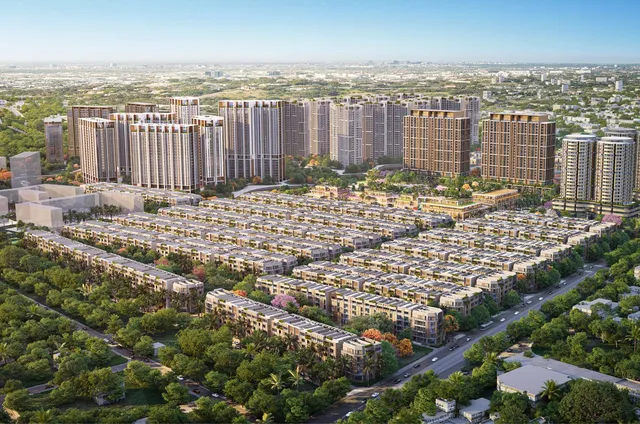 Selling now Foreign quota
 Masterise Homes · Luxury apartment & integrated township
The Global City
An Phu, Thu Duc City (former District 2), HCMC
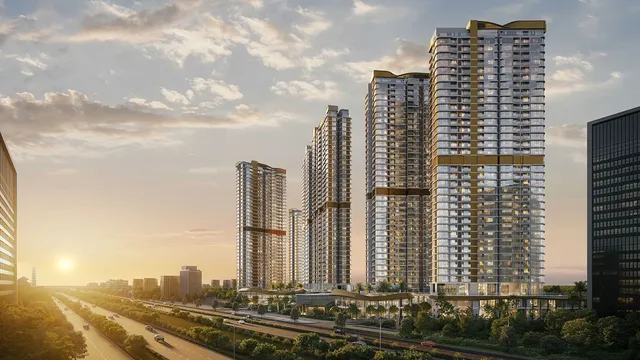 Selling now Foreign quota
 Gamuda Land · Luxury apartment
Eaton Park
An Phu, Thu Duc City, HCMC
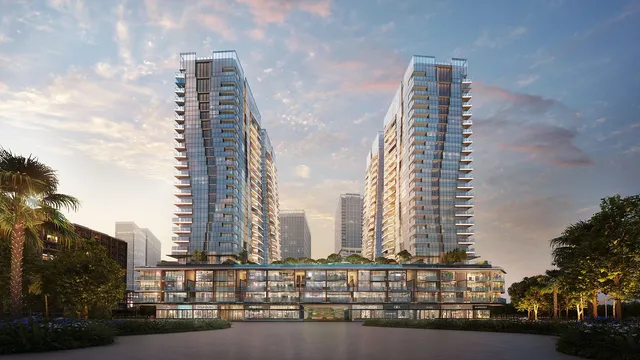 Selling now Foreign quota
 SonKim Land × Hongkong Land · Branded residences
The Metropole Thủ Thiêm
Thu Thiem, Thu Duc City, HCMC