
Buying a Second Home or Holiday Property in Vietnam as a Foreigner (2026)
Buying a place in Vietnam to use a few weeks a year and let out the rest of the time is an appealing idea: warm coast, low entry prices, and a market that opened up further under the Housing Law 2023 and Land Law 2024. But a holiday home is a specific use case, and rules that look simple in a headline get more nuanced once you factor in part-year use, short-term letting, running costs while you are away, and resale.
This guide is written for the foreign buyer thinking of a second or holiday home — a city base in Ho Chi Minh City, or a leisure place in Da Nang, Nha Trang or Phu Quoc. It is general information, not legal, financial or investment advice. Property law and tax in Vietnam change, and the figures here are indicative; always confirm the current position with a licensed Vietnamese lawyer or adviser before you commit.
The same rules apply — a holiday home is not a special category
There is no separate “holiday home” or “second home” licence for foreigners in Vietnam. Whatever you buy, you buy under the same framework as any other foreign purchaser. In practice, three things matter most.
First, what you can own. Foreigners can buy apartments in eligible commercial residential projects, held on a 50-year ownership term that is renewable under current rules. You receive a pink-book ownership certificate for the unit, not the standalone, freely transferable land-use rights that Vietnamese nationals hold. Landed property — villas, townhouses, anything with its own plot — is very tightly restricted and, on the coast especially, usually off the table for foreigners.
Second, the quota. Foreign buyers are capped at 30% of the units in any one apartment building, and there are separate, much smaller caps on landed houses within a project (broadly around 10% of the houses, subject to a ward-level ceiling). If a building has already hit its foreign quota, you cannot buy there as a foreigner regardless of budget. We explain this fully in The 30% foreign-ownership quota explained.
Third, what you cannot own at all. Land itself is not available to foreigners — see Can foreigners own land in Vietnam?. Areas tied to national defence and security, certain border and island zones, and land near military sites are excluded. This is exactly why the beach-villa dream is harder than it sounds.
The headline takeaway for a holiday buyer: you are almost always buying a condo-format apartment on a renewable 50-year term, and the realistic question is which apartment, in which city, and on what legal product — not whether you can buy at all.
Where foreigners actually buy holiday homes
Two buyer profiles dominate, and they pull in different directions.
A city base — Ho Chi Minh City. If your “holiday” is really a recurring trip for business, family, healthcare or simply because you like the city, an HCMC apartment is the most liquid, best-documented choice. Inventory is deep, the legal product is well understood, long-term tenants are easy to find when you are away, and resale is the most active in the country. Prime-district rental yields sit in the mid-single digits (often cited around 4–5% gross), which is modest but stable. This is the lowest-drama option.
A coastal leisure place — Da Nang, Nha Trang, Phu Quoc. This is the classic holiday-home picture, and it is where the legal caveats bite hardest. Entry prices are lower than HCMC for a beach-view apartment, and tourism demand can push higher short-let yields in season — but the products on offer are more likely to be condotels or resort units rather than ordinary residential apartments, and that distinction matters enormously (see below). Da Nang has the deepest stock of genuinely foreign-eligible residential condos on the coast; Nha Trang and Phu Quoc lean more heavily toward condotel and resort formats.
City base vs coastal leisure — at a glance
The table below is a simplified, indicative comparison. Prices and yields vary widely by project, view, floor and season; treat them as orientation, not quotes.
| Factor | HCMC (city base) | Da Nang (coastal city) | Nha Trang / Phu Quoc (resort) |
|---|---|---|---|
| Typical entry price, eligible apartment | From ~US$120k–250k+ | From ~US$90k–180k | From ~US$80k (Nha Trang) / higher in Phu Quoc |
| Dominant legal product | Residential apartment (pink book) | Mix of residential + condotel | Heavily condotel / resort leasehold |
| Foreign-eligible residential stock | Deep | Moderate | Thinner — check carefully |
| Indicative gross yield | ~4–5% long-let | Higher in season, variable | Higher in season, more volatile |
| Short-let suitability | Building-dependent (see HCMC rules) | Tourism-driven, building-dependent | Often via resort rental program |
| Resale liquidity | Strongest | Reasonable | Weakest / slowest |
| Management when away | Many agents available | Available | Often bundled with resort operator |
If your priority is using the place yourself for a few weeks and not worrying the rest of the year, an HCMC or Da Nang residential apartment with a proper pink book is the cleaner path. If you are chasing in-season holiday-let income on the beach, you are usually looking at condotels — read the next section before you fall in love with a show unit.
The condotel and resort caveat — read this twice
The single most common and most costly mistake foreign buyers make on the coast is buying a condotel or resort unit believing it is a standard residential apartment. They look identical in the brochure. Legally they are not.
A condotel (condo-hotel) is typically built on commercial or tourism-zoned land, not residential land. The consequences for a foreign holiday buyer:
- It often does not come with a standard residential ownership certificate; what you hold may be a developer leasehold for a fixed term, not the 50-year renewable residential pink book.
- Banks frequently will not accept it as mortgage collateral, which both limits your financing and shrinks the pool of future buyers who can finance a purchase from you.
- It is usually tied to a rental-pool or management program run by the operator. That can be convenient, but it also dictates when (and whether) you can use the unit yourself, and the “guaranteed yield” promises some developers attach to these are not something to bank on.
- Resale is harder and slower because of all of the above, and the legal classification can deter cautious buyers entirely.
None of this makes condotels “bad” — for a buyer who wants hands-off income and accepts the trade-offs, they can work. But for a holiday home you actually want to use and one day sell, the leasehold-resort format behaves very differently from a residential apartment. The protections under the Housing Law 2023 that apply to residential apartments do not all map cleanly onto these mixed-use products.
Practical rule: before any deposit, get the developer to confirm in writing (1) the land classification and exact legal product, (2) whether you receive a residential certificate or a leasehold, (3) the remaining term, and (4) that the specific unit sits within the foreign-eligible quota. Have a Vietnamese lawyer read the contract. If a salesperson is vague about whether it is “residential” or “condotel,” treat that as a red flag, not a detail.
Using it part-year and letting the rest — and the new short-let rules
The appeal of a holiday home is using it yourself part of the year and letting it the rest. The letting side is where 2026 brought a real change.
Long-term letting (months-to-yearly tenants) is the simpler route. You can let an apartment you own, register the rental, and pay the relevant taxes; our guide Renting out your apartment in Vietnam walks through contracts, registration and the income-tax mechanics. For a holiday owner, the trade-off is obvious: a long lease gives you steady income but you cannot drop in whenever you like.
Short-term / nightly letting (the Airbnb model) is what most holiday buyers actually want, and it is more regulated than people assume. In Ho Chi Minh City, Decision 19/2026/QD-UBND took effect on 25 April 2026: short-term apartment letting is permitted only where the building’s approved use allows it, and hosts must register the accommodation business, meet tax obligations (VAT and income tax apply to letting income), complete guest registration through the national digital channels, and satisfy fire-safety requirements. Many ordinary residential buildings still ban nightly letting in their house rules, and a large share of apartments do not meet the safety standards required to be licensed for it. Other destinations — Da Nang, Nha Trang, Phu Quoc, Hanoi — sit on a spectrum from “loosely enforced” to “expect to register,” and the rules continue to evolve.
The honest planning assumption: do not buy a specific unit on the strength of projected short-let income until you have confirmed that this building, in this city, under current rules, actually permits and can be licensed for short-term letting. If it cannot, your model is long-let or self-use only.
Running costs and management while you are away
A holiday home is, by definition, empty much of the year — which makes the running costs and the “who looks after it” question central, not an afterthought.
Recurring costs to budget for (indicative; varies by project):
- Management / service fees to the building’s management board, charged per square metre per month — higher in serviced, amenity-rich and resort buildings.
- Sinking fund / maintenance contributions.
- Utilities and standing charges even when unoccupied.
- Property/letting management fee if you appoint an agent — commonly a percentage of rent for long-let, or a larger share of revenue for managed short-let.
- Tax on any letting income, plus your own home-country tax position on a foreign property.
- Insurance for contents and, where relevant, the unit.
Just as important is the human side. As a non-resident, you will need a trusted local party to take handover, hold keys, deal with the management board, pay bills, handle tenants or guests, and act on tax and guest-registration filings — often under a power of attorney. This is a recurring theme for overseas owners, and we cover the practicalities in Managing your Vietnam property from abroad. Underestimating this is the most common reason a holiday home becomes a headache rather than a pleasure.
Resale and liquidity — be realistic
Two structural points shape resale for a foreign holiday owner.
You can now sell to other foreigners. Under the Housing Law 2023, a foreign owner of an eligible apartment can resell to another foreign buyer (subject to that building’s quota still having room), not only to Vietnamese nationals. This widened the exit pool meaningfully compared with the old framework — a genuine improvement for liquidity.
The clock does not reset on resale. The 50-year term runs from when the certificate was first issued, so a resale buyer inherits the remaining term, not a fresh 50 years. The closer a unit gets to the end of its term, the more buyers will discount it and the more renewal uncertainty weighs on price. Build this into both what you pay and what you expect to recover.
Layered on top: liquidity is uneven by location and product. HCMC residential apartments resell fastest; Da Nang is reasonable; pure resort and condotel units on the coast are the slowest to move and the most price-sensitive. There are no guaranteed returns in any of these markets, and you should ignore any pitch that promises them.
A short pre-purchase checklist for holiday buyers
- Confirm the exact legal product (residential apartment vs condotel/leasehold) in writing.
- Confirm the unit is within the foreign quota before any deposit.
- Confirm the remaining 50-year term, not just “50 years.”
- Confirm whether the building permits short-term letting if that is part of your plan.
- Budget the full running cost when empty, not just the purchase price.
- Line up local management before completion.
- Have a licensed Vietnamese lawyer review the contract and developer paperwork.
This article is general information only and is not legal, financial, tax or investment advice. Vietnamese property law, tax rules and local regulations change, and the figures here are indicative and will vary by project and over time. Always engage a licensed Vietnamese lawyer or qualified adviser for your specific situation before committing.
If you would like help finding a foreign-eligible apartment that fits a part-year-use, occasional-let plan — with the quota and legal product confirmed up front — message Happy Land on Zalo or WhatsApp for a straightforward, no-pressure conversation, and browse our project listings to see what is currently available.
Frequently asked questions
Can a foreigner buy a holiday home in Vietnam without living there?
Yes. There is no residency requirement to buy an eligible apartment. You can purchase on a valid passport with a legal entry stamp, even if you only visit a few weeks a year. The practical issue is not eligibility but management: you will need someone local to handle handover, utilities, tax filing and any letting while you are away. See our guide on managing your Vietnam property from abroad for how overseas owners structure this.
Is a beachfront villa in Da Nang or Phu Quoc a realistic option for foreigners?
Usually not as full ownership. Landed villas and townhouses are tightly capped (broadly around 10 percent of the houses within a project, subject to ward-level limits) and many coastal villa or resort plots sit on land classifications that foreigners cannot hold. Most foreign buyers on the coast end up with a condo-format unit or a condotel on a developer leasehold rather than a freehold beach villa. Get written confirmation of exactly what you are buying before any deposit.
What is the difference between a regular apartment and a condotel for a foreign buyer?
A regular apartment in an eligible residential project gives you a 50-year renewable ownership certificate (pink book) and counts within the 30 percent per-building foreign quota. A condotel is typically a hotel-style unit on commercial or tourism land, often sold on a developer leasehold, sometimes without a standard residential certificate, frequently tied to a rental-pool program, and harder to mortgage or resell. They can suit pure income buyers but are a different legal product. Read our condotel and resort-property guidance before committing.
Can I rent my holiday apartment out short-term (Airbnb) when I am not using it?
It depends on the building and the city. In Ho Chi Minh City, Decision 19/2026/QD-UBND (effective 25 April 2026) allows short-term apartment letting only where the building's approved use permits it, with business registration, tax, guest registration and fire-safety compliance. Many residential buildings still prohibit nightly letting in their house rules. Long-term letting is generally simpler. Confirm the building's rules and the current local regulations before you rely on short-let income.
Does the 50-year ownership term restart when I buy?
No. The 50-year clock runs from when the ownership certificate is first issued, not from your purchase date. If you buy a resale unit that is already several years old, you inherit the remaining term, not a fresh 50 years. The term is renewable under current rules, but renewal is not automatic and depends on the law and your eligibility at the time. Factor the remaining term into price and into how easily you can resell later.
Projects for sale now
Get the latest price list, availability & payment terms — free advice via Zalo/WhatsApp.
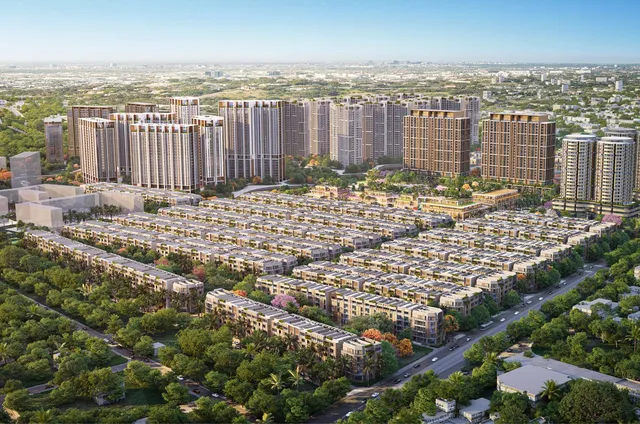 Selling now Foreign quota
 Masterise Homes · Luxury apartment & integrated township
The Global City
An Phu, Thu Duc City (former District 2), HCMC
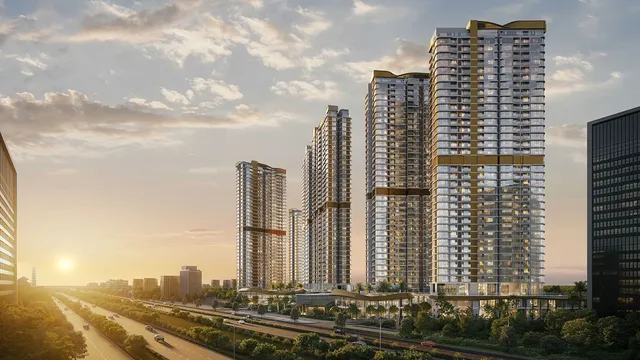 Selling now Foreign quota
 Gamuda Land · Luxury apartment
Eaton Park
An Phu, Thu Duc City, HCMC
 Selling now Foreign quota
 SonKim Land × Hongkong Land · Branded residences
The Metropole Thủ Thiêm
Thu Thiem, Thu Duc City, HCMC