
Thao Dien Apartments for Sale: 2026 Expat Buyer's Guide
Thao Dien is the most established expat neighborhood in Ho Chi Minh City, and for foreign buyers it remains the benchmark against which every other district is measured. This guide walks through what you actually get for your money in 2026: the prices, the Metro Line 1 effect, the schools, the ownership rules, and the honest trade-offs nobody puts on a glossy brochure.
This article is general information for orientation only and is not legal, tax or investment advice. Always confirm current figures and your eligibility with a licensed lawyer and your developer before signing anything.
Why foreign buyers keep choosing Thao Dien
Thao Dien is popular with foreign buyers because it bundles international schools, walkable amenities, a riverside setting and a Metro station into one compact, ready-built community — something no newer district has fully replicated yet. Officially part of Thu Duc City (the former District 2), Thao Dien sits across the Saigon River from District 1, roughly 15 to 25 minutes by road and far less since Metro Line 1 opened.
The appeal is maturity. Where master-planned newcomers like The Global City and Eaton Park are still building out their retail and community life, Thao Dien already has it: Annam Gourmet and a dozen Western supermarkets, clinics, gyms, craft-coffee culture, and a dense restaurant scene that runs from banh mi to French bistros. For a family relocating mid-school-year, “already finished” is worth a premium.
If you are weighing Thao Dien against the newer luxury enclaves of Thu Thiem — projects like The Metropole Thu Thiem and Masteri Grand View — the choice is essentially established community versus future skyline. Both are valid; they suit different timelines.
Curious how Thao Dien stacks up against the rest of our portfolio? You can browse all current Happy Land projects here and compare locations side by side.
The Metro Line 1 effect on Thao Dien
Thao Dien has its own elevated station on Metro Line 1 (Ben Thanh–Suoi Tien), which has moved from “promised infrastructure” to genuine daily utility — and that shift is now priced into the neighborhood. The line carried more than 20 million passengers by early 2026 and averages over 1.5 million riders a month, with peak holiday days exceeding 110,000.
For a resident, the practical win is a fast, air-conditioned link to District 1’s business core without sitting in District 2 bridge traffic. For a buyer, a walkable station is one of the few amenities that reliably supports both resale appeal and rental demand, because the next tenant values the same convenience you do.
A realistic caveat: the line is not a true door-to-door metro for every Thao Dien address. Thao Dien is a sprawling, low-rise neighborhood, and many of its quieter villa-lined lanes are a 10–20 minute walk or a short Grab ride from the station. Before you fall in love with a specific building, check the actual walking distance to the platform — it varies a lot within the same neighborhood.
International schools: the real reason families pay a premium
Thao Dien’s cluster of top-tier international schools is the single strongest driver of its family rental market, and it directly underpins resale liquidity. The neighborhood and immediate An Phu surroundings host several of the city’s best-known schools, including the International School Ho Chi Minh City (ISHCMC, the city’s first IB World School), the British International School (BIS HCMC, Nord Anglia network), and the Australian International School (AIS).
This concentration matters financially. Fees run high — roughly USD 15,000–24,000 a year for British-curriculum schools and around USD 18,000–32,000 for established IB programs depending on year group — which means the parents renting near these schools are corporate-package expats with strong, stable budgets. That is the tenant profile most owner-investors want.
| Buyer priority | What Thao Dien delivers | Honest limitation |
|---|---|---|
| Family with school-age kids | Walk/short-drive to ISHCMC, BIS, AIS | Premium prices reflect this demand |
| Rental investor | Deep expat tenant pool, year-round demand | Yields have compressed (see below) |
| Lifestyle buyer | Mature dining, river, walkability | Older stock; some buildings dated |
| Metro commuter | Own Line 1 station | Walk distance varies by address |
Thao Dien apartment prices in 2026
Expect Thao Dien sale prices to span a wide band — roughly USD 3,500 to 5,000+ per square metre for typical stock, with premium riverside units pushing higher — because the neighborhood mixes 15-year-old buildings with brand-new luxury towers. Reported 2026 secondary-market figures put a ~70 sqm Thao Dien apartment anywhere from about 6.3 to 12.6 billion VND (roughly USD 240,000–485,000), and the broader area including villas stretches up to USD 1 million-plus.
Newer flagship stock sits at the top. At Masterise Homes’ Lumiere Riverside in An Phu — completed in 2023, directly on the Metro Line 1 corridor — recent resale listings have shown 2-bedroom units around USD 6,000+ per square metre, with original launch pricing in the USD 4,300–5,300/sqm range including VAT. That is a clear premium over older Thao Dien buildings, and it buys you new finishes, modern management and the Metro-adjacent location.
Treat every number here as a directional reference, not a quote. Vietnamese property prices move quickly, listing prices and transacted prices differ, and the headline figure rarely includes VAT, the 2% sinking (maintenance) fund, registration tax and fees. For a current, project-specific breakdown you can contact the Happy Land team and we’ll send live availability rather than stale portal listings.
Rental yields: the honest investor reality
If you are buying Thao Dien purely for cash yield, set your expectations carefully — prime Thao Dien and luxury condos in HCMC now produce gross yields near 3%, below the citywide average of roughly 4–4.6%. Prices in this neighborhood have appreciated faster than rents for several years, compressing yields even as capital values held up.
That does not make Thao Dien a bad investment; it makes it a different one. The thesis here is liquidity and a resilient, school-anchored tenant base, plus the long-run upside of mature, Metro-served land in a supply-constrained pocket. If maximum running yield is your goal, newer high-density projects elsewhere — for example Vinhomes Grand Park — often pencil out higher on paper. We’d rather you know that up front.
Net yields land lower still once you subtract management fees, the sinking fund, periodic vacancy and income tax. Run the full-cost math before you commit.
Can foreigners actually buy in Thao Dien? The 2026 rules
Foreigners can buy apartments in eligible commercial projects in Thao Dien, but ownership is a renewable 50-year leasehold and is capped at 30% of the units in any single condominium building. Under Vietnam’s Housing Law and the implementing decree in force in 2026 (Decree 95/2024/ND-CP), the underlying land stays with the state, and the 50-year term is renewable once for a further period on application to the provincial People’s Committee.
Two practical consequences for Thao Dien buyers:
- The 30% cap can be full. In a desirable building, the foreign quota may already be exhausted, leaving only resale-from-another-foreigner or nothing. Always have your agent confirm the building’s remaining foreign quota before you fall in love with a unit.
- Older buildings need extra diligence. Some long-standing Thao Dien projects were sold primarily to Vietnamese owners or have title/quota situations that need a lawyer’s eyes. New, developer-direct sales generally have the cleanest foreign-ownership pathway.
We cover the mechanics in depth in our buying process guide for foreigners and the overview of who can buy what. For the money side, see taxes and costs when buying and, crucially for foreign investors, how to repatriate funds and rental income. Read the repatriation guide before you transfer a deposit — getting the paper trail right at purchase is what lets you take money out later.
How to shortlist a Thao Dien apartment
The best Thao Dien decision balances four levers — building age, exact Metro/school walking distance, the building’s foreign quota status, and your hold horizon — rather than chasing the lowest price per square metre. A cheaper unit in a tired 2010-era block can cost more in renovation, higher vacancy and weaker resale than a well-priced new unit near the station.
A simple sequence that works:
- Decide your priority — schools, Metro, lifestyle or yield — and let it rank the buildings.
- Verify foreign quota availability in writing for each shortlisted building.
- Walk the route to the Metro station and the relevant school at the time of day you’d actually use it.
- Price the all-in cost: unit + VAT + 2% sinking fund + registration tax + agent/legal fees.
- Confirm your exit and repatriation plan before signing.
If you’d like a curated shortlist matched to your budget and school catchment, the Happy Land advisory team can put one together — and you can read more about who we are and how we work first.
The bottom line
Thao Dien is not the cheapest place to buy in Ho Chi Minh City, and its rental yields have compressed to around 3% gross at the prime end. What it offers instead is the city’s deepest, most proven expat ecosystem: top international schools, a finished and walkable lifestyle, a Saigon-River setting, and now a working Metro Line 1 station that adds real daily value. For families and lifestyle-led investors who weight liquidity and quality of life over headline yield, it remains a strong, defensible choice in 2026 — provided you confirm the foreign-ownership quota, the true distances, and the full cost stack before you commit.
Frequently asked questions
Can foreigners buy an apartment in Thao Dien in 2026?
Yes, in eligible commercial projects. Foreign ownership is structured as a renewable 50-year leasehold and is capped at 30% of the units in any single condominium building, under Vietnam's Housing Law and Decree 95/2024/ND-CP. The land itself remains state-owned. Always confirm a building's remaining foreign quota in writing before committing, and verify current rules with a licensed lawyer — this is general information, not legal advice.
How much does a Thao Dien apartment cost?
As a 2026 reference, typical Thao Dien stock runs roughly USD 3,500–5,000+ per square metre, with newer riverside flagships such as Lumiere Riverside trading higher (around USD 6,000+/sqm on recent resale listings). A ~70 sqm unit has been reported anywhere from about USD 240,000 to 485,000. These are directional figures only; ask for live, project-specific pricing that includes VAT, the 2% sinking fund and registration costs.
Is Thao Dien on Metro Line 1?
Yes. Thao Dien has its own elevated station on Metro Line 1 (Ben Thanh–Suoi Tien), which has been carrying over 1.5 million passengers a month in 2026. It gives a fast link to District 1's business core. Note that Thao Dien is spread out, so walking distance from a specific building to the platform varies — check it before you buy.
What is the rental yield for a Thao Dien apartment?
Gross yields at the prime end of Thao Dien sit near 3% in 2026, below the HCMC average of roughly 4–4.6%, because prices have risen faster than rents. Net yields are lower again after management fees, the sinking fund, vacancy and tax. Thao Dien's investment case rests more on liquidity, a strong school-anchored tenant base and long-run capital quality than on maximum running yield.
Which international schools are in Thao Dien?
Thao Dien and the immediate An Phu area host several of the city's leading international schools, including ISHCMC (the city's first IB World School), BIS HCMC (Nord Anglia, British curriculum), and the Australian International School (AIS). Annual fees broadly range from about USD 15,000 to 32,000 depending on curriculum and year group. This school cluster is a major reason the neighborhood holds strong family rental demand.
Projects for sale now
Get the latest price list, availability & payment terms — free advice via Zalo/WhatsApp.
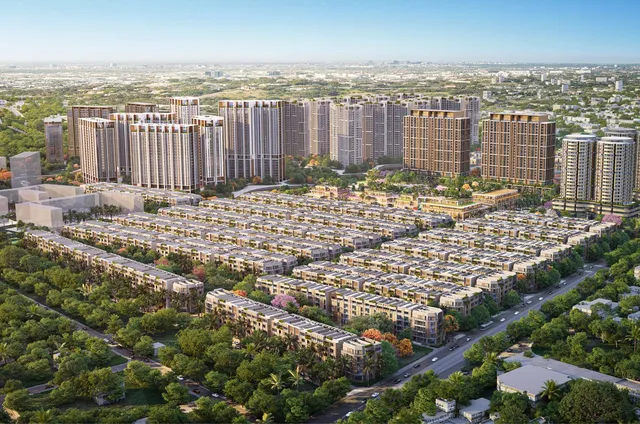 Selling now Foreign quota
 Masterise Homes · Luxury apartment & integrated township
The Global City
An Phu, Thu Duc City (former District 2), HCMC
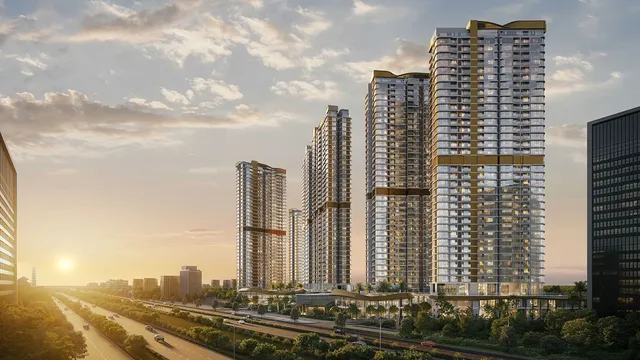 Selling now Foreign quota
 Gamuda Land · Luxury apartment
Eaton Park
An Phu, Thu Duc City, HCMC
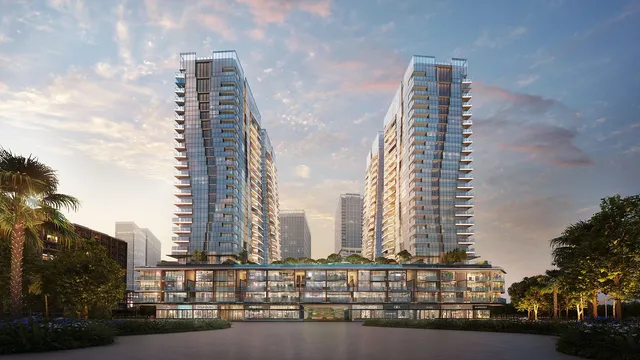 Selling now Foreign quota
 SonKim Land × Hongkong Land · Branded residences
The Metropole Thủ Thiêm
Thu Thiem, Thu Duc City, HCMC