
Renting vs Buying Property in Ho Chi Minh City (Foreigner Guide)
If you are an expat weighing whether to rent or buy an apartment in Ho Chi Minh City, the honest answer is that it depends on three things: how long you will stay, how you feel about Vietnam’s 50-year leasehold structure, and whether you would rather keep your capital liquid or lock it into a hard asset. This guide walks through the real 2026 numbers on both sides so you can make the call with open eyes rather than sales pressure.
We sell new-build projects, so treat this as an advisor’s overview rather than legal or tax advice. Rules, prices, and exchange rates move quickly in Vietnam — always confirm specifics with a licensed lawyer and a tax professional before signing anything.
The short answer: renting wins under ~5 years, buying wins on a longer horizon
As a rule of thumb, if you expect to be in Ho Chi Minh City for fewer than four to five years, renting almost always makes more financial sense; beyond that, the case for buying strengthens considerably. The reason is transaction friction. Buying a new-build apartment in HCMC carries roughly 11% to 15% in upfront costs once you add Vietnam’s 10% VAT, the 2% maintenance fund, and the 0.5% registration fee, and selling later costs another 2% in personal income tax on the transfer price. You need several years of either rent savings or capital appreciation just to absorb those round-trip costs.
That said, the “buy” side has been unusually attractive recently because HCMC apartment prices have been climbing fast. According to the Global Property Guide, average apartment prices in Ho Chi Minh City rose around 24% year-on-year heading into 2026. Past performance is not a promise of future returns — and double-digit annual growth is not sustainable forever — but it explains why many long-stay expats have leaned toward ownership. If you want our current new-build inventory and indicative price ranges, see our project listings.
What renting actually costs in Ho Chi Minh City in 2026
Renting gives you flexibility and near-zero exit cost, but in prime expat districts the monthly outlay is meaningful and rising. Based on early-2026 market data, here is a realistic snapshot of monthly rents for furnished, good-quality units in areas expats favor:
| Area / unit type | Typical monthly rent (2026) |
|---|---|
| Studio (citywide, decent building) | ~$300–$500 |
| 1-bedroom (mid-range) | ~$420–$650 |
| 2-bed, Thao Dien (District 2 / Thu Duc) | ~$1,200 |
| 2-bed, Thu Thiem | ~$1,400 |
| 2-bed, Phu My Hung (District 7) | ~$1,120 |
| Quality 2–3 bed, prime districts | ~$1,000–$2,000 |
Rents in the most desirable expat enclaves such as Thao Dien and Thu Thiem have been growing roughly 6% to 8% a year, ahead of the citywide pace of around 5%. The upside of renting is obvious: you can leave with a month’s notice, you carry no exposure to the 50-year ownership question, and your landlord handles major repairs and the building sinking fund. The downside is that you build no equity and you ride rent inflation every renewal.
A practical tip for renters: leases are usually 12 months, deposits run one to three months, and you should insist on a registered rental contract so your stay is properly recorded for visa and tax purposes. Our foreigner guide covers the paperwork side in more depth.
What buying actually costs — and the 50-year ownership reality
Foreigners can legally own apartments in Ho Chi Minh City, but on a 50-year renewable leasehold rather than freehold — and understanding that nuance is the single most important part of the buy decision. Under the Housing Law 2023 and Land Law 2024, a foreign individual receives ownership of the unit for 50 years from the date the ownership certificate (the “Pink Book,” now merged into a single land-and-asset certificate since January 2025) is issued.
Key constraints every foreign buyer should know:
- The 50-year clock. You own the unit for 50 years. You can apply for one extension of up to another 50 years by petitioning the provincial People’s Committee at least three months before expiry. Renewal is not automatic and is not guaranteed under identical terms — this is the central uncertainty of the whole structure.
- The 30% building cap. Foreigners may collectively own no more than 30% of the units in any single condominium building. Once a project hits that cap, additional foreign buyers must wait for resale.
- You never own the land. What you hold is a long lease on the apartment plus a land-use right, not the freehold land beneath it. This is true for locals too in practice, since all land in Vietnam is ultimately state-owned.
On costs, budget the following round-trip figures for a new-build purchase:
| Item | Typical cost (2026) |
|---|---|
| VAT (new commercial housing) | 10% of price |
| Maintenance / sinking fund | 2% of price |
| Registration fee | 0.5% of price |
| Notary + admin | ~$100–$400 |
| Ongoing management fee | ~$1–$3 per sqm / month |
| Exit tax when you sell (PIT) | 2% of transfer price |
For a resale apartment where VAT is already baked in, your buy-side costs can drop to roughly 1% to 1.8%, which materially changes the math versus a primary-market unit. We break down the full step-by-step in our buying process guide for foreigners. For tailored numbers on a specific unit, talk to our team.
The break-even math: rent vs buy over different horizons
The decisive question is whether your expected price appreciation plus avoided rent will exceed your round-trip ownership costs over your actual time in Vietnam. Consider a simplified, illustrative example for a $250,000 two-bedroom in a prime district (numbers rounded; not a forecast):
- Upfront to buy (new-build): ~12.5% of $250,000 ≈ $31,250 in VAT, fund, registration and admin.
- Annual cost to own: management fees plus the opportunity cost of your tied-up capital — and rental income, if you let it, is taxed at a flat 10% of gross once you exceed about 100 million VND (~$4,000) a year, with no expense deductions under the simplified individual method.
- Cost to rent the same unit: roughly $1,200–$1,400/month ≈ $14,400–$16,800 per year.
- Exit cost to sell: 2% PIT on the sale price, regardless of whether you profit.
Under 3 years, the ~$31k buy-in plus 2% exit rarely beats simply renting and keeping your capital invested elsewhere. Past the 5-to-7-year mark, modest appreciation and avoided rent tend to flip the result in favor of buying — and in a market that has been appreciating in double digits, the crossover has been arriving sooner. The risk is that you are betting growth continues; if prices stall, the buyer carries that downside while the renter walks away. Our rental yield guide for Ho Chi Minh City digs into the income side, where net yields for foreign landlords using a manager typically land around 2.6% to 3.1%.
When renting is the smarter choice
Rent if your horizon, mobility, or liquidity needs outweigh the appeal of holding a hard asset. Renting is usually the better call when:
- You are on a 1–3 year assignment or your future in Vietnam is uncertain.
- You want zero exposure to the 50-year leasehold renewal question.
- You prefer to keep capital liquid for business, school fees, or investments at home.
- You value being able to relocate within the city as your job or family needs change.
- You are still learning the market and want to “test-drive” neighborhoods before committing.
When buying makes sense
Buy if you have a long horizon, want a foothold in a fast-growing market, and are comfortable with the leasehold trade-off. Ownership tends to win when:
- You plan to stay 5+ years, or want a long-term base in Vietnam.
- You believe in HCMC’s growth trajectory and want capital-appreciation exposure.
- You want rental income from a second unit (mind the 10% gross tax and the 30% building cap).
- You are buying into a strong primary-market project with a credible developer and clear legal title — for example master-planned communities like Vinhomes Grand Park, The Global City, or premium Thu Thiem addresses such as The Metropole Thu Thiem.
- You can comfortably absorb the ~12–15% round-trip cost without straining liquidity.
A note on financing: most foreigners buy with cash or funds wired from abroad, because local mortgage access for non-residents is limited. Keeping clean documentation that your purchase funds originated overseas is essential — it is what allows you to repatriate sale proceeds later through official banking channels.
The exit: can you actually get your money out?
Yes, foreigners can sell and repatriate proceeds, but only with disciplined paperwork from day one. When you sell, you pay the flat 2% personal income tax on the transfer price — the same rate locals pay, with no foreigner surcharge. To move the proceeds home, banks will want the notarized sale contract, the ownership certificate, tax receipts, and proof that your original purchase money came from abroad. Buyers who skip that proof at the entry stage often struggle to repatriate cleanly at the exit stage, so set it up correctly before you wire a single dong. This is exactly where an experienced agent and a good lawyer earn their fee.
Bottom line
For a stay under five years, renting in Ho Chi Minh City is usually the financially rational and lower-stress choice. For a longer horizon, buying a well-chosen new-build can build equity and tap into one of Asia’s fastest-appreciating urban markets — provided you go in clear-eyed about the 50-year leasehold, the 30% foreign cap, and the ~12–15% round-trip cost. There is no universally correct answer; there is only the answer that fits your timeline and risk appetite. If you would like us to run the rent-vs-buy numbers against a specific project and budget, reach out to Happy Land or browse current available projects. You can also learn more about our team and how we work with foreign buyers.
Frequently asked questions
Can foreigners actually own property in Ho Chi Minh City, or only rent?
Foreigners can legally own apartments in approved commercial developments, but on a 50-year renewable leasehold rather than outright freehold. You hold the unit and a land-use right for 50 years from the date your ownership certificate is issued, with the possibility of applying for one extension of up to another 50 years. Foreigners cannot own the underlying land, and no more than 30% of units in any one building can be foreign-owned.
Is it cheaper to rent or buy in Ho Chi Minh City as an expat?
For stays under roughly four to five years, renting is usually cheaper because buying a new-build carries about 11% to 15% in upfront costs (10% VAT, 2% maintenance fund, 0.5% registration) plus a 2% exit tax when you sell. Beyond five years, avoided rent and capital appreciation tend to favor buying — especially in a market that has been appreciating quickly — but that outcome depends on continued price growth, which is never guaranteed.
What happens at the end of the 50-year ownership period?
You can apply to the provincial People's Committee for an extension, ideally at least three months before the term expires, and approval can be granted for up to another 50 years if conditions are met. However, renewal is not automatic and is not guaranteed on identical terms, which is the main long-term uncertainty foreign buyers should weigh. Always get current legal advice, as the implementing regulations continue to evolve.
How much rent should I budget for a 2-bedroom in a prime expat area?
In early 2026, quality 2-bedroom apartments in popular expat districts typically run about $1,120 in Phu My Hung (District 7), around $1,200 in Thao Dien, and roughly $1,400 in Thu Thiem. Rents in these enclaves have been rising about 6% to 8% per year. Deposits are usually one to three months, and leases are commonly 12 months.
Can I get my money out of Vietnam after selling?
Yes. Foreigners pay a flat 2% personal income tax on the sale price and can repatriate proceeds through official banking channels. To do so, you will need the notarized sale contract, ownership certificate, tax receipts, and crucially proof that your original purchase funds came from abroad. Set up that documentation when you buy, not when you sell, and confirm details with a tax professional.
Projects for sale now
Get the latest price list, availability & payment terms — free advice via Zalo/WhatsApp.
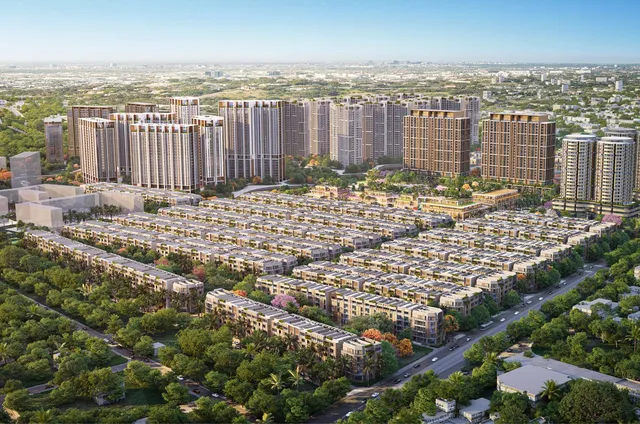 Selling now Foreign quota
 Masterise Homes · Luxury apartment & integrated township
The Global City
An Phu, Thu Duc City (former District 2), HCMC
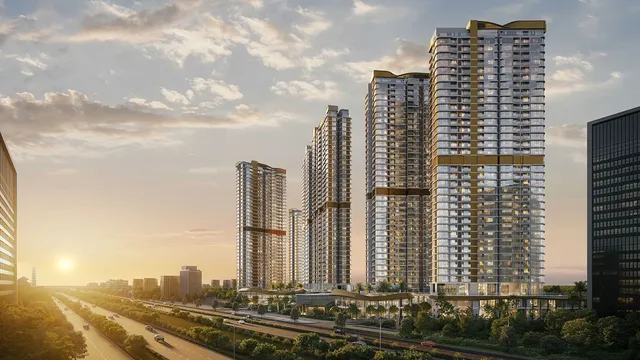 Selling now Foreign quota
 Gamuda Land · Luxury apartment
Eaton Park
An Phu, Thu Duc City, HCMC
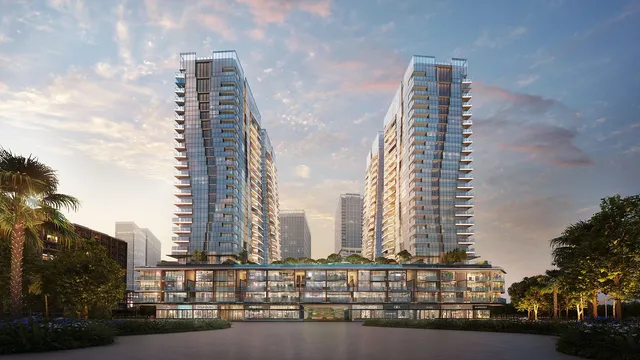 Selling now Foreign quota
 SonKim Land × Hongkong Land · Branded residences
The Metropole Thủ Thiêm
Thu Thiem, Thu Duc City, HCMC