
Buying Property in Phu Quoc as a Foreigner: 2026 Guide
Phu Quoc is Vietnam’s most talked-about island market: white-sand beaches, Sun Group and Vingroup mega-resorts, a special-zone upgrade, and the spotlight of hosting APEC 2027. For foreign buyers it is genuinely exciting — and genuinely easy to misunderstand. The single most important thing to know is that most of what sells on Phu Quoc is resort and leisure product, not the standard foreign-quota apartment most guides describe.
This guide explains why the island appeals to foreigners, the ownership rules under the Housing Law 2023, and — most importantly — the honest catch about condotels and tourism-land villas. Figures are indicative and this is general information, not investment advice.
Why foreigners look at Phu Quoc
Phu Quoc sits off the south-west coast in the Gulf of Thailand, closer to Cambodia than to mainland Vietnam. It offers a tropical, resort-town lifestyle: long beaches, a large national park, the Hon Thom cable car, Sunset Town in the south, and a rapidly expanding international airport with visa-free entry for citizens of many countries.
The macro story got a lot bigger recently. From 1 July 2025, Phu Quoc was reorganised as a special zone (administered under An Giang province after the Kien Giang–An Giang merger) and elevated to Class-I city status. It was then selected to host the APEC Summit in 2027, becoming the third Vietnamese city to do so after Hanoi (2007) and Da Nang (2017).
That designation pulled forward serious infrastructure. According to public reporting, roughly 21 APEC-linked projects carry total investment on the order of USD 5.25 billion, including:
- A second airport runway, new terminal and VVIP facility (full operations targeted around early 2027)
- An APEC conference complex (reported at about USD 836 million, ~95,000 m², up to 10,000-seat hall)
- A light-rail line, new arterial roads and ceremonial boulevards
For a foreign buyer, this signals long-run tourism demand and international visibility. But infrastructure momentum is not the same as a price guarantee, and it does not change the ownership rules on any individual unit — which is where most people trip up.
The rules: what foreigners can own under Housing Law 2023
Vietnam’s framework is set by the Housing Law 2023 and Land Law 2024. The starting principle: foreigners cannot own land. All land is state-administered. What a foreigner can own is the house or apartment — the structure and its use rights — inside a qualifying project.
The core rules that apply nationwide:
- Licensed projects only. You can buy only in a commercial housing project specifically approved to sell to foreign buyers.
- 50-year term, renewable once. A foreign individual holds the home for 50 years from the date the ownership certificate is issued, extendable once (application to the Provincial People’s Committee; approval is not automatic). If you buy resale, you inherit the remaining term, not a fresh 50 years.
- Apartment quota: 30%. Foreigners may own no more than 30% of the units in any one apartment building.
- Landed-home quota. For villas and townhouses, foreign ownership is capped at roughly 250 houses per ward-equivalent (~10,000 population), or 10% of the homes if only one project exists in that area (per Decree 95/2024).
- Foreigner-to-foreigner resale is now allowed — a meaningful improvement over the old rules, which effectively forced sales back to Vietnamese buyers and crushed exit liquidity.
- Restricted zones. Foreigners cannot own property in areas reserved for national defence or security, and historically this has included border zones and islands.
For a full walk-through of the term structure, see our guide to the Vietnam 50-year leasehold explained.
That last bullet raises an obvious question for an island market.
The island tension — and how Phu Quoc resolves it
If foreigners are generally barred from island and defence-sensitive areas, how are foreigners buying on Phu Quoc at all? The answer is project-by-project licensing. Specific, approved commercial projects on Phu Quoc have been licensed for foreign sale — most clearly in the apartment segment. Outside those licensed projects, the general island/defence-zone caution still bites.
The practical takeaway: do not assume any Phu Quoc property is foreign-ownable just because it is being marketed to foreigners. Eligibility is a property of the specific project and unit, confirmed in writing — not a property of the island.
The honest core: most Phu Quoc product is resort, not residential
Here is the part brochures skip. Phu Quoc’s inventory splits into three very different classes, and they are not interchangeable for a foreign buyer.
| Product class | Typical land / legal basis | Foreigner ownership | Reality check |
|---|---|---|---|
| Residential apartment (in a licensed housing project) | Residential land; certificate on the unit | Yes — within the 30% per-building quota, 50-yr term | Clearest path for foreigners; usable as home or long-let |
| Condotel (hotel-style unit) | Commercial/tourism land; pink book possible under Decree 10/2023 | Project-specific; often via operator/lease model | Land term follows developer’s commercial term (up to 50, sometimes 70 yrs); returns tied to operator; weaker resale liquidity |
| Tourism-land villa / shophouse | Commercial or tourism land use rights | Frequently leasehold to the developer, or restricted for foreigners | Often marketed with “long-term red book” for Vietnamese buyers — that does not automatically extend to foreigners |
The subtlety that catches people: a coastal villa or shophouse can genuinely carry long-term (permanent) land-use rights — but that status applies to a Vietnamese buyer. A foreigner buying a qualifying landed home still holds it on the 50-year term and only within the landed quota. And much beachfront resort stock is not sold as freehold-style ownership at all; it is sold under a lease with the developer or as a condotel tied to a rental-operation contract.
Condotels and pink books
There is good news on condotels: since Decree 10/2023, condotels and resort villas in properly licensed non-residential projects on commercial land can be granted a pink book. This improves transparency and liquidity. But two caveats remain: the land-use term follows the developer’s commercial term (typically up to 50 years, 70 in specially approved cases), and foreign-ownership treatment is still project-specific. A pink book is not a promise of perpetual, freely foreign-transferable ownership.
Rental operation and liquidity — read this before you fall for a yield
Resort products are usually sold with a rental story: put the unit into the operator’s pool, collect a share of room revenue, use it a few weeks a year. That can work — but the economics live entirely inside the management/operation contract. Check:
- Whether the return is guaranteed or performance-based, and for how many years
- Who bears operating costs, refurbishment and vacancy
- Your rights if the operator underperforms or the contract ends
- Realistic resale liquidity — condotels and tourism-land units generally sell more slowly than plain apartments, and to a narrower buyer pool
None of this is a reason to avoid Phu Quoc. It is a reason to price the leisure premium honestly and to prefer the cleanest ownership form you can get for your goals.
Happy Land’s Phu Quoc projects — with honest caveats
We work on primary-market Sun Group inventory on Phu Quoc. Here is how each maps to the framework above. Ownership descriptions below reflect public information and should be re-verified per unit at the time you buy.
-
Sun Grand City New An Thoi — a large low-rise development in the south of the island (per public information, ~35 ha with several hundred shophouses and townhouses). It is marketed with long-term (“red book”) land ownership — a strong point on the Vietnamese-buyer side. For a foreign buyer, remember this is landed product: eligibility runs through the landed-home quota and the 50-year foreign term, and shophouse/commercial units may be treated differently again. We confirm current quota and certificate wording before any deposit.
-
The Sunset – Sun Grand City Hillside — the apartment side of Sunset Town, promoted (per public information) as one of the rare long-term-ownership beachfront apartment products on Phu Quoc. Apartments are the clearest route for foreigners, subject to the 30% per-building quota and the 50-year renewable term. We check foreign-quota availability tower-by-tower.
Both are Sun Group developments; for background on the developer’s track record and what that means for a foreign buyer, see our Sun Group developer review. You can also browse current stock on our projects list.
What to verify before you buy — the five-point check
Run this on every Phu Quoc unit, regardless of how the brochure reads:
| # | Verify | Why it matters |
|---|---|---|
| 1 | Is the project licensed to sell to foreigners? | Island/defence-zone rules mean this is not automatic |
| 2 | Is there remaining foreign quota? (30% apartments / ward cap for landed) | Quota can be full even in an eligible project |
| 3 | Exact product & land type — apartment vs condotel vs tourism-land villa/shophouse | Determines your ownership form and rights |
| 4 | Certificate wording & remaining term — long-term vs 50/70 yr; pink book vs red book | A foreigner’s term differs from a Vietnamese buyer’s |
| 5 | For resort units, the rental-operation contract & resale liquidity | Yield and exit depend on the operator, not the brochure |
Get each point in writing from the developer or a licensed Vietnamese lawyer. A brochure headline is a marketing claim, not a legal certificate.
Costs and process, in brief
Beyond the purchase price, budget for VAT, registration and certificate fees, a sinking/maintenance fund for apartments, and annual management fees (higher for resort-operated units). Payments for foreigners must move through proper banking channels so funds — and eventual sale proceeds — are traceable and repatriable. If you value your time on-island, factor in that a lawyer’s independent review of the sale-and-purchase agreement and the operation contract is money well spent.
Is Phu Quoc right for you?
Phu Quoc suits a buyer who wants a resort lifestyle asset on an island with real infrastructure momentum and is comfortable that most product is leisure-oriented, term-limited, and — for foreigners — quota-bound. If your priority is the cleanest possible ownership and easiest resale, a licensed residential apartment is the most straightforward path; condotels and tourism-land villas can offer more space and beachfront but ask more of you on legal diligence and liquidity.
General information, not investment advice. Ownership rules, quotas and terms are set by the Housing Law 2023, the Land Law 2024 and their decrees, and every point above must be verified for the specific unit — foreign-sale licensing, remaining foreign quota, product/land type, certificate term, and any rental-operation contract. Figures are indicative and subject to change.
Want us to check the current foreign-quota status and exact ownership form on a specific Phu Quoc unit before you commit? Message us on Zalo or WhatsApp for live inventory, developer pricing and an honest read on each product — or browse the current projects list.
Frequently asked questions
Can a foreigner actually buy property in Phu Quoc in 2026?
Yes, but only in specific licensed projects and mostly as apartments. Under Housing Law 2023, foreigners can own apartments and houses inside commercial housing projects that are approved for foreign sale, on a 50-year leasehold that is renewable once. The catch on Phu Quoc is that a large share of what is marketed is resort or leisure stock (condotels and tourism-land villas or shophouses) that is either not sold to foreigners at all or is held under leasehold and operator arrangements rather than standard foreign-quota ownership. Always confirm, in writing, that the specific unit is in a project licensed for foreign buyers before paying a deposit.
Do foreigners get freehold or only a 50-year term in Phu Quoc?
Foreigners never get true freehold in Vietnam because all land is state-owned. Even where a Vietnamese buyer would receive long-term (permanent) land-use rights, a foreign individual holds the home on a 50-year term from the date the ownership certificate is issued, renewable once by application to the Provincial People's Committee (approval is not automatic). If you buy a unit resale, you inherit the remaining term, not a fresh 50 years. For resort products such as condotels, the land term follows the developer's commercial land term, typically up to 50 years and in some approved cases 70.
What is the difference between a condotel and a normal apartment in Phu Quoc?
A normal apartment sits in a residential housing project; a foreigner can own it within the 30 percent per-building quota and use it as a home or long-let it. A condotel sits on commercial or tourism land, is designed as a hotel-style unit, and is usually tied to a developer or operator rental pool. Condotels can now receive a pink book under Decree 10/2023, but the land term follows the project's commercial term and foreign-ownership treatment is project-specific. Condotels tend to be less liquid on resale and their returns depend on the operator's performance, so read the management contract carefully.
Is the Sun Grand City Hillside apartment ownable by foreigners with long-term ownership?
According to public marketing information, Sun Grand City Hillside (which includes The Sunset tower) is promoted as one of the few beachfront apartment products on Phu Quoc granted long-term ownership on the Vietnamese-buyer side. For a foreign buyer, that still translates into the 50-year renewable term and the 30 percent per-building quota, and eligibility must be confirmed per tower and per unit. Treat the developer's headline as a starting point, not a guarantee, and ask us to check current foreign-quota availability and the exact certificate wording before you commit.
How does APEC 2027 and special-zone status affect Phu Quoc property?
From July 2025 Phu Quoc became a special zone (administered under An Giang province after the Kien Giang-An Giang merger) and a Class-I city, and it will host the APEC Summit in 2027. This has pulled forward major infrastructure: a second airport runway and new terminal, a light-rail line, new roads, and an APEC conference complex, with total related investment reported around 5.25 billion US dollars across roughly 21 projects. The upgrade supports tourism and long-run demand, but infrastructure momentum is not a guarantee of price gains, and it does not change the foreign-ownership rules on any individual unit.
What should I verify before buying any Phu Quoc property as a foreigner?
Verify five things per unit: (1) is the project licensed to sell to foreigners; (2) is there remaining foreign quota (30 percent for apartments, or the ward-level cap for landed homes); (3) the exact product and land type - residential apartment, condotel, or tourism-land villa/shophouse; (4) the certificate wording and remaining term (long-term versus 50 or 70 years, and whether it is a pink book); and (5) for resort units, the rental-operation contract and realistic resale liquidity. Get each point in writing from the developer or a licensed lawyer, not from a brochure.
Projects for sale in Phú Quốc
Get the latest price list, availability & payment terms — free advice via Zalo/WhatsApp.
 Selling now Foreign quota
 Sun Property (Tập đoàn Sun Group) · Condotel resort apartment
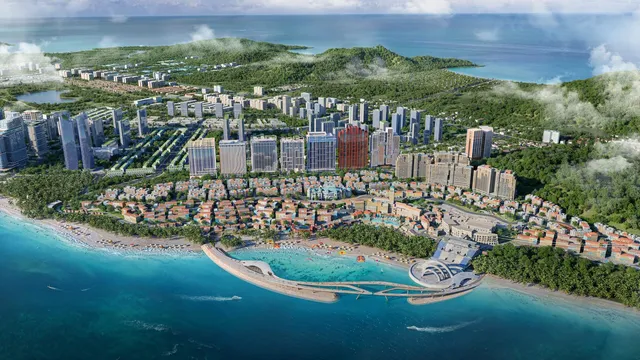
The Sunset - Sun Grand City Hillside (Sunset Town Phú Quốc)
Sunset Town, An Thoi Ward, South Phú Quốc
 Selling now Foreign quota
 Tân Á Đại Thành (MeyLand) · Shophouse / Commercial townhouse
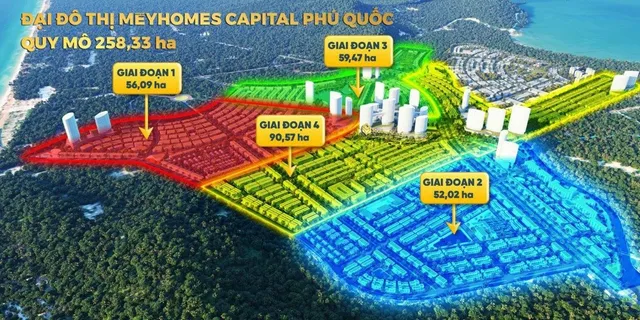
Meyhomes Capital Phú Quốc
An Thoi Ward, South Phu Quoc, Kien Giang
 Selling now Foreign quota
 Vingroup (Vinpearl / New Vision) - Phú Quốc United Center · Resort shophouse / Commercial townhouse
Grand World Phú Quốc (Shophouse)
Bai Dai, Ganh Dau, North Phu Quoc, Kien Giang (Phú Quốc)
 Selling now Foreign quota
 Sun Group (Công ty TNHH Mặt Trời Phú Quốc) · Townhouse / Shophouse
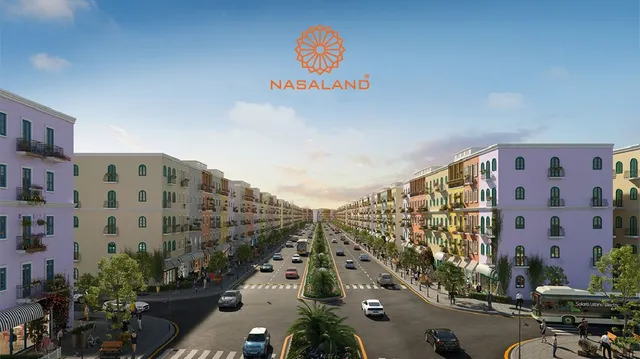
Sun Grand City New An Thới
Bai Dat Do area, An Thoi Ward, South Phú Quốc