
District 7 & Phu My Hung Property Guide for Foreign Buyers
Phu My Hung, in what most people still call District 7, is the most established foreign-family neighborhood in Ho Chi Minh City. For Korean, Japanese, Taiwanese, and Western buyers who want international schools, a JCI-accredited hospital, walkable streets, and a deep resale market, it remains the benchmark against which newer districts are measured. This guide covers the community, schools, healthcare, prices, rents, and the ownership rules foreigners actually need to understand before committing.
This article is general information for orientation, not legal, tax, or investment advice. Always confirm current rules and project-specific eligibility with a licensed Vietnamese lawyer and notary before signing.
A note on the name: “District 7” still works, even though it officially changed
As of 1 July 2025, Vietnam’s administrative merger dissolved the old district system, so “District 7” no longer exists as a formal government unit — but everyone still uses the name. The former District 7 was reorganized into four new wards: Tan My, Tan Hung, Tan Thuan, and Phu Thuan. The core Phu My Hung urban area now sits mainly within Tan My Ward.
For day-to-day life and real-estate listings, “District 7” and “Phu My Hung” remain the everyday shorthand, and developers, agents, and schools still advertise that way. What changed in practice is your legal address: the ward name on your Pink Book (ownership certificate), utility accounts, and residence registration will reflect the new ward structure. When you review contracts, make sure the address matches the post-merger ward name. This is the single most common paperwork surprise for buyers in 2026.
If you want to see which buildings sit inside Phu My Hung versus the wider former district, our team can map current availability for you — start a conversation through our contact page.
Who lives here: a genuinely international, family-first community
Phu My Hung is HCMC’s most internationally mixed residential township, with large, long-settled Korean and Japanese communities alongside Taiwanese, Western, and affluent Vietnamese families. Built from former marshland into a planned “model” township from the late 1990s onward, the area is sometimes informally called “Korea Town” for its concentration of Korean restaurants, bakeries, and supermarkets.
What makes the community sticky is infrastructure rather than novelty:
- Korean and Japanese daily life: dedicated supermarkets, clinics, restaurants, and services in walking distance, plus international chains like Lotte Mart and Emart.
- Walkability and green space: wide tree-lined streets, parks, and lakes — unusual for HCMC and a major draw for families with young children.
- Retail and leisure: Crescent Mall, SC VivoCity, and the Saigon Exhibition and Convention Center (SECC) anchor the area.
For foreign buyers, this density of community matters two ways. It supports strong, stable rental demand (your future tenant is likely another expat family), and it makes daily living genuinely easy if you plan to occupy the home yourself.
Schools: SSIS and a cluster of international options
Phu My Hung’s biggest single advantage for family buyers is school access — Saigon South International School (SSIS) sits inside the township, alongside RMIT University, the British University Vietnam, and several other international and bilingual schools. SSIS, located on Nguyen Duc Canh in Tan Hung Ward, is one of the city’s longest-running American-curriculum schools and a primary reason many families choose this neighborhood specifically.
International schooling is a serious budget line, so plan for it honestly. For the 2025/2026 year, published SSIS annual tuition runs roughly VND 479 million to VND 882 million depending on grade level, plus one-time application, registration, and enrollment-deposit fees. Treat these figures as a reference range only — fees change yearly and vary by program, and you should confirm the current schedule directly with the school.
| Family priority | Why Phu My Hung fits |
|---|---|
| International curriculum from kindergarten to grade 12 | SSIS and multiple alternatives within the township |
| University on the doorstep | RMIT Vietnam and British University Vietnam nearby |
| Short school commute | Many residential towers are a short drive or walk from campuses |
| Resale and rental demand | School proximity keeps family-tenant demand consistent |
Healthcare: FV Hospital and an international medical ecosystem
FV Hospital (Franco-Vietnamese Hospital), in the heart of Phu My Hung, is one of the most credentialed private hospitals in southern Vietnam and a decisive factor for many foreign families. Established in 2003, FV operates across 30-plus specialties — including A&E, a cancer care centre, maternity, ICU/NICU, imaging with MRI, and rehabilitation — and is the only hospital in southern Vietnam to have achieved JCI international accreditation four consecutive times (2016–2025).
For buyers comparing neighborhoods, having a JCI-accredited hospital within minutes is a quality-of-life and resale advantage that newer eastern districts cannot yet fully match. Combined with international clinics and pharmacies throughout the township, healthcare access is rarely a friction point here.
Prices in 2026: what your budget actually buys
Phu My Hung is a mature, premium market: resale apartments cluster well above the city’s mid-market, while new Phu My Hung Development launches command the highest prices in the township. Use the figures below as a 2026 reference range, not a quote — actual pricing depends on building, floor, view, furnishing, and remaining leasehold term, and the market moves.
| Segment | Approximate 2026 reference | Notes |
|---|---|---|
| HCMC city-wide median apartment | ~VND 95 million/sqm (~US$3,650/sqm) | Citywide benchmark for context |
| Phu My Hung resale condos | ~US$1,570/sqm median range upward | Older stock; wide spread by building/quality |
| New Phu My Hung launches | from ~VND 90 million/sqm | E.g. recent Phu My Hung Development projects |
| Typical 2-bedroom (~70 sqm) resale | ~US$300,000 and up | Family-oriented buildings |
The headline takeaway: Phu My Hung trades on liquidity and lifestyle, not on being cheap. You pay a premium for a proven community, schools, and healthcare. Buyers chasing the lowest entry price or the highest raw capital-growth narrative often look east to newer master-plans — but those trade some maturity and amenity depth for that potential upside. We break the buying mechanics down in our step-by-step buying process for foreigners, and you can compare live inventory across districts on our projects page.
Rental income and yields: realistic expectations
Phu My Hung enjoys steady expat-driven rental demand, but treat any single yield figure with caution — gross yield ignores real costs. In early 2026, a furnished 2-bedroom in Phu My Hung typically rents for around VND 28 million (~US$1,120) per month, with quality 2–3 bedroom units broadly in the VND 15–25 million range depending on building and finish. Published gross yields for District 7 apartments have been quoted near 7–8%, but that is before vacancy, management fees, sinking fund, maintenance, agent commission, and tax.
A few honest points for income-focused buyers:
- Net yield is materially lower than gross. Budget for service charges, occasional vacancy, furnishing wear, and income tax on rent.
- Tenant profile is a strength. School-driven family tenants tend to sign longer leases and stay, reducing turnover cost.
- Older buildings depreciate inside, not just outside. Renovation and re-furnishing cycles affect both rent and resale.
For a full picture of the ongoing costs and taxes that erode gross yield, read our guide to taxes and costs of buying property in Vietnam before you model returns.
The ownership rules every foreign buyer must understand
Foreigners can legally own apartments in approved commercial projects in Phu My Hung, but ownership is leasehold, capped, and document-dependent — getting this right is non-negotiable. Under the Housing Law 2023 and Land Law 2024, the framework in 2026 works broadly as follows. (Confirm specifics with a Vietnamese lawyer; rules and draft decrees are still being finalized.)
- 50-year renewable leasehold. Foreign owners hold for 50 years from the certificate date, with one possible extension. Apply to the provincial People’s Committee at least three months before expiry; renewal is policy-dependent, not automatic.
- 30% per-building cap. Foreigners may own up to 30% of the units in any single apartment building. A given building can therefore be “sold out” to foreigners even when units remain — always confirm the project still has foreign quota before you commit.
- The Pink Book (Sổ Hồng) is your proof. This is the government-registered Certificate of Land Use Rights and Housing Ownership. Do not treat a sales contract as ownership — confirm the project is eligible for foreign ownership and that a Pink Book can and will be issued in your name.
- Eligibility and entry. You generally must enter Vietnam legally; buy in approved commercial developments (not land or restricted-zone housing).
Because Phu My Hung has many older buildings, two practical checks matter here: confirm the remaining leasehold term on resale units, and verify the building has not already hit its foreign-ownership cap. Our buying process guide and foreigner guide walk through the due diligence sequence.
Getting your money back out: plan repatriation before you buy
Yes, foreigners can repatriate sale proceeds and rental income from Vietnam — but only if you build the paper trail correctly from the first payment. Vietnam allows repatriation through licensed banks when you can document that funds entered legally and taxes were paid. The mistakes that trap people are upstream: paying cash, using informal channels, or losing the inbound-transfer records.
Set this up at purchase, not at sale. We explain the mechanics in our guide to repatriation of funds from Vietnam property. If repatriation is central to your plan, raise it on day one with both your bank and your lawyer.
Phu My Hung vs. the eastern growth corridor
Phu My Hung is the “proven, mature, family” choice; the eastern districts (former District 2 / Thu Thiem area) are the “newer, higher-growth-narrative” choice — neither is universally better. If your priorities are schools, healthcare, walkability, and stable rental demand today, Phu My Hung is hard to beat. If you weight new construction, branded residences, and a longer-horizon growth story, it’s worth comparing eastern projects such as The Global City, Eaton Park, and The Metropole Thu Thiem before deciding.
Many of our clients ultimately split the decision by use-case: occupy-now families lean Phu My Hung; pure investors weighing appreciation often look east. To talk through which fits your situation, reach out to our team and we’ll give you an honest comparison rather than a sales pitch.
Conclusion
Phu My Hung / District 7 earns its premium. It offers something newer districts are still building toward: a deep, established international community, an in-township American-curriculum school in SSIS, a JCI-accredited hospital in FV, and a liquid resale and rental market underpinned by family tenants. The trade-offs are real — you pay more, much of the stock is older, and you must navigate leasehold terms, the 30% cap, and repatriation paperwork carefully. Do the due diligence properly and it remains one of HCMC’s most dependable places for foreigners to live and invest. Learn more about how we work, or send us your requirements and we’ll prepare a tailored shortlist.
Frequently asked questions
Is it still called District 7 after the 2025 administrative merger?
Officially, no. Vietnam's merger on 1 July 2025 dissolved the district system, and the former District 7 was reorganized into the wards of Tan My, Tan Hung, Tan Thuan, and Phu Thuan, with the Phu My Hung core mainly in Tan My Ward. In everyday use, listings, schools, and agents still say 'District 7' and 'Phu My Hung.' Just make sure your contract and Pink Book show the correct new ward name.
Can foreigners legally buy an apartment in Phu My Hung?
Yes, foreigners can own apartments in approved commercial projects on a 50-year renewable leasehold, evidenced by a Pink Book. Ownership is capped at 30% of units per building, so a building can reach its foreign quota even with units available. Confirm the project's foreign eligibility, remaining quota, and leasehold term with a Vietnamese lawyer before paying. This is general information, not legal advice.
How much does an apartment in Phu My Hung cost in 2026?
As a 2026 reference range only, resale condos commonly start around US$1,570/sqm and rise sharply with quality and view, while new Phu My Hung Development launches start from roughly VND 90 million/sqm. A family-oriented 70 sqm two-bedroom resale unit often begins around US$300,000. Actual prices depend on building, floor, furnishing, and remaining lease, and the market moves, so treat these as orientation, not a quote.
What is the rental yield in District 7 / Phu My Hung?
Gross rental yields for District 7 apartments have been quoted around 7-8%, with a furnished two-bedroom renting near VND 28 million (about US$1,120) per month in early 2026. Net yield is meaningfully lower once you subtract service charges, vacancy, maintenance, agent fees, and rental income tax. Use gross yield only as a starting point and model your own net figure.
Why do Korean and Japanese families choose Phu My Hung specifically?
Phu My Hung combines in-township international schools (notably SSIS), the JCI-accredited FV Hospital, Korean and Japanese supermarkets, restaurants and clinics, and rare walkability with parks and lakes. That concentration of community and family infrastructure, built up over two decades, makes daily life easy and keeps rental demand from expat families consistent.
Projects for sale now
Get the latest price list, availability & payment terms — free advice via Zalo/WhatsApp.
 Selling now Foreign quota
 Masterise Homes · Luxury apartment & integrated township
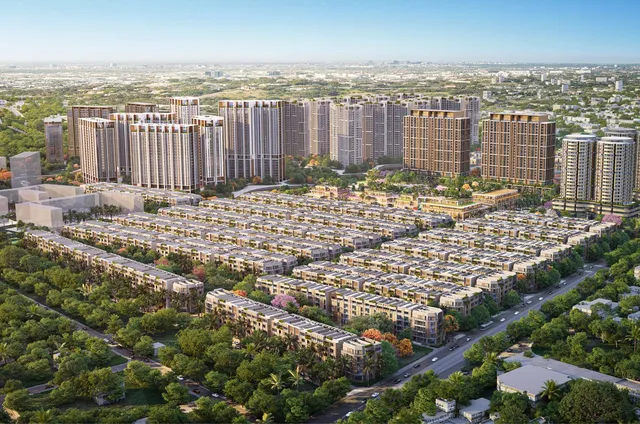
The Global City
An Phu, Thu Duc City (former District 2), HCMC
 Selling now Foreign quota
 Gamuda Land · Luxury apartment
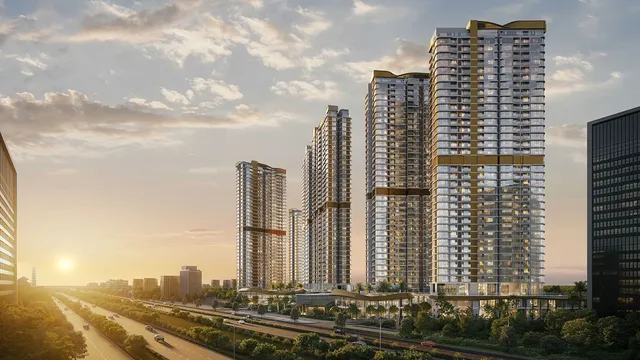
Eaton Park
An Phu, Thu Duc City, HCMC
 Selling now Foreign quota
 SonKim Land × Hongkong Land · Branded residences
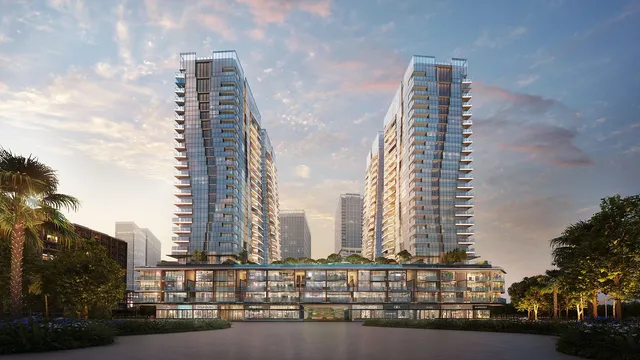
The Metropole Thủ Thiêm
Thu Thiem, Thu Duc City, HCMC