
Buying Property in Da Nang as a Foreigner: 2026 Guide
Da Nang has quietly become one of Southeast Asia’s most talked-about cities for lifestyle buyers and yield hunters alike — a beach, a river, and misty mountains inside one compact, easy-to-live city. For foreigners, the appeal is obvious, but the rules are specific and the ownership forms vary more than the glossy brochures admit. This guide walks through why Da Nang works for foreign buyers in 2026, exactly what the law lets you own, what the numbers realistically look like, and — most importantly — the ownership-form traps to verify before you transfer a single dong.
This is general information, not investment or legal advice. Figures are indicative and change; verify everything against the actual certificate and contract for the specific unit you are considering.
Why Da Nang appeals to foreign buyers
Da Nang is Vietnam’s third-largest city, but it doesn’t feel like a megacity. You get 30-plus kilometres of coastline (My Khe beach is a short ride from almost anywhere), the Han River cutting through the centre with its famous bridges, and the Son Tra peninsula and Marble Mountains on the doorstep. It is consistently ranked among the most livable places in Vietnam — cleaner air, lighter traffic, and a slower pace than Ho Chi Minh City or Hanoi.
For international buyers the practical draws stack up:
- Cost. Prime riverfront and beachfront apartments run roughly US$2,000-6,000 per square metre depending on district and view — broadly half the price of prime Ho Chi Minh City, according to public market data for late 2025 / early 2026.
- Tourism and a growing economy. Da Nang drew more than 10 million visitors across 2024-2025 and is pushing into tech, services, and MICE tourism. Da Nang International Airport sits inside the city, with direct regional flights.
- Expat and digital-nomad friendliness. The An Thuong / My An “expat zone” near the beach has an established international community, English-friendly cafes, coworking spaces, and long-stay tenants — which matters a lot for rental stability.
- Lifestyle. Beach in the morning, river dining at night, Ba Na Hills and Hoi An within an hour. It is a genuinely nice place to own, not just a spreadsheet entry.
The flip side, covered honestly below: Da Nang’s rental market is tourism-driven and seasonal, its resale buyer pool is smaller than HCMC’s, and coastal “resort” products carry ownership-form risks that catch many first-time foreign buyers.
What foreigners can — and cannot — buy
Vietnam’s framework is set by the Housing Law 2023, in force from 1 August 2024. It confirms and modernises the rules foreigners have worked under since 2015, with one very important improvement (more on resale below).
You can buy, provided you entered Vietnam legally (tourist visa, e-visa, or business visa all qualify — no special property visa needed):
- Apartments and condos inside licensed commercial housing projects
- Villas, townhouses, and shophouses within such developments
You cannot buy:
- Standalone land plots — all land in Vietnam is state-owned; foreigners never own land outright
- Houses on individual land parcels outside a commercial project
- Property via informal “nominee” arrangements (a Vietnamese person holding title for you) — these carry no legal protection and are a well-known way to lose money
Owning property does not grant residency or citizenship. You still need the appropriate visa or temporary residence card to actually live here.
The two rules that decide everything: the 30% quota and the 50-year term
Two ownership rules apply nationwide, Da Nang included:
1. The 30% foreign-ownership quota. In any single apartment building, foreigners may own a maximum of 30% of the units. For landed homes the cap is stricter — broadly 10% of units in a project, up to a maximum of 250 houses per ward-level area. In Da Nang the quota fills fastest in the most-wanted beachfront zones (My An, An Thuong, Phuoc My), so remaining foreign-eligible units are sometimes competed over. Always confirm in writing that (a) the project is foreign-eligible and (b) the building has not already hit its 30% cap before you pay a deposit. We cover this in depth in The 30% foreign-ownership quota.
2. The 50-year leasehold term. A foreign individual receives an ownership certificate (the “pink book”) valid for 50 years from issuance, extendable once under the law. A Vietnamese buyer in the very same building typically holds long-term (effectively indefinite) title. You own the apartment; you hold a time-limited land-use right, not the land. Confirm the exact remaining years on the certificate and the extension procedure — don’t assume.
The big 2026 improvement: under the current framework, foreign owners can now sell to other foreigners. Under older interpretations, foreigners could effectively only sell to Vietnamese citizens, which crushed exit liquidity. Foreigner-to-foreigner resale materially improves the secondary market, though Da Nang’s buyer pool is still smaller than HCMC’s — expect resale to take time and often to price 10-20% below new-launch levels.
The critical caution: condotel vs. standard apartment
This is the single most important thing to get right on the coast, and it is where Da Nang trips up foreign buyers more than anywhere else.
Many resort-style coastal products are condotels or hospitality units — not standard residential apartments. They are typically sold on 50-70 year land terms, bundled with a rental-pool operating agreement, and marketed with “guaranteed” yields of 8-12%. Historically these have caused real losses: several developers reduced or stopped the guaranteed payments, the legal classification (residential vs. commercial/hospitality) stayed ambiguous, banks often won’t accept them as collateral, and the resale market is weak. A standard residential apartment, by contrast, comes with a proper pink book and full foreign-ownership rights, clearer legal standing, and better resale prospects.
The brochure will rarely make the distinction obvious. The certificate and the sale-and-purchase contract will. Here is the practical comparison:
| Feature | Standard residential apartment | Condotel / resort unit |
|---|---|---|
| Ownership document | Pink book, full foreign-ownership rights (50-yr foreign term) | Often a business/hospitality certificate; 50-70 yr land term |
| Legal classification | Residential (clear) | Residential vs. commercial (historically ambiguous) |
| Rental control | You choose tenants / manager | Usually locked into developer’s rental pool |
| Advertised yield | Realistic ~3.5-5% gross | ”Guaranteed” 8-12% (often not sustained) |
| Bank collateral | Generally accepted | Frequently rejected |
| Resale liquidity | Better | Weak / difficult |
| Suits | Long-term owners, self-directed landlords | Hands-off buyers who accept operator risk |
The takeaway: never buy on the yield number alone. Verify the product type on the certificate first. If it’s a condotel or hospitality unit, price the operator and liquidity risk realistically — or choose a standard residential apartment instead.
What’s available on the Han River — and the rental reality
For foreign buyers who want the cleaner residential-apartment path, the Han River corridor in the central districts is the sweet spot: it’s genuinely urban (dining, bridges, business district) yet minutes from My Khe beach and about 15-20 minutes from the airport. Prime riverfront apartments here have reached roughly US$3,000-6,000 per square metre.
Happy Land distributes Sun Group’s Han riverfront apartment projects — and here the ownership form matters, so we state it accurately per project:
- Sun Ponte Residence Da Nang — at the foot of the Dragon Bridge on Tran Hung Dao. This is a standard residential apartment (explicitly not a condotel): Vietnamese buyers receive long-term pink books, and foreign buyers hold the standard 50-year term within the 30% quota. A twin 26-storey tower of ~495 units, from around VND 2.7 billion.
- Sun Symphony Residence Da Nang — east bank of the Han, facing the DIFF international fireworks site. Vietnamese long-term pink book; foreigners 50-year term, 30% cap per tower. Roughly 1,313 apartments across an ~8 ha riverside development, from around VND 2.9 billion.
- Sun Cosmo Residence Da Nang — at the foot of the Tran Thi Ly bridge. Here the ownership form is mixed: the low-rise The Cosmo villas/townhouses carry long-term title, while the high-rise The Panoma apartment tower has a land-term nuance flagged in public information. If you are looking at the tower, verify the certificate and land-use term carefully before committing. Ask us for the current legal file. You can browse all of these on the project list.
All three are by Sun Group / Sun Property — one of Vietnam’s largest resort-and-urban developers, whose track record and delivery we cover in the Sun Group developer review.
Rental reality, honestly stated. Da Nang income is tourism-driven and seasonal. Per public market commentary for 2025-2026, realistic gross yields on residential apartments are roughly:
| Area | Indicative gross yield | Notes |
|---|---|---|
| My An / My Khe (beach) | ~3.5-5% | Expat + tourist mix; less seasonal in the expat zone |
| Hai Chau (city centre / riverfront) | ~4-5% | Steadiest professional-tenant demand |
| Son Tra (premium coastal) | ~3-4% | More seasonal, resort-style |
Those are gross. After management fees (often 10-25%), vacancy, and tax, net yields are commonly ~2.5-3.5%. High season runs roughly October-March (international tourists); May-September is softer and a pure tourist-area unit can sit vacant 1-2 months. Units in the expat corridor smooth this out with year-round long-stay tenants. Treat any “guaranteed 8-12%” claim as a condotel red flag, not a base case.
Costs, tax, and financing at a glance
Budget beyond the headline price:
- Closing costs: roughly ~3%+ on new builds (the ~2% maintenance fund is the biggest single item), ~1.5% on resales; registration ~0.5%, notary 0.1-0.5%.
- Annual property tax: minimal — on the order of VND 500,000-2,000,000 (~US$20-80). Building management fees are separate.
- Rental income tax: ~10% combined VAT + personal income tax once annual rental revenue tops ~VND 100 million (~US$4,000).
- Mortgages: some foreigner-friendly banks lend at 50-70% loan-to-value, but promotional rates (5.5-7% for 1-3 years) typically reset toward ~9-11%. Many foreign buyers pay cash. Payment should flow through a Vietnamese bank account for a clean paper trail.
What to verify before you buy
Run this checklist on the specific unit, not the project in general:
- Product type — is it a standard residential apartment or a condotel/hospitality unit? Read the certificate, not the brochure.
- Foreign eligibility + quota — confirm the project is foreign-eligible and the building is under its 30% cap, in writing.
- The certificate (pink book) — exact remaining term for foreign ownership, and the renewal/extension procedure.
- Land-use term — especially for coastal or tower products; confirm 50-year vs 50-70 year vs long-term.
- Rental-operation terms — if there’s a rental pool, who controls it, what’s actually guaranteed, and what happens if the operator stops paying.
- Developer standing — delivery track record and financial health (delays on new builds are common).
- Encumbrances — request a Land Registration Office check and any bank release letter if previously mortgaged.
Talk to Happy Land
Da Nang can be an excellent place to own — a real lifestyle city with a functioning rental market — provided you buy the right ownership form and go in with realistic numbers. The mistakes that hurt foreign buyers are almost always avoidable: a condotel bought as if it were an apartment, a building already at its 30% cap, or an 8-12% “guarantee” that never materialises.
Happy Land sells Sun Group’s Han riverfront apartments at developer pricing with live availability, and we confirm foreign-quota status and the exact ownership form per building before you commit. Browse the project list, or message us on Zalo / WhatsApp for the current price sheet, available foreign-eligible units, and a plain-English read of the legal file.
This article is general information only, not investment or legal advice. Ownership form, foreign-quota availability, and legal terms differ per product and change over time — verify them for your specific unit before purchasing.
Frequently asked questions
Can a foreigner legally buy an apartment in Da Nang?
Yes. Under Vietnam's Housing Law 2023 (in force from 1 August 2024), foreign individuals who enter Vietnam legally can buy apartments and houses inside licensed commercial housing projects. You cannot buy land plots or houses outside such projects, and each apartment building is capped at 30% foreign-owned units. You must confirm the specific project is foreign-eligible and that the quota is not already full before you commit.
What does the 50-year leasehold actually mean for foreign owners?
Foreign individuals receive an ownership certificate (pink book) valid for 50 years from issuance, extendable once under the law. Vietnamese buyers in the same building can typically hold long-term (indefinite) ownership. You own the apartment and hold a time-limited land-use right, not the land itself. Confirm the exact remaining term on the certificate and the renewal procedure in writing before purchase.
Are Da Nang beachfront condos condotels or real apartments?
Both exist, and the difference is critical. Many resort-style coastal products are condotels or hospitality units on 50-70 year land terms with rental-pool operating agreements, which historically had weaker legal status, dropped 'guaranteed yield' payments, and poor resale liquidity. Standard residential apartments come with a proper pink book and full foreign-ownership rights. Always verify the product type in the certificate and contract rather than the brochure.
What rental yield can I realistically expect in Da Nang?
According to public market commentary for 2025-2026, realistic gross yields on residential apartments in Da Nang are roughly 3.5-5% in the beach and city-centre corridors, before management fees (often 10-25%), vacancy, and tax. Advertised 8-12% 'guaranteed' returns are almost always attached to condotel products and should be treated with strong skepticism. Da Nang rentals are also tourism-driven and seasonal, so model conservative occupancy.
Does buying property in Da Nang give me a visa or residency?
No. Property ownership does not grant residency or citizenship in Vietnam. You buy on a tourist, e-visa, or business visa, and you still need a separate visa or temporary residence card to live in Vietnam long-term. Rental income above about VND 100 million per year is taxed at roughly 10% combined VAT and personal income tax, and you can manage the unit remotely through a management company.
Which Da Nang projects does Happy Land offer to foreign buyers?
Happy Land distributes Sun Group's Han riverfront apartments in Da Nang: Sun Symphony Residence and Sun Ponte Residence (both standard residential apartments giving Vietnamese buyers long-term pink books and foreigners the standard 50-year term within the 30% quota), plus Sun Cosmo Residence (whose low-rise villas carry long-term title while the high-rise tower has a land-term nuance you must verify). We provide developer pricing, live availability, and can confirm foreign-quota status per building. Contact us on Zalo or WhatsApp.
Projects for sale in Đà Nẵng
Get the latest price list, availability & payment terms — free advice via Zalo/WhatsApp.
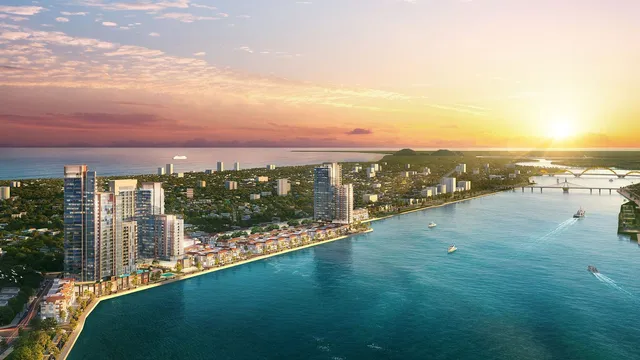 Selling now Foreign quota
 Sun Group (Sun Property) · Riverfront luxury apartment
Sun Symphony Residence
Nai Hien Dong Ward, Son Tra District, Đà Nẵng
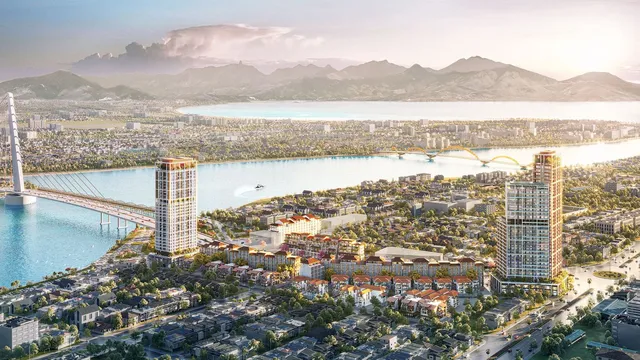 Selling now Foreign quota
 Sun Property (Tập đoàn Sun Group) · High-rise apartment (The Panoma)
Sun Cosmo Residence
Bac My Phu Ward, Ngu Hanh Son District, Đà Nẵng
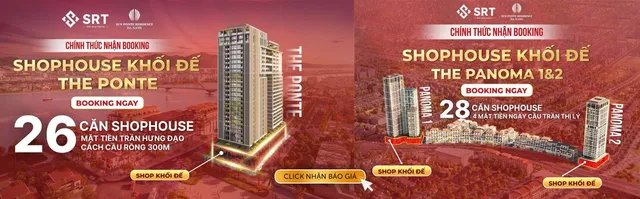 Selling now Foreign quota
 Sun Group (Sun Property) · Luxury riverfront apartment
Sun Ponte Residence
An Hai Tay, Son Tra, Đà Nẵng
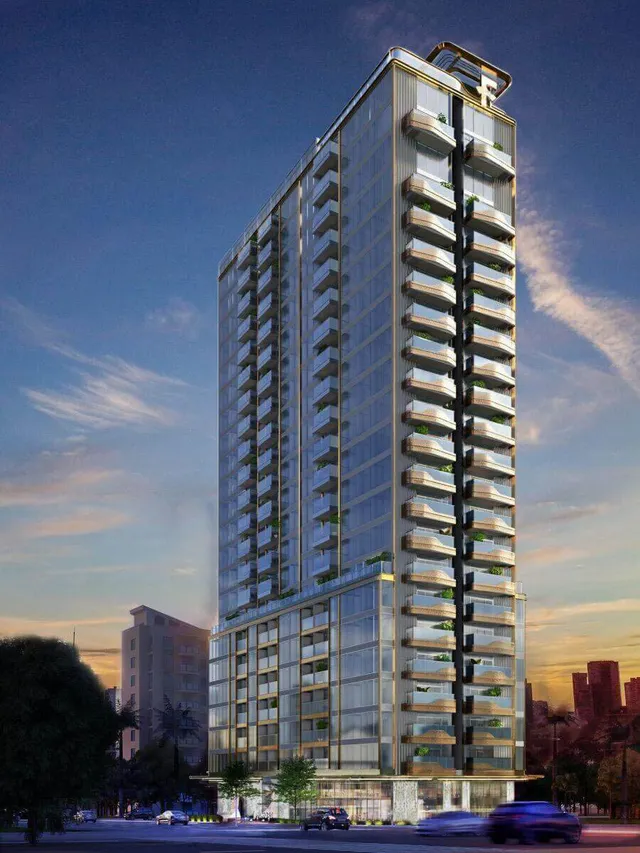 Selling now Foreign quota
 Công ty Cổ phần Phát triển Bất động sản Filmore (Filmore Development JSC) · Luxury riverfront apartment
The Filmore Đà Nẵng
Bach Dang, Hai Chau, Da Nang