
Cost of Owning Property in Vietnam: 2026 Guide for Foreigners
Buying the apartment is only the first cheque you write. The real question for most foreign investors is what it costs to hold a property in Vietnam year after year — and here the news is mostly good. Compared with Singapore, Australia, or the United States, Vietnam’s recurring ownership costs are remarkably light, but they are not zero, and a few line items surprise first-time buyers. This guide breaks down every ongoing cost in 2026, with a full table, so you can model your true net yield before you sign.
This article is general information for foreign buyers and investors, not legal or tax advice. Tax rules, tariffs, and fee structures change; always confirm current figures with a licensed Vietnamese tax advisor or lawyer before acting.
The headline: Vietnam has no Western-style annual property tax
Unlike most developed markets, Vietnam does not levy a large annual ad-valorem property tax on the market value of your home — which is the single biggest reason holding costs here are so low. In the US or UK, a homeowner might pay 1–2% of property value every year in council tax or property tax. In Vietnam, the equivalent charge — non-agricultural land use tax — is calculated on a state-set land price, not market value, and typically lands between roughly VND 500,000 and VND 2,000,000 per year (about USD 20–80) for a normal urban apartment.
That said, “no big property tax” does not mean “no ongoing costs.” Your real recurring bill is built from five buckets: building management fees, the one-time 2% sinking fund, land-use tax, taxes that only apply if you rent the unit out, and utilities. Below we walk through each, then bring them together in one table.
To see how these holding costs sit on top of the purchase, it helps to read this alongside our guide to taxes and costs when buying property in Vietnam, which covers the one-off acquisition fees.
Building management fees: your biggest recurring cost
For most apartment owners, the monthly management fee (phí quản lý) is the largest ongoing cost — and the one that varies most by building tier. This fee covers security, cleaning of common areas, lift maintenance, lighting, ventilation, landscaping, pool and gym operation, and the salaries of the management board and on-site staff.
As of 2026, management fees in Ho Chi Minh City typically run VND 8,000–20,000 per square metre per month in mid-market and upper-mid buildings. Premium and luxury developments with extensive amenities — concierge, multiple pools, sky lounges — frequently charge VND 20,000–35,000+ per m²/month.
A practical example for a 70 m² apartment:
- Mid-tier building at VND 12,000/m²: about VND 840,000/month (~USD 33)
- Premium building at VND 25,000/m²: about VND 1,750,000/month (~USD 69)
Two honest cautions. First, the fee is set per building and can rise over time as costs and amenity levels increase, so treat today’s rate as a starting point. Second, when a managing agent coordinates a repair, many charge a coordination margin (commonly 10–15%) on top of the contractor’s invoice — a small but real cost owners often overlook. Always ask for the current published fee schedule before you buy. High-amenity developments such as Eaton Park or The Global City will naturally sit at the higher end of this range because there is simply more to maintain.
The 2% sinking fund (maintenance fund)
Every apartment buyer in Vietnam pays a one-time maintenance fund equal to 2% of the apartment’s purchase price — and foreign buyers are no exception. This is the quỹ bảo trì, often called the sinking fund. It is paid once, at handover, and is used for major structural maintenance of common areas over the building’s life: facade repairs, lift overhauls, fire-safety systems, structural works.
Key points for 2026:
- It is 2% of the contract sale price, paid one time — not annually.
- On a VND 5 billion apartment, that is VND 100 million (~USD 3,900).
- Under current regulations, the payment should go into a dedicated maintenance-fund account (managed by the building’s elected management board once formed), rather than being absorbed into developer cash flow.
Because it is a one-off, the sinking fund is technically an acquisition cost, not a recurring one — but we include it here because buyers consistently confuse it with the monthly management fee. They are different: the 2% fund is for big structural maintenance; the monthly fee is for day-to-day operations.
Non-agricultural land use tax (the annual “property tax”)
Vietnam’s only genuinely annual ownership tax on residential property is the non-agricultural land use tax, levied at progressive rates of 0.03% to 0.15% on a state-determined land price — not the market price. For apartment owners, the land value is apportioned across all units in the building, which is why the resulting bill is so small.
In practice, most apartment owners pay somewhere between VND 500,000 and VND 2,000,000 per year (roughly USD 20–80). Even large or high-value units rarely exceed a few million dong annually. Standalone villas or townhouses on bigger land plots pay more, but still modest by international standards.
This is one of the most attractive features of holding Vietnamese property for foreign investors: your annual carrying cost from tax is almost negligible. For a fuller treatment of every tax touchpoint, see our taxes and costs guide.
Taxes that apply only if you rent the property out
If you lease your apartment, rental income is taxed — but a generous 2026 threshold means many small landlords pay nothing at all. Individual landlords in Vietnam are subject to a combined flat charge of 10% on gross rental revenue: 5% VAT plus 5% personal income tax (PIT).
The important 2026 update: under Law No. 48/2024/QH15, the tax-free revenue threshold rose from VND 100 million to VND 200 million per year, effective 1 January 2026. If your total annual rental income is below VND 200 million (~USD 7,800), you are exempt from both VAT and PIT. Above that, the full 10% applies to the gross.
A worked example for a unit renting at VND 25 million/month:
- Annual gross rent: VND 300 million (above the threshold)
- Tax due (10% of gross): VND 30 million/year (~USD 1,180)
Two further 2026 notes worth flagging. First, from 1 January 2026, foreign individuals who own rental property in Vietnam are exempt from the annual business licence tax (per Resolution 198/2025/QH15) — a small simplification. Second, getting your rent out of the country is a separate process: read our guide to repatriation of funds from Vietnam property before you rely on overseas cash flow. None of this is tax advice — confirm your position with a Vietnamese accountant, especially regarding any home-country tax on the same income.
If buying primarily for rental yield, talk to our team about which projects in our current portfolio are achieving the strongest net returns after these costs.
Utilities: electricity, water, internet, parking
Utilities in Vietnam are inexpensive by international standards, but air-conditioning in the southern climate is the line item that drives bills up. Electricity is tiered (higher consumption is charged at higher rates), with the residential average around VND 2,200 per kWh in 2025–2026, equivalent to roughly USD 0.08–0.09 before VAT.
Typical monthly ranges for an occupied 1–2 bedroom apartment in HCMC:
- Electricity: VND 800,000–2,500,000 depending heavily on AC use
- Water: VND 150,000–400,000
- Internet/fibre: VND 200,000–350,000
- Car parking: VND 1,000,000–1,800,000 per car/month in premium buildings; motorbike parking is far cheaper
A note on metering: in some buildings, residential electricity is billed at the correct tiered EVN tariff; in others (especially when renting), a flat or marked-up rate is applied. Confirm how your building meters utilities before committing — it materially affects monthly running costs.
Full cost table: owning a Vietnam apartment in 2026
The table below summarises a typical 70 m² mid-to-upper-mid apartment held by a foreign owner. Figures are illustrative 2026 reference ranges, not guarantees — your actual costs depend on building, location, and usage.
| Cost item | Type | Typical 2026 amount | Notes |
|---|---|---|---|
| Building management fee | Monthly | VND 8,000–35,000/m² (≈VND 0.6M–2.4M/mo) | Higher in luxury/amenity-rich buildings |
| Sinking fund (maintenance) | One-time | 2% of purchase price | Paid once at handover; structural maintenance |
| Non-agricultural land use tax | Annual | ~VND 0.5M–2M (USD 20–80) | On state land price, not market value |
| Rental income tax (if leased) | Annual | 10% of gross rent | Exempt if annual rent < VND 200M (from 2026) |
| Electricity | Monthly | VND 0.8M–2.5M | Tiered; AC-driven |
| Water | Monthly | VND 0.15M–0.4M | Often metered per unit |
| Internet | Monthly | VND 0.2M–0.35M | Fibre widely available |
| Parking (car) | Monthly | VND 1M–1.8M | Premium buildings; bike parking cheaper |
| Home/contents insurance | Annual | Varies (optional) | Not legally required; recommended |
For a non-rented, owner-occupied unit, your unavoidable recurring costs are essentially the management fee, land-use tax, and utilities — often USD 100–250 per month all-in for a mid-tier apartment. That is a low carrying cost by global standards, and a core part of the investment case for buildings like Vinhomes Grand Park or The Metropole Thu Thiem.
What’s on the horizon: proposed property tax reform
Foreign buyers should be aware that Vietnam is actively studying new property taxes — including a possible second-home tax — though nothing is law yet in mid-2026. The Ministry of Finance has floated reforms aimed at curbing speculation, including progressive taxes on owners of multiple properties and a holding-duration-based transfer tax (higher tax for quick flips, lower for long-term holds). A draft amending the non-agricultural land use tax law is expected to reach the National Assembly later in 2026.
We flag this not to alarm but to set honest expectations: today’s very low holding costs reflect the current regime, which is under review. Long-term investors should budget conservatively and revisit their assumptions as legislation develops. This is exactly the kind of risk we walk buyers through during planning.
If you want a holding-cost model built around a specific unit and your rental plans, get in touch with our advisory team — we’ll run the numbers transparently, including the costs most agents leave out.
The bottom line
Owning property in Vietnam is cheap to hold. The dominant recurring cost is the monthly management fee; the annual land-use tax is tiny; the 2% sinking fund is a one-off; and rental tax only bites if you let the unit and exceed the new VND 200 million threshold. For a typical mid-tier apartment, an owner-occupier can expect carrying costs of a few hundred US dollars a month — far below comparable Asian or Western markets. The main forward-looking caveat is proposed tax reform, which could change the picture over the coming years. Model your costs honestly, confirm figures with a licensed advisor, and you can buy with confidence. To start, browse our available projects or read our buying process guide for foreigners.
Frequently asked questions
Does Vietnam have an annual property tax for foreign owners?
Vietnam has no large Western-style annual property tax based on market value. The only genuinely annual ownership tax is the non-agricultural land use tax, charged at 0.03%–0.15% of a state-set land price (not market value). For a typical apartment this is usually only about VND 500,000–2,000,000 (USD 20–80) per year. This is general information, not tax advice — confirm your figures with a Vietnamese tax advisor.
What is the 2% sinking fund and is it annual?
The sinking fund (quỹ bảo trì, or maintenance fund) is a one-time payment equal to 2% of your apartment's purchase price, paid at handover. It funds major structural maintenance of the building's common areas over its lifetime. It is not annual and is separate from the monthly management fee, which covers day-to-day operations like security and cleaning.
How much are apartment management fees in Ho Chi Minh City in 2026?
Management fees typically run VND 8,000–20,000 per square metre per month in mid-market buildings and VND 20,000–35,000+ per m²/month in premium developments with extensive amenities. For a 70 m² unit that's roughly VND 0.6–2.4 million per month (about USD 25–95). Always request the building's current published fee schedule before buying, as fees can rise over time.
Do I pay tax if I rent out my Vietnam apartment?
Yes, if your annual rental income exceeds VND 200 million (the threshold from 1 January 2026), you pay a combined 10% on gross rent — 5% VAT plus 5% personal income tax. Below VND 200 million per year you are exempt from both. From 2026, foreign landlords are also exempt from the annual business licence tax. Always confirm your specific situation with a licensed accountant, including any home-country tax.
What are typical monthly utility costs for an apartment in Vietnam?
For an occupied 1–2 bedroom apartment in HCMC, expect roughly VND 0.8–2.5 million for electricity (driven heavily by air-conditioning use), VND 0.15–0.4 million for water, VND 0.2–0.35 million for internet, and VND 1–1.8 million per car for parking in premium buildings. Electricity is tiered, so higher consumption is charged at higher rates.
Projects for sale now
Get the latest price list, availability & payment terms — free advice via Zalo/WhatsApp.
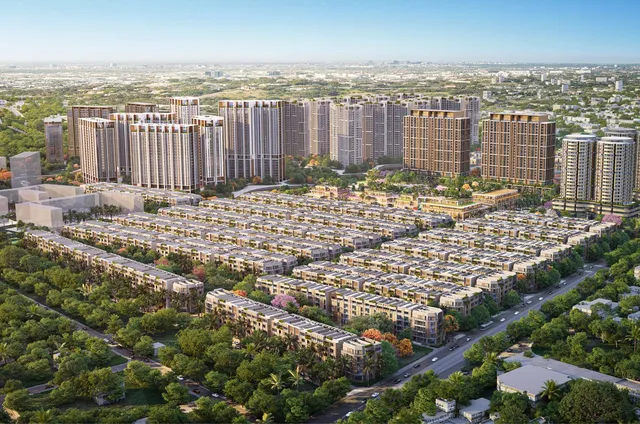 Selling now Foreign quota
 Masterise Homes · Luxury apartment & integrated township
The Global City
An Phu, Thu Duc City (former District 2), HCMC
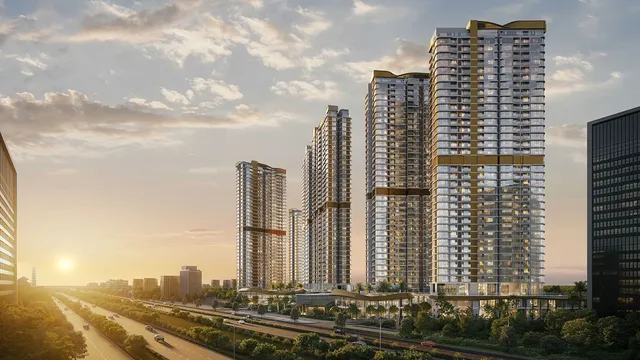 Selling now Foreign quota
 Gamuda Land · Luxury apartment
Eaton Park
An Phu, Thu Duc City, HCMC
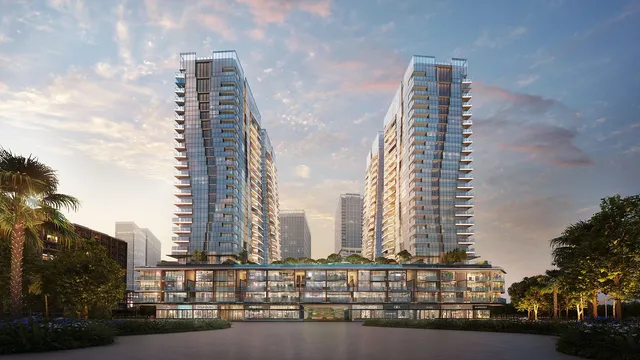 Selling now Foreign quota
 SonKim Land × Hongkong Land · Branded residences
The Metropole Thủ Thiêm
Thu Thiem, Thu Duc City, HCMC