
Can Foreigners Get a Mortgage in Vietnam? 2026 Reality
If you are a foreign buyer eyeing an apartment in Ho Chi Minh City, the financing question comes up fast: can you actually get a mortgage in Vietnam, or do you need to bring 100% cash? The honest answer is nuanced, and a lot of the marketing copy online glosses over it. This guide gives you the real picture for 2026, including the local-bank rules that quietly disqualify most non-residents and the three practical alternatives serious buyers use instead.
General information only, not legal, tax, or financial advice. Lending policies, rates, and regulations change frequently and vary by bank and by individual profile. Confirm current terms with a licensed Vietnamese bank and a qualified advisor before committing.
Can foreigners get a mortgage from a Vietnamese bank?
Technically yes, but in practice most non-resident foreigners cannot get a conventional Vietnamese mortgage, and almost no one buys off-plan property with one. Vietnamese law does not forbid lending to foreigners. Circular 39/2016/TT-NHNN allows credit institutions to lend to foreign individuals who meet the bank’s eligibility conditions. The barrier is not the law, it is the underwriting reality.
Local and foreign-owned banks operating in Vietnam (think Techcombank, BIDV, VPBank, plus Shinhan, HSBC, Standard Chartered and UOB) generally expect a foreign borrower to clear a stack of conditions that a typical overseas investor cannot meet:
- A valid long-term visa or residence permit, often with a minimum residency history (frequently three to six months or more).
- A work permit or labour contract, and verifiable income, ideally paid into a Vietnamese bank account.
- A clean local credit profile and full documentation of the property’s legal status, including foreign-ownership quota confirmation.
- Property collateral that already has its ownership certificate (the “Pink Book,” or Sổ Hồng).
In short, a mortgage in Vietnam is realistically available to foreigners who live and work here with local income, and effectively closed to overseas buyers, tourist-visa holders, and most off-plan purchasers. If that describes your situation, do not anchor your budget on financing you may not get. If you want help testing your eligibility against specific banks, our team can point you in the right direction through the Happy Land contact page.
What do the numbers look like if you do qualify?
Even qualifying foreign borrowers face shorter terms, lower loan-to-value ratios, and rates that float up after a teaser period. Here is a realistic 2026 snapshot for foreign borrowers who meet residency and income tests. Treat these as reference ranges, not quotes.
| Feature | Typical range for foreign borrowers (2026) |
|---|---|
| Loan-to-value (LTV) | ~50%–70% (some local profiles up to 80%, foreigners usually lower) |
| Promotional fixed rate | ~7.9%–8.1% for an initial 12–36 months |
| Floating rate thereafter | ~9%–11%, adjusts with market |
| Maximum term | Often 15 years, sometimes up to 20 |
| Term cap | May be limited to remaining ownership-certificate or residence-permit period |
Two structural catches matter for foreigners specifically. First, your loan term can be capped by your remaining residence permit or by the property’s ownership horizon, which compresses the loan and raises monthly payments. Second, foreign-owned apartments hold a 50-year leasehold-style ownership term (renewable in principle), and the Pink Book that lets a bank take the property as collateral can take years to issue after handover. No certificate, no clean collateral, no straightforward loan. The foreigner guide and our buying-process walkthrough explain how ownership and certificates work in more depth.
Alternative 1: Developer installment plans
Developer installment plans are the single most accessible “financing-like” route for foreign buyers, and they are how most off-plan apartments actually get paid for. Instead of borrowing from a bank, you pay the developer in scheduled tranches tied to construction milestones. A common structure spreads payments across the build, with a regulated ceiling: until the buyer receives the ownership certificate, total payments collected are capped (commonly cited at around 70% of value for foreign-relevant transactions), with the balance due once the certificate is issued.
Why this works well for foreigners:
- No residency, work permit, or local-income test, because it is a purchase contract, not a loan.
- Payments are spread over the 18–36 month construction period, easing cash flow.
- It sidesteps the Pink-Book collateral problem entirely.
What to watch: every payment schedule, interest charge (some installment plans carry one), penalty clause, and default consequence must be written clearly into the sale-and-purchase agreement. Vietnam’s Housing Law also requires that payments flow through a licensed credit institution in Vietnam under the buyer’s name, which matters later for repatriating your money. Read the contract with a lawyer before signing.
Alternative 2: Developer interest-subsidy and grace-period schemes
Major developers increasingly bundle bank financing with interest subsidies that can beat anything a foreigner could negotiate alone. These are technically bank loans, but the developer absorbs the early-year interest, so your effective cost is far lower than a standalone foreign mortgage. The headline 2026 example: in March 2026 Vinhomes launched a “5 years without worrying about interest rates” policy guaranteeing roughly 3.3% in year one, a cap near 7.8% across the first three years, and a 9% ceiling in years four and five, with the developer covering any excess if market rates rise.
Other common sweeteners include:
- Low entry capital (some programs let buyers start with around 20% down).
- A grace period on principal repayment to protect early-stage cash flow.
- Rental-management or yield-support programs on selected projects.
These promotions move quickly and vary by project and tower. They are a strong reason to compare live offers rather than rely on a generic mortgage. Browse current developments and their payment terms on the Happy Land projects page, including township-scale options like The Global City and Vinhomes Grand Park.
Alternative 3: Offshore financing from your home country
For overseas investors with no Vietnamese income, offshore financing is usually the most realistic way to use leverage. Rather than borrowing in Vietnam, you raise funds against assets in your home country, then transfer cash into Vietnam to pay in full. Typical structures include:
- A home-equity line of credit (HELOC) or remortgage on a property abroad.
- An international property loan from a bank in your home market or a regional hub like Singapore.
- A portfolio or securities-backed loan against existing investments.
The trade-off: you take on the home-country loan and its currency exposure, while the Vietnamese property is bought outright with cash. That keeps your Vietnam transaction clean and fast, which sellers and developers like, but it concentrates the financing risk offshore.
Crucially, the money still has to enter Vietnam correctly. Funds must come in through a licensed Vietnamese bank, in the buyer’s name, with supporting documentation (the State Bank of Vietnam scrutinizes transfers, and large transfers require the property contract and proof of source of funds). Keeping a clean paper trail from the start is what later allows you to repatriate sale proceeds and rental income, as explained in our guide to repatriating funds from Vietnam property.
Which route fits your situation?
Match the financing path to your residency status and how much cash you can deploy. As a rough decision guide:
| Your profile | Most realistic route |
|---|---|
| Live and work in Vietnam, local income | Possibly a Vietnamese bank mortgage; also compare developer plans |
| Overseas investor, buying off-plan | Developer installment or interest-subsidy plan |
| Overseas investor, want leverage | Offshore financing, pay Vietnam side in cash |
| Cash-rich, want simplicity | Pay in full, negotiate a discount for early settlement |
Whatever route you choose, budget for total acquisition costs beyond the headline price. Foreign buyers should typically plan for roughly 11%–15% on top of the property price to cover VAT, registration fees, and other closing costs. Our breakdown of taxes and costs when buying property in Vietnam walks through each line item so the final invoice holds no surprises.
The bottom line
The realistic answer to “can foreigners get a mortgage in Vietnam?” is: rarely from a local bank unless you live and work here, and almost never for off-plan purchases. The good news is that the alternatives are mature and well-trodden. Developer installment plans and interest-subsidy programs let you stagger payments without a traditional loan, and offshore financing lets overseas investors use leverage while keeping the Vietnam-side transaction in cash. The right choice depends on your residency, income, and risk appetite, and the cleanliness of your fund transfers will determine how easily you can take your money back out later.
Want a straight answer for your specific profile, including which developer payment plans are live right now? Reach out through the Happy Land team and we will map your options without the sales spin. You can also learn more about how we work before getting in touch.
Frequently asked questions
Can a foreigner with a tourist visa get a mortgage in Vietnam?
In practice, no. Vietnamese banks expect a long-term visa or residence permit, a work permit or labour contract, and locally earned income before approving a foreign borrower. Tourist-visa holders almost always need to buy with cash or arrange offshore financing instead.
What interest rates do foreigners pay on a Vietnamese mortgage in 2026?
For foreigners who do qualify, rates in early 2026 typically start around 7.9%–8.1% during an initial fixed period of 12–36 months, then float to roughly 9%–11%. These are reference ranges that vary by bank and profile, not guaranteed quotes.
How much can a foreigner borrow against a Vietnamese property?
Loan-to-value caps for foreign borrowers usually fall between 50% and 70%, with terms often capped around 15 years. The loan also requires a property certificate (Pink Book) as collateral, which can take years to issue, so off-plan units generally cannot be mortgaged.
Are developer installment plans available to foreign buyers?
Yes, and they are the most accessible route for most foreign buyers. You pay the developer in milestone-based tranches rather than borrowing from a bank. Payments before the ownership certificate is issued are capped (commonly cited around 70% of value), with the balance due on certificate handover. Every term should be written into the sale contract.
Can I use a loan from my home country to buy property in Vietnam?
Yes. Many overseas investors use a HELOC, remortgage, or international property loan abroad, then transfer cash into Vietnam to pay in full. Funds must enter through a licensed Vietnamese bank in the buyer's name with documented source of funds, which is also what later enables repatriation of sale proceeds.
Projects for sale now
Get the latest price list, availability & payment terms — free advice via Zalo/WhatsApp.
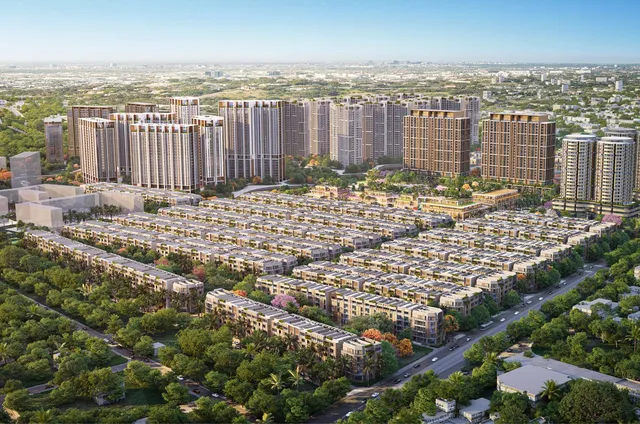 Selling now Foreign quota
 Masterise Homes · Luxury apartment & integrated township
The Global City
An Phu, Thu Duc City (former District 2), HCMC
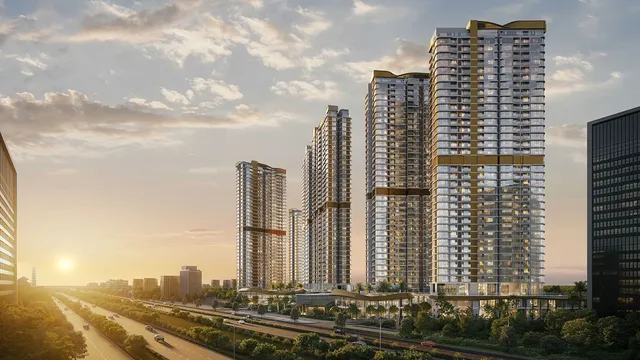 Selling now Foreign quota
 Gamuda Land · Luxury apartment
Eaton Park
An Phu, Thu Duc City, HCMC
 Selling now Foreign quota
 SonKim Land × Hongkong Land · Branded residences
The Metropole Thủ Thiêm
Thu Thiem, Thu Duc City, HCMC