
Can Foreigners Buy Villas or Houses in Vietnam? 2026 Guide
Yes—foreign individuals and organizations can legally buy villas, townhouses, and other landed houses in Vietnam, but only inside licensed commercial housing projects and only up to a strict per-area quota. The headline rule is a cap of 250 landed houses per area with a ward-equivalent population, layered on top of a per-project percentage limit. This guide explains exactly how the cap works, who qualifies, what you actually own, and the practical traps that catch foreign buyers.
This is general information for foreign buyers, not legal or tax advice. Vietnamese real-estate law is technical and changes; always confirm specifics with a licensed Vietnamese lawyer before signing or paying.
The short answer: yes, but landed houses are quota-limited
Foreigners may own villas and landed houses in Vietnam—subject to the 250-house ward cap—but they can never own the land underneath. This is the single most important concept. Under the Land Law 2024, all land in Vietnam belongs to the people and is administered by the State; nobody, Vietnamese or foreign, owns land outright. What a buyer holds is a land-use right and ownership of the structure on it.
For foreign individuals, the law goes a step further: you own the house (the building), not a private land-use right of the kind a Vietnamese citizen receives. Your name appears on a Certificate of Ownership tied to the dwelling, and your tenure runs for a defined term rather than indefinitely. So a “villa purchase” by a foreigner is legally a purchase of a standalone house within a project, with a time-limited ownership certificate.
The governing framework is the Housing Law 2023 (in force from 1 August 2024) and its implementing Decree 95/2024/ND-CP (dated 24 July 2024, effective 1 August 2024). These replaced the old 2014 regime and clarified—rather than loosened—the quotas for standalone houses.
If you are weighing landed houses against condominiums, our buying process guide for foreigners walks through both routes step by step.
How the 250-house ward cap actually works
Foreigners can collectively own no more than 250 landed houses within an area that has a population equivalent to one ward—roughly 10,000 people—regardless of how that area is labeled administratively. This is a cumulative ceiling shared by all foreign buyers, not a personal allowance. It applies to villas, semi-detached (duplex) houses, townhouses, and similar standalone dwellings.
Two limits operate together for landed houses:
| Rule | What it limits | Cap |
|---|---|---|
| Ward-area ceiling | Total foreign-owned landed houses in a ward-population area | 250 houses |
| Per-project share | Foreign-owned houses within a single project | 10% of the project’s houses |
| (For comparison) Apartments | Foreign-owned units per condo building/block | 30% |
The per-project 10% rule and the 250-house ceiling stack. In practice, the limit you hit first is the one that binds. A small villa compound of 200 houses caps foreign ownership at roughly 20 units (10%) long before the 250-house ward ceiling matters. A very large landed-house district, by contrast, will run into the 250-house ward ceiling even if no single project exceeds its 10% share.
When two or more housing projects sit inside the same ward-population area, the 250 houses are counted across all of them combined. Once foreign buyers in that area collectively reach 250 landed houses, no further foreign purchases are permitted there—even in a brand-new project that opens later with its own 10% headroom.
Why the 2025 administrative merger matters
Vietnam’s July 2025 reform abolished the district tier and merged communes and wards nationwide, cutting commune-level units from over 10,000 to about 3,321. This raised an obvious question: if wards are now much larger, does the cap balloon? The drafting answer is no—the rule pins the cap to a population equivalent of a ward (about 10,000 people), applied uniformly to any administrative unit regardless of its new name. So the merger did not multiply the quota; the 10,000-person yardstick is what counts.
Because the cap is shared and finite, popular foreign-favored districts can sell out their foreign quota. Always ask the developer—in writing—how much foreign quota remains in the specific project and area before you pay a deposit.
Who qualifies to buy, and what you actually own
Any foreign individual legally permitted to enter Vietnam is eligible to own a house, plus foreign-invested organizations and foreign developers under defined conditions. You do not need a residence card or a long-stay visa to qualify as an individual buyer; lawful entry (a valid passport with an entry stamp) is the baseline. Foreign organizations such as representative offices, branches, and foreign-invested enterprises can own houses for use by their staff, tied to the duration of their operating documents.
What you receive differs by buyer type:
- Foreign individual: ownership of the house for up to 50 years from the certificate’s issuance date, renewable once for up to another 50 years if you apply (typically three months before expiry). The structure stays yours during the term; you may sell, lease, gift, mortgage, or bequeath it.
- Foreign organization: tenure limited to the term stated in its Investment Registration Certificate.
- Foreigner married to a Vietnamese citizen: treated substantially like a Vietnamese owner—stable, long-term tenure without the 50-year term, the area cap, or the quantity quota. This is a meaningful path for mixed-nationality couples, but it must be documented correctly; speak to a lawyer about whose name goes on the certificate and how marital property rules apply.
For the bigger picture of what foreigners can and cannot buy, see our foreigner guide and the dedicated about Happy Land page explaining how we vet projects for foreign eligibility.
If you want a shortlist of projects that openly track foreign quota, our team can prepare one—contact Happy Land here and tell us your budget and preferred district.
Conditions, restricted zones, and the project requirement
You can only buy landed houses inside a licensed commercial housing project that is approved for foreign ownership—not resale homes on the open secondary market held by individual Vietnamese owners on private land plots. A “villa for sale” advertised by a local owner on a freehold residential plot is generally off-limits to a foreign individual buyer, because that transaction would require holding a private land-use right.
Key conditions to verify before committing:
- Project eligibility. The development must be on the provincial list of projects where foreigners may own homes, and the specific house must fall within the project’s foreign-ownership allocation.
- National defense and security zones. Foreign ownership is prohibited in areas designated for national defense or security—border communes, land near military installations, and zones flagged by the Ministry of National Defense and Ministry of Public Security. Developers must obtain confirmation that a project lies outside these zones; ask to see it.
- Payment compliance. Funds should flow through proper banking channels in Vietnam, which is also what protects your later right to remit sale proceeds abroad. Read our note on repatriation of funds before you wire money in.
- Certificate (“pink book”). Insist the sale-purchase contract commits the developer to apply for your ownership certificate. Without it, your legal position is weak.
Costs to budget for
Beyond the price, expect registration fee, VAT (typically embedded in the developer price), a maintenance/sinking fund contribution, notarization, and—on resale—a personal income tax on the transfer. We break these down in taxes and costs of buying property. Treat any figures as indicative ranges; rates and bases change and depend on the project and locality, so confirm current numbers with your lawyer and the developer.
Landed house vs. apartment: which route fits a foreigner?
For most foreign buyers, condominiums are the simpler, more liquid route, while landed houses suit those wanting space, a private plot footprint, and stronger appreciation potential—if quota allows. Apartments have a larger foreign quota (30% per building) and deep resale demand among foreigners, so they rarely hit ownership ceilings. Landed houses are scarcer for foreigners precisely because of the 10% project share and 250-house ward cap, which can make them harder to acquire and to resell to another foreigner later.
That scarcity cuts both ways. A villa or townhouse in a master-planned township can command premium rents and capital growth, but your future buyer pool includes the same quota constraints you faced. Many foreign investors therefore split strategies: an apartment for liquidity and yield, a landed house for lifestyle and long-hold appreciation.
If a landed or townhouse product appeals, master-planned communities like Vinhomes Grand Park and The Global City are common starting points, while buyers prioritizing liquid condo units often look at Eaton Park or Masteri Grand View. Browse the full lineup on our projects page and ask us which currently have foreign landed-house quota open.
Common mistakes foreign villa buyers make
The costliest errors come from skipping quota and zoning checks, not from the price negotiation. Watch for these:
- Assuming the 250 figure is personal. It is a shared ceiling for all foreigners in the area; the practical limit on your project is usually the 10% project share.
- Buying on the secondary market from a private owner. A foreign individual generally cannot take a private land-use right this way—only project houses approved for foreigners.
- Ignoring restricted zones. Coastal and border-adjacent plots can fall in security-sensitive areas where foreign ownership is barred.
- Nominee (“borrowed name”) arrangements. Holding a villa through a Vietnamese nominee to dodge the cap is legally risky and routinely ends in disputes and forfeiture. Don’t.
- Forgetting the 50-year clock and renewal. Diarize the renewal window; the term is renewable once but only if you apply in time.
Conclusion
Foreigners absolutely can own villas and landed houses in Vietnam in 2026—within licensed projects, capped at 250 houses per ward-population area and 10% of any single project, on a renewable 50-year certificate, and never including the land itself. The buyers who succeed are the ones who confirm remaining foreign quota, check the project sits outside security zones, route money through banks, and lock in the ownership-certificate commitment before paying. Couples with a Vietnamese spouse enjoy a far freer path worth exploring with a lawyer.
Want to know which landed-house projects still have foreign quota and clean eligibility paperwork? Talk to the Happy Land team and we’ll match you to compliant options.
Frequently asked questions
Can a foreigner own a villa in Vietnam outright?
A foreigner can own the villa structure within an approved housing project, but not the land beneath it—all land in Vietnam is State-administered. Foreign individuals receive a Certificate of Ownership for up to 50 years, renewable once. A foreigner married to a Vietnamese citizen can hold near-citizen, long-term ownership without the 50-year term or quotas.
What is the 250-house ward cap for foreigners?
Under Decree 95/2024/ND-CP, foreign buyers collectively may own no more than 250 landed houses (villas, townhouses, duplexes) within an area with a ward-equivalent population of about 10,000 people. It is a shared ceiling across all foreigners and all projects in that area, not a personal limit. Within any single project, foreign ownership of houses is also capped at 10%.
Did the 2025 ward mergers change the foreign ownership cap?
No. Vietnam's July 2025 administrative reform merged wards and communes and abolished the district tier, but the ownership cap is tied to a population equivalent of a ward (roughly 10,000 people), applied to any unit regardless of its new name. So larger merged wards did not automatically increase the 250-house quota.
Can foreigners buy a resale house from a private Vietnamese owner?
Generally no. Foreign individuals can buy landed houses only inside licensed commercial projects approved for foreign ownership. A private home on a freehold residential plot requires holding a private land-use right, which foreign individuals cannot do. Always verify a project is on the eligible list before committing.
Are some areas off-limits to foreign house buyers?
Yes. Foreign ownership is prohibited in areas designated for national defense or security, including border communes and zones near military sites flagged by the Ministry of National Defense and Ministry of Public Security. Developers must hold confirmation that a project lies outside these zones—ask to see it before you buy.
Projects for sale now
Get the latest price list, availability & payment terms — free advice via Zalo/WhatsApp.
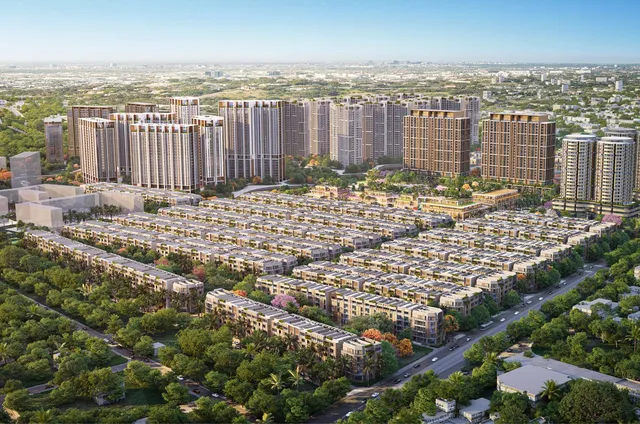 Selling now Foreign quota
 Masterise Homes · Luxury apartment & integrated township
The Global City
An Phu, Thu Duc City (former District 2), HCMC
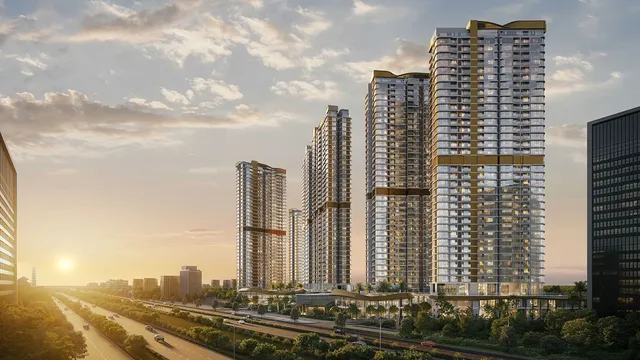 Selling now Foreign quota
 Gamuda Land · Luxury apartment
Eaton Park
An Phu, Thu Duc City, HCMC
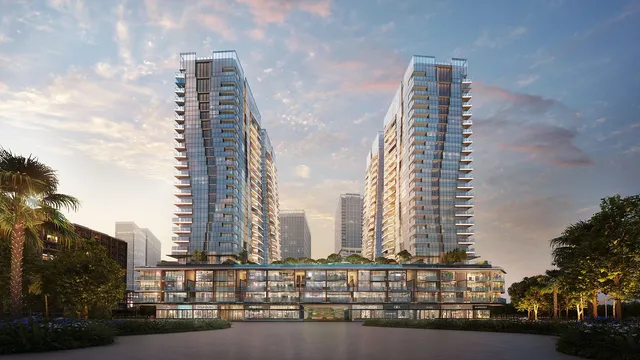 Selling now Foreign quota
 SonKim Land × Hongkong Land · Branded residences
The Metropole Thủ Thiêm
Thu Thiem, Thu Duc City, HCMC