
Can Foreigners Buy Resale Apartments in Vietnam? (2026)
Yes, foreigners can buy resale (secondary) apartments in Vietnam in 2026 — but only when the specific unit sits inside a project that is open to foreign ownership and the building’s 30% foreign quota still has room. The secondary market is where most genuine bargains and ready-to-move-in stock live, yet it is also where eligibility, quota and remaining-term traps quietly sink deals. This guide walks through exactly what is allowed, how the transfer works step by step, what it costs, and the pitfalls that catch overseas buyers.
This is general information for foreign buyers, not legal or tax advice. Rules are implemented at the provincial level and change; always confirm the current position with a licensed Vietnamese lawyer and the project’s management board before you pay any deposit.
Foreigners can legally buy resale apartments — within strict limits
The Law on Housing 2023 and Land Law 2024 confirm that foreign individuals may buy apartments on the secondary market, including from Vietnamese owners and from other foreigners, provided the building is an eligible commercial housing project. Foreigner-to-foreigner resale is explicitly permitted, which means you are not limited to buying brand-new from a developer.
The hard limits are the same ones that apply to off-plan purchases:
- Eligible projects only. You can buy in approved commercial housing developments — not social housing, and not projects inside zones the Ministry of National Defence or Ministry of Public Security have flagged for security reasons. Border areas, sensitive islands and land near military sites are off-limits, and some coastal projects need extra approval for foreign sales.
- Apartments, broadly yes; landed houses, capped tightly. Condos are the core of what foreigners buy. Landed villas and townhouses inside eligible projects are allowed but limited to 250 houses per ward-equivalent population area.
- Leasehold, not freehold. Foreigners hold a 50-year ownership term (renewable once), recorded on the “pink book” certificate.
The resale angle adds one critical extra filter that off-plan buyers rarely think about: the building’s foreign quota must not already be full. That single fact decides whether your purchase can even be registered in your name.
If you are still mapping out the basics, our foreigner buying guide and the detailed buying process for foreigners cover the ground-level rules before you focus on a specific resale unit.
The 30% quota is the make-or-break factor in resale deals
Foreign individuals and organisations combined may own no more than 30% of the apartments in any single condominium building — and that cap applies to your resale purchase just as it does to a new sale. If a 200-unit building has already sold 60 units to foreigners, you cannot legally take title on number 61, even if the seller is a foreigner trying to exit.
This produces two scenarios you must diagnose before depositing:
| Situation | What it means for you |
|---|---|
| You buy from a Vietnamese owner, quota already at 30% | Blocked. The transfer to a foreigner would breach the cap; you cannot register the pink book in your name. |
| You buy from a foreigner, replacing them in the quota | Usually fine — one foreign owner exits, you take their slot, net foreign count unchanged. |
| You buy from a Vietnamese owner, quota has room | Allowed, subject to all other eligibility checks. |
The practical takeaway: a resale unit currently owned by a foreigner is generally the safest path, because you are stepping into an existing foreign-owned slot rather than trying to create a new one. When the current owner is Vietnamese, your lawyer must get written confirmation of the building’s foreign-ownership percentage before you commit.
Never accept a verbal “there’s plenty of room.” Ask the management board (Ban Quản lý) or the developer for written confirmation of the current foreign ownership count. In high-demand corridors of Ho Chi Minh City the foreign quota in flagship towers can be fully subscribed, which is exactly why some owners are selling to you in the first place.
If quota risk worries you, established large-scale developments with deep foreign allocations — such as Vinhomes Grand Park or The Global City — tend to have clearer, better-documented quota tracking than small boutique buildings. When you are ready to pressure-test a specific tower’s availability, talk to our team and we will request the written quota position for you.
Watch the remaining 50-year term — it does not reset on resale
The single biggest financial trap in secondary purchases is the remaining ownership term. The 50-year clock starts on the date the pink book is first issued — not when you buy. Current law does not clearly grant a fresh 50 years to a subsequent foreign buyer, so the prudent assumption is that you inherit only the years left on the original certificate.
If you buy a unit whose pink book was issued in 2014, you may be acquiring a property with roughly 38 years of term left, not 50. That matters for three reasons:
- Resale value erodes as the term shortens, especially in the final decade.
- Renewal is not automatic. The law allows one extension of up to 50 years, but the procedure and conditions for the next buyer remain an area of legal ambiguity.
- Your own exit pool narrows — future foreign buyers will price in the shortened term just as you should now.
Always verify the issue date on the seller’s pink book and treat the remaining years — not a notional 50 — as what you are buying. For newer resale stock (a unit handed over in the last two to three years), this gap is small; for older buildings it can be material. Discuss the renewal outlook with a Vietnamese lawyer before you sign.
This term mechanic is one reason many foreign investors prefer recently completed projects on the resale market — for example newer Thu Thiem and eastern HCMC towers like Eaton Park, The Metropole Thu Thiem or Masteri Grand View — where the remaining term is still close to the full 50 years.
The resale process: deposit, notarisation, tax, then title
A straightforward resale typically takes 30 to 60 days in Ho Chi Minh City from accepted offer to a pink book updated in your name. Here is the standard sequence:
- Due diligence and offer. Confirm project eligibility, building quota, the seller’s pink book (issue date, remaining term, no mortgage/dispute), and that the seller is the registered owner.
- Deposit agreement. A deposit of around 5–10% locks the deal. Use a clear deposit contract that makes your payment conditional on quota confirmation and clean title.
- Notarised Sale & Purchase Agreement (SPA). For private (non-developer) transfers, Vietnamese law requires the SPA to be notarised at a licensed notary office. This is the legally operative transfer document and usually settles the balance (the remaining ~90–95%).
- Tax and fee declaration. Parties file the transfer with the tax authority. The 2% transfer tax must be paid and cleared (commonly 7–14 days) before title can move.
- Title transfer at the land office. The application goes to the Land Registration Office / DONRE (or one-stop service centre), which updates or reissues the pink book in your name. Expect roughly 15–30 working days.
Use proper escrow-style controls. Vietnam does not have a deep formal escrow culture, so structure staged payments through a bank and tie the balance to notarisation and tax clearance. A bilingual lawyer representing you (not the seller or agent) is essential — this is the step where DIY buyers get hurt.
Budget 1.5%–3% in taxes and fees on a resale
Beyond the headline price, a secondary purchase carries modest, predictable closing costs — and foreigners pay no extra “foreign buyer” surcharge versus locals. As a general 2026 reference (confirm exact figures with your advisor, as rates and valuations vary):
| Item | Typical rate | Usually paid by |
|---|---|---|
| Personal income tax on transfer | 2% of transfer/state price | Seller (often negotiated) |
| Registration (“pink book”) fee | ~0.5% of value | Buyer |
| Notarisation + admin | small fixed/percentage | Negotiable |
| Maintenance fund (if not already paid) | 2% (one-off, condos) | Per project rules |
In practice, a clean resale can close with buyer-side costs in the low single digits of the price. Note that the 2% PIT is the seller’s tax by law but is frequently pushed into the negotiation, so read who-pays-what carefully. For the full picture, see our guide to taxes and costs of buying property in Vietnam.
One 2026 watch-item: Vietnam’s Ministry of Finance has floated reforms to how transfer gains are taxed, including ideas around taxing actual profit rather than gross proceeds. Nothing in force changes the 2% resale mechanism yet, but the regime is evolving — another reason to confirm current rates at the time you transact.
Pitfalls foreign resale buyers must avoid
Most failed or regretted resale deals trace back to a short list of avoidable mistakes:
- Quota blindness. Buying from a Vietnamese owner without written proof the building’s foreign cap has room — the deal can collapse at registration.
- Term amnesia. Paying near-new prices for a unit with a heavily depleted 50-year term.
- Restricted-zone exposure. Assuming any project is open; some are excluded for defence/security reasons. Check the provincial Department of Construction list.
- Title defects. Unpaid maintenance fees, an undischarged mortgage, inheritance disputes, or a pink book not yet issued (common in newer towers — you may be buying a contract, not a title).
- Funds-in proof. Money for the purchase should arrive through proper banking channels, and you should keep records — this protects your ability to repatriate proceeds later. See our note on repatriation of funds from Vietnam property.
- Inheritance reality. If your heirs are not eligible to own in Vietnam, they receive the value (sale proceeds), not the apartment itself.
When buying from a foreigner, also confirm they originally bought into the quota legally and hold a valid pink book — defects upstream become your problem.
Conclusion
Foreigners absolutely can buy resale apartments in Vietnam in 2026, and the secondary market often offers better value, real photos, and immediate handover. The deal lives or dies on three checks: the project must be foreign-eligible, the building’s 30% quota must have room (buying from an exiting foreigner is the cleanest route), and the remaining 50-year term must justify the price. Add a notarised SPA, a buyer-side lawyer, and clean banking trails, and a resale purchase is no riskier than buying new.
To learn more about who we are and how we work, see our about page or browse current foreign-eligible stock on our projects page. When you have a specific resale unit in mind, contact our team and we will run the quota, term and title checks before you risk a deposit.
Frequently asked questions
Can a foreigner buy a resale apartment from another foreigner in Vietnam?
Yes. The Law on Housing 2023 explicitly permits foreigner-to-foreigner resale in eligible commercial projects. This is often the cleanest route because you step into the seller's existing foreign-ownership slot, so the building's 30% foreign quota is not affected. You still need a valid pink book, a notarised transfer, and to check the remaining ownership term.
What happens if the building's 30% foreign quota is already full?
If the cap is full, the property can no longer be registered to a foreign buyer. Buying from a Vietnamese owner in a fully-subscribed building is effectively blocked at the title-registration stage. Buying from an exiting foreign owner is generally still possible because the net foreign count stays the same. Always get written confirmation of the current foreign-ownership count before depositing.
Do I get a fresh 50-year term when I buy a resale apartment?
Probably not. The 50-year clock starts when the pink book was first issued, and current law does not clearly grant a subsequent foreign buyer a brand-new 50 years. The safe assumption is that you inherit only the remaining term. Check the issue date on the seller's pink book and price the property on the years actually left, not a notional 50.
How much are the taxes and fees on a resale apartment in Vietnam?
As a 2026 reference, expect a 2% personal income tax on the transfer (legally the seller's, but often negotiated), a roughly 0.5% registration fee for the pink book (buyer), plus notarisation and small admin costs. Foreigners pay no extra foreign-buyer surcharge. Exact amounts depend on the declared price versus the state valuation, so confirm with your advisor. This is general information, not tax advice.
How long does a resale apartment transfer take for a foreigner?
A straightforward resale in Ho Chi Minh City typically takes about 30 to 60 days from accepted offer to the pink book being updated in your name. The main stages are the deposit, the notarised Sale & Purchase Agreement, paying and clearing the 2% transfer tax (about 7–14 days), and the land office reissuing the title (about 15–30 working days).
Projects for sale now
Get the latest price list, availability & payment terms — free advice via Zalo/WhatsApp.
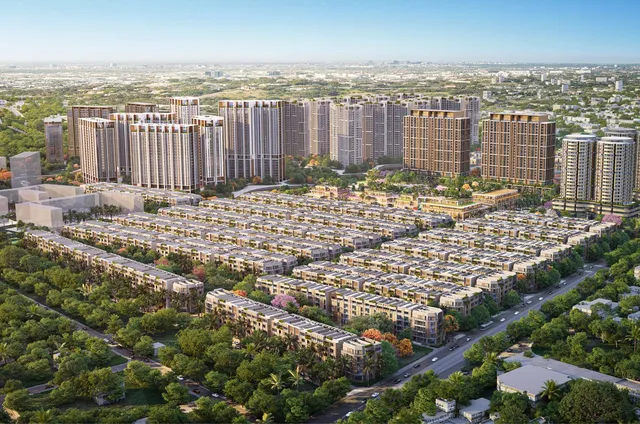 Selling now Foreign quota
 Masterise Homes · Luxury apartment & integrated township
The Global City
An Phu, Thu Duc City (former District 2), HCMC
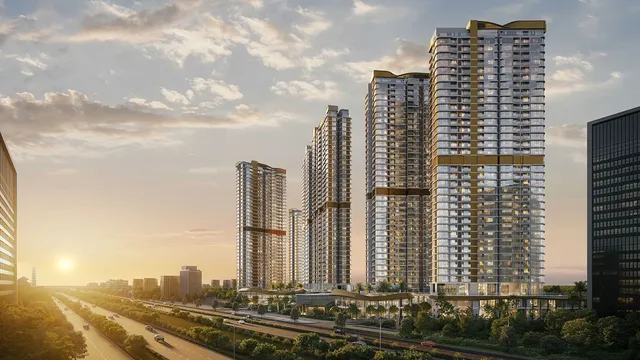 Selling now Foreign quota
 Gamuda Land · Luxury apartment
Eaton Park
An Phu, Thu Duc City, HCMC
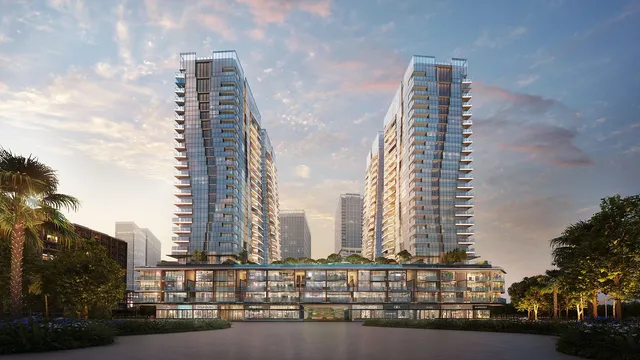 Selling now Foreign quota
 SonKim Land × Hongkong Land · Branded residences
The Metropole Thủ Thiêm
Thu Thiem, Thu Duc City, HCMC