
How to Choose a Real Estate Agent in Vietnam (Foreign Buyer Guide 2026)
Choosing the right person to guide your purchase is arguably the most important decision a foreign buyer makes in Vietnam — more important than the building, the floor, or even the price. The right agent or distributor protects you from quota problems, legal surprises, and outright fraud; the wrong one can quietly cost you your deposit or, in worst cases, the whole property.
This guide explains, from the perspective of a primary-market distributor, how the agent relationship actually works in Vietnam: who pays the commission (hint: usually not you), how a licensed primary distributor differs from a random broker, the red flags that should make you walk away, and the exact questions to ask before you pay anything.
Why the agent you pick matters more in Vietnam
Vietnam’s property market is not as transparent as markets in North America, Europe, or Australia. There is no single public multiple-listing service, prices are often negotiated case by case on the resale market, and the legal framework — rebuilt in 2024–2025 around the Land Law 2024, Housing Law 2023, and Law on Real Estate Business 2023 — places real limits on what foreigners can own and where. A foreign buyer who does not read Vietnamese is, in practice, completely dependent on the person translating and explaining the deal.
That dependence is exactly why the choice of agent carries so much weight. A good agent does far more than open doors. They confirm you are even allowed to buy the unit (foreign-ownership quota), check the project’s legal status, walk your contract through translation, manage staged payments to the correct account, and stay reachable after handover. A bad agent simply pushes you toward a deposit and disappears once their commission is paid.
How the commission model works — and why a primary sale costs you the same
This is the single most misunderstood point, so it is worth being precise.
On a primary (new-build) sale, the developer sets one official price list for the project. That price is the same whether you walk into the developer’s own sales gallery or buy through an authorised distributor like Happy Land. The developer pays the distributor’s commission out of its own margin — it is not added on top of your price. In other words, using a reputable distributor on a primary unit is, for you, effectively a free service.
On the resale (secondary) market, the picture is different. The seller is a private individual, and the commission — often in the region of a couple of percent — is usually paid by the seller, though buyers increasingly engage and pay their own buyer’s agent (around 1% on residential, more on commercial) specifically so that the agent’s loyalty is to them. Both models are legitimate; what matters is that the arrangement is stated clearly in writing before you commit.
| Transaction type | Who you buy from | Who pays the agent | Net effect on your price |
|---|---|---|---|
| Primary (new-build, off-plan) | Developer, via authorised distributor | The developer | Same as the developer’s official price list |
| Secondary (resale) | Private owner | Usually the seller (sometimes a buyer’s-agent fee) | Negotiated; commission baked into deal terms |
| ”Off-market” private deal | Unknown party | Unclear / often opaque | Highest risk of hidden mark-up — verify everything |
The practical takeaway: if you are buying a new-build apartment and someone asks you for a separate “finder’s fee” or “agent fee” on top of the developer’s published price, ask why. On a normal primary sale, that fee should not exist.
Primary distributor vs. a random broker
Not everyone calling themselves an “agent” in Vietnam operates the same way. It helps to understand three rough tiers.
Authorised primary distributors have a formal agreement with the developer to sell a specific project. They have access to live inventory and the official price list, they know the project’s legal milestones, and — crucially — they can check the foreign-ownership quota for your exact unit directly with the developer. Their reputation is tied to the developer’s, which gives them a strong incentive to do the deal correctly.
General brokerage firms are licensed companies that may handle both primary and resale, across many projects. Quality varies; the good ones are excellent, but you must verify which projects they are actually authorised to sell.
Freelance individuals are the highest-risk category — and here Vietnamese law has tightened significantly. Under the Law on Real Estate Business 2023, real estate brokerage must now be carried out through a registered enterprise; individuals operating purely on their own account are no longer permitted, and a broker working within a company must hold a brokerage practice certificate (the certificate requires completing an accredited training course and passing an examination — under the 2024 implementing rules, around 32 hours of training and a pass mark of 70/100). If the person you are dealing with cannot point to a registered company behind them, that alone is a reason for caution. (Figures are indicative and the regulatory detail evolves — confirm specifics with a licensed Vietnamese lawyer.)
Red flags: when to walk away
Most problems foreign buyers run into trace back to a handful of warning signs that appear before money changes hands. Treat any of the following as a reason to slow down and verify independently.
- Pressure to deposit fast to “lock the price” before you have seen the contract or confirmed your eligibility. Genuine scarcity exists, but real urgency never requires you to skip due diligence.
- A request to wire money to a personal bank account, pay in cash, or send funds abroad. On a legitimate primary purchase, payments go to the developer’s named corporate account stated in your contract — never to an agent personally.
- Vague or evasive answers to legal questions. If you ask about the foreign quota, the project’s construction permit, the mortgage/bank guarantee for an off-plan unit, or how your Pink Book (ownership certificate) will be issued, a professional gives clear answers or finds out. Hand-waving is a red flag.
- Suggesting a nominee structure — putting the property in a Vietnamese friend’s, spouse’s, or company’s name to get around ownership rules. This is unsafe and frequently ends in total loss of the asset; a trustworthy agent will never propose it.
- No written, itemised breakdown of price, taxes, fees, and payment schedule. “Trust me, it’s all included” is not a contract.
- Reluctance to involve your own lawyer. A good agent welcomes independent legal review because it protects everyone. Resistance suggests something will not survive scrutiny.
- A deal that exists only on the resale/“off-market” channel with no developer paper trail, especially when priced suspiciously below the official list.
For a deeper treatment of fraud patterns and how to verify documents, see our dedicated guide on Vietnam property scams & red flags.
Questions to ask before you commit
A short, direct conversation reveals a great deal. A professional answers these comfortably; an amateur gets uncomfortable.
- Which company do you work for, and are you authorised to sell this specific project? Ask to see the business registration and, for primary units, the distribution authorisation (or confirm it with the developer).
- Can foreigners buy this exact unit, and what is the current foreign quota in this building? Foreign ownership is capped — broadly, foreigners may own up to 30% of the apartments in one building, with ward-level limits too, and only in eligible projects.
- What is the full, itemised cost? Price, registration fee, VAT treatment, maintenance/sinking fund, management fees, and the staged payment schedule — in writing.
- Which account do I pay into, and at what milestones? Confirm it is the developer’s corporate account.
- How and when will my Pink Book (ownership certificate) be issued, and in whose name?
- What happens after handover — do you help with utilities, leasing, resale, or transferring ownership later?
- Are you comfortable with my independent lawyer reviewing everything?
What a good agent should actually do for you
The difference between a transaction-pusher and a genuine advisor shows up in the work they do on your behalf — much of it before you pay a cent.
| Stage | What a good agent / distributor does | Why it protects you |
|---|---|---|
| Eligibility | Checks live foreign-ownership quota for your exact unit | Prevents buying a unit you cannot legally own |
| Legal status | Verifies developer, construction permit, off-plan bank guarantee, project approvals | Avoids stalled or non-compliant projects |
| Pricing | Confirms the official developer price and full fee breakdown in writing | No hidden mark-ups or surprise fees |
| Documents | Prepares and translates the sale contract; explains each clause | You sign knowing what you agreed to |
| Payments | Directs payments to the developer’s corporate account on the correct schedule | Removes the personal-account fraud risk |
| Handover | Inspects the unit, manages snagging, hands over keys and documents | You receive what you paid for |
| After-sales | Supports Pink Book issuance, leasing, resale, future transfer | Long-term relationship, not a one-off sale |
Why an English-speaking primary distributor lowers your risk
If you cannot read a Vietnamese contract or call a developer’s accounts department in Vietnamese, an English-speaking, project-authorised distributor removes the most dangerous gap in the whole process: the translation gap. You transact at the developer’s official price, the commission is paid by the developer, and you get someone whose job is to catch the quota and legal issues that a busy developer sales desk — whose staff work for the developer, not for you — may never raise.
This does not replace your own lawyer. The strongest setup pairs a reputable distributor with independent Vietnamese legal review. The two are complementary, not redundant.
A buyer’s checklist for vetting an agent
Use this before signing anything. Aim for a “yes” on every line.
| Check | What you are confirming | Pass = |
|---|---|---|
| Registered company | Agent operates through a licensed enterprise, not freelance | Yes |
| Project authorisation | Authorised to sell this primary project | Yes |
| Foreign quota checked | Live quota confirmed for your exact unit | Yes |
| Price = developer list | No fee added on top of the official primary price | Yes |
| Payments to developer account | No personal-account or cash requests | Yes |
| Written cost breakdown | Itemised price, taxes, fees, schedule | Yes |
| Clear legal answers | Straight answers on permits, Pink Book, guarantees | Yes |
| No nominee suggestion | Never proposes putting title in another name | Yes |
| Welcomes your lawyer | Comfortable with independent legal review | Yes |
| After-sales support | Helps beyond the signature | Yes |
Bringing it together
Choosing an agent in Vietnam comes down to a simple test: does this person make the process more transparent, or less? A trustworthy primary distributor shows you the developer’s real price, proves the unit is open to foreigners, routes your money to the developer, and is happy to have your lawyer check the paperwork. Anyone steering you toward fast deposits, personal-account transfers, nominee tricks, or vague legal answers is showing you exactly who they are — believe them, and walk away.
For the wider journey, read our companion guides on the buying process for foreigners, the common mistakes foreign buyers make, and the documents checklist for foreign buyers.
This article is general information for 2026 and is not legal or tax advice; figures and quotas are indicative and the rules change — always confirm the specifics of your purchase with a licensed Vietnamese lawyer. Happy Land is a primary-market distributor working directly with developers, so the price you pay is the developer’s official price. If you would like us to check the foreign quota and legal status of a specific unit — or just talk through your options in English — reach out any time on Zalo or WhatsApp, and browse our project listings to see what is currently available.
Frequently asked questions
Does it cost me more to buy through an agent or distributor in Vietnam?
On a primary (new-build) sale, no. The developer publishes one price list, and that same price applies whether you walk into the sales gallery yourself or buy through an authorised distributor. The developer pays the distributor's commission out of its own margin, so the number you pay is identical. A good distributor adds service — legal checks, the foreign-quota check, paperwork, and translation — at no extra cost to you. Be cautious only if someone asks you to pay a separate 'finder's fee' or 'agent fee' on top of the developer price for a primary unit; that is unusual and worth questioning.
How do I check whether a real estate agent in Vietnam is licensed?
Under the Law on Real Estate Business 2023, brokerage must be carried out through a registered enterprise — independent freelance brokers are no longer permitted to operate on their own account, and individual brokers must hold a brokerage practice certificate and work within a company. Ask for the company's business registration, confirm the legal entity name, and for primary projects ask to see (or verify with the developer) the distribution authorisation for that specific project. A legitimate firm answers these questions without hesitation. These are general pointers, not a substitute for advice from a licensed Vietnamese lawyer.
Should I use a buyer's agent or buy directly from the developer?
For most foreign buyers of new-build apartments, an authorised primary distributor gives you the best of both: you transact at the developer's official price, but you also get an English-speaking team that runs the legal and foreign-quota checks for you. Walking into a developer gallery alone is possible, but the sales staff there work for the developer, not for you, and rarely flag quota or eligibility issues proactively. On the resale (secondary) market the dynamics differ and a dedicated buyer's agent or your own lawyer becomes more important, because the seller is a private party.
What is the single biggest red flag when choosing an agent in Vietnam?
Being asked to wire money to a personal bank account. On a legitimate primary purchase, deposits and instalments go to the developer's named corporate account stated in your contract — never to an agent's personal account, never in cash, and never abroad. Any pressure to pay quickly to 'hold the price' before you have seen the contract and confirmed your foreign-ownership eligibility is a reason to slow down, not speed up.
Can an agent help confirm a foreigner is allowed to buy a specific unit?
Yes, and a good one will do this before you pay anything. Foreign ownership in Vietnam is capped — broadly, foreigners may own up to 30% of the apartments in a single building, with limits also applying at the ward level, and only in eligible projects (not land-use-right plots or units in security-sensitive areas). A competent distributor checks the live foreign quota for your exact unit with the developer and confirms the project is open to foreign buyers. If an agent cannot or will not do this check, treat it as a serious warning sign.
Projects for sale now
Get the latest price list, availability & payment terms — free advice via Zalo/WhatsApp.
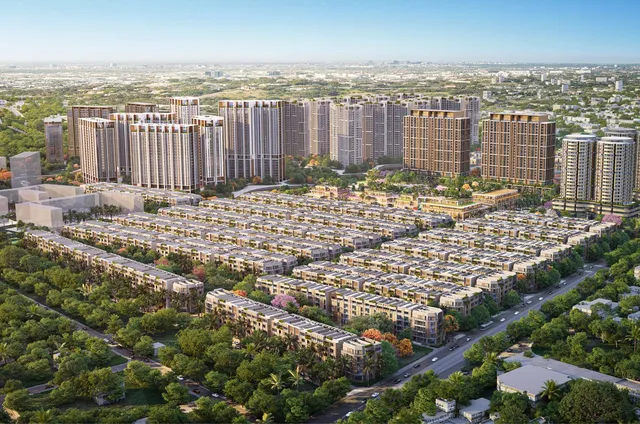 Selling now Foreign quota
 Masterise Homes · Luxury apartment & integrated township
The Global City
An Phu, Thu Duc City (former District 2), HCMC
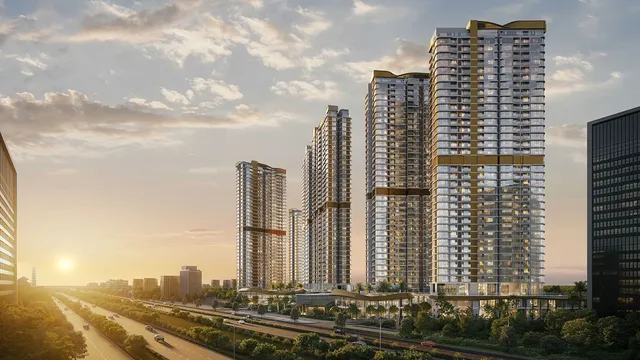 Selling now Foreign quota
 Gamuda Land · Luxury apartment
Eaton Park
An Phu, Thu Duc City, HCMC
 Selling now Foreign quota
 SonKim Land × Hongkong Land · Branded residences
The Metropole Thủ Thiêm
Thu Thiem, Thu Duc City, HCMC